Grandmillennial Interior Design
Granny chic reimagined — chintz, fringe, ironic florals, layered patterns.
Stage your room in Grandmillennial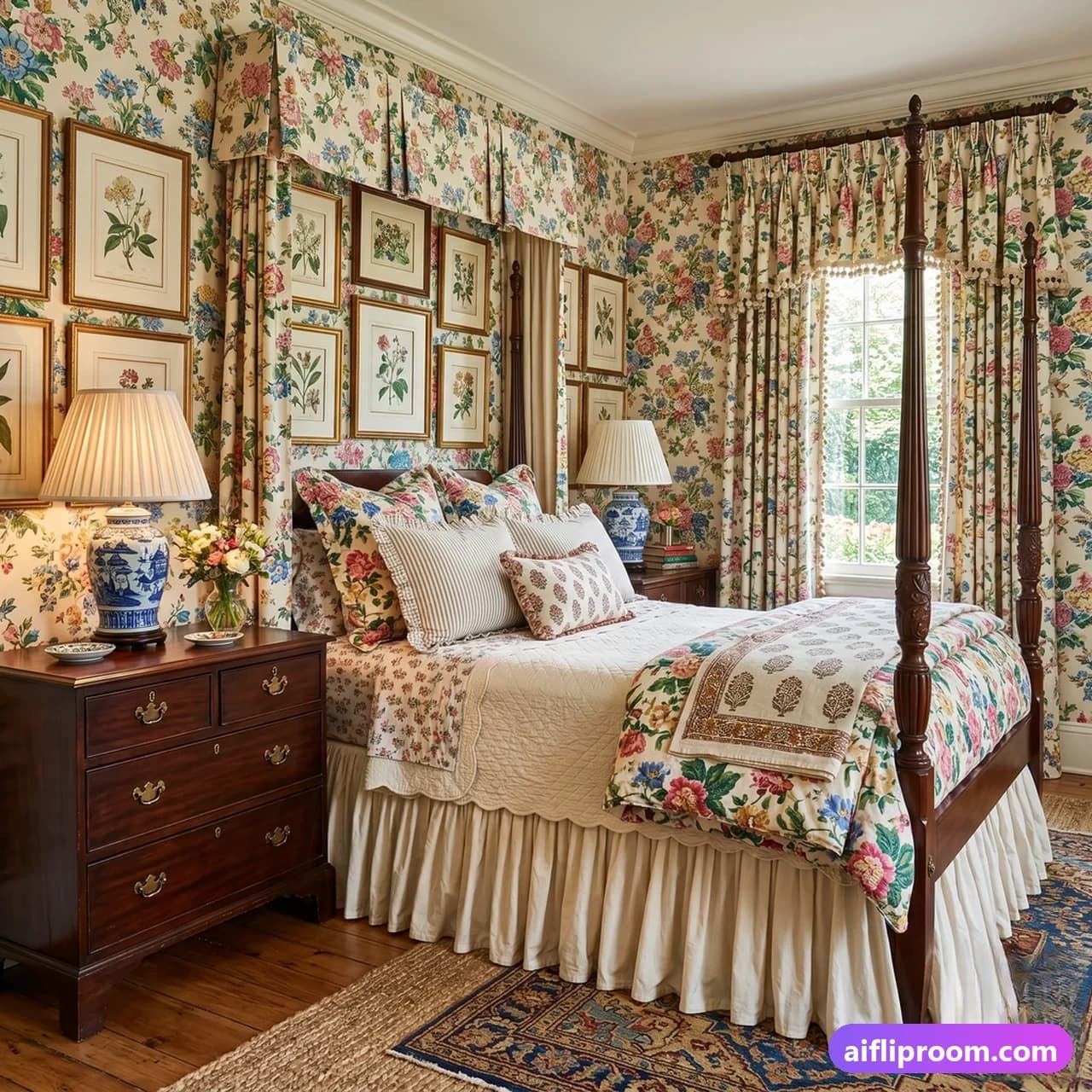
What is Grandmillennial interior design?
Grandmillennial style revives the classic, slightly old-fashioned decor of past generations — the chintz, ruffles and florals once dismissed as “granny” taste — and wears it with a knowing, modern wink. It is traditional warmth reclaimed by a younger eye. Floral and chintz patterns return, alongside ruffles, fringe, scalloped edges and skirted furniture; blue-and-white china and botanical prints are styled with affection. But the look is not a museum piece: the patterns are layered with a fresher, more cheerful hand, and modern proportions keep it from feeling fussy. The result is charming, characterful and comfortable, with a sense of humour. In staging, grandmillennial appeals to buyers who like traditional cosiness but want it to feel current and personal rather than dated — it photographs as warm, distinctive and full of charm.
Where Grandmillennial comes from
Grandmillennial is a knowing joke that turned into a real style. Named around 2019, it describes younger people deliberately embracing the decorating their grandmothers did and their parents spent two decades stripping out — chintz, skirted tables, needlepoint cushions, blue and white porcelain, pelmets and fringe. Part of the appeal was reaction: after years of grey open-plan minimalism, pattern and comfort felt like relief. Part of it was practical, since the pieces were cheap and plentiful in second-hand shops precisely because nobody wanted them. What distinguishes it from simply inheriting a house is the edit. A grandmillennial room is traditional decorating chosen deliberately, mixed with modern furniture and lit properly, rather than accumulated by default.
Key elements of Grandmillennial
- Floral and chintz patterns
- Ruffles, fringe and scalloped edges
- Blue-and-white china
- Skirted furniture
- Botanical prints
- A layered, pattern-rich but cheerful arrangement
When to use Grandmillennial
Bedrooms and living rooms. A charming, characterful look for buyers who like traditional warmth with a playful, current sensibility.
Grandmillennial colours and materials
Cheerful and slightly nostalgic. Soft blues and greens, pink, coral, yellow and lilac, over cream and white, with classic blue-and-white doing a great deal of the work. Brass and rattan for warmth. Materials are chintz and floral cotton, ticking, gingham, toile, needlepoint, wicker and cane, painted timber, scalloped edges and plenty of trim — fringe, piping, ruffles and skirts. Pattern is the point and it is layered deliberately: a floral against a stripe against a check, held together by a shared colour. What the style avoids is grey, industrial materials and anything self-consciously minimal.
Grandmillennial room by room
Living room in Grandmillennial
A sofa in a floral chintz or a plain fabric with heavily patterned cushions, a skirted or rattan side table, and a pair of chairs in a contrasting pattern that shares a colour. A patterned rug, framed botanical prints or plates hung on the wall, and curtains with a pelmet or a scalloped edge. Blue-and-white ceramics as lamp bases or on shelving. The room should look layered and cheerful, and the single discipline that keeps it from chaos is varying the scale of the patterns.
Bedroom in Grandmillennial
A skirted bed or an upholstered headboard in a floral, layered bedding with a quilt and a ruffled or scalloped edge, and a skirted bedside table. Wallpaper in a small repeating print, a wicker or painted chest, and lamps with pleated shades — the pleated shade is close to a signature of the whole style. Keep one surface plain so the eye has somewhere to rest.
Dining room in Grandmillennial
A traditional table with painted or cane-backed chairs, a tablecloth or a runner, and a plate wall or a display of blue and white china. A rattan or brass chandelier. Chintz or a scalloped valance at the window. This is the room where the style is most fun and least risky, because dining rooms are used briefly and can carry more pattern than a room you sit in all evening.
Home office in Grandmillennial
A painted or skirted desk, a cane-backed or upholstered chair, and a bookcase with wallpaper inside the back panel — an old trick that suits this style perfectly. A patterned rug, a pleated lampshade, and framed prints hung densely. It turns a functional room into one people actually want to sit in, which is the aesthetic's whole argument.
Powder room in Grandmillennial
The best place to commit fully. Bold wallpaper on all four walls, a scalloped or gilt mirror, a brass tap, a pleated sconce shade, and a small skirted or antique washstand. Guests are in the room for two minutes, which means it can be as decorated as you like without anyone having to live in it.
Grandmillennial mistakes to avoid
- Skipping the edit. The difference between grandmillennial and an unrenovated house is deliberate selection — a few modern pieces, good lighting, and restraint about how much is in the room.
- Patterns at one scale. A large floral, a medium check and a small stripe sharing a colour works. Three medium florals fight.
- Grey anywhere. It flattens the whole palette. The neutrals here are cream and white.
- Buying reproduction everything. Genuine second-hand pieces are cheap and are what give the look its charm; a full set of new imitation-vintage furniture reads as a catalogue.
- Overdoing the trim. Fringe, ruffle, pleat and scallop are all correct, but not all at once on the same object.
Grandmillennial questions, answered
What is grandmillennial style?
A contemporary style, named around 2019, in which younger people deliberately adopt traditional decorating their grandparents used — chintz, skirted furniture, needlepoint, blue and white china, pelmets, fringe and scallops — and mix it with modern pieces and modern lighting. The name is affectionate and slightly self-aware.
What is the difference between grandmillennial and cottagecore?
Cottagecore is rural, rustic and pastoral — linen, wildflowers, handmade things, a fantasy of country self-sufficiency. Grandmillennial is suburban and domestic, drawn from traditional formal decorating rather than farm life: chintz sofas, porcelain, skirted tables and pelmets. Cottagecore looks like a cottage; grandmillennial looks like a well-loved family house.
How do I mix pattern without it looking cluttered?
Two rules. Every pattern in the room should share at least one colour with the others. And vary the scales — one large, one medium, one small. If it still feels busy, the fix is usually to leave one large surface plain: a solid rug under patterned furniture, or plain walls behind a patterned sofa.
Is grandmillennial expensive to do?
It is one of the cheaper styles to assemble, because the pieces it uses were unfashionable for twenty years and are still plentiful and inexpensive second hand. Charity shops, auctions and family attics are the natural sources. The costs that do add up are curtains and upholstery, where fabric and making are genuinely expensive.
Does grandmillennial work for staging a property?
Rarely for the main rooms, since heavy pattern makes it harder for a buyer to picture their own things. It can work well in one small space — a powder room or a study — to give a listing warmth and character while the principal rooms stay neutral.
Guides to read next
Longer reads on getting a room photographed and restaged well.
- See Your Own Room in a New Style Before You Buy AnythingPreview your actual room in a new style before buying furniture or hiring anyone: what a preview settles, what it can't, and five steps to a useful one.
- How to Photograph Rooms for Virtual Staging: 7 RulesDaylight, lamps off, a level phone at chest height, the 1x lens not 0.5x, one room per frame, clear surfaces — seven habits that make AI staging look real.
- What Is Virtual Staging? The Complete Guide: How It Works, Cost, Rules, ExamplesVirtual staging explained in plain language: how AI furnishes a photo of a real room, what it costs, what agents think of it (NAR 2025), who it helps, the rules and how to spot bad staging.
See your room in Grandmillennial
Upload a photo and our AI restages it in the Grandmillennial look in 15–60 seconds, depending on how much detail your room has — keeping your walls, windows and layout intact.
Try Grandmillennial on your room