Warm Minimalist Interior Design
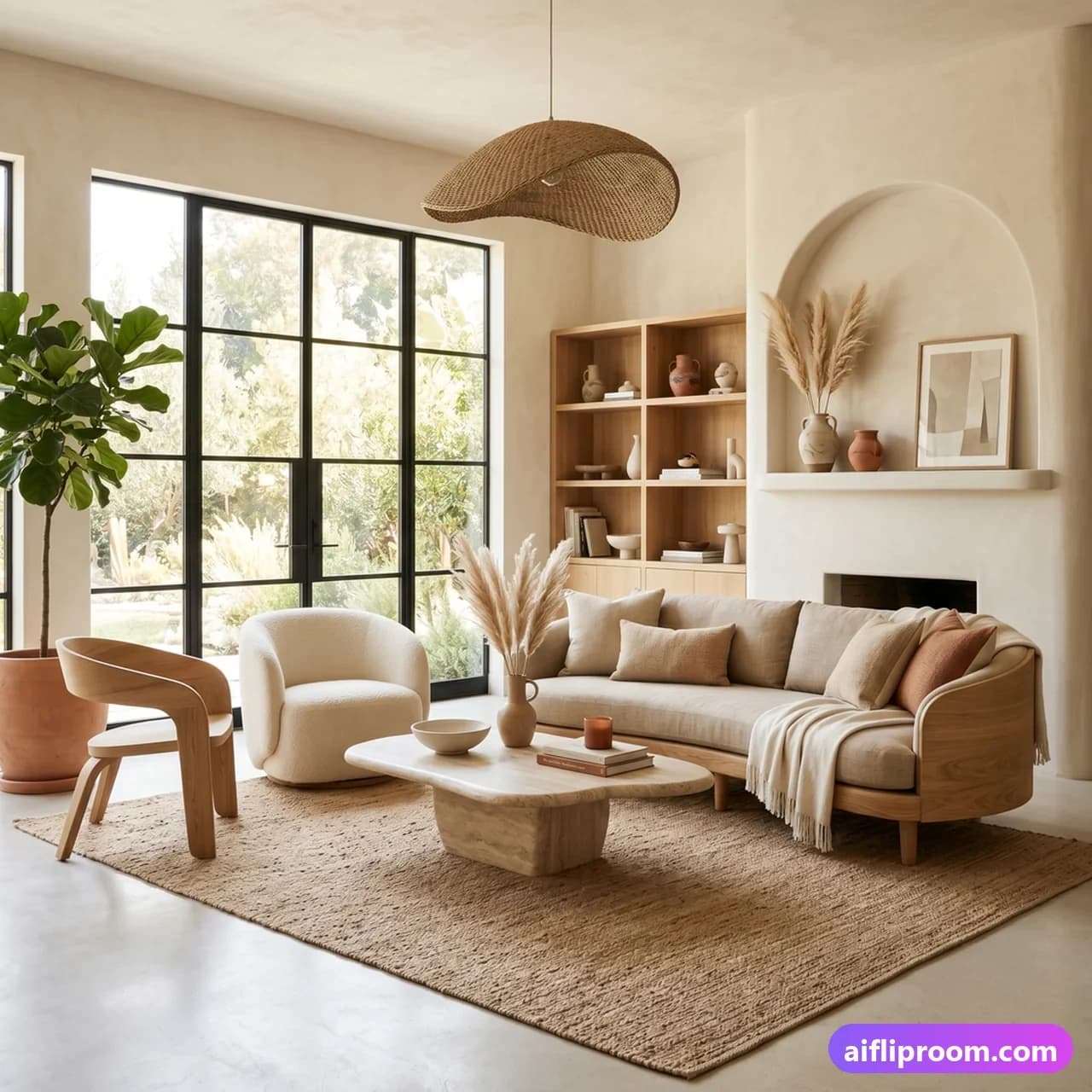
Minimalism with warmth — creamy walls, bouclé sofa, soft amber light.
Stage your room in Warm Minimalist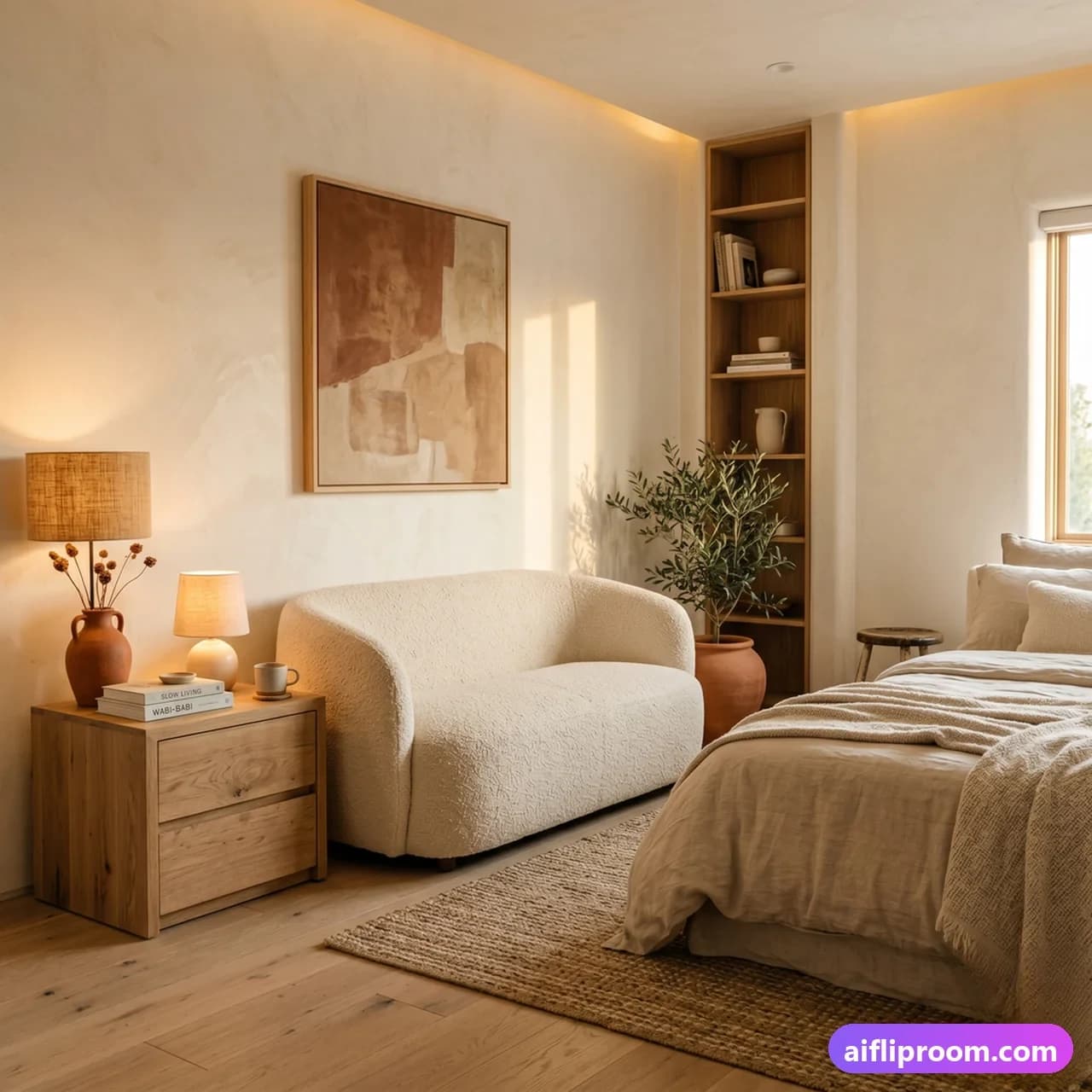
What is Warm Minimalist interior design?
Warm minimalism answers the most common criticism of minimalism — that it can feel cold — without giving up what makes it valuable. It keeps the restraint, the clear surfaces and the generous space, but swaps a stark white-and-grey palette for creamy, warm neutrals, and adds soft, tactile texture wherever the eye lands. Bouclé, linen and wool bring comfort; raw oak and natural wood add warmth; lighting is soft and golden rather than bright and even. The discipline is still there — few objects, nothing superfluous — but the room reads as inviting rather than empty. This balance is exactly what makes it useful for staging: warm minimalist rooms photograph as calm, spacious and well cared for, but also as somewhere a buyer would actually want to spend an evening, which an austere minimalism can fail to do.
Where Warm Minimalist comes from
Warm minimalism exists because classic minimalism kept losing arguments with the people who had to live in it. The discipline was admired and the rooms were uncomfortable — hard surfaces, cool white, nothing to touch. The correction, which settled into its own recognisable style through the late 2010s and 2020s, keeps the restraint about quantity and abandons the coldness entirely: the same few pieces, the same empty surfaces, but in cream and oat rather than white and grey, with wool, linen and timber doing the work that colour and pattern do elsewhere. It is minimalism as a way of living rather than as a photograph, and it is now the more common of the two by a wide margin.
Key elements of Warm Minimalist
- A creamy, warm neutral palette
- Soft tactile textures — bouclé, linen, wool
- Raw oak and natural wood
- Restrained, uncluttered surfaces
- Soft, golden lighting
- A few warm, organic accents
When to use Warm Minimalist
Bedrooms and living rooms. Gives the spacious calm of minimalism without feeling stark, so rooms photograph as inviting rather than empty.
Warm Minimalist colours and materials
Cream, bone, oat, sand and mushroom, with a warm mid-brown or soft black for grounding. No cool greys and no true whites — the difference between this and ordinary minimalism is visible in a single paint choice. Materials are where the interest lives: boucle, wool, brushed cotton, heavy linen, oiled oak, rattan, plaster, unglazed ceramic and travertine. Finishes are matt throughout. If a room feels correct but a little empty, the answer is another texture rather than another object, and that instinct is the whole style in one sentence.
Warm Minimalist room by room
Living room in Warm Minimalist
One generous sofa in a cream or oat textured weave, a timber or stone coffee table, one chair, one large rug in wool or a soft jute. Keep the walls in a warm off-white or limewash and hang a single large artwork or nothing at all. Storage closed and low. The room's warmth comes from three or four different textures rather than from colour: a boucle cushion against a linen throw against an oak surface against a wool rug. Lighting at low level, warm, and never a single ceiling source.
Bedroom in Warm Minimalist
The style's best room. A low upholstered bed, layered bedding all in the same cream-to-oat family but in different weaves — washed linen, brushed cotton, a chunky knit throw. Simple timber nightstands, one lamp each side with a linen or ceramic shade. Full-length curtains in heavy linen close to the wall colour. Almost nothing on the surfaces. The result is a room that photographs as serene and feels like somewhere you want to stay.
Kitchen in Warm Minimalist
Handle-less or lightly reeded fronts in cream or pale oak, a honed stone worktop, and everything small put away behind doors. One open shelf or a niche holding three or four ceramic pieces. Warm metal hardware in brass or bronze. The discipline is the same as in cold minimalism — the counters have to stay clear — but the palette means the room reads as calm rather than as clinical when they are.
Bathroom in Warm Minimalist
Microcement or large-format matt tile in a sand or bone tone, a timber vanity, a stone basin, and aged brass fittings. Linen towels, a wooden stool, one plant, a niche instead of shelving. Warm lighting at face height. This is the room where the difference between warm and cold minimalism is most obvious: the same layout in white tile and chrome reads as a clinic, and in bone and brass reads as a retreat.
Home office in Warm Minimalist
A plain oak desk, one comfortable chair, closed storage, and cables managed out of sight. Add a wool rug and a linen curtain so the room is not acoustically hard, which is the thing most minimal offices get wrong. One plant, one ceramic, one framed piece. The room should be quiet enough to concentrate in and warm enough to want to sit in for four hours.
Warm Minimalist mistakes to avoid
- Using a cool white. This is the whole difference between the style and ordinary minimalism, and getting it wrong undoes everything else in the room.
- One texture repeated. Cream linen on cream linen on cream linen is flat. The layers need to differ in weave and weight, not only in shade.
- Leaving the acoustics hard. Bare floors, bare walls and no soft furnishing produce an echo. Rugs and curtains are functional here, not decorative.
- Buying more objects to fix a room that feels empty. The answer is almost always more texture or better lighting.
- Cool overhead lighting. Warm bulbs at low level; a bright white ceiling fixture flattens the palette immediately.
Warm Minimalist questions, answered
What is warm minimalism?
Minimalism's restraint — few objects, clear surfaces, no ornament — rebuilt on a warm palette and layered natural textures. Cream and oat instead of white and grey, wool and boucle and oiled timber instead of hard uniform surfaces. The quantity discipline is identical; the temperature is the opposite.
What is the difference between warm minimalism and Japandi?
They are close relatives. Japandi has a stronger Japanese influence — lower furniture, more deliberate negative space, darker contrast notes such as charred timber or ink. Warm minimalism is softer and more upholstered, with a narrower cream-to-oat palette and less emphasis on contrast.
How do I make minimalism feel less cold?
Four changes cover most of it. Repaint in a warm off-white rather than a cool one. Add a wool or jute rug large enough to sit under the furniture. Replace the ceiling light with two or three warm lamps at low level. Then add texture — boucle, linen, sheepskin — without adding objects. None of that compromises the restraint.
What colours count as warm minimalist?
Cream, bone, oat, sand and mushroom as the base, with a warm mid-brown, olive or soft black to ground the scheme. The test is simple: hold the colour against a pure white and it should look distinctly warmer, not merely darker.
Is warm minimalism good for staging a property?
It is close to ideal. It is uncluttered enough to make rooms read as spacious, warm enough to look inviting in photographs, and neutral enough that almost no buyer objects. It works in nearly every property type, which is not true of most styles on this list.
Guides to read next
Longer reads on getting a room photographed and restaged well.
- See Your Own Room in a New Style Before You Buy AnythingPreview your actual room in a new style before buying furniture or hiring anyone: what a preview settles, what it can't, and five steps to a useful one.
- How to Photograph Rooms for Virtual Staging: 7 RulesDaylight, lamps off, a level phone at chest height, the 1x lens not 0.5x, one room per frame, clear surfaces — seven habits that make AI staging look real.
- What Is Virtual Staging? The Complete Guide: How It Works, Cost, Rules, ExamplesVirtual staging explained in plain language: how AI furnishes a photo of a real room, what it costs, what agents think of it (NAR 2025), who it helps, the rules and how to spot bad staging.
See your room in Warm Minimalist
Upload a photo and our AI restages it in the Warm Minimalist look in 15–60 seconds, depending on how much detail your room has — keeping your walls, windows and layout intact.
Try Warm Minimalist on your room