Organic Modern Interior Design
Natural materials, soft sculptural forms, neutral palette, airy light.
Stage your room in Organic Modern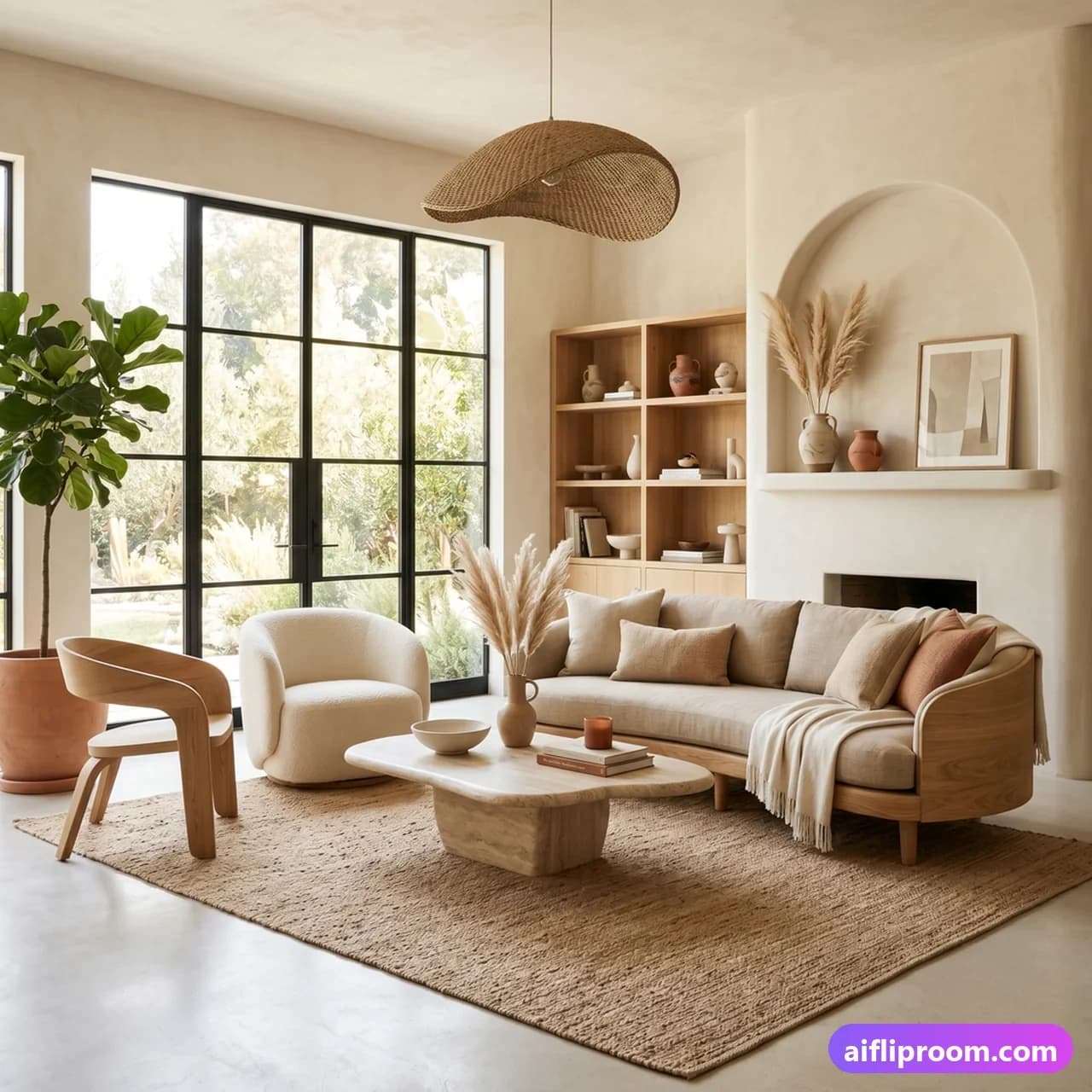
What is Organic Modern interior design?
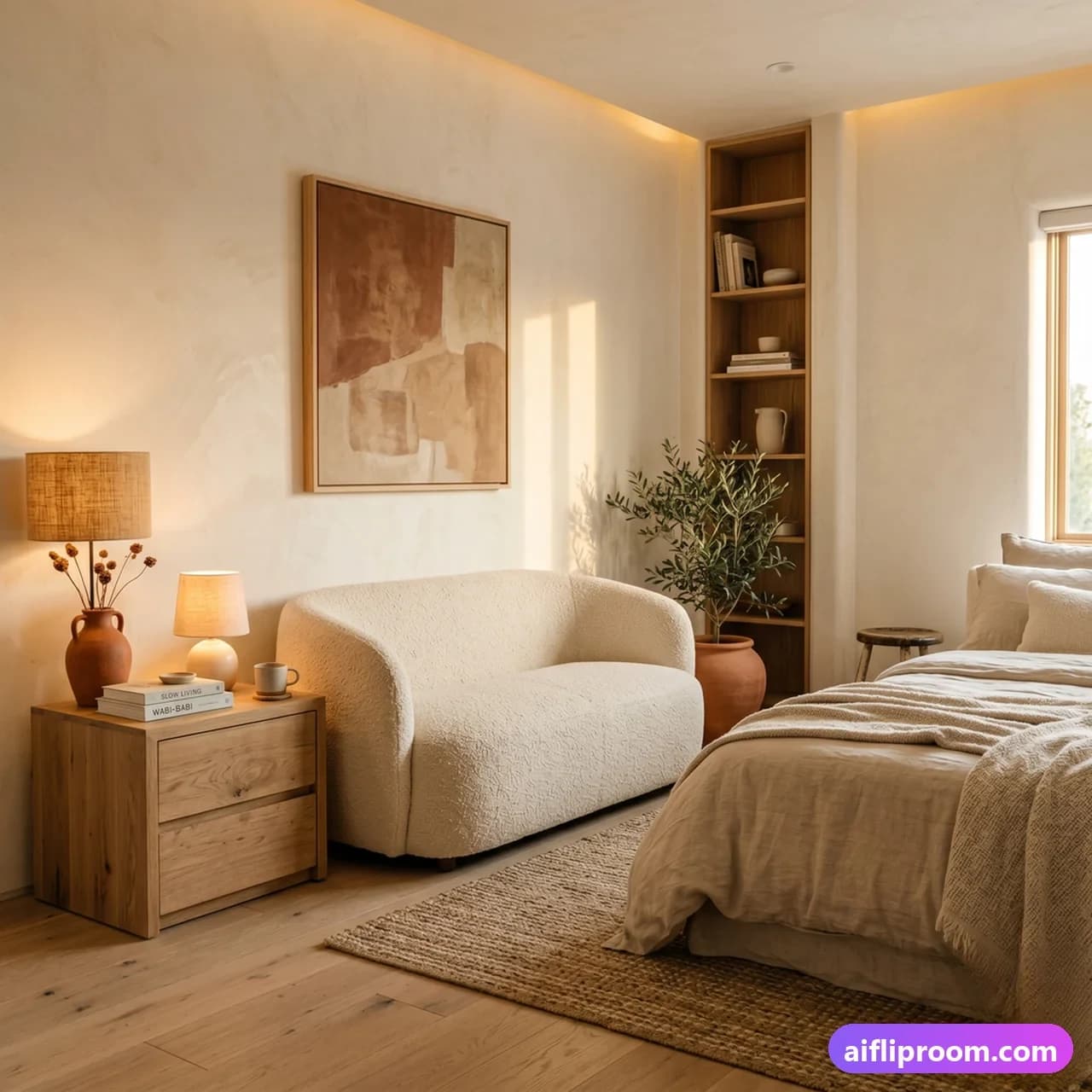
Organic modern is one of the most in-demand looks of the moment, and its appeal is easy to understand: it keeps the clean lines and calm of modern design but softens them with the curves and warmth of the natural world. Hard geometry gives way to rounded, sculptural furniture; the palette is a warm range of neutrals drawn from sand, stone and clay; and materials are honest and tactile — wood with visible grain, raw stone, linen, plaster, clay vessels. Natural light is welcomed in and treated as part of the design. Nothing shouts, but nothing feels cold either: the room is serene and uncluttered, yet inviting and high-end. In staging, organic modern is a strong choice for design-aware buyers — it photographs beautifully, feels current without being trendy, and reads as both restful and quietly expensive.
Where Organic Modern comes from
Organic modern is the current answer to a complaint about modern design: that it can be correct and cold. It keeps modernism's clean lines and lack of ornament, then softens every edge — curved sofa arms, arched openings, rounded mirrors, kidney-shaped tables — and swaps the cool grey palette for warm neutrals and raw natural material. The lineage runs back through mid-century designers who worked in organic forms rather than rectangles, and through architects who insisted a building should sit in its landscape rather than on it. What made it dominant in the 2020s is that it photographs beautifully and feels calm without being austere, which is a combination very few styles manage.
Key elements of Organic Modern
- Curved, sculptural furniture
- Natural materials — wood, stone, linen, clay
- A warm neutral palette
- Soft, organic shapes
- Abundant natural light
- A calm, uncluttered but inviting layout
When to use Organic Modern
Living rooms and bedrooms. An of-the-moment look that feels both serene and high-end, appealing to design-aware buyers.
Organic Modern colours and materials
Warm, sandy and low-contrast. Bone, oat, mushroom, greige, clay and putty carry the room, grounded by chocolate, olive or charcoal in one or two places. Nothing cool, nothing stark. The materials are the identity: limewash or plaster walls, travertine, unfilled stone, oak and walnut with visible grain, boucle, heavy linen, rattan, jute and unglazed ceramic. Metals are matt and warm — aged brass, bronze, blackened steel. Every surface should look as though it came out of the ground or off a loom, and the few that do not should be quiet enough not to argue.
Organic Modern room by room
Living room in Organic Modern
A curved or rounded sofa in boucle or a heavy neutral weave, a travertine or solid timber coffee table with softened edges, and one sculptural chair. Layer a low-pile wool or jute rug large enough that all the furniture sits on it. Keep walls in limewash or a warm plaster finish and hang one large abstract piece rather than several small ones. Lighting should be sculptural — a paper or plaster pendant, an arced floor lamp. One large plant, two or three ceramic objects, and nothing else on the surfaces.
Bedroom in Organic Modern
An upholstered bed with a curved or channelled headboard in a warm neutral, layered linen bedding in oat and bone, and a boucle or sheepskin bench at the foot. Nightstands in oak or travertine, ideally rounded, with plaster or ceramic table lamps. An arched or organically shaped mirror. Curtains in heavy linen, floor to ceiling, in a shade close to the wall colour so the window reads as part of the architecture.
Kitchen in Organic Modern
Flat or lightly reeded fronts in oak or a warm off-white, stone worktops in travertine or a soft-veined quartzite with a honed finish, and the same stone continued up as the splashback. Aged brass or bronze hardware. Rounded island edges rather than sharp ones, timber or boucle stools, and one shelf or niche allowed to hold ceramics. Keep appliances integrated so the room reads as furniture rather than as fittings.
Bathroom in Organic Modern
Microcement or plaster on the walls, a stone or ceramic basin with a rounded profile, and a timber vanity. Arched mirror, warm metal fittings, a niche instead of shelves, and a linen curtain or timber blind. This is where the style's arches and curves are cheapest to introduce, since a mirror and a shower opening can carry the shape without any structural work.
Open-plan space in Organic Modern
Use an arched opening or a curved wall return to break a long rectangular space without dividing it. Keep the floor material continuous, the palette identical across zones, and let a large rug define the living area. Rounded furniture is what stops an open plan reading as a corridor of boxes, so put the curves where the eye lands first.
Organic Modern mistakes to avoid
- Curves on everything. Round mirror, round table, round rug, curved sofa and arched doorway in one room becomes cartoonish. Two or three curved elements against straight ones is the balance.
- Beige with no anchor. An all-neutral scheme goes flat without one deep tone — chocolate, olive or charcoal — somewhere in the room.
- Flat matt paint instead of limewash. The variation across a plaster or limewash surface is doing a lot of the work; uniform emulsion loses it.
- Fake travertine and printed stone. At close range they read as what they are. A smaller piece of real stone beats a large piece of imitation.
- Forgetting the plants. The style is called organic; a room with no living thing in it is only half of it.
Organic Modern questions, answered
What is organic modern design?
Modern design's clean lines and lack of ornament, softened with curved and rounded forms and rebuilt on a warm natural palette. The defining materials are plaster or limewash walls, travertine and unfilled stone, oak and walnut, boucle and heavy linen, in colours that run from bone through oat and mushroom to clay.
What is the difference between organic modern and Japandi?
They overlap on warmth, natural material and restraint. Japandi is more disciplined and more angular, with lower furniture and a Japanese sense of negative space. Organic modern is curvier, softer and more sculptural, and it is comfortable with larger, more upholstered pieces. Japandi feels edited; organic modern feels enveloping.
Is organic modern a passing trend?
The specific combination — arches, boucle, travertine, limewash — is very much of the 2020s and will date as a package. The underlying instincts, warm neutrals and natural material, are durable. The sensible approach is to put the trend into things that are easy to change and keep the permanent surfaces quiet.
What colours work in an organic modern room?
Bone, oat, mushroom, greige, clay and putty as the base, with one grounding dark such as chocolate, olive or charcoal. Warmth is essential — cool greys and stark whites belong to the previous generation of modern design and fight this one.
Is organic modern good for staging a property?
It is currently one of the strongest choices. It reads as current and expensive, it is warm enough not to feel cold in photographs, and it is broadly liked across buyer types. It suits new builds, renovated homes and apartments particularly well.
Guides to read next
Longer reads on getting a room photographed and restaged well.
- See Your Own Room in a New Style Before You Buy AnythingPreview your actual room in a new style before buying furniture or hiring anyone: what a preview settles, what it can't, and five steps to a useful one.
- How to Photograph Rooms for Virtual Staging: 7 RulesDaylight, lamps off, a level phone at chest height, the 1x lens not 0.5x, one room per frame, clear surfaces — seven habits that make AI staging look real.
- What Is Virtual Staging? The Complete Guide: How It Works, Cost, Rules, ExamplesVirtual staging explained in plain language: how AI furnishes a photo of a real room, what it costs, what agents think of it (NAR 2025), who it helps, the rules and how to spot bad staging.
See your room in Organic Modern
Upload a photo and our AI restages it in the Organic Modern look in 15–60 seconds, depending on how much detail your room has — keeping your walls, windows and layout intact.
Try Organic Modern on your room