Biophilic Interior Design
Nature inside — living walls, natural light, calm wellness retreat.
Stage your room in Biophilic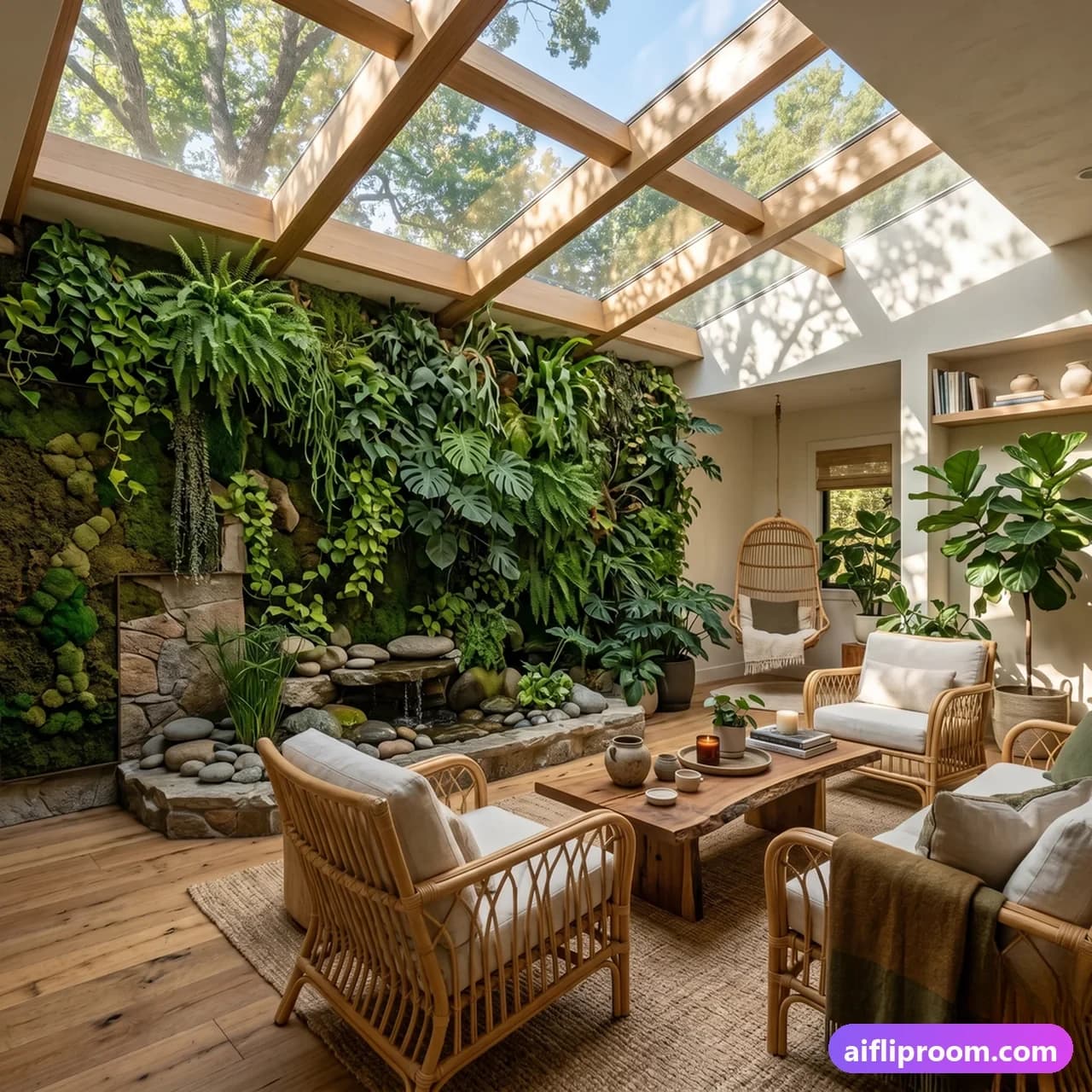
What is Biophilic interior design?
Biophilic design starts from a simple observation: people feel better in spaces connected to nature. So it builds a room around that connection rather than treating plants as an afterthought. Greenery is abundant and architectural — not one pot on a shelf but planting that becomes part of the room. Natural light is maximised, and views to the outside are framed and valued. Materials are natural and tactile — wood, stone, jute, clay — and the palette is drawn from the landscape. Where possible the design nods to natural airflow, water and organic form. The result is a space that feels calm, healthy and restorative. In staging, biophilic design speaks directly to the fast-growing group of wellness-minded buyers, and it is especially powerful in rooms that already have good light or a garden view to build on.
Where Biophilic comes from
The term comes from biophilia, the proposition that humans have an inherited affinity for the living world, popularised by the biologist E. O. Wilson in the 1980s. Designers took it up as a practical brief rather than a philosophy: if people respond well to daylight, greenery, natural material and views out, then buildings should supply those things deliberately instead of by accident. It arrived first in offices and hospitals, where the argument had to be made in terms of measurable outcomes, and moved into homes later. That origin is why biophilic design is more systematic than simply owning plants — it is about light, air, material, view and pattern as much as about what is in the pots.
Key elements of Biophilic
- Abundant, architectural greenery
- Generous natural light
- Natural materials — wood, stone, jute, clay
- A nature-drawn colour palette
- Framed views to the outdoors
- A calm, healthy, restorative atmosphere
When to use Biophilic
Living rooms, home offices and bedrooms. Appeals strongly to wellness-minded buyers and lifts rooms with good light or garden views.
Biophilic colours and materials
Taken from landscape rather than from a chart. Greens across the full range from sage to deep forest, browns and clay, sand and stone grey, with sky and water blues as secondary notes. The base is usually a warm off-white so the greenery reads clearly. Materials matter as much as colour: unfinished or lightly oiled timber, stone, clay, cork, rattan, jute, wool, linen. Where pattern appears it references natural form — leaf, grain, ripple, branching — rather than geometry. Anything plastic-looking, high-gloss or aggressively synthetic works against the premise, because the style depends on surfaces that read as grown or quarried.
Biophilic room by room
Living room in Biophilic
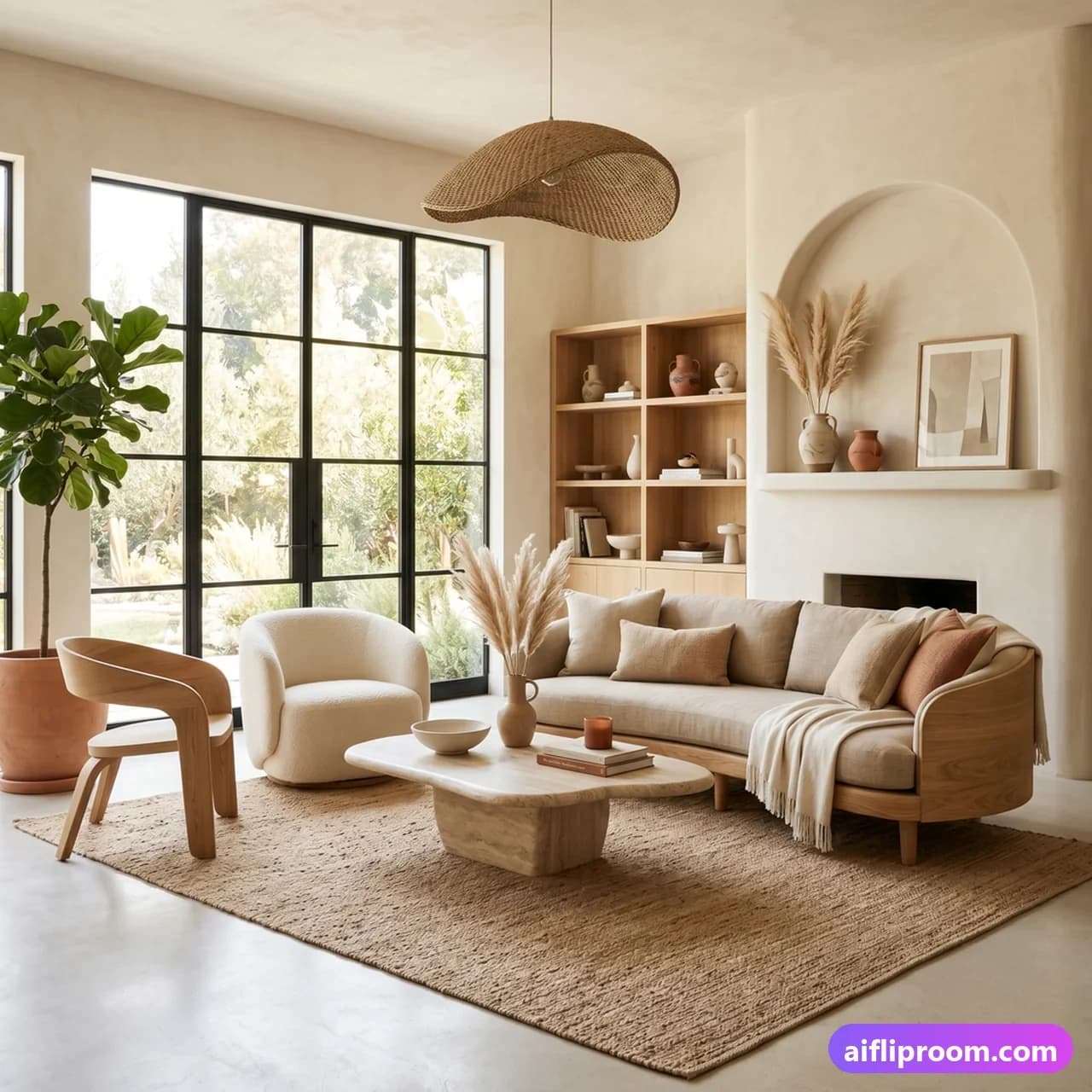
Start with the light: strip back heavy window treatments, move furniture away from the window, and let the room's brightest corner be usable. Plants go in at three scales — one tall specimen in a floor basket, a mid-height cluster on a low surface, something trailing from a shelf. Furniture in timber, rattan or linen, a wool or jute rug, and a stone or wooden coffee table. If there is a view of anything green outside, arrange the seating so people can see it; a real view outperforms any amount of indoor planting.
Bedroom in Biophilic
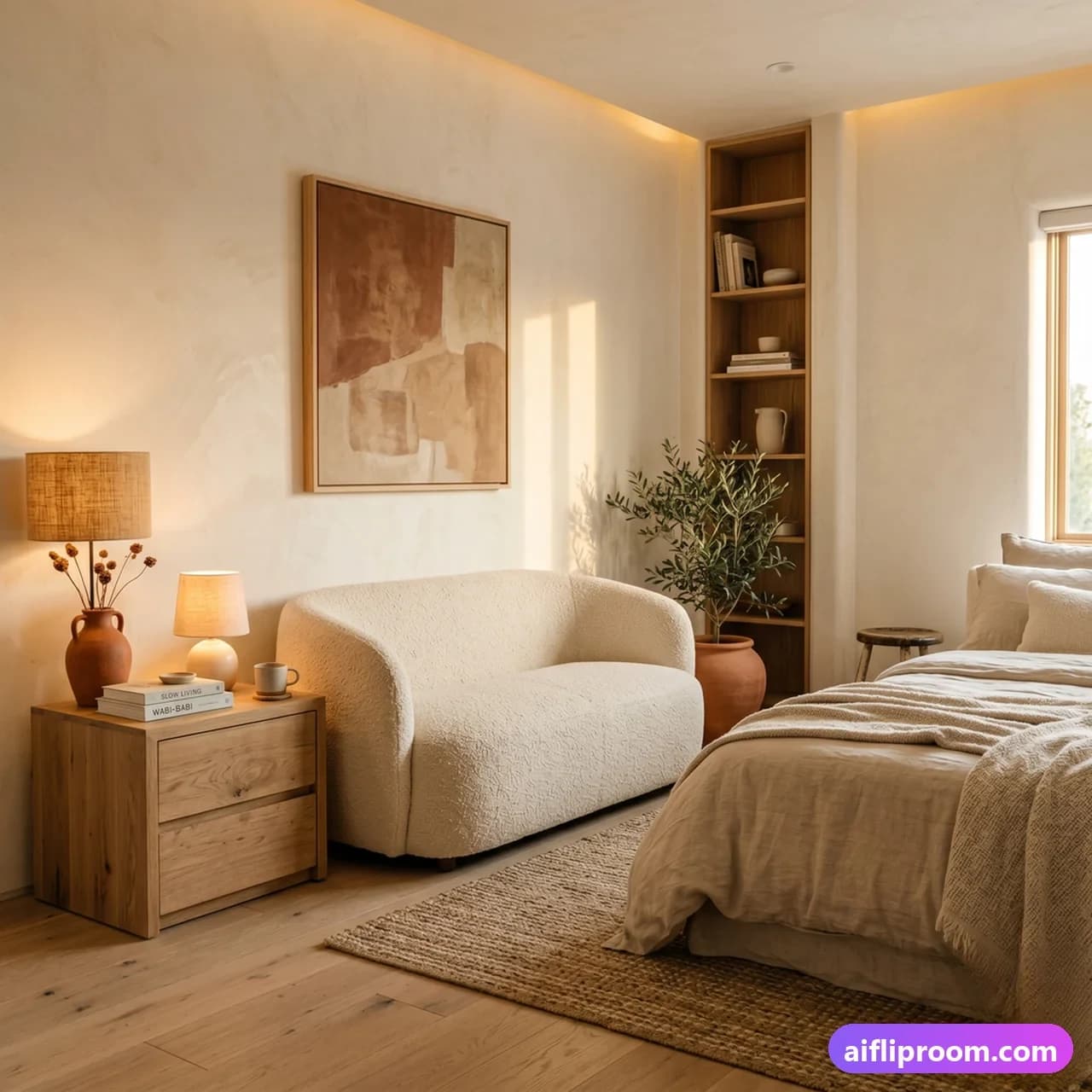
Air quality and calm are the brief. A timber bed, linen bedding in an earth tone, a wool rug, and two or three plants that tolerate lower light — snake plant, pothos, ZZ. Keep synthetic materials out of the soft furnishings where budget allows, because they are the ones you sleep against. Curtains in an unlined natural fabric that filters light rather than blocking it, and a window that actually opens easily, which sounds obvious and is frequently the reason a bedroom feels stale.
Kitchen in Biophilic
Timber or stone worktops, open shelving in wood, and herbs growing where they will actually be used — a windowsill, a rail by the hob. Natural clay and ceramic storage rather than plastic. If the kitchen has a window over the sink, keep the sill clear enough for two or three pots. The kitchen is the easiest room to make genuinely biophilic rather than decoratively so, because the plants in it have a job.
Bathroom in Biophilic
Humidity makes bathrooms the best growing environment in the house, and most people waste it. Ferns, calathea, orchids and pothos thrive there. Pair them with stone or timber surfaces, a wooden duckboard or stool, natural fibre baskets and cotton towels. Where there is a window, frost the lower half rather than covering it, so the daylight stays.
Home office in Biophilic
The room where the evidence for biophilic design is strongest and where it is most often ignored. Put the desk near the window and facing into the room or toward the view rather than at a blank wall. Add one large plant within sight, a timber desk surface, and a natural-fibre rug. Even a small amount of greenery in the field of view changes how long a room is comfortable to work in.
Biophilic mistakes to avoid
- Buying plants that cannot survive the room. A dead fiddle-leaf fig is worse than no plant. Match the species to the actual light before buying — most failures are a light problem, not a watering one.
- Treating it as decoration only. Plants scattered through a room with heavy curtains, synthetic surfaces and no daylight is not biophilic design; it is a room with plants in it.
- Using fake plants. They deliver none of the air, humidity or attention benefit, and at close range everyone can tell.
- Lining plants up. Natural arrangement is clustered and uneven — odd numbers, varied heights, grouped rather than spaced.
- Ignoring the view. Where a window looks onto anything green, that view is the most valuable biophilic asset in the room and should not be blocked by furniture or a blind that is never opened.
Biophilic questions, answered
What is biophilic design?
An approach that deliberately brings natural elements into a building: daylight, greenery, natural materials, views out, natural airflow, and patterns drawn from natural form. It began in workplace and healthcare design and moved into homes. The distinguishing feature is that it treats light, air and view as design elements alongside the plants.
How many plants do I need for a biophilic room?
Fewer and larger beats many and small. One substantial floor specimen, one mid-height group of two or three, and one trailing plant is enough for an average room. What matters more than the count is that they are healthy, that they suit the light, and that at least one is in your normal field of view when sitting.
What plants work in a room with low light?
Snake plant, ZZ plant, pothos, cast iron plant, philodendron and peace lily all tolerate low light. In a genuinely dark room, rotating two plants between the dark room and a brighter one every few weeks keeps both alive. Ferns and calathea need humidity and do best in bathrooms.
Is biophilic design the same as bringing the outside in?
It overlaps but is broader. Bringing the outside in usually means plants and natural materials. Biophilic design adds daylight quality, ventilation, views, acoustic softening and natural-form pattern, and treats them as part of the same system. In practice a biophilic room is often one where the window has been dealt with as carefully as the furniture.
Does biophilic styling help sell a property?
It photographs well and makes rooms feel cared for and healthy, which is a strong signal in listing images. Greenery also adds colour to otherwise neutral rooms without committing to a decorating style. The practical caution is scale — a jungle can read as high-maintenance to a buyer, so a few well-placed plants outperform a full display.
Guides to read next
Longer reads on getting a room photographed and restaged well.
- See Your Own Room in a New Style Before You Buy AnythingPreview your actual room in a new style before buying furniture or hiring anyone: what a preview settles, what it can't, and five steps to a useful one.
- How to Photograph Rooms for Virtual Staging: 7 RulesDaylight, lamps off, a level phone at chest height, the 1x lens not 0.5x, one room per frame, clear surfaces — seven habits that make AI staging look real.
- What Is Virtual Staging? The Complete Guide: How It Works, Cost, Rules, ExamplesVirtual staging explained in plain language: how AI furnishes a photo of a real room, what it costs, what agents think of it (NAR 2025), who it helps, the rules and how to spot bad staging.
See your room in Biophilic
Upload a photo and our AI restages it in the Biophilic look in 15–60 seconds, depending on how much detail your room has — keeping your walls, windows and layout intact.
Try Biophilic on your room