Hygge Interior Design
Danish coziness — chunky knits, candles, low warm light, snowy comfort.
Stage your room in Hygge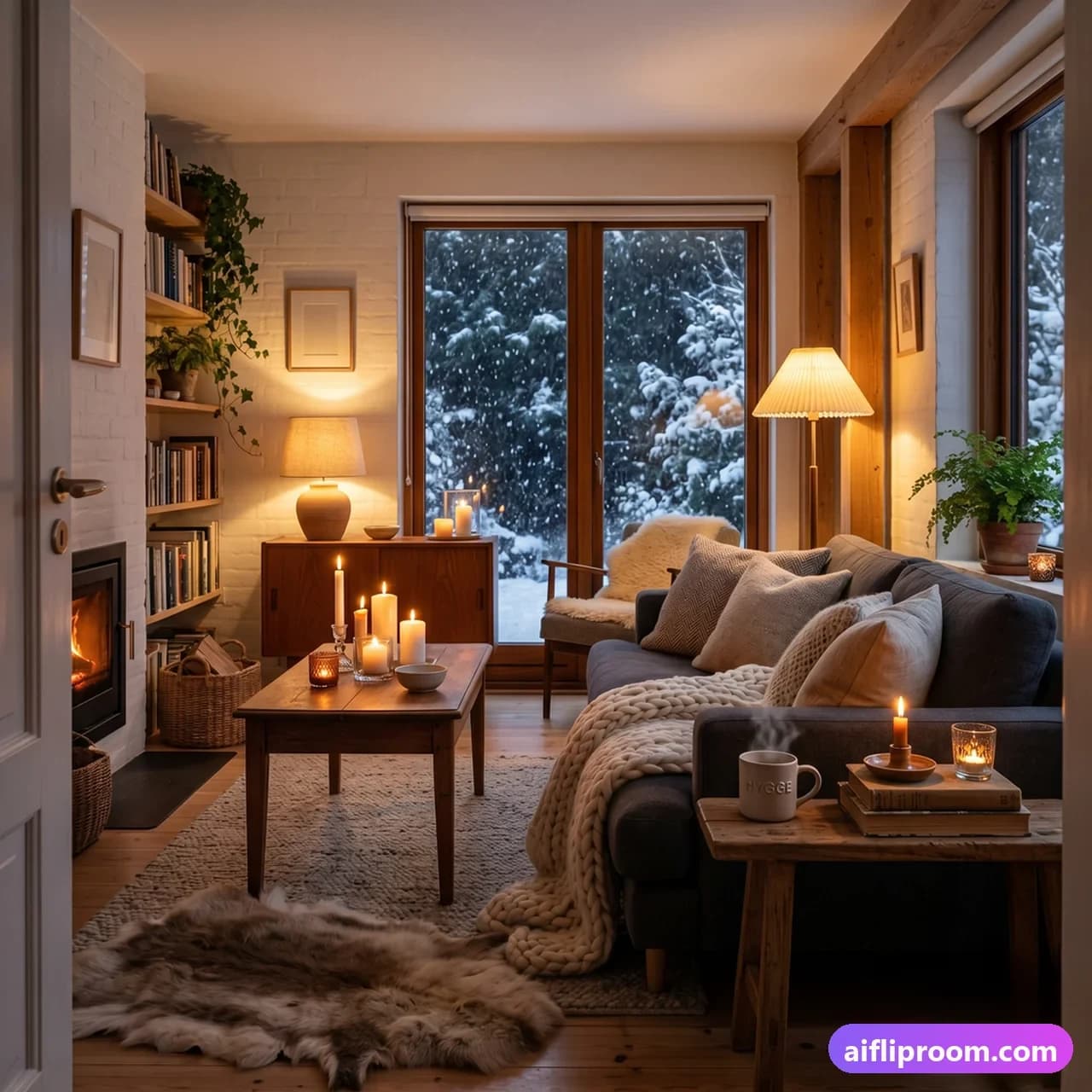
What is Hygge interior design?
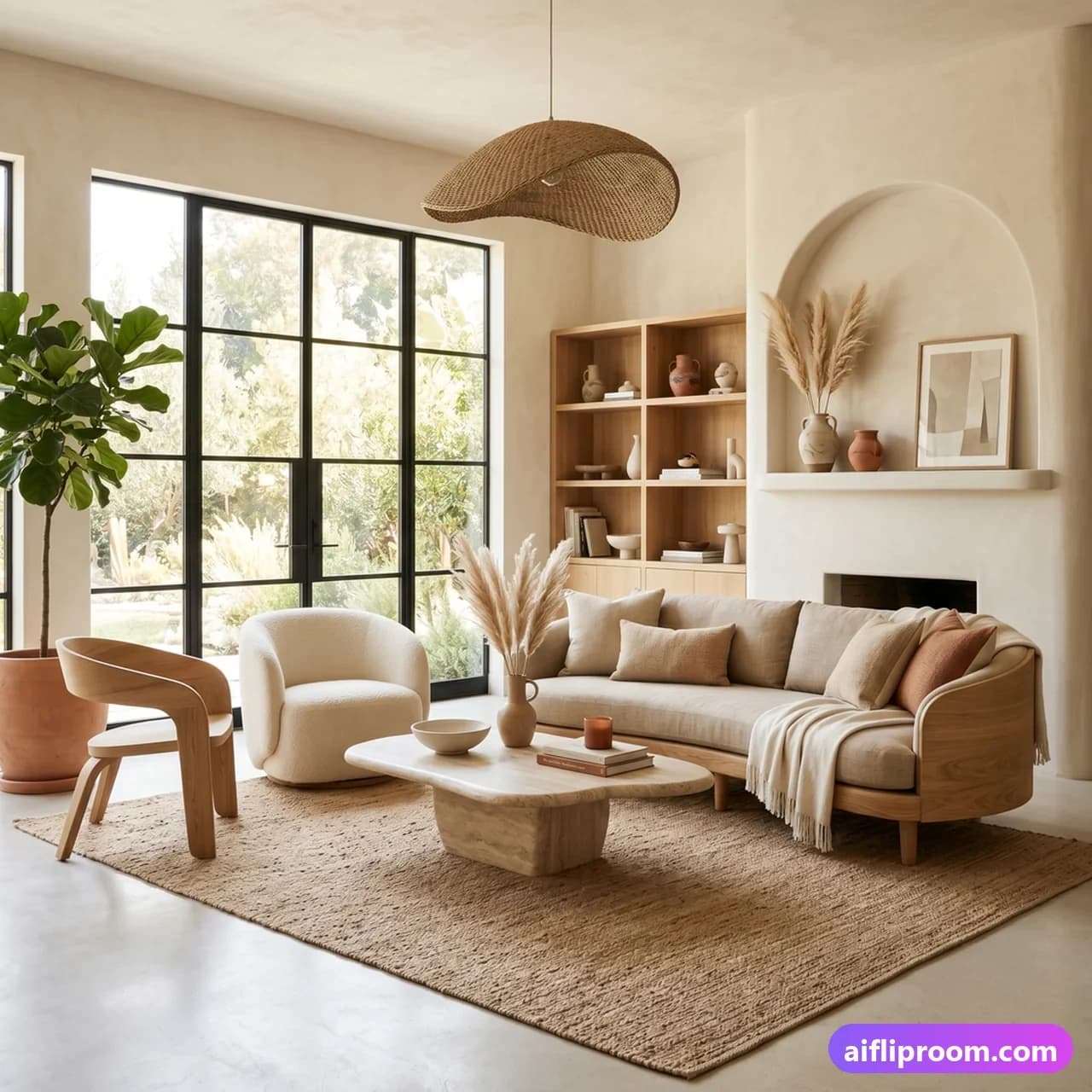
Hygge is a Danish word for a feeling — the cosy contentment of being warm, comfortable and at ease — and as an interior style it is the pursuit of exactly that feeling in a room. Everything is chosen for comfort. Soft textiles are layered generously: chunky knits, wool throws, sheepskins, deep cushions. Lighting is low and warm, with lamps and candles rather than bright overhead light. The palette stays calm and neutral so nothing disrupts the mood, and natural wood adds warmth. Seating is soft and inviting, and the scale feels intimate rather than grand. The result is a room that simply feels good to be in. In staging, hygge is quietly powerful: it makes rooms photograph as warm and welcoming, and that emotional pull helps a buyer imagine feeling at home from the first moment.
Where Hygge comes from
Hygge is a Danish word for a feeling rather than a look — roughly, the contentment of being warm, unhurried and in good company. It became an international interiors term around 2016, which annoyed a lot of Danes, because in Denmark it describes an evening with friends as readily as it describes a room. The interiors that carry the name are the ones built to produce that feeling through a long, dark winter: low warm light instead of overhead glare, textiles you want to be under, a fire or candles as a focal point, and furniture arranged so people face each other. Every characteristic follows from the goal. If a room looks correct in photographs and is not somewhere you would happily spend four hours, it has the style and not the point of it.
Key elements of Hygge
- Layered soft textiles — knits, wool, sheepskin
- Warm, low lighting and candles
- A calm, neutral palette
- Comfortable, inviting seating
- Natural wood for warmth
- An intimate, snug, restful atmosphere
When to use Hygge
Living rooms and bedrooms. Makes rooms photograph as warm and welcoming, helping buyers feel at home immediately.
Hygge colours and materials
Warm and soft, with no hard edges in the colour. Cream, oatmeal, warm white, dove grey and pale wood as the base, with muted accents in dusty rose, sage, soft blue or clay. Nothing saturated, nothing cold. Materials are the whole argument: chunky wool, sheepskin, mohair, brushed cotton, linen, unglazed ceramic and light timber. Metals stay warm and matt — brass, copper, blackened iron. Candles are effectively a material in this style, and the single most consequential decision is the colour temperature of the bulbs: 2700K or lower, everywhere, with no exceptions.
Hygge room by room
Living room in Hygge
Arrange the seating to face itself rather than a screen — hygge is social before it is decorative. A deep sofa in a soft, touchable fabric, an armchair angled toward it, and a low table between them within reach of everyone. Layer heavily: a wool throw over one arm, a sheepskin on a chair, cushions in three related textures, a thick rug. Light the room with four or five small warm sources at different heights and no ceiling light at all. If there is a fireplace, the furniture should acknowledge it; if there is not, a cluster of candles does the same job.
Bedroom in Hygge
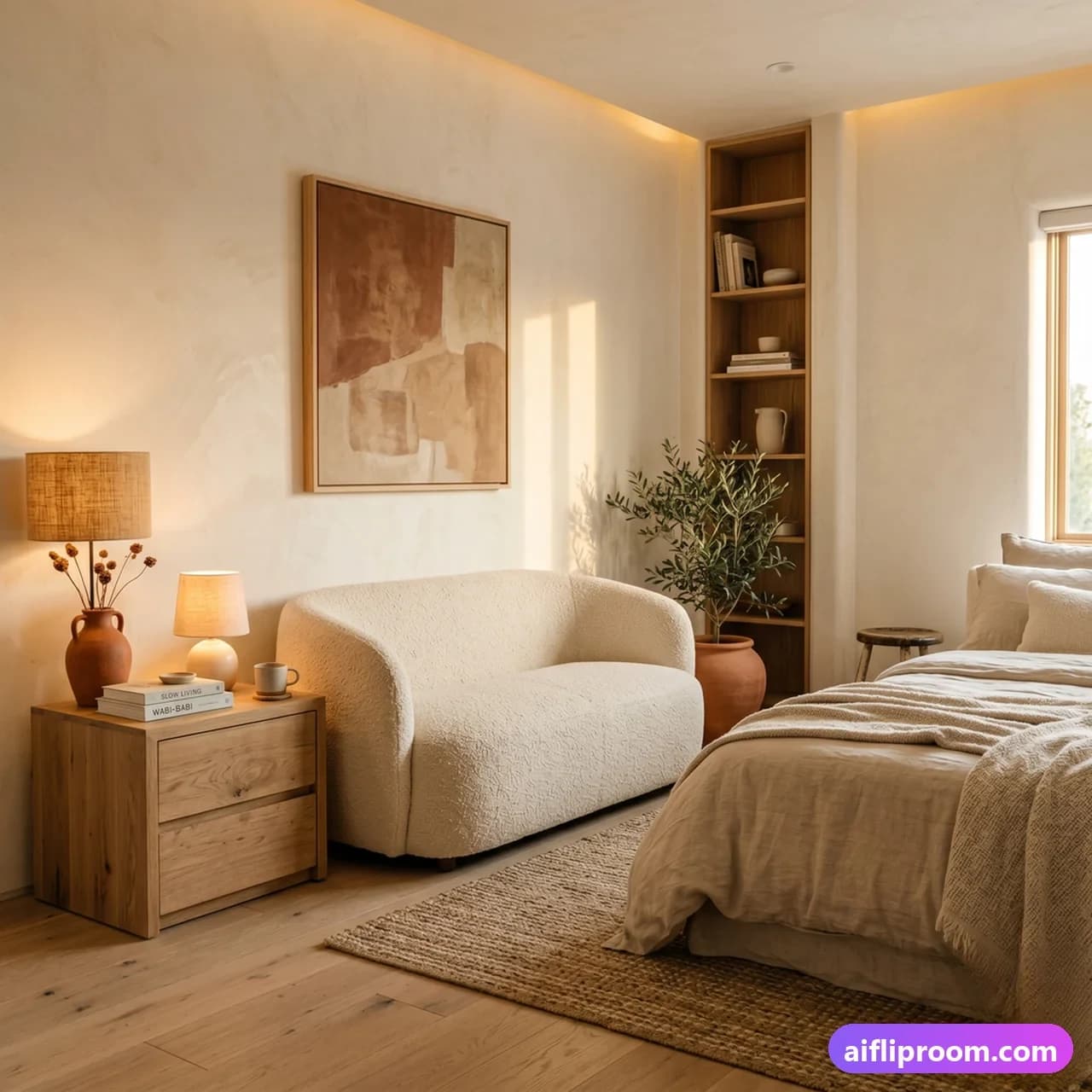
Layers in the bedding rather than a single duvet: a linen or brushed cotton base, a wool blanket, a knitted throw folded across the foot. Warm timber or upholstered frame, curtains heavy enough to hold the warmth in, and a rug beside the bed so the first step of the morning is soft. Reading lights on each side with warm bulbs, a candle on the nightstand, and books stacked where they are reachable. The test is whether the room makes you want to stay in it on a cold morning.
Kitchen in Hygge
Hygge kitchens are working kitchens that people gather in. Pale timber or soft-painted cabinets, open shelving with mismatched handmade ceramics, a wooden table with room for more people than live there. Warm pendant light over the table, low enough to feel enclosing. Leave the bread board, the teapot and the herbs out — the visible evidence of ordinary life is what separates this from Scandinavian minimalism, which it otherwise resembles closely.
Reading nook in Hygge
The style does small dedicated corners better than almost anything. A comfortable chair by a window, a footstool, a small table for a mug, a floor lamp with a warm shade, a blanket permanently draped over the back. A shelf of books within arm's reach. It needs almost no space and it is often the part of a home people end up using most.
Bathroom in Hygge
Warm rather than spa-clinical. Timber accents, matt tile in a soft tone, thick cotton towels, a wooden stool or bath tray, and candles. Warm lighting at face height instead of a cold central fixture, and a bath mat with actual pile. If the room has to be tiled throughout, wood and textile are what stop it feeling like a hospital.
Hygge mistakes to avoid
- Cool or bright bulbs. This is the one mistake that undoes everything else. A perfectly styled hygge room under 4000K light is not a hygge room.
- Treating it as a shopping list. Candles, a sheepskin and a knitted throw bought in one afternoon produce a photograph, not a feeling. The style accumulates.
- Confusing it with Scandinavian minimalism. Hygge tolerates more clutter, more layers and more evidence of use; a room too tidy to relax in has missed the idea.
- Arranging the furniture around a television. If nobody can comfortably face anybody else, the social half of the style is gone.
- Skipping the rug on a hard floor. Cold underfoot beats every other cosy decision you make in the room.
Hygge questions, answered
What is hygge, exactly?
A Danish word describing a feeling of warm, unhurried, companionable contentment. It is not primarily a design style — an evening with friends can be hyggeligt with no design involved. The interiors that carry the name are simply rooms arranged to make that feeling more likely: soft light, warm textiles, comfortable seating and a focal point people gather around.
What is the difference between hygge and Scandinavian style?
Scandinavian design is a visual style — pale, functional, well-made, quite disciplined. Hygge is the atmosphere that style is often trying to produce, and when the two separate you notice immediately. A minimal Nordic room that is beautiful but uninviting is Scandinavian and not hygge; a slightly cluttered room full of blankets and candlelight is hygge and only loosely Scandinavian.
How do I make a room feel hygge on a small budget?
Three cheap changes do most of the work. Replace every bulb with a warm one and turn off the ceiling light. Add a thick rug and two or three textured throws. Put a lamp at low level in the corner that is currently dark. Candles and a comfortable chair finish it. None of that requires new furniture.
What colours are used in hygge interiors?
Warm neutrals — cream, oatmeal, warm white, pale wood — with muted accents in dusty rose, sage, soft blue or clay. Nothing bright, nothing cold. The palette should feel like candlelight rather than daylight.
Does hygge work for staging a property?
It works well for smaller homes, apartments and anything being sold in autumn or winter, because it makes rooms photograph as inviting rather than as empty. The caution is that hygge tolerates a level of layering that can read as cluttered in a listing photo, so keep the surfaces clearer than you would for yourself.
Guides to read next
Longer reads on getting a room photographed and restaged well.
- See Your Own Room in a New Style Before You Buy AnythingPreview your actual room in a new style before buying furniture or hiring anyone: what a preview settles, what it can't, and five steps to a useful one.
- How to Photograph Rooms for Virtual Staging: 7 RulesDaylight, lamps off, a level phone at chest height, the 1x lens not 0.5x, one room per frame, clear surfaces — seven habits that make AI staging look real.
- What Is Virtual Staging? The Complete Guide: How It Works, Cost, Rules, ExamplesVirtual staging explained in plain language: how AI furnishes a photo of a real room, what it costs, what agents think of it (NAR 2025), who it helps, the rules and how to spot bad staging.
See your room in Hygge
Upload a photo and our AI restages it in the Hygge look in 15–60 seconds, depending on how much detail your room has — keeping your walls, windows and layout intact.
Try Hygge on your room