Cottagecore Interior Design
Romantic countryside — linen, wildflowers, vintage china, soft afternoon sun.
Stage your room in Cottagecore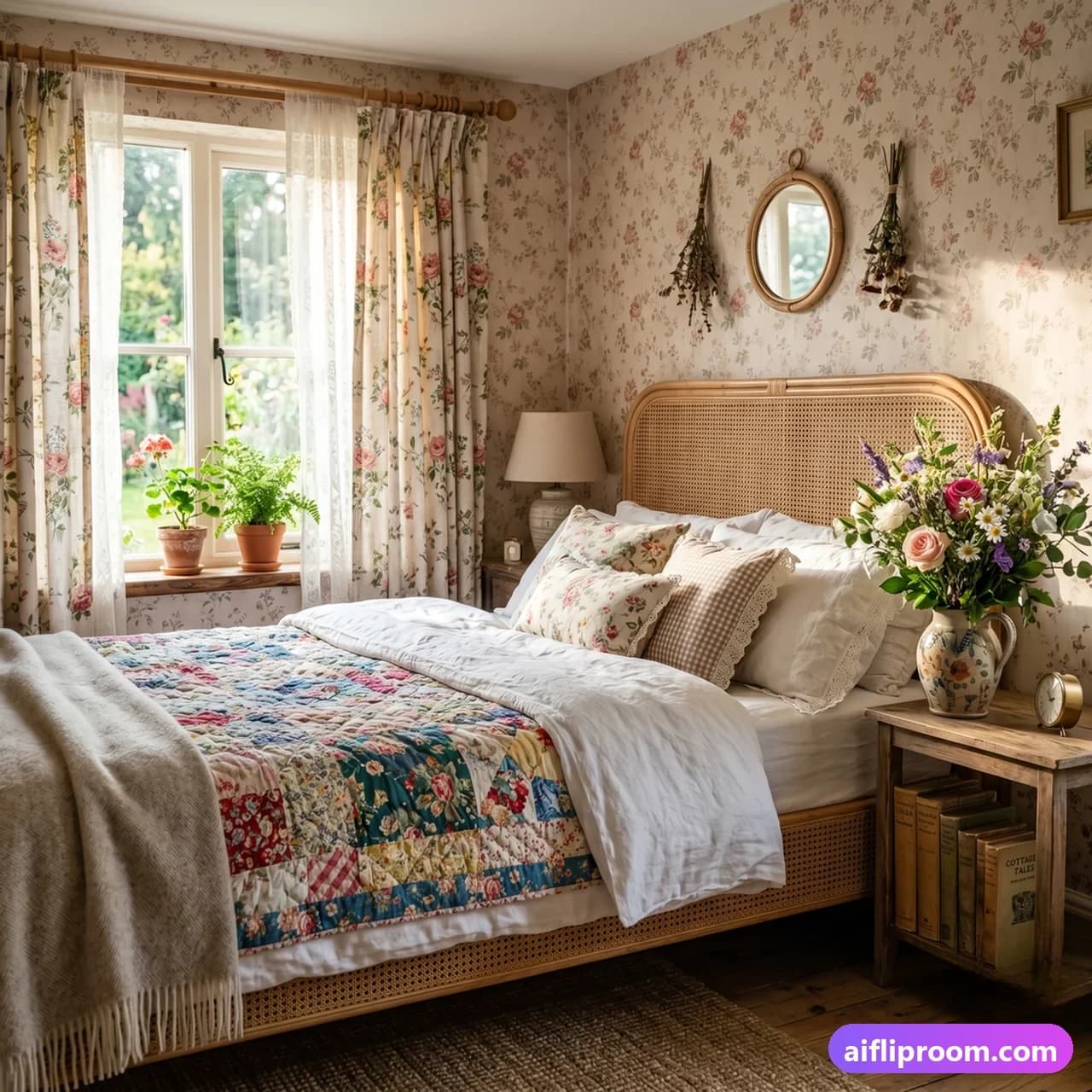
What is Cottagecore interior design?
Cottagecore is a romantic, nostalgic vision of simple countryside living, and as an interior style it is all about softness and comfort. Floral patterns and prints appear on wallpaper, bedding and upholstery; natural linen and cotton keep everything light and unfussy; and furniture is vintage, handmade or gently worn rather than slick. The palette is soft and warm — faded pastels, cream, sage — and fresh or dried flowers are part of the look, not decoration added on top. Rooms are cosy and a little gently cluttered, in the way a long-loved home is. The mood is calm, homely and quietly hopeful. In staging, cottagecore is a charming, distinctive choice for cottages, countryside homes and period properties, and it appeals to buyers drawn to a gentler, slower pace of life.
Where Cottagecore comes from
Cottagecore began online rather than in design, spreading through image-sharing platforms in the late 2010s and peaking during the lockdowns of 2020, when a great many people were confined to small spaces and started fantasising about baking bread in a stone kitchen. It is nostalgic for a rural life most of its audience has never lived, which is both the criticism of it and the point: it is an aesthetic about slowness, self-sufficiency and the handmade, expressed through interiors. In practice it borrows from English country cottage decorating, from folk textiles and from botanical illustration, and it sits close to cottage and country styles while being softer, more feminine and considerably more floral than either.
Key elements of Cottagecore
- Floral patterns and prints
- Natural linen and cotton textiles
- Vintage and handmade furniture
- A soft, warm pastel palette
- Fresh or dried flowers as part of the look
- A cosy, gently cluttered, homely feel
When to use Cottagecore
Bedrooms and kitchens. A charming, soft look that suits cottages, countryside homes and buyers seeking a gentler pace of life.
Cottagecore colours and materials
Soft, warm and faded, as though everything has been washed many times. Cream and warm white as the base, with sage, dusty rose, butter yellow, powder blue and terracotta over it. Wood is pale to mid-toned and often painted in chalky colours. Materials are natural and slightly imperfect: linen, cotton, gingham, ticking, crochet and lace, wicker, enamelware, unglazed terracotta and hand-thrown ceramic. Pattern is botanical above all — small repeating florals, trailing vines, ditsy prints — mixed with gingham and stripe. Nothing shiny, nothing machine-perfect, and no cool greys anywhere.
Cottagecore room by room
Kitchen in Cottagecore
The room the whole aesthetic revolves around. Painted cabinetry in cream, sage or soft blue, open shelving with mismatched crockery, a butler sink and a wooden worktop. Enamelware, glass jars of dry goods, a bread crock, dried herbs hanging. A small table with a gingham or linen cloth and mismatched painted chairs. Cottagecore kitchens should look as though something is always in progress — a bowl proving under a cloth, a bunch of flowers in a jug on the sill.
Bedroom in Cottagecore
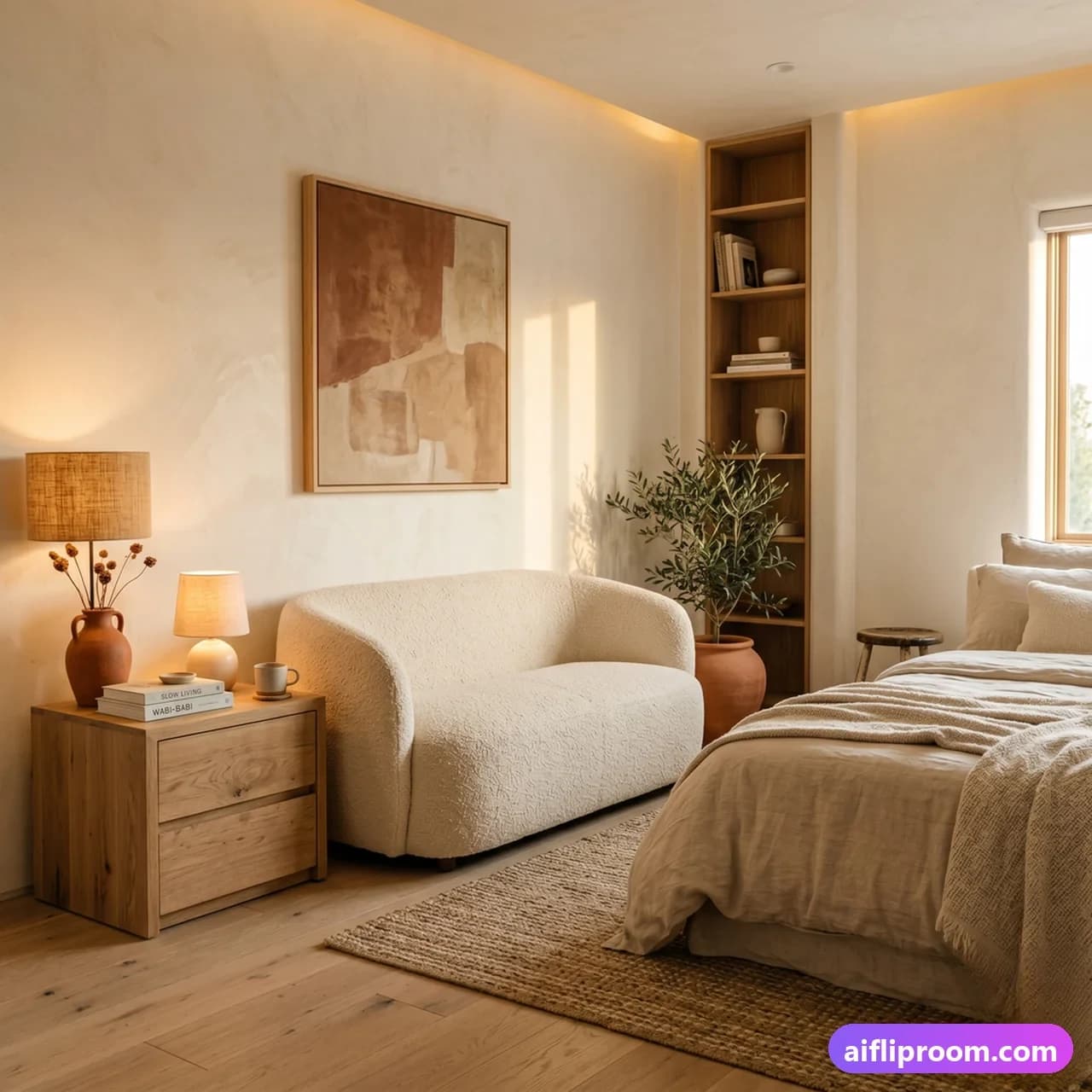
An iron or painted wooden bed, floral or ditsy-print bedding layered with a quilt and a crochet or knitted throw, and linen curtains that filter rather than block the light. A vintage or painted dresser, a small vase of flowers on the nightstand, and a rag rug on a wooden floor. Botanical prints or pressed flowers in mismatched frames on the wall. The room should feel like a bedroom in a very old house, whether or not the house is old.
Living room in Cottagecore
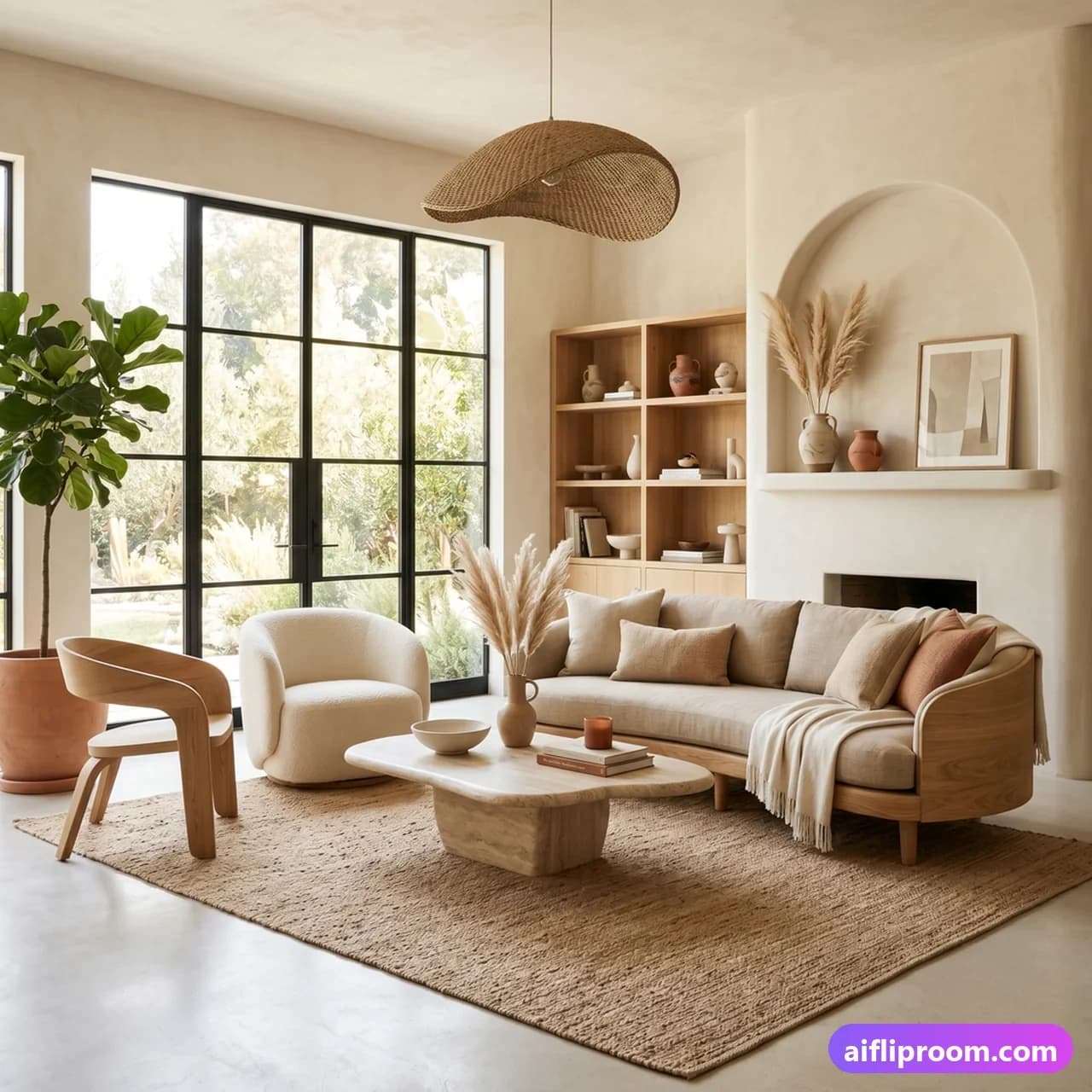
A slipcovered sofa in cream or a small floral, layered with cushions in mixed prints that share a colour. A wooden or painted coffee table, a wicker basket for blankets, and shelves holding books, ceramics and dried flowers. A rag or floral rug. Where a modern room would centre on a television, this one centres on a fireplace, a window seat or simply a comfortable chair by the light.
Bathroom in Cottagecore
White or soft-coloured tile, a painted vanity or a washstand, and brass or aged fittings. Add a wicker basket, a small stool, cotton towels, glass bottles and a plant. Wallpaper with a small botanical print works surprisingly well in a bathroom, and a claw-foot tub is the single most cottagecore object it is possible to own.
Outdoor space in Cottagecore
The aesthetic runs straight outside and arguably belongs there most. A wooden bench or a pair of mismatched chairs, a small table, terracotta pots planted densely and slightly unruly, herbs in a raised bed, and a rambling rose or clematis if there is anything for it to climb. Bunting, a picnic blanket, lanterns for the evening. Nothing should look landscaped.
Cottagecore mistakes to avoid
- Everything matching. The style depends on things having arrived separately over time. A cottagecore bedroom set bought as a set defeats it entirely.
- New-looking new things. Where the budget allows, one genuinely old piece — a dresser, a chair, a quilt — anchors a room full of newer items. Manufactured distressing does not do the same job.
- Cool grey. It kills the warmth immediately. Every neutral in this palette should lean cream or beige.
- Florals at one scale. Mix a small ditsy print with a larger botanical and a gingham or stripe, sharing a colour, or the room turns into wallpaper.
- Too much clutter with no order. Layered and cosy is the aim; a surface with eleven small objects on it is just a surface that needs tidying.
Cottagecore questions, answered
What is cottagecore?
An aesthetic movement that romanticises rural, self-sufficient, handmade living. It spread online in the late 2010s and became widely popular in 2020. In interiors it means soft faded colour, floral and gingham patterns, natural materials, vintage and handmade objects, and a general impression of a slow country life — regardless of whether the home is in the countryside.
What is the difference between cottagecore and farmhouse style?
Farmhouse is tidier, more architectural and leans on shiplap, black hardware and a restrained palette. Cottagecore is softer, more floral, more feminine and more layered, with vintage textiles, botanical prints and pastel colour. Farmhouse looks renovated; cottagecore looks inherited.
Can cottagecore work in a modern apartment?
Yes, and it is one of the most common ways it is done, since the aesthetic grew up online among people living in flats. Keep the textiles, the botanicals, the vintage finds and the warm palette, and skip the architectural elements — exposed beams and stone floors — which need a building that already has them.
What colours are cottagecore?
Cream and warm white as a base, with sage green, dusty rose, butter yellow, powder blue and terracotta. Everything should look slightly faded rather than freshly mixed. Cool greys, bright saturated colour and stark white all sit outside the palette.
Is cottagecore suitable for staging a home?
It suits cottages, period rural properties and smaller character homes, where it flatters the building and appeals to the buyers already drawn to it. For a broad-market family home it is too personal and too pattern-heavy for staging, where the aim is to let buyers picture their own belongings in the room.
Guides to read next
Longer reads on getting a room photographed and restaged well.
- See Your Own Room in a New Style Before You Buy AnythingPreview your actual room in a new style before buying furniture or hiring anyone: what a preview settles, what it can't, and five steps to a useful one.
- How to Photograph Rooms for Virtual Staging: 7 RulesDaylight, lamps off, a level phone at chest height, the 1x lens not 0.5x, one room per frame, clear surfaces — seven habits that make AI staging look real.
- What Is Virtual Staging? The Complete Guide: How It Works, Cost, Rules, ExamplesVirtual staging explained in plain language: how AI furnishes a photo of a real room, what it costs, what agents think of it (NAR 2025), who it helps, the rules and how to spot bad staging.
See your room in Cottagecore
Upload a photo and our AI restages it in the Cottagecore look in 15–60 seconds, depending on how much detail your room has — keeping your walls, windows and layout intact.
Try Cottagecore on your room