British Colonial Interior Design
Teak, rattan, plantation shutters, brass, sophisticated tropical grandeur.
Stage your room in British Colonial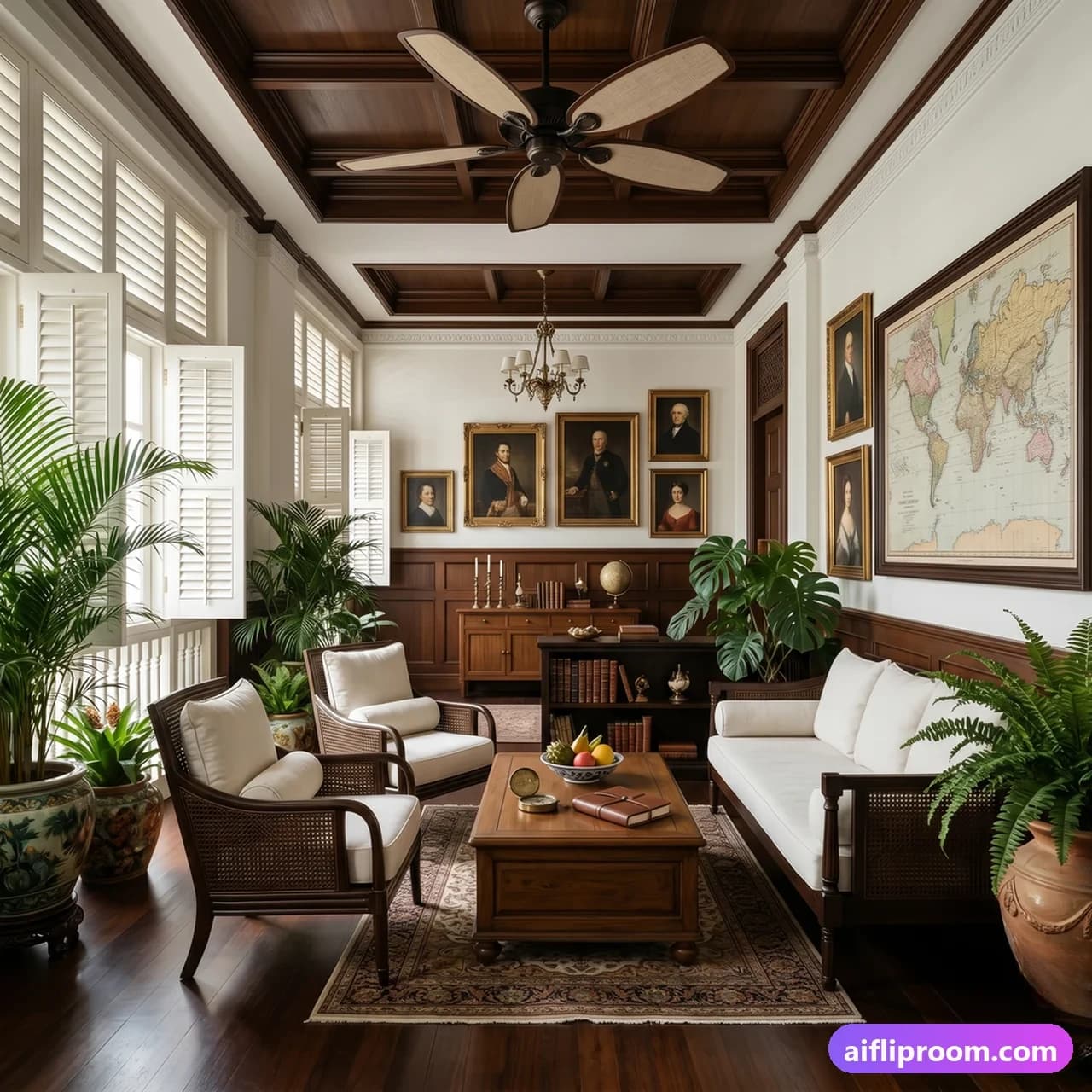
What is British Colonial interior design?
British Colonial style developed when European households settled in tropical climates and adapted their familiar furniture to a hotter, brighter world. The result is a distinctive mix: classic European silhouettes built or paired with tropical materials. Dark teak furniture and rattan or cane seating are the core; plantation shutters filter strong light; a ceiling fan and breezy linen keep rooms cool. Tropical plants in ornate pots, brass details and travel-inspired touches — maps, globes, framed prints — add a worldly, well-travelled character. The palette is warm and natural. The overall feeling is refined but relaxed, sophisticated without being stiff. In staging, British Colonial style suits living rooms and studies, works especially well in warm-climate properties, and appeals to buyers who want a classic, characterful, worldly home.
Where British Colonial comes from
British Colonial describes the interiors that appeared where British households settled in hot climates — India, the Caribbean, parts of Africa and Southeast Asia — from the eighteenth century onward. The look is a collision: European furniture shapes and formality, remade by local craftsmen in local materials, and adapted to heat. Heavy upholstery gave way to cane and rattan, mahogany gave way to teak, and everything gained shutters, verandas and high ceilings. Campaign furniture — pieces built to fold, stack and travel with brass corners and recessed handles — belongs to the same period and is one of its most recognisable inheritances. It is worth being straightforward about where the style comes from: these were the houses of an occupying administration, and the aesthetic exists because of that history rather than alongside it.
Key elements of British Colonial
- Dark teak wood furniture
- Rattan and cane seating
- Plantation shutters
- A ceiling fan and breezy linen
- Tropical plants in ornate pots
- Brass and travel-inspired accents
When to use British Colonial
Living rooms and studies. A refined, characterful look that suits warm-climate properties and buyers who want a worldly, classic feel.
British Colonial colours and materials
Warm neutrals against dark wood. Cream, ivory, sand and stone for walls and upholstery, with deep teak, mahogany and rosewood as the structural contrast. Accents come from botanical green, faded indigo, and the reds and ochres of hand-woven rugs. Brass everywhere — hardware, lanterns, campaign fittings — usually unlacquered so it patinates. Materials are teak and mahogany, rattan and cane, jute and sisal, linen and heavy cotton, leather, and plenty of plantation shutters. Pattern is sparing: a botanical print, a stripe, an ikat or kilim rug. The overall effect should read as cool, ordered and slightly worn.
British Colonial room by room
Living room in British Colonial
A pair of cane-backed or rattan armchairs facing a linen sofa in cream or oatmeal, a dark timber coffee table, and a jute or kilim rug. Plantation shutters or simple linen curtains. A ceiling fan is both correct and useful. Add a campaign chest or a trunk as a side table, a brass lantern or table lamps with linen shades, and one or two large plants — palms and ferns above all. Framed botanical prints or old maps on plain walls. The room should feel cool and uncrowded, with dark wood providing the structure and everything else staying light.
Bedroom in British Colonial
A four-poster or a simple dark timber bed, ideally with a mosquito-net canopy, dressed in white cotton or linen. A campaign chest with brass corners, a cane-backed chair, and a jute rug. Shutters at the window. Keep the palette to white, cream and dark wood, and let one kilim or a single botanical print supply the pattern. A brass or rattan pendant, and a plant in a large pot.
Study in British Colonial
The room the style does best. A dark timber desk, a leather or cane chair, a brass desk lamp, and a wall of dark shelving holding books. A globe, a framed map, a campaign trunk. Shutters, a fan, and a rug with age. This is where campaign furniture makes most sense, and a single genuine piece — a folding chair, a brass-cornered chest — will carry the whole room.
Dining room in British Colonial
A dark timber table with cane-backed or upholstered chairs, a brass or rattan pendant, and a sideboard in teak. Plain walls, a large mirror or a set of botanical prints, and a jute rug. Table settings should be simple — white china, brass or bone-handled cutlery, linen napkins, one plant or a bowl of fruit rather than an arrangement.
Veranda in British Colonial
Structurally part of the style rather than an addition, since these houses were designed to be lived in from a shaded outdoor room. Teak or rattan seating with washable cushions, a low table, a ceiling fan or lanterns, and dense planting in large pots. A daybed if the space allows. Even a small balcony treated this way changes how the interior reads.
British Colonial mistakes to avoid
- Making it heavy. The whole point was adapting European furnishing to heat, so the rooms should feel airy. Dark wood is the structure, not the volume — keep walls, upholstery and windows light.
- Filling it with souvenirs. A room of unrelated imported objects reads as a collection rather than a home. A few good pieces against plain walls is the correct density.
- Reproduction campaign hardware on modern furniture. Brass corners screwed onto a new sideboard fool nobody. One genuine piece is worth more than a room of imitation.
- Skipping the plants. Palms and ferns are as structural here as they are in tropical style; without them the room is just dark furniture in a beige space.
- Lacquered brass. Unlacquered brass darkens and softens with time, which is what the style wants. Bright permanent gold looks wrong immediately.
British Colonial questions, answered
What is British Colonial style?
The interior style that developed where British households settled in hot climates from the eighteenth century onward: European furniture shapes made by local craftsmen in local materials such as teak and rattan, adapted for heat with shutters, high ceilings, verandas and light upholstery. Campaign furniture, built to travel and fitted with brass corners, comes from the same period.
What is campaign furniture?
Furniture designed for military and colonial officers to transport — chests, desks, chairs and beds that fold, stack or come apart, protected with brass corners and fitted with recessed handles so nothing catches when packed. The style is prized now for its clean lines and visible hardware, and originals are widely collected.
What is the difference between British Colonial and tropical style?
They share climate, materials and plants. British Colonial is more formal and more furniture-led: dark timber, symmetry, campaign pieces, a restrained palette of cream and wood. Tropical is more relaxed and more colourful, with botanical prints, brighter accents and less emphasis on formal arrangement.
How do I get the look without antique furniture?
Four things carry most of it: a pair of cane or rattan chairs, one dark timber piece with presence, plantation shutters or slatted blinds, and large plants. Add unlacquered brass lighting and a jute rug. Genuine campaign pieces are a bonus rather than a requirement.
Is British Colonial good for staging a property?
It suits older houses, properties with verandas or good ceiling height, and warm-climate homes, where it reads as characterful and calm. In small modern flats the dark timber can close the space down. A lighter version — rattan, plants, warm neutrals, less dark wood — travels better.
Guides to read next
Longer reads on getting a room photographed and restaged well.
- See Your Own Room in a New Style Before You Buy AnythingPreview your actual room in a new style before buying furniture or hiring anyone: what a preview settles, what it can't, and five steps to a useful one.
- How to Photograph Rooms for Virtual Staging: 7 RulesDaylight, lamps off, a level phone at chest height, the 1x lens not 0.5x, one room per frame, clear surfaces — seven habits that make AI staging look real.
- What Is Virtual Staging? The Complete Guide: How It Works, Cost, Rules, ExamplesVirtual staging explained in plain language: how AI furnishes a photo of a real room, what it costs, what agents think of it (NAR 2025), who it helps, the rules and how to spot bad staging.
See your room in British Colonial
Upload a photo and our AI restages it in the British Colonial look in 15–60 seconds, depending on how much detail your room has — keeping your walls, windows and layout intact.
Try British Colonial on your room