Contemporary Interior Design
Bold accents, mixed materials, sophisticated current design.
Stage your room in Contemporary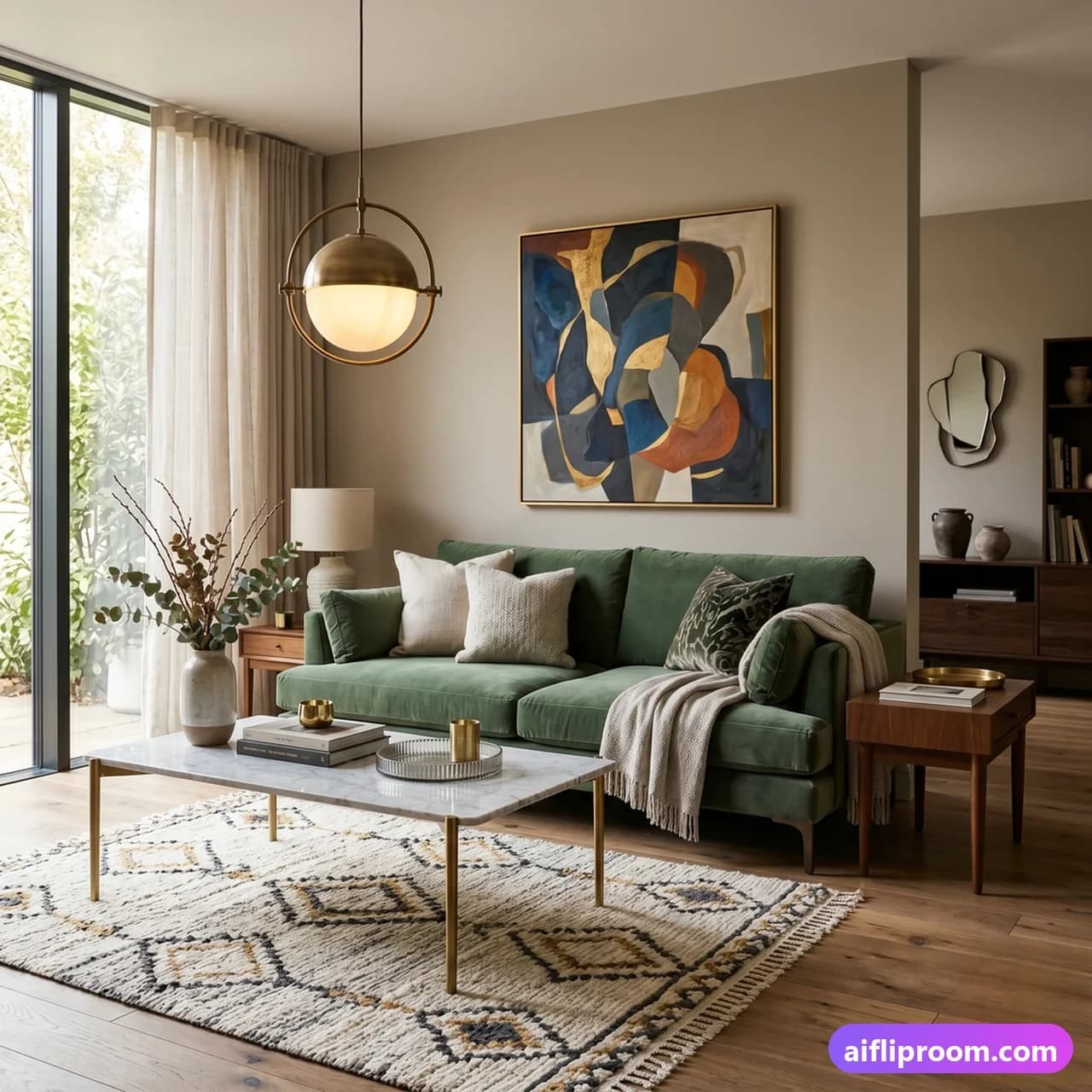
What is Contemporary interior design?
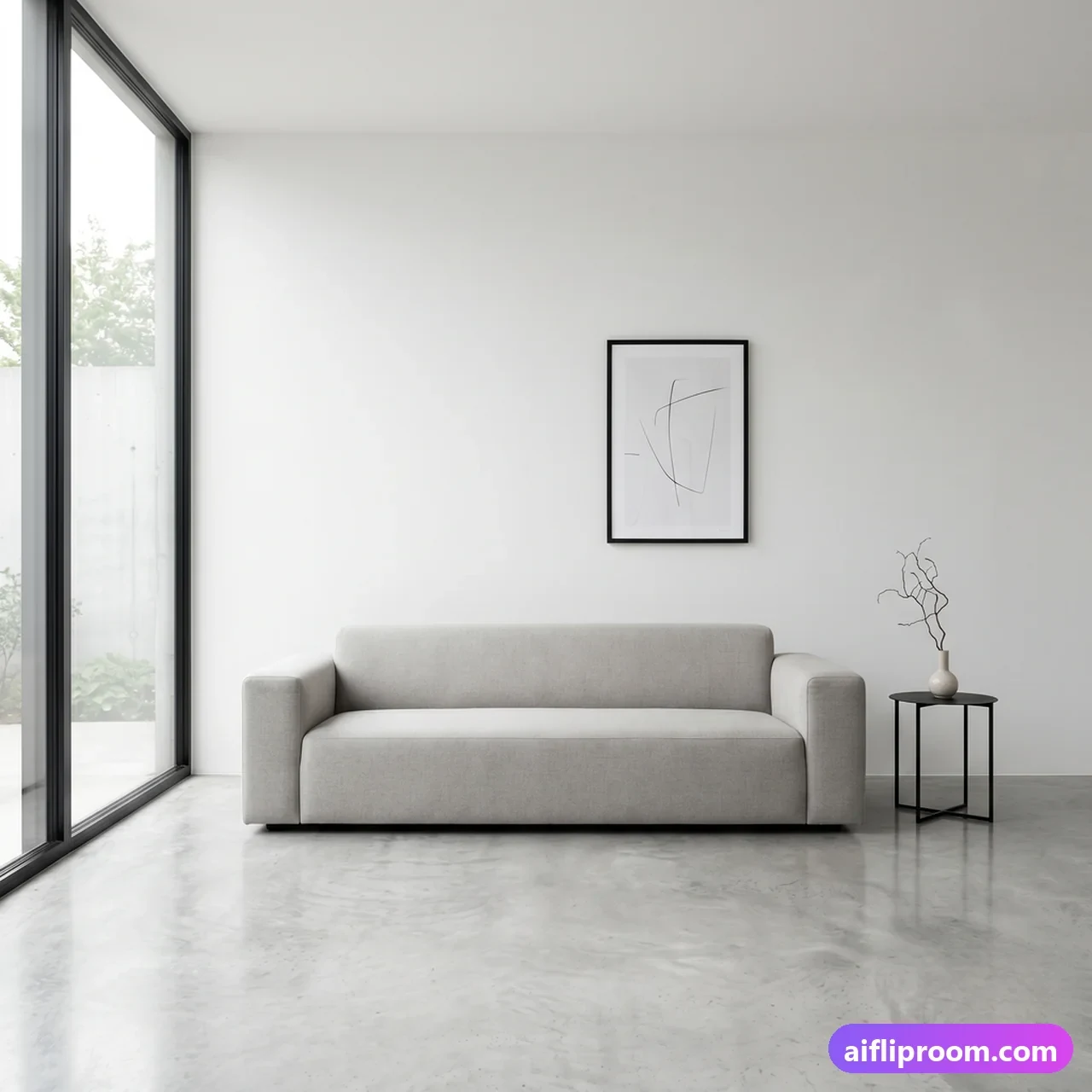
Contemporary design is, by definition, the style of right now — it tracks current design rather than any single historical period, so it keeps evolving. That makes it different from modern design, which refers to a specific twentieth-century movement; contemporary simply means up to date. In practice it is recognisable by a confident mix of materials and textures, a neutral base lifted by one or two bold accents, clean architectural lines, and sculptural lighting. Rooms are uncluttered but not stark — there is warmth and personality, just delivered with discipline. It borrows freely: a little of minimalism's restraint, a little of modern's clean geometry, a current colour here, an of-the-moment finish there. For staging, contemporary is a strong, low-risk choice when you want a listing to feel current, well-maintained and move-in ready without committing it to one named aesthetic.
Where Contemporary comes from
Contemporary is the one style with no fixed date, because the word means whatever is current. That makes it a moving target: contemporary in 1995 meant blond wood and chrome, in 2010 it meant grey and gloss, and today it means warm neutrals, curved silhouettes, textured plaster and mixed metals. The through-line is not a look but an attitude — contemporary rooms borrow freely from whatever else is in circulation, mix periods without apology, and prioritise how a space feels now over consistency with any tradition. It is the most forgiving style to work in and the hardest to describe, and the practical consequence is that a contemporary room dates faster than a modern or traditional one.
Key elements of Contemporary
- Of-the-moment furniture and finishes
- A confident mix of materials and textures
- A neutral base lifted by one or two bold accents
- Clean architectural lines
- Sculptural, current lighting
- An uncluttered but warm, personable layout
When to use Contemporary
Living rooms and open-plan spaces. A strong choice when you want a listing to feel current and well-kept without committing to one named aesthetic.
Contemporary colours and materials
Currently warm and low-contrast: bone, mushroom, greige, oat and clay, with a grounding tone in chocolate, olive or charcoal. Colour appears in confident but muted blocks rather than as small accents. The material mix is the defining feature — plaster or limewash walls, boucle and heavy weaves, travertine and honed stone, warm timber, and two metals used deliberately rather than one used strictly. Curves are everywhere at the moment: arched openings, rounded sofa arms, oval tables, soft-edged mirrors. Anything that reads as high-gloss, cold grey or aggressively rectilinear is the previous decade's contemporary rather than this one's.
Contemporary room by room
Living room in Contemporary
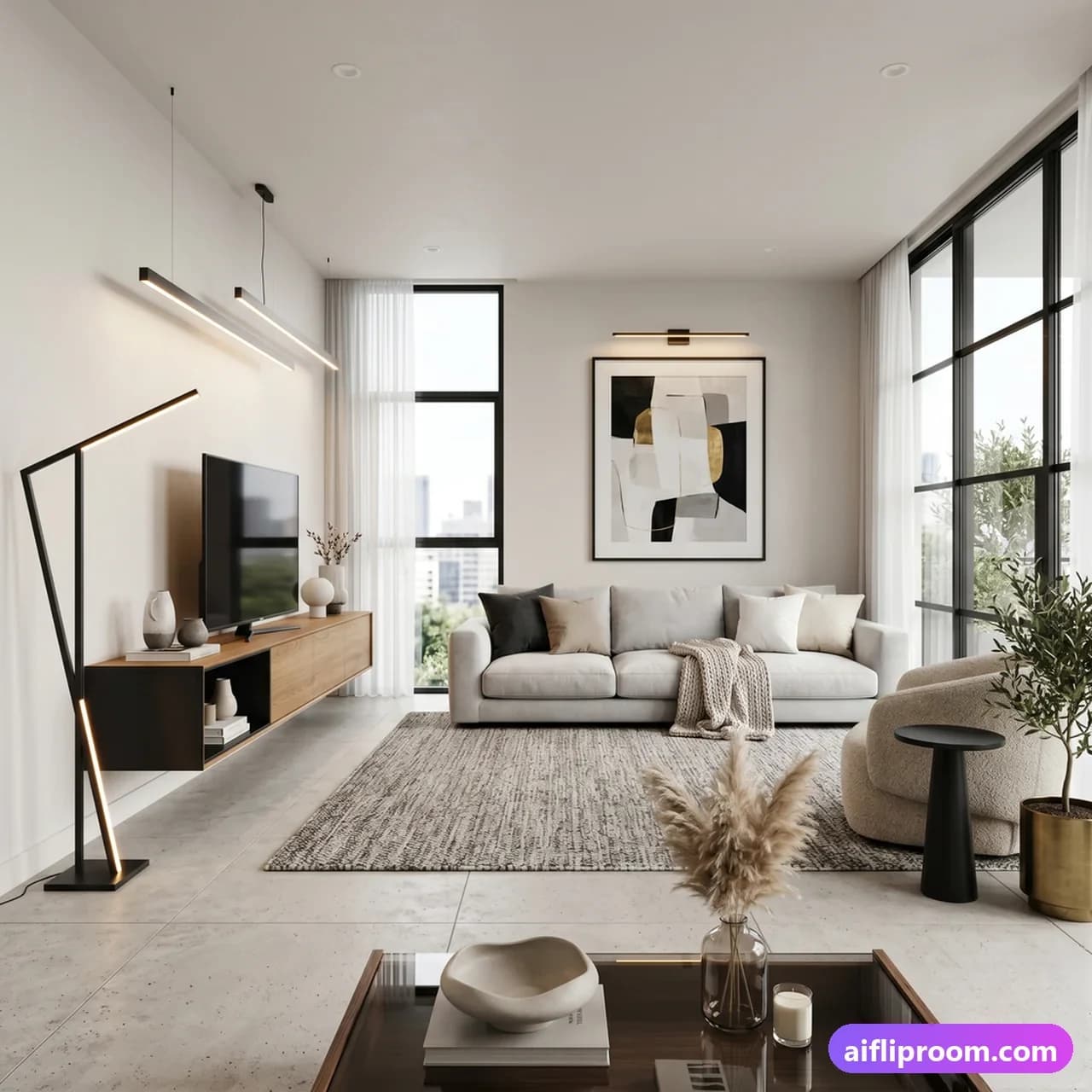
A deep, rounded sofa in a textured neutral, a stone or timber coffee table with a soft edge, and one chair with a distinct silhouette. Layer a large low-pile rug and keep the palette to three tones plus one grounding dark. Contemporary rooms are built for comfort, so the seating should look like it is intended to be sat in for hours. One large artwork, a floor lamp with presence, and a couple of sculptural objects — the styling is deliberate but sparse enough that the shapes of the furniture stay readable.
Bedroom in Contemporary
An upholstered bed with a curved or channelled headboard, bedding in warm white or oat, and a throw with real texture. Nightstands can be rounded or asymmetric — matching is optional in contemporary, unlike in traditional. Wall lights or slim table lamps in warm metal, curtains in a heavy linen hung floor to ceiling, and one large piece of abstract art. Keep the surfaces almost clear; the interest should come from material and shape rather than from objects.
Kitchen in Contemporary
Flat or lightly reeded fronts in a warm neutral or a mid-tone timber, stone worktops with a honed rather than polished finish, and a splashback that continues the worktop material. Mixed metals are current here: a brass tap over black hardware, for instance, provided it looks decided rather than accidental. Integrated appliances, one statement pendant or a pair over the island, and a small area — a shelf, a niche — allowed to hold something beautiful and useless.
Bathroom in Contemporary
Microcement or large-format stone-effect tile, a wall-hung vanity in timber or a soft colour, and a basin with a rounded profile. Backlit or arched mirrors, warm metal fittings, and a niche in the shower rather than shelving. Contemporary bathrooms lean spa-like without going literal — texture on one wall, warm lighting at face height, and very few visible objects.
Open-plan space in Contemporary
This is where contemporary design is most at home, because it is comfortable defining zones without walls. Use a large rug to establish the living area, a change in lighting to mark the dining area, and a consistent floor throughout so the space still reads as one room. Keep the palette identical across zones and let furniture shape do the separating. An arched opening or a rounded island edge softens what would otherwise be a long rectangular box.
Contemporary mistakes to avoid
- Treating contemporary as a synonym for modern. Modern is a fixed historical style; contemporary is whatever is current. Asking for both in one room produces something with no clear direction.
- Chasing every trend at once. Curves, plaster, boucle, arches, mixed metals and a statement stone all in one room is exhausting. Pick two or three ideas and commit.
- Going cold. The grey-and-gloss version of contemporary is a decade old and reads as dated rather than current. Warm neutrals and texture are where the style sits now.
- Buying disposable furniture for a fast-moving style. Because contemporary changes, the sensible approach is timeless large pieces and current smaller ones, not the reverse.
- Leaving out the grounding dark. All-neutral schemes go flat. One chocolate, olive or charcoal element gives the eye somewhere to rest.
Contemporary questions, answered
What is the difference between contemporary and modern design?
Modern is a defined movement from the early-to-mid twentieth century with a fixed vocabulary: clean lines, functional forms, natural woods, neutral palette. Contemporary means whatever is fashionable right now and changes continuously. A modern room from 1960 still looks modern; a contemporary room from 2010 already looks like 2010.
What does contemporary design look like right now?
Warm neutrals rather than grey, curved and rounded silhouettes, textured wall finishes such as limewash or plaster, boucle and heavy weaves, travertine and honed stone, arched openings, and mixed metals used deliberately. The overall effect is softer and warmer than the contemporary of ten years ago.
Does contemporary style date quickly?
Yes, by definition — it is tied to current fashion rather than to a fixed period. The usual way to manage that is to keep the expensive, permanent things neutral and quiet, and to put the current ideas into the items that are easy to change: cushions, lighting, smaller furniture, paint.
Is contemporary a good choice for staging a property?
It is one of the strongest, because it looks current, and looking current is exactly what a listing photograph needs to do. It suits new builds, apartments and renovated homes especially well. The one caution is that heavily trend-led staging ages visibly if a property sits on the market for months.
Can contemporary work in an older home?
Yes, and the contrast usually reads well — original mouldings, fireplaces or beams against soft contemporary furniture. The rule is to be decisive: keep the period features properly and let the furniture be clearly current, rather than half-modernising the architecture.
Guides to read next
Longer reads on getting a room photographed and restaged well.
- See Your Own Room in a New Style Before You Buy AnythingPreview your actual room in a new style before buying furniture or hiring anyone: what a preview settles, what it can't, and five steps to a useful one.
- How to Photograph Rooms for Virtual Staging: 7 RulesDaylight, lamps off, a level phone at chest height, the 1x lens not 0.5x, one room per frame, clear surfaces — seven habits that make AI staging look real.
- What Is Virtual Staging? The Complete Guide: How It Works, Cost, Rules, ExamplesVirtual staging explained in plain language: how AI furnishes a photo of a real room, what it costs, what agents think of it (NAR 2025), who it helps, the rules and how to spot bad staging.
See your room in Contemporary
Upload a photo and our AI restages it in the Contemporary look in 15–60 seconds, depending on how much detail your room has — keeping your walls, windows and layout intact.
Try Contemporary on your room