Scandinavian Interior Design
Light woods, white walls, cozy textiles and warmth.
Stage your room in Scandinavian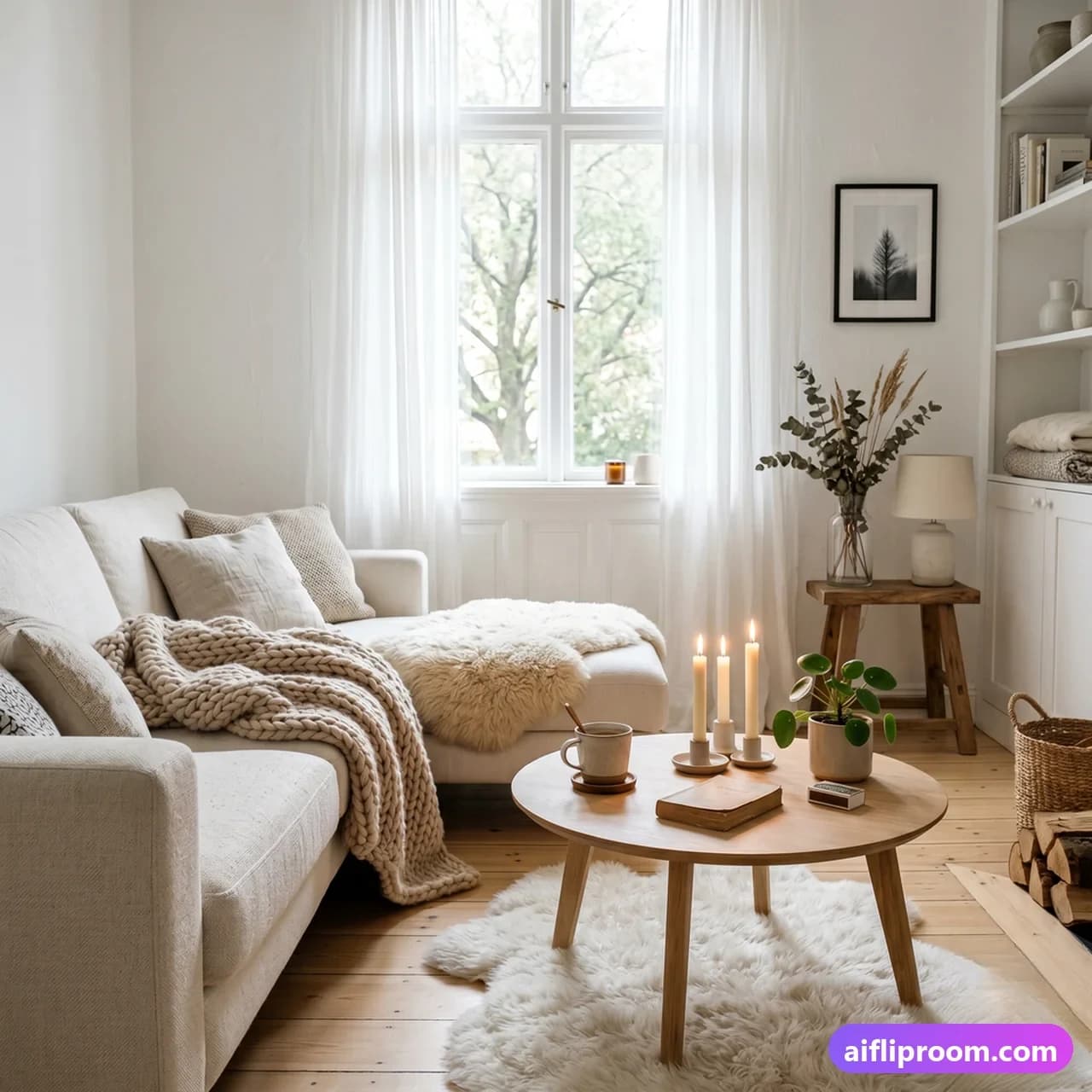
What is Scandinavian interior design?
Scandinavian design grew out of the long, dark winters of the Nordic countries, and almost everything about it is a response to that: make the most of natural light, and keep a home warm, simple and functional. Walls are kept white or very pale to bounce light around; floors and furniture use light woods like ash, birch and pine. Textiles do the warming — wool throws, sheepskins and soft cushions — while houseplants add life. Furniture is practical and uncluttered, with clean lines and no wasted ornament, reflecting the Nordic belief that good design should be available and useful, not showy. The result is a look that feels bright, calm and genuinely welcoming. For staging, Scandinavian style is a dependable choice: it photographs as fresh and well-kept, and it is particularly good at rescuing darker or north-facing rooms that need to feel lighter.
Where Scandinavian comes from
Scandinavian design is a response to a climate. In Denmark, Sweden, Norway and Finland the winter days are short and the light is thin, and interiors evolved to make the most of what little there is: pale surfaces that bounce daylight, large unobstructed windows, and furniture light enough not to swallow a room. The movement that made it famous came out of the 1930s to 1950s, when Nordic designers set out to make well-made furniture ordinary people could actually afford — a democratic ambition as much as an aesthetic one. That is why the style still feels practical rather than precious. Nothing in a properly Scandinavian room is there only to be looked at, and the things that are beautiful are usually beautiful because they were made carefully, not because they were decorated.
Key elements of Scandinavian
- White or very pale walls that maximise light
- Light woods — ash, birch, pine
- Cosy textiles: wool, sheepskin, soft cushions
- Abundant natural light treated as the priority
- Houseplants and touches of greenery
- Functional, uncluttered furniture with clean lines
When to use Scandinavian
Living rooms and bedrooms in almost any market, and especially effective for darker or north-facing rooms that need to photograph brighter and more welcoming.
Scandinavian colours and materials
White or near-white walls do the heavy lifting — not a stark clinical white, but something with a touch of warmth so the room does not go grey when the light drops. Layer greys, soft beige and muted blue-green over it. Wood is almost always pale: birch, ash, light oak, sometimes pine, finished matt so the grain shows. Textiles carry the comfort — wool, sheepskin, chunky knits, linen — and are where a room earns the word hygge rather than sterile. Black appears in small, deliberate doses: a chair frame, a lamp, a window surround. Accent colour, when used at all, tends to be dusty rather than bright: sage, terracotta, faded blue, mustard.
Scandinavian room by room
Living room in Scandinavian
The room should look as though the light gets everywhere. Keep the sofa in a light neutral, raise it on visible legs so floor shows underneath, and choose a coffee table in pale wood rather than something heavy and boxed-in. Cover the seating in texture — a sheepskin over one arm, a chunky wool throw, linen cushions — because without it the palette turns cold. Window treatments should be sheer or absent. One or two graphic prints in simple frames and a single large plant finish it; Scandinavian rooms are not bare, they are edited.
Scandinavian Living Room IdeasBedroom in Scandinavian
A pale wood or upholstered bed frame, white or oatmeal bedding, and layers you can actually see: a knitted throw folded at the foot, a linen quilt, two or three cushions at most. Bedside tables stay small and light. Lighting is the detail people miss — a Scandinavian bedroom wants several warm, low sources rather than one ceiling fixture, so add a wall-mounted reader or a small table lamp on each side. If the floor is dark, a soft light rug will do more for the room than anything you hang on the walls.
Scandinavian Bedroom IdeasKitchen in Scandinavian
Flat, handle-less fronts in white or pale wood, a simple worktop, and open shelving holding things that get used. Scandinavian kitchens are unfussy on purpose: no ornate detailing, no heavy cornices, nothing that collects dust for decorative reasons. A pendant or a row of them over the island or table is close to a signature. Keep the splashback plain — square white tile or a continuous surface — and let the wood of a stool or a chopping board supply the warmth.
Scandinavian Kitchen IdeasDining room in Scandinavian
A light wood table with slim legs, chairs that do not match each other perfectly, and one strong pendant hung lower than feels natural — around 70 to 80 cm above the tabletop. That low pendant is what makes the space feel intimate in a room full of pale surfaces. Skip the tablecloth, skip the elaborate centrepiece, and put a single stoneware bowl or a few stems in a plain vase in the middle.
Bathroom in Scandinavian
White tile, pale timber, and matt black or brushed steel fittings. A wooden vanity or a simple floating shelf keeps it from feeling like a hotel bathroom. Add a wooden stool, a linen towel and one plant that tolerates humidity, and the room reads as calm rather than clinical. Underfloor heating and warm lighting matter more here than any decorative choice — Scandinavian bathrooms are meant to feel comfortable in winter first.
Scandinavian mistakes to avoid
- Confusing it with minimalism and stripping out the softness. Without wool, sheepskin and knit, the same room reads cold and unfinished — the textiles are not optional extras, they are half the style.
- Using a stark blue-white on the walls. Under Nordic-style warm lighting it turns grey. Pick a white with a little warmth in it.
- Heavy curtains. They undo the entire premise, which is getting daylight into the room.
- One central ceiling light. Scandinavian interiors run on several small warm sources; a single overhead fixture flattens everything it touches.
- Buying the whole room from one flat-pack range. The look came out of craftsmanship — one solid wood piece or one vintage chair among the affordable items is what stops it looking like a showroom.
Scandinavian questions, answered
What is the difference between Scandinavian and minimalist design?
Minimalism removes until nothing is left that can be removed. Scandinavian design removes clutter but deliberately keeps comfort: throws, rugs, wood grain, plants, a few personal objects. A minimalist room aims for silence; a Scandinavian room aims for ease. In practice the difference you notice first is texture — there is a lot of it in one and almost none in the other.
Does Scandinavian design work in a dark room?
It is arguably the style most designed for exactly that problem. Pale walls and floors, mirrors placed to face the window, light furniture on visible legs and several warm lamps rather than one overhead all pull a dark room upward. What will not work is compensating with dark furniture and heavy fabrics, which is the instinct most people have in a gloomy space.
What is hygge and how does it relate?
Hygge is a Danish word for a feeling of warm, unhurried contentment — the atmosphere rather than the furniture. Scandinavian interiors are built to produce it: soft light, natural materials, comfortable seating, nothing demanding your attention. If a room looks Nordic in photographs but is uncomfortable to sit in, it has the style and not the point of it.
Is Scandinavian style good for staging a property?
It is one of the safest and most effective choices. It makes rooms look brighter and larger, it suits almost every kind of property from a city flat to a family house, and very few buyers dislike it. It is especially useful for small or north-facing rooms, where the whole point of the style is making the space feel more generous than it is.
What wood is used in Scandinavian interiors?
Pale species, finished matt or oiled rather than varnished: birch, ash and light oak most often, with pine common in more rustic versions. The finish matters as much as the species — a glossy lacquer on the right wood still looks wrong, because the style depends on surfaces that look touchable.
Guides to read next
Longer reads on getting a room photographed and restaged well.
- Scandinavian Interior Design Guide: Palette, Wood, RoomsWhat defines Scandinavian interior design: the typical palette and woods, how it differs from Japandi and minimalism, room-by-room notes, common mistakes.
- See Your Own Room in a New Style Before You Buy AnythingPreview your actual room in a new style before buying furniture or hiring anyone: what a preview settles, what it can't, and five steps to a useful one.
- How to Photograph Rooms for Virtual Staging: 7 RulesDaylight, lamps off, a level phone at chest height, the 1x lens not 0.5x, one room per frame, clear surfaces — seven habits that make AI staging look real.
See your room in Scandinavian
Upload a photo and our AI restages it in the Scandinavian look in 15–60 seconds, depending on how much detail your room has — keeping your walls, windows and layout intact.
Try Scandinavian on your room