Modern Interior Design
Clean lines, neutral colors, contemporary furniture.
Stage your room in Modern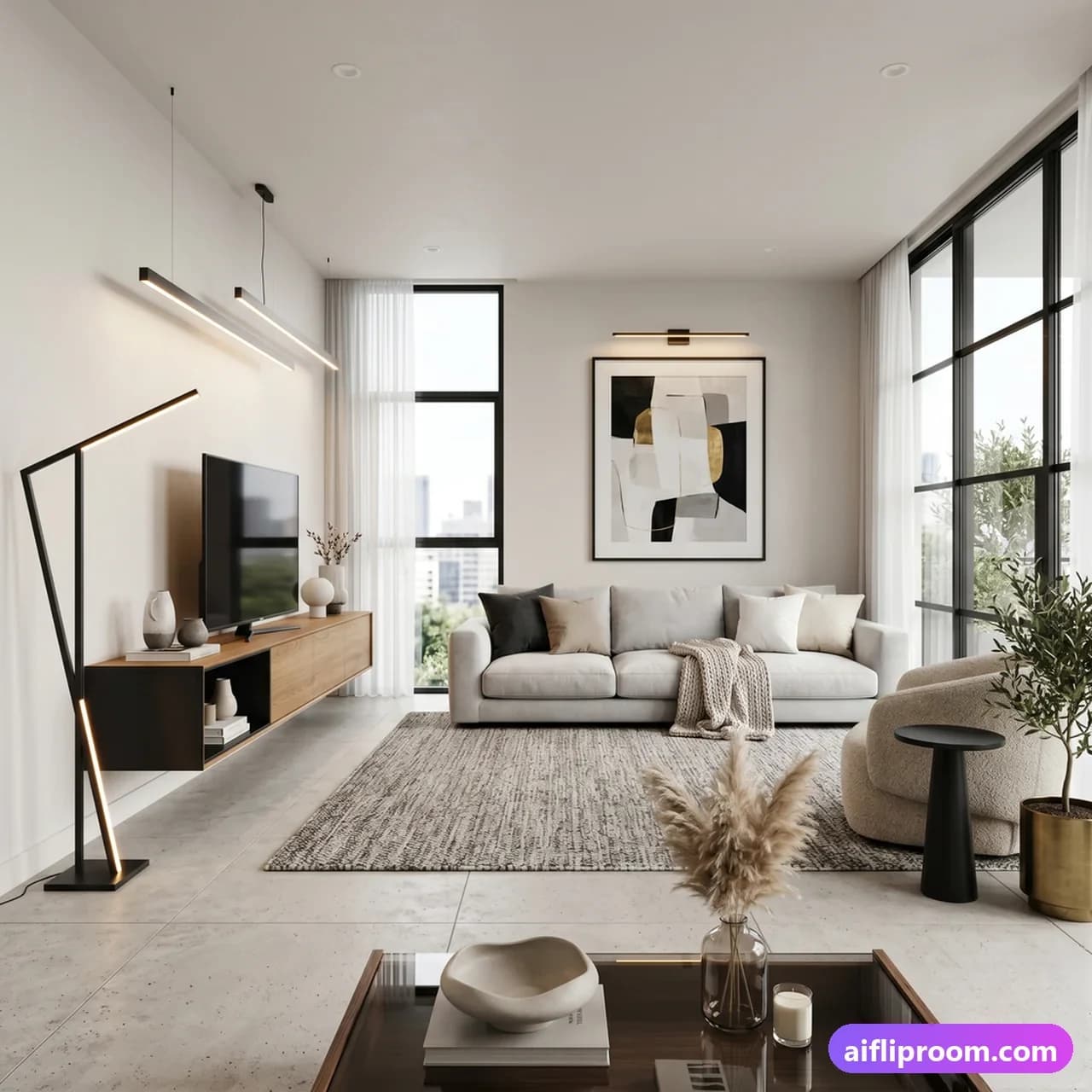
What is Modern interior design?
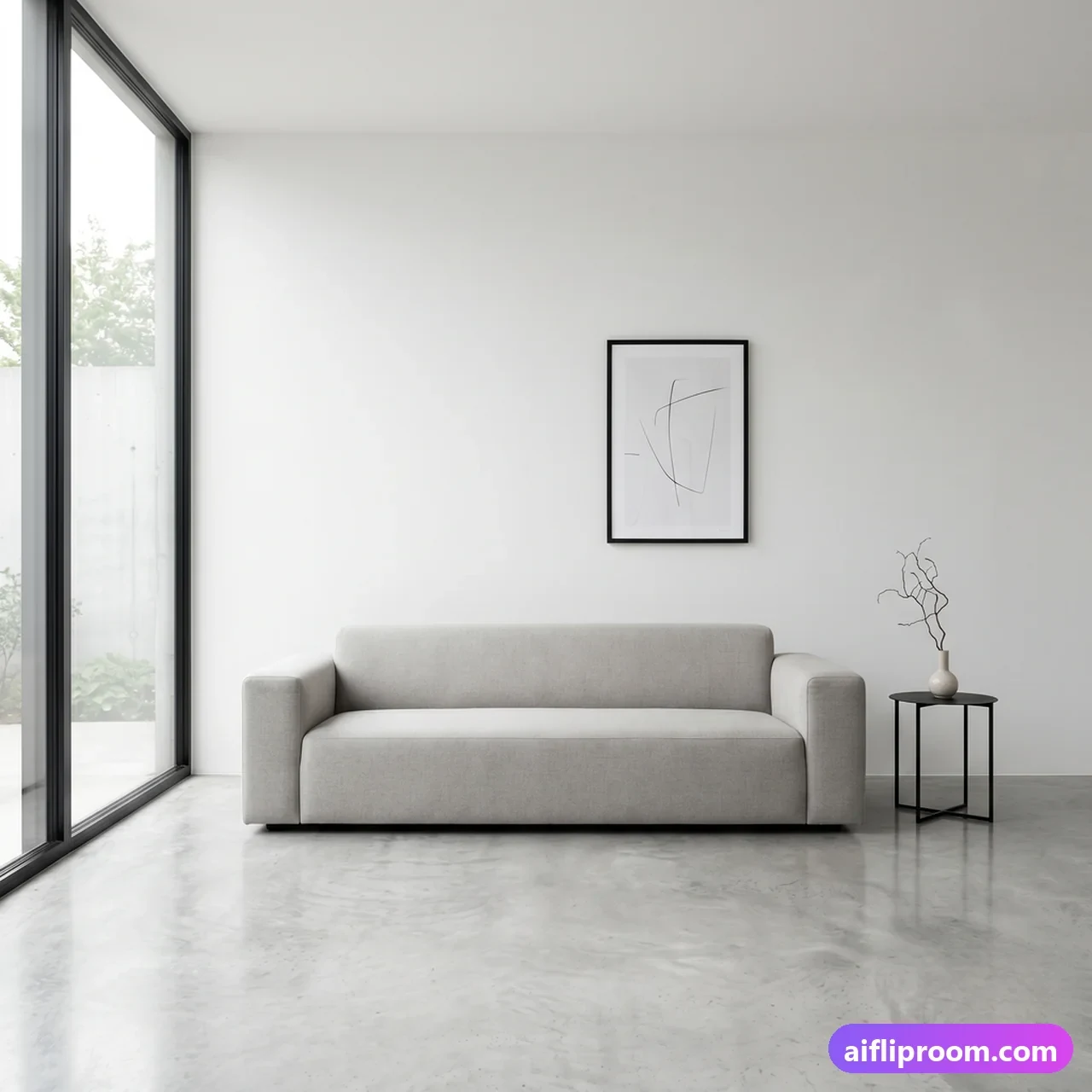
Modern interior design is the clean, current, neutral look most people picture when they imagine a freshly updated home. It grew out of early-twentieth-century modernism, which stripped away ornament in favour of function, honest materials and simple form — and in staging it has come to mean exactly that: straight lines, open space and nothing that fights for attention. The palette stays neutral — whites, greys, warm woods — so the architecture and the light do the talking. Furniture sits low and horizontal, surfaces stay clear, and a single bold accent does more work than a dozen small decorations. Because it is calm and broadly appealing, Modern is the safest staging choice for almost any property: it rarely puts a buyer off, and it lets them picture their own life in the room. That neutrality is also why it consistently converts well.
Where Modern comes from
Modern design is a specific historical movement, not a synonym for new. It came out of the early twentieth century, when architects and designers decided that a building or a chair should be shaped by what it does rather than by inherited decoration. Ornament was stripped away, structure was allowed to show, and new materials — steel, plate glass, moulded plywood — made shapes possible that had never been buildable before. The mid-century decades pushed it into ordinary homes, and that is the version most people picture: open plan, big windows, low furniture, nothing carved. It is worth separating from contemporary design, which simply means whatever is current. Modern has a fixed vocabulary and will look the same in twenty years; contemporary will not.
Key elements of Modern
- Clean, straight lines and simple geometric forms
- A neutral base palette — white, grey, black and warm wood
- Uncluttered surfaces and open, airy layouts
- Contemporary furniture with low, horizontal profiles
- A few bold accents instead of many small decorations
- Natural light treated as a design feature in its own right
When to use Modern
The safest, most broadly appealing choice for almost any listing — living rooms, bedrooms and open-plan spaces. A neutral modern render rarely puts a buyer off, which makes it a strong default staging style.
Modern colours and materials
Neutral and disciplined. White, grey, greige and black do most of the work, with warmth arriving through material rather than colour — walnut, teak, oiled oak, leather, wool. Where accent colour appears it tends to be one confident note against the neutrals: a rust or mustard chair, a deep green wall, a single strong artwork. Surfaces are flat and matt more often than glossy, and metal is usually blackened steel or brushed rather than shiny chrome. The rule of thumb is that a modern room should be legible at a glance: a small number of materials, each used generously, with no decorative pattern competing for attention.
Modern room by room
Living room in Modern
Low, long and horizontal. A straight-lined sofa with a tight back, a rectangular or oval coffee table, and one sculptural chair to break the geometry. Legs should be visible on most pieces so the floor runs underneath and the room reads bigger. Keep the wall art large and few — one big canvas beats a gallery wall here. Storage should be closed and low, and cable clutter should be invisible. If the room has an architectural feature such as a fireplace or a full-height window, arrange the furniture to acknowledge it rather than to face a television by default.
Bedroom in Modern
A low platform bed, plain bedding in white or grey, and nightstands that look like furniture rather than boxes. The discipline is in what you leave out: no upholstered headboard the height of the wall, no stacked cushions, no clutter on the surfaces. One good reading light per side, mounted or slim. A single piece of art above the bed, hung slightly lower than instinct suggests, keeps the horizontal emphasis the style is built on.
Kitchen in Modern
Handle-less flat-panel cabinets, a continuous worktop, and an integrated look where appliances disappear into the run. Contrast is the main tool — a pale upper run over a dark or timber base, or a single block of colour on the island. Keep the splashback plain and the open shelving minimal. A modern kitchen should look calm with everything put away, which means planning enough closed storage that nothing has to live on the counter.
Home office in Modern
A desk with a clean top and slim legs, an ergonomic chair that is honest about being an ergonomic chair, and closed storage along one wall. Modern design has no problem with visible function — a good task lamp or a well-made monitor arm belongs here in a way it would not in a period room. Keep the palette to two neutrals plus wood, and give yourself one piece of art or one plant so the room does not read as an office park.
Dining room in Modern
A rectangular or round table with a simple base, moulded or leather-seated chairs, and a single strong light fixture centred over it. The table should be the only substantial object in the room; sideboards stay low and closed. Skip the runner and the centrepiece — a modern dining room looks best with an empty tabletop and one good pendant doing the work above it.
Modern mistakes to avoid
- Using modern and contemporary as the same word. Modern is a defined historical style with a fixed vocabulary; contemporary is whatever is fashionable now. Mixing the two intentions produces a room with no point of view.
- Mistaking bare for clean. Modern interiors are uncluttered, not empty — they still need wood, leather, wool and one or two objects with presence, or they read as an unfurnished flat.
- Too many materials. Three is usually the limit. A room with oak, walnut, marble, chrome, brass and glass in it stops looking modern and starts looking undecided.
- Small art on big walls. The scale is part of the style; one large piece will do more than six small ones.
- Ignoring lighting design. Flat downlights on a flat palette produce a flat room. Modern interiors rely on layered light — something at eye level, something low, something washing a wall.
Modern questions, answered
What is the difference between modern and contemporary interior design?
Modern refers to a specific movement rooted in the early and mid twentieth century, with a settled set of characteristics: clean lines, functional forms, neutral palettes, natural woods, no applied ornament. Contemporary simply means what is current, so it changes every few years and can borrow from anywhere. A modern room designed today would still look modern in 2050; a contemporary room from 2010 already looks dated.
Is modern design cold?
Only when it is done badly. The coldness comes from stopping at white walls and grey furniture. Add walnut or oak, leather, wool, a large plant and warm lighting and the same layout reads comfortable. Warmth in modern interiors is delivered by material and light rather than by colour or pattern.
Does modern design work in an older home?
Very often, yes, and the contrast is usually the point. Original mouldings, fireplaces or sash windows against clean-lined modern furniture reads deliberate and confident. What does not work is half-measures — stripping out some period detail and keeping the rest tends to look like an unfinished renovation rather than a decision.
What flooring suits modern interiors?
Wide-plank oak or walnut, polished or honed concrete, or large-format porcelain in a neutral tone. Consistency across rooms matters more than the specific material; the fewer floor transitions there are, the larger and more coherent an open-plan space feels.
Is modern a safe style for a property listing?
It is one of the safest. It is widely liked, it does not date quickly, and its uncluttered layouts photograph as spacious. It suits new builds and open-plan homes especially well. In a small, dark or heavily period property, a warmer style will often do more for the photographs.
Guides to read next
Longer reads on getting a room photographed and restaged well.
- See Your Own Room in a New Style Before You Buy AnythingPreview your actual room in a new style before buying furniture or hiring anyone: what a preview settles, what it can't, and five steps to a useful one.
- How to Photograph Rooms for Virtual Staging: 7 RulesDaylight, lamps off, a level phone at chest height, the 1x lens not 0.5x, one room per frame, clear surfaces — seven habits that make AI staging look real.
- What Is Virtual Staging? The Complete Guide: How It Works, Cost, Rules, ExamplesVirtual staging explained in plain language: how AI furnishes a photo of a real room, what it costs, what agents think of it (NAR 2025), who it helps, the rules and how to spot bad staging.
See your room in Modern
Upload a photo and our AI restages it in the Modern look in 15–60 seconds, depending on how much detail your room has — keeping your walls, windows and layout intact.
Try Modern on your room