Minimalist Interior Design
Clean spaces, monochrome palette, only the essentials.
Stage your room in Minimalist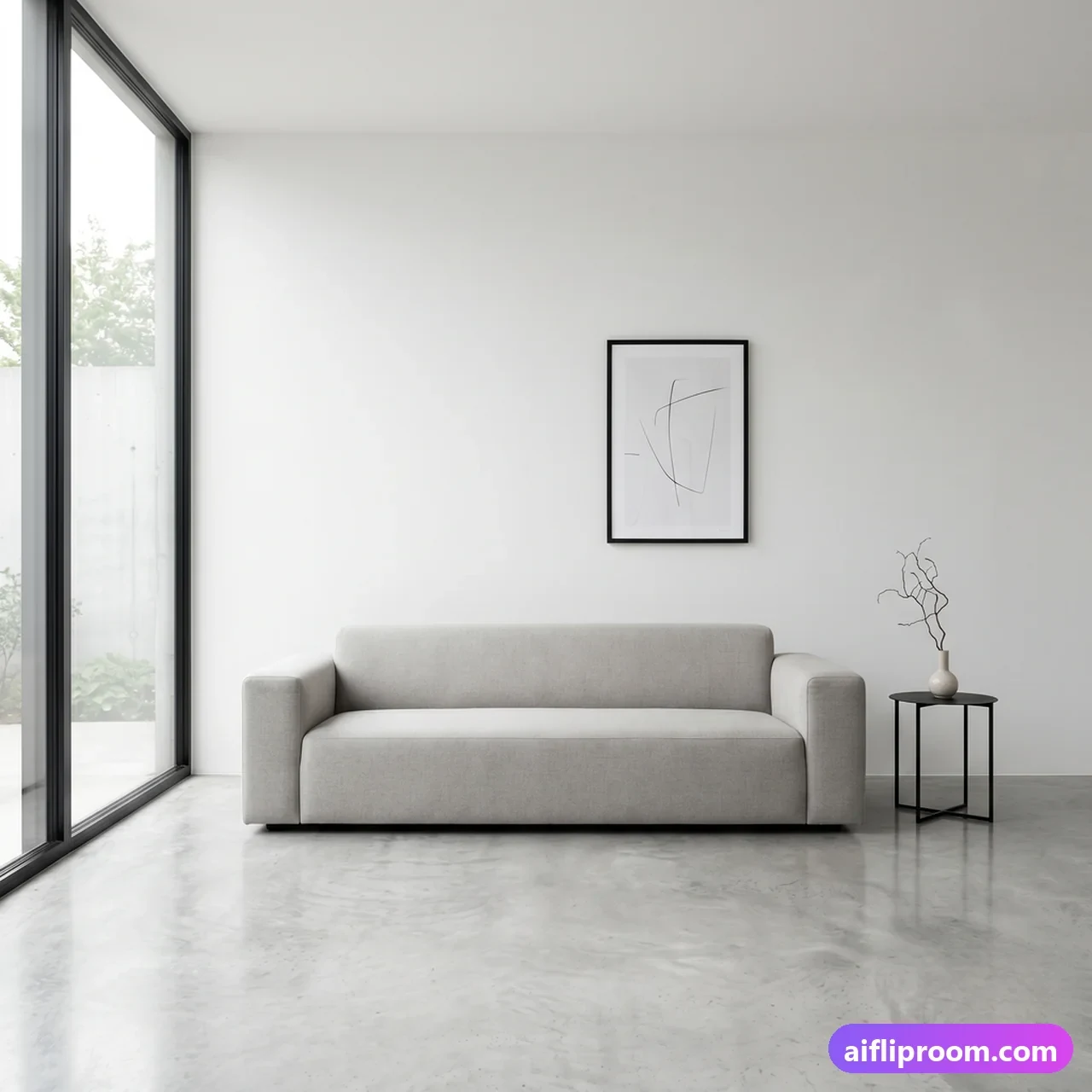
What is Minimalist interior design?
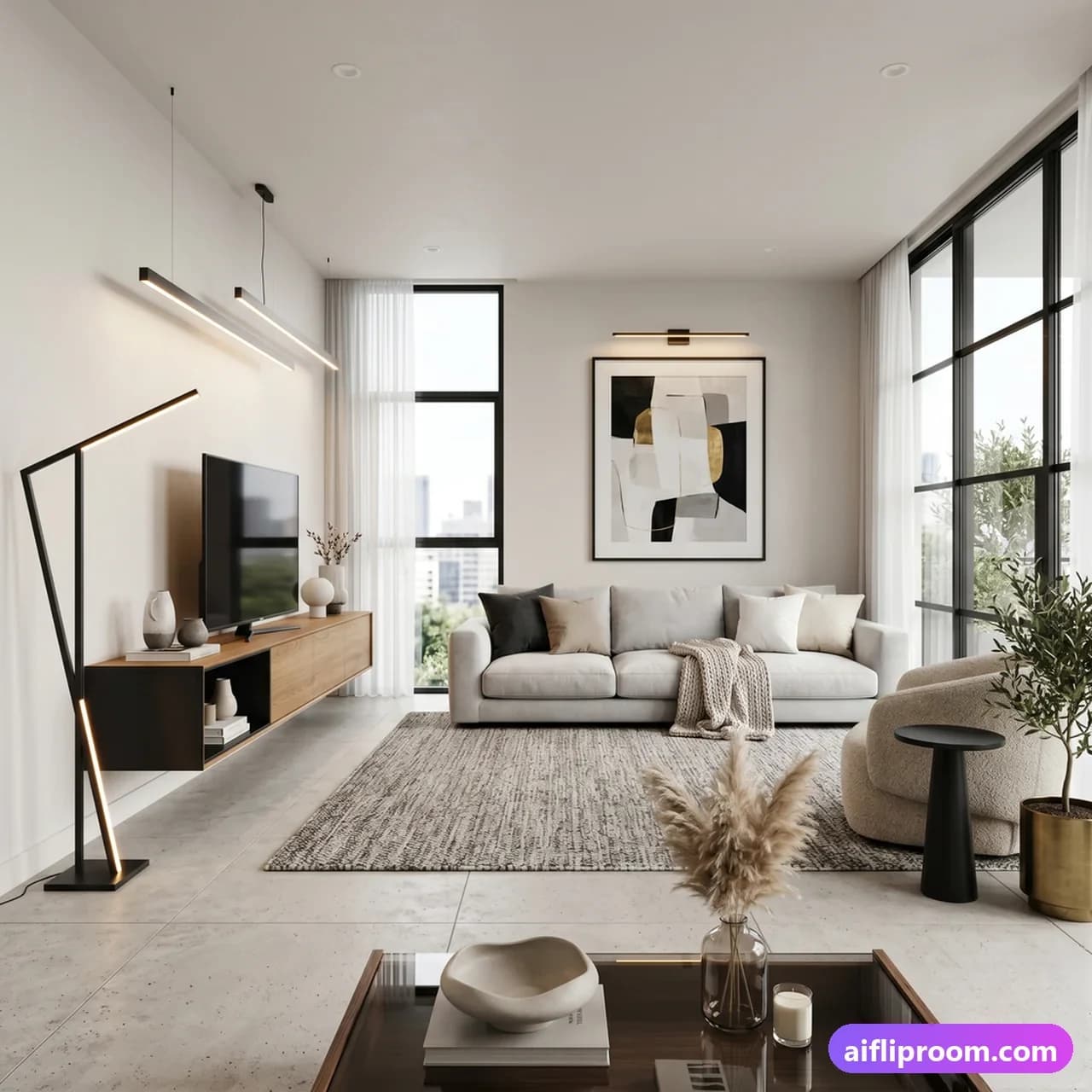
Minimalist interior design reduces a room to only what it truly needs. The guiding idea is “less, but better”: empty space is treated as a material in its own right, and every object that stays has to earn its place. The palette is tight — usually white, grey and black, or a narrow band of soft neutrals — so nothing competes for attention. Storage is concealed, surfaces are kept clear, and a small number of well-made pieces do all the work. The effect is calm, ordered and quietly confident. Minimalism is sometimes mistaken for cold, but done well it is restful rather than bare: light, proportion and a few honest materials carry the room. For real-estate photos this is a powerful tool — clear, uncluttered rooms read as larger, brighter and well cared for, and they give a buyer a clean canvas to project their own life onto.
Where Minimalist comes from
Minimalism in interiors grew out of the same twentieth-century impulse that produced modern architecture — the conviction that a space should be shaped by what it does — but pushed further, into subtraction as a discipline in its own right. It drew on the emptiness of traditional Japanese rooms, on the reductive sculpture and painting of the 1960s, and on architects who were willing to spend a great deal of effort making things look effortless. That last part is the piece people underestimate. A minimalist room is expensive in attention rather than in objects: every junction, every hinge, every cable has to be resolved, because there is nothing else in the room to look at instead.
Key elements of Minimalist
- A tight palette — white, grey, black or soft neutrals
- Clear surfaces with concealed, built-in storage
- A few well-made pieces instead of many
- Generous negative space treated as part of the design
- Simple geometric forms and clean lines
- Restrained or near-absent decoration
When to use Minimalist
Any listing where you want rooms to feel larger, brighter and well cared for. Minimalism is especially effective in small apartments and for buyers who find visual clutter stressful.
Minimalist colours and materials
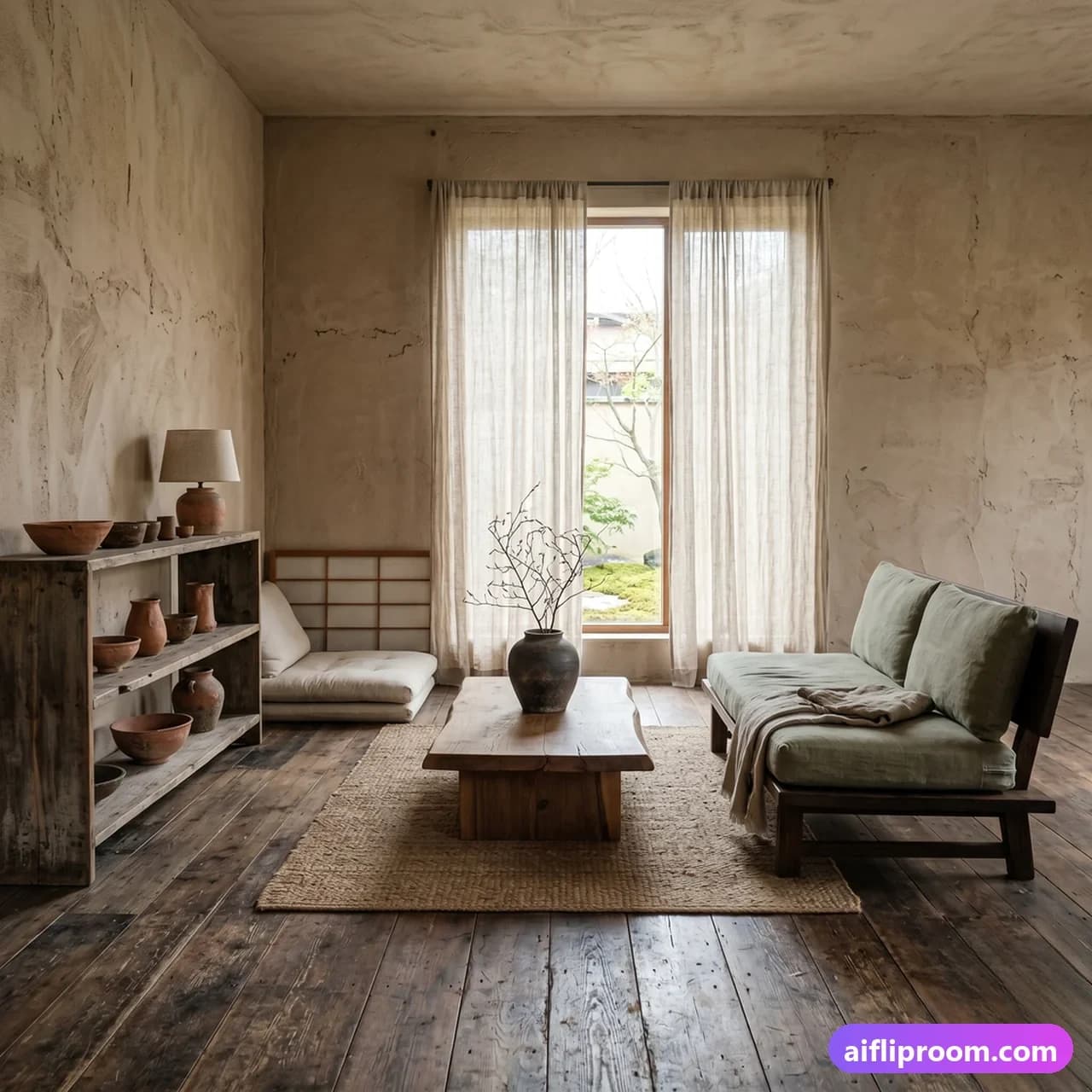
Narrow on purpose. One base neutral carries the walls and usually the floor — white, bone, pale grey or a soft sand — with a second, deeper tone for contrast and almost nothing else. Texture replaces colour as the source of interest: plaster, linen, wool, honed stone, matt timber, brushed metal. Finishes stay flat, because gloss draws the eye to reflections and reflections are visual noise. Where a minimalist scheme allows itself an accent it is usually a single natural material with real grain or veining, used at scale — one stone slab, one wood wall — rather than a colourful object.
Minimalist room by room
Living room in Minimalist
One sofa, one low table, one chair, one light. The composition matters more than the pieces: leave generous space between things, keep everything below eye level, and let one long horizontal — a bench, a shelf, a run of storage — organise the wall. Storage must be closed, because minimalism collapses the moment objects accumulate. If the room feels bare rather than calm, the fix is scale and texture, not more furniture: a larger rug, a heavier weave, a bigger single artwork.
Bedroom in Minimalist
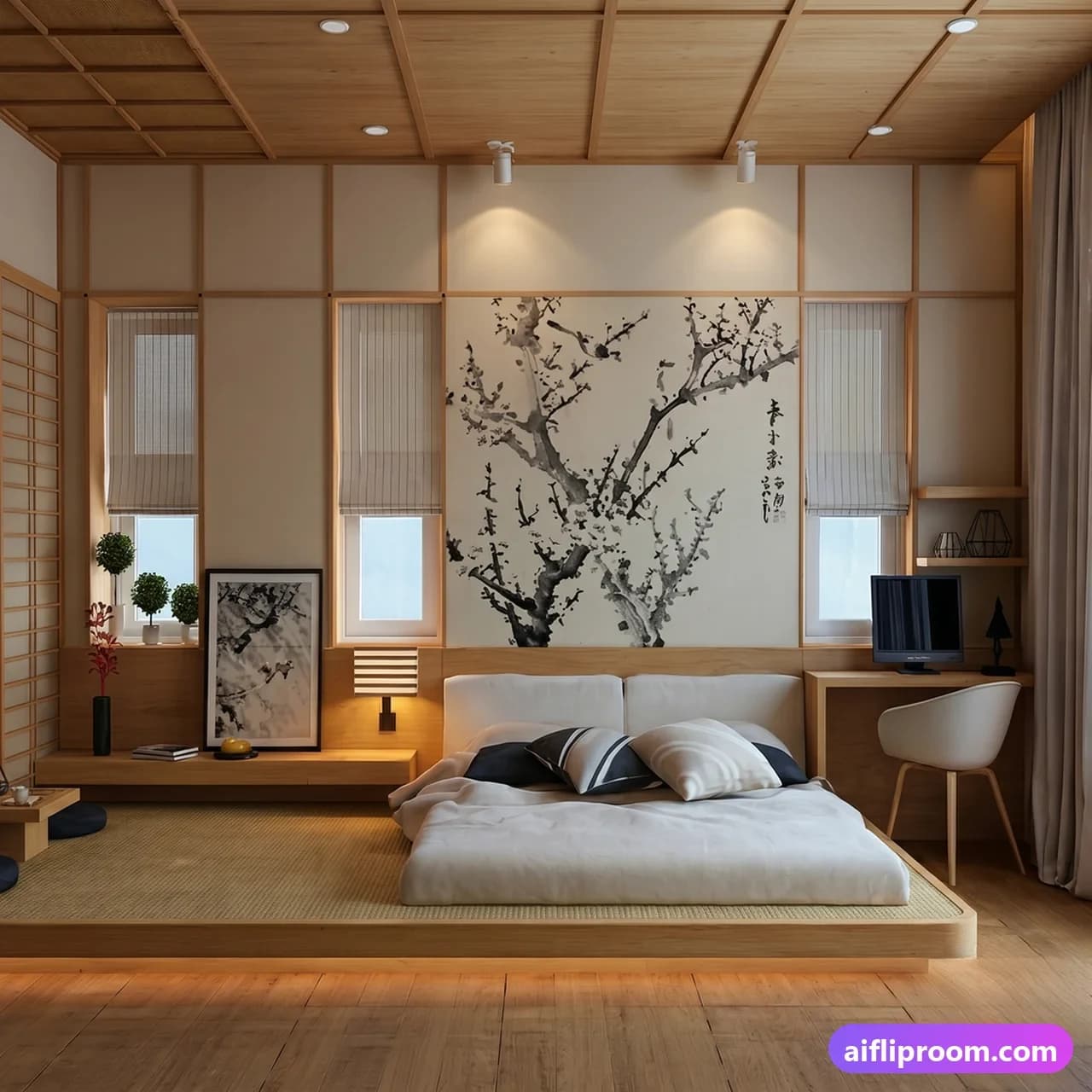
A low bed, plain bedding in one colour, and as little else as the room can function with. No headboard, or a very simple one. Bedside surfaces should hold a lamp and nothing else, which means the storage has to be good enough that nothing needs to sit out. Blackout or plain linen curtains hung wall to wall and floor to ceiling make the window read as architecture rather than as a hole with fabric beside it — a small change that does more for the room than any object you could add.
Kitchen in Minimalist
Handle-less, flat, continuous. Push everything into full-height cabinetry, integrate the appliances, and keep one uninterrupted worktop surface. A single material wrapping worktop and splashback reads far calmer than a change of material at the join. The hard part is not the design, it is the daily discipline: a minimalist kitchen only works if there is a home behind a door for the kettle, the toaster and the knife block.
Bathroom in Minimalist
Large-format tile or microcement to cut down the number of grout lines, a wall-hung basin and cistern, and concealed storage behind a mirror. Fittings in one finish, no more. The reason minimalist bathrooms photograph so well is that they contain almost no small objects, so plan a drawer or niche for everything that would otherwise sit on the edge of the basin.
Home office in Minimalist
A single clean-topped desk, one chair, one lamp, and closed storage. Cable management is not a detail here, it is the whole difference between calm and chaotic — route everything to a tray under the desk. Face the desk into the room or toward a window rather than at a wall, and allow one object that is not work: a plant, a single ceramic, one framed print.
Minimalist mistakes to avoid
- Confusing empty with minimal. An unfurnished room is not minimalist, it is unfurnished. The style needs a few well-chosen, well-made pieces and a lot of considered space between them.
- Skipping texture. With colour and pattern removed, texture is the only thing left to make a room feel warm. Plaster, linen, wool and matt stone are doing the work colour would do elsewhere.
- Leaving clutter in plain sight. Minimalism is unforgiving: one pile of post on a counter undoes an entire room, which is why the storage plan matters more than the furniture.
- Too many finishes. Two metals, three woods and a marble is not a minimalist scheme — it is a busy scheme in neutral colours.
- Flat, even lighting. A single bright ceiling source kills the shadow and depth the style relies on. Use fewer, softer, more directional sources.
Minimalist questions, answered
What is the difference between minimalist and modern design?
Modern is a historical style with a recognisable vocabulary — clean lines, natural woods, mid-century forms — and it is comfortable with warmth and a certain amount of stuff. Minimalism is a discipline of removal that can be applied to almost any style. Most minimalist rooms look modern, but a modern room with a bookshelf, a patterned rug and a gallery wall is still modern and is definitely not minimalist.
Is minimalism cold or unwelcoming?
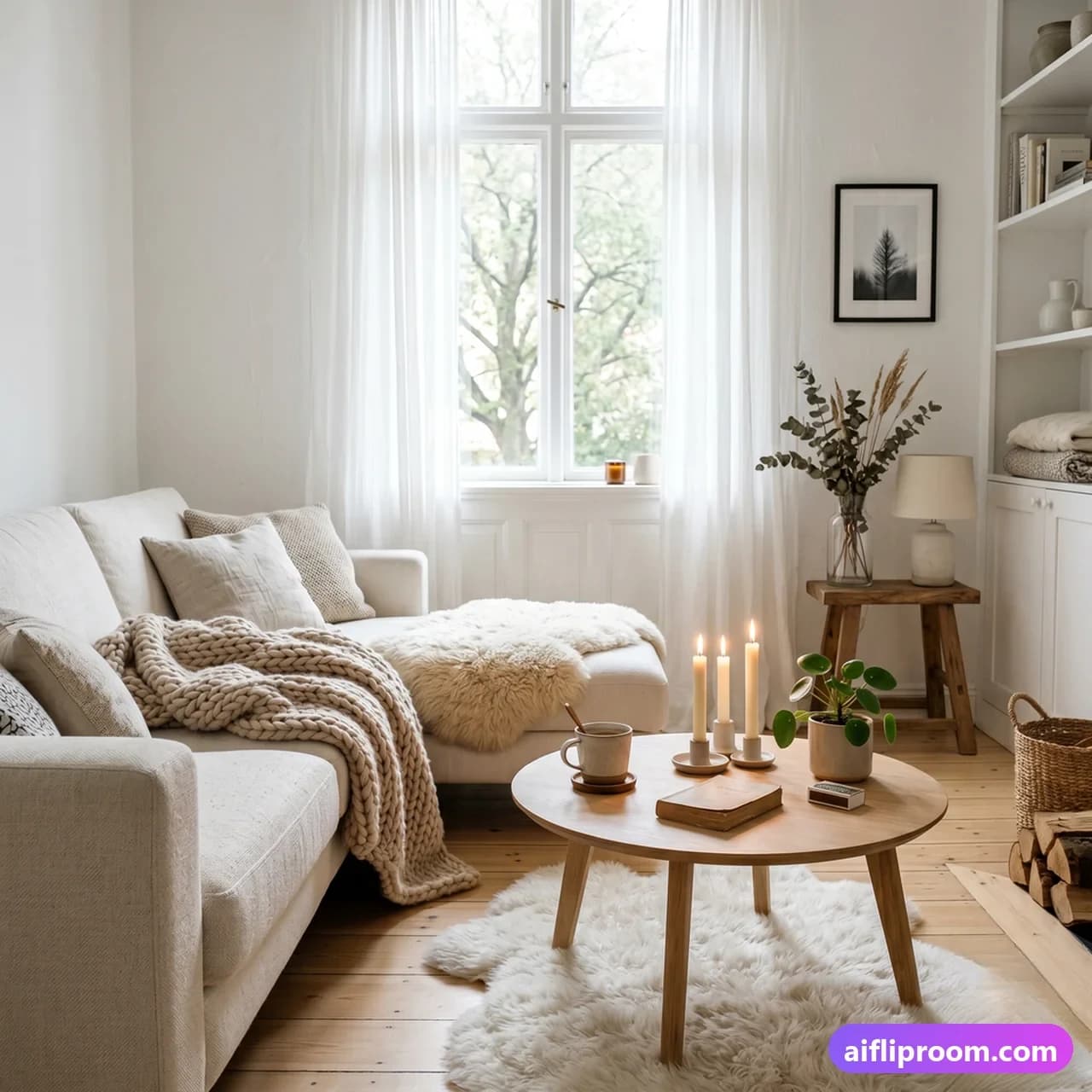
It is when it is done as an aesthetic rather than as a way of living. The rooms that feel cold are usually the ones with no texture and no warmth in the light. Add wool, linen, timber and warm lamps at low level and the same restrained layout feels calm rather than clinical.
Does minimalism work with children or pets?
It works better than most styles, because it forces you to solve storage properly, and because fewer surfaces mean less to tidy. The adjustment is durability rather than looks — washable fabrics, robust finishes and one deep cupboard per room that absorbs everything at the end of the day.
What colours are used in minimalist interiors?
One base neutral doing most of the work — white, bone, pale grey, sand — with a single deeper tone for contrast, often charcoal or black. Some schemes add a natural material with strong grain or veining as the only visual event in the room. Bright and multiple accent colours sit outside the style.
Is minimalism a good choice for staging?
For photographs, it is excellent: empty surfaces read as space, and buyers see the room rather than someone else's belongings. The one caution is that a very sparse room can leave buyers unsure how furniture would actually fit, so a minimalist staging still needs enough pieces to show scale — a sofa, a bed, a table people can measure the room against.
Guides to read next
Longer reads on getting a room photographed and restaged well.
- See Your Own Room in a New Style Before You Buy AnythingPreview your actual room in a new style before buying furniture or hiring anyone: what a preview settles, what it can't, and five steps to a useful one.
- How to Photograph Rooms for Virtual Staging: 7 RulesDaylight, lamps off, a level phone at chest height, the 1x lens not 0.5x, one room per frame, clear surfaces — seven habits that make AI staging look real.
- What Is Virtual Staging? The Complete Guide: How It Works, Cost, Rules, ExamplesVirtual staging explained in plain language: how AI furnishes a photo of a real room, what it costs, what agents think of it (NAR 2025), who it helps, the rules and how to spot bad staging.
See your room in Minimalist
Upload a photo and our AI restages it in the Minimalist look in 15–60 seconds, depending on how much detail your room has — keeping your walls, windows and layout intact.
Try Minimalist on your room