Industrial Interior Design
Exposed brick, metal accents, concrete floors, Edison bulbs.
Stage your room in Industrial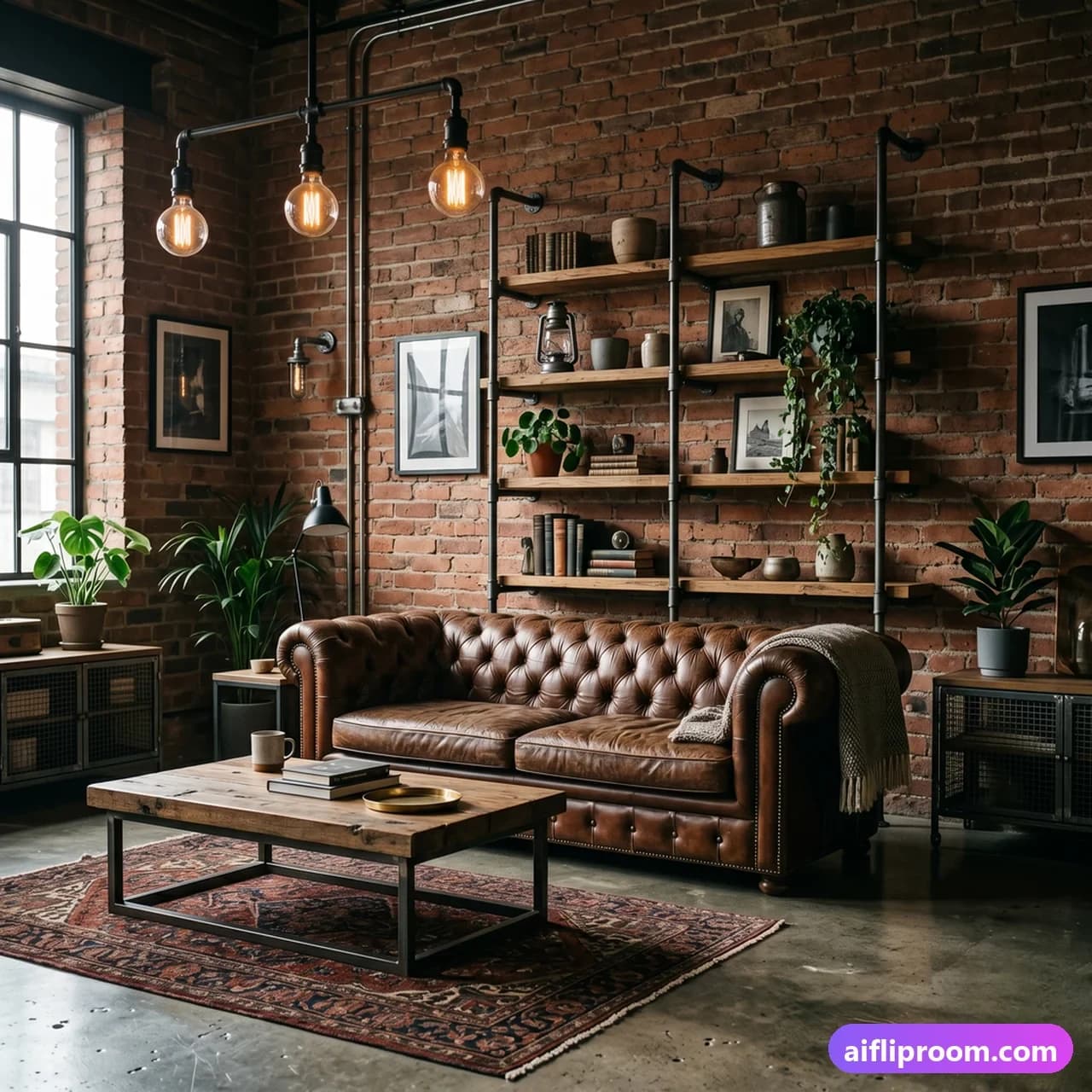
What is Industrial interior design?
Industrial style takes its cues from old factories and warehouses converted into homes — spaces where the building's bones were left on show instead of hidden. Exposed brick, poured concrete, raw structural beams and black metal framing are the signature, softened by reclaimed wood and the warm glow of Edison-bulb lighting. The palette is muted and grounded: grey, rust, black and brown. Furniture is sturdy and honest — leather, steel and solid timber — and the layout celebrates volume, with high ceilings and open sightlines left deliberately uncluttered. Done well, industrial feels characterful and unpretentious rather than cold: it tells a story about the building itself. In real-estate photography it works hardest in lofts, city condos and any property with visible structure or a warehouse-conversion past, and it speaks directly to younger urban buyers drawn to that look.
Where Industrial comes from
Industrial style began as an accident of economics. When manufacturing left Western city centres in the second half of the twentieth century, it left behind warehouses and factories with cheap rent, enormous windows and ceilings no residential building could match. Artists moved in because it was affordable, and rather than hiding the brick, the ductwork and the steel columns they simply lived alongside them. The look that followed is a deliberate imitation of that: exposed structure treated as decoration, raw materials left unfinished, and a general refusal to cover anything up. It is worth knowing the origin because it explains the one rule that matters — industrial reads as honest when the materials are actually structural, and as a theme restaurant when they are stuck on.
Key elements of Industrial
- Exposed brick, concrete and raw structural surfaces
- Black metal framing — windows, shelving and fixtures
- Reclaimed and weathered wood
- Edison-bulb and cage lighting
- An open, loft-like sense of volume and height
- A muted palette of grey, rust, black and brown
When to use Industrial
Loft apartments, city condos and open-plan spaces with high ceilings or visible structure. Industrial pairs naturally with exposed-brick and warehouse-conversion listings and appeals strongly to younger urban buyers.
Industrial colours and materials
Greys, browns and black, warmed by wood and by light. Concrete and unpainted brick set the base; blackened or gunmetal steel supplies the lines; reclaimed timber in a mid-to-dark tone stops the room going cold. Leather in tan or oxblood is close to essential, both for colour and for the way it ages. Where an accent appears it is usually rust, forest green or a deep petrol blue. Almost everything is matt or lightly worn — the only shine should come from glass and from the filament bulbs that do so much of the atmospheric work.
Industrial room by room
Living room in Industrial
Anchor the room with a leather sofa, a metal-and-timber coffee table and a rug substantial enough to soften a hard floor. Keep the furniture layout open and slightly under-filled — industrial spaces are supposed to feel generous. Shelving in black steel and reclaimed wood along one wall gives the room its structure and its storage at once. Lighting does more here than in any other style: a pair of oversized pendants or a track of directional spots will change the room more than any piece of furniture.
Bedroom in Industrial
This is where industrial needs restraint, because a bedroom in raw concrete and steel can end up feeling like a car park. Keep one hard surface — a brick wall behind the bed, a concrete-effect finish — and soften everything else: a metal bed frame with generous linen bedding, a wool rug over the hard floor, curtains rather than blinds. A single black wall light on each side instead of table lamps keeps the surfaces clear and the look consistent.
Kitchen in Industrial
Stainless steel worktops, open shelving on black brackets, and either dark cabinetry or plain timber fronts. Exposed pipework and a visible extractor are features rather than problems. A butcher-block section breaks up the metal and gives the room somewhere warm to land. Bar stools in steel and leather at a concrete or timber island finish it — and pendant lights over that island are the single most photographed detail of the style.
Home office in Industrial
Industrial suits a workspace better than almost any other look, because the materials it favours are the materials good desks are made of. A heavy timber top on a steel frame, a leather task chair, a black articulated lamp and open metal shelving. Cables can stay visible if they are routed deliberately — this is one of the few styles where a conduit run along a wall reads as intentional.
Bathroom in Industrial
Concrete-effect large-format tile or microcement, black matt fittings, exposed pipework and a plain steel-framed shower screen. A reclaimed timber vanity is what keeps it from feeling like a changing room. Metro tile in a dark grout is the affordable route to the same effect, and warm lighting is non-negotiable — cool light on grey surfaces is what makes an industrial bathroom feel cold.
Industrial mistakes to avoid
- Sticking materials on rather than exposing them. Brick slips over plasterboard and fake ceiling beams read as scenery. If the building has nothing raw to reveal, lean on furniture, metal and lighting instead of pretending.
- Forgetting to warm it. Concrete, steel and grey with no wood, leather or wool is a cold room. The style needs at least two warm materials to be liveable.
- Overdoing the filament bulbs. A few are atmospheric; a dozen is a bar. They also give poor working light, so pair them with something practical.
- Using it in a small, low-ceilinged room without adjusting. The look assumes volume. In a normal-height room, keep one raw surface and go lighter on everything else.
- Ignoring acoustics. Hard floors, hard walls and no soft furnishing produce an echo that no photograph shows and every visitor notices. Rugs and curtains are functional here.
Industrial questions, answered
Does industrial style work in a normal house rather than a loft?
Yes, but it has to be dialled down. Choose one raw element the room can carry — a brick chimney breast, a concrete-effect floor, black steel shelving — and let the rest be furniture and lighting. What does not travel from a loft to a standard house is the wholesale approach: exposed everything needs the ceiling height and window scale of the original buildings to look right.
How do you make an industrial room feel warm?
Three levers, in order of effect. Warm light first — 2700K bulbs, several low sources, nothing cool or overhead-only. Then warm materials: reclaimed timber, tan or oxblood leather, wool and jute. Then softness: a thick rug, floor-length curtains, generous bedding. The hard surfaces stay; what changes is everything touching them.
What colours go with industrial design?
The base is grey, brown and black. Warmth comes from timber and leather rather than from paint. Accent colours, used sparingly, tend to be muted and slightly aged: rust, forest green, petrol blue, mustard. Bright or pastel colour fights the whole premise.
Is industrial style still in fashion?
The extreme version that peaked in the 2010s — every wall raw, filament bulbs everywhere, reclaimed-wood signage — has passed. The materials themselves have not: concrete, black metal, timber and leather remain common, now used more selectively and mixed with softer, more contemporary furniture. That blended version is what most people mean by industrial today.
Is industrial a good choice for staging a property?
It is strong for lofts, warehouse conversions, city apartments and anything with exposed structure, where it flatters what is already there. It is a poor fit for suburban family homes and period properties, where it fights the architecture. Buyers for those homes generally respond better to a warmer, more classic look.
Guides to read next
Longer reads on getting a room photographed and restaged well.
- See Your Own Room in a New Style Before You Buy AnythingPreview your actual room in a new style before buying furniture or hiring anyone: what a preview settles, what it can't, and five steps to a useful one.
- How to Photograph Rooms for Virtual Staging: 7 RulesDaylight, lamps off, a level phone at chest height, the 1x lens not 0.5x, one room per frame, clear surfaces — seven habits that make AI staging look real.
- What Is Virtual Staging? The Complete Guide: How It Works, Cost, Rules, ExamplesVirtual staging explained in plain language: how AI furnishes a photo of a real room, what it costs, what agents think of it (NAR 2025), who it helps, the rules and how to spot bad staging.
See your room in Industrial
Upload a photo and our AI restages it in the Industrial look in 15–60 seconds, depending on how much detail your room has — keeping your walls, windows and layout intact.
Try Industrial on your room