Wabi-Sabi Interior Design
Imperfect beauty, weathered materials, muted earthy tones.
Stage your room in Wabi-Sabi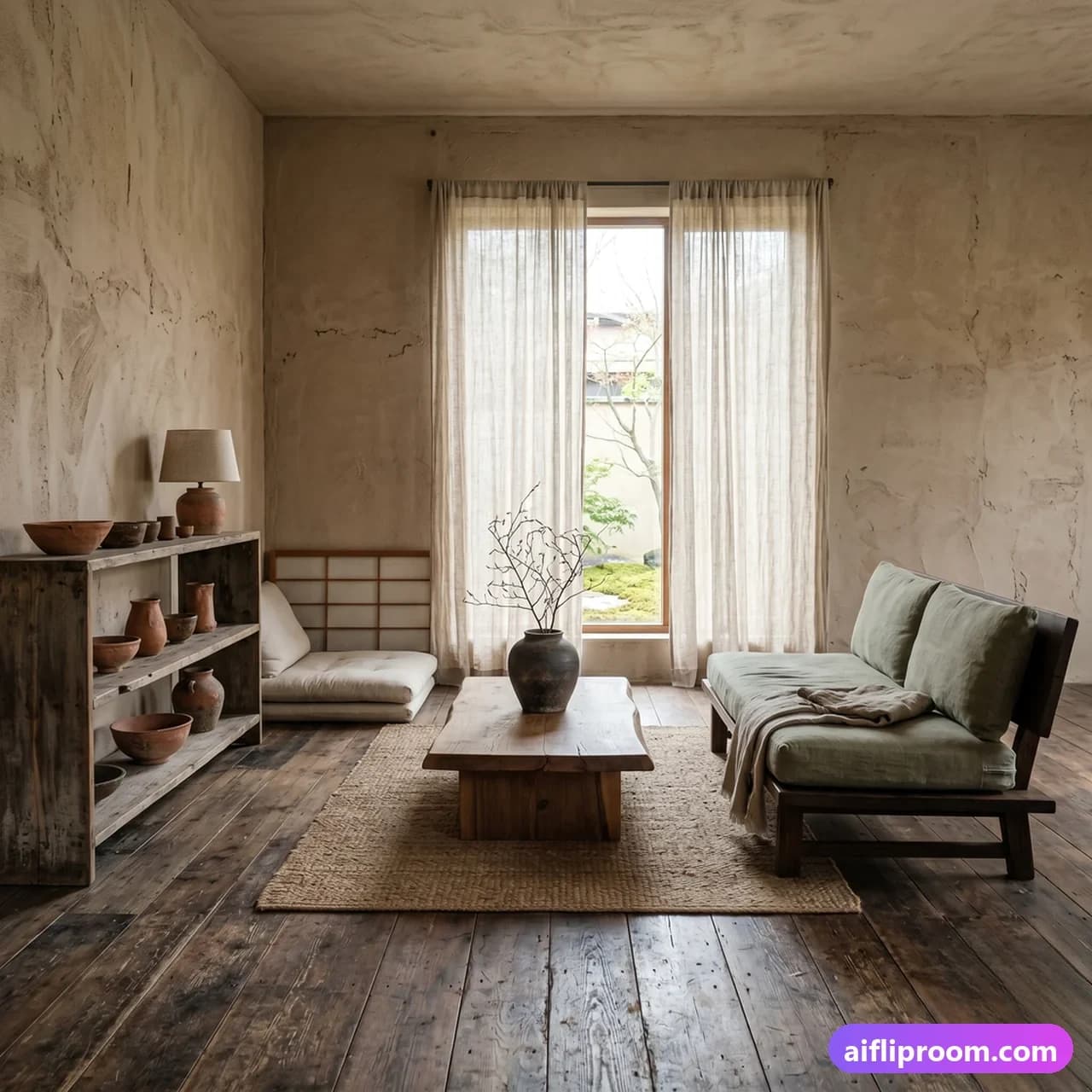
What is Wabi-Sabi interior design?
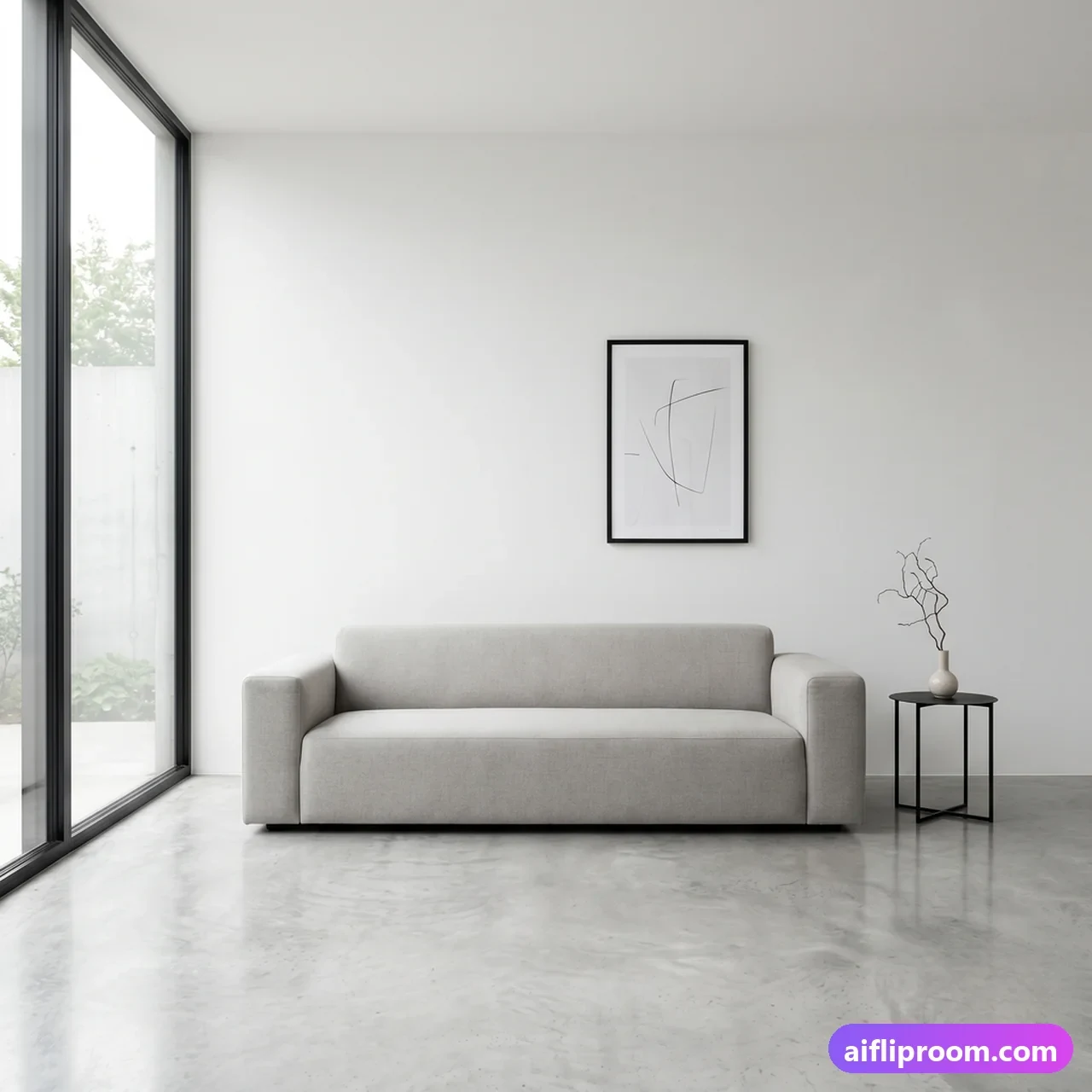
Wabi-sabi is less a decorating trend than a Japanese way of seeing — it finds beauty in imperfection, impermanence and the natural cycle of things. Translated into a room, it means weathered and honest materials, muted earthy tones, and handmade objects whose small irregularities are valued rather than hidden. A hand-thrown bowl with an uneven glaze, a wooden table with visible grain and wear, a wall with a soft, imperfect finish: these carry the look. Arrangements are sparse and asymmetric, never staged to perfection, and the lighting is soft and natural. The mood is grounded, quiet and deeply calming — a deliberate antidote to the glossy and the mass-produced. In real-estate photography wabi-sabi reads as soulful and authentic; it suits buyers who want a home that feels considered and lived-in rather than showroom-new.
Where Wabi-Sabi comes from
Wabi-sabi is a Japanese aesthetic sensibility rather than a decorating scheme, and it is older than almost anything else on this list. It grew out of Zen Buddhism and the tea ceremony, where a deliberately plain room, a rough hand-thrown bowl and a single seasonal branch were understood to be more moving than anything ornate. The two halves of the word point at slightly different things — a quiet, unadorned simplicity, and the particular beauty that comes with age and use. Applied to a home it means accepting the crack in the bowl, the fade on the timber and the unevenness of a handmade surface as the interesting part. It is worth saying plainly that the Western interiors version simplifies a much deeper idea, but the practical instruction it leaves behind is genuine: stop hiding the evidence of time.
Key elements of Wabi-Sabi
- A muted, earthy palette
- Weathered, raw and honest natural materials
- Handmade objects with visible, valued imperfections
- Asymmetric, sparse, unforced arrangements
- Soft, natural light
- Visible age, patina and texture
When to use Wabi-Sabi
Bedrooms and living rooms aimed at buyers who want a calm, grounded, soulful home rather than a glossy one. Works well in period properties and quiet, light-filled rooms.
Wabi-Sabi colours and materials
Earth, stone and undyed fibre. Warm greys, clay, oatmeal, mushroom, faded charcoal and the browns of aged timber, with almost no colour that could be called bright. Nothing is uniform: a plaster wall should vary across its surface, a linen curtain should have slubs in it, a ceramic glaze should pool and thin. Materials are lime plaster, raw or oiled timber, stone, unglazed and raku ceramic, undyed linen, hemp, paper and hand-forged iron. Every finish is matt. The palette is close to Japandi's but goes further — where Japandi is calm and resolved, wabi-sabi is calm and slightly unfinished, and the unfinished part is deliberate.
Wabi-Sabi room by room
Living room in Wabi-Sabi
Very few pieces, each with visible character. A low linen sofa or floor seating, a table made from a single slab of timber with the edge left as it came, and one hand-thrown vessel large enough to be a presence in the room. Leave walls almost empty and let a plaster or limewash surface be the thing you look at. Light should be low, warm and uneven — a paper shade, a single lamp in a corner — so that shadow has somewhere to gather. A wabi-sabi living room should look under-decorated to someone expecting a scheme.
Bedroom in Wabi-Sabi
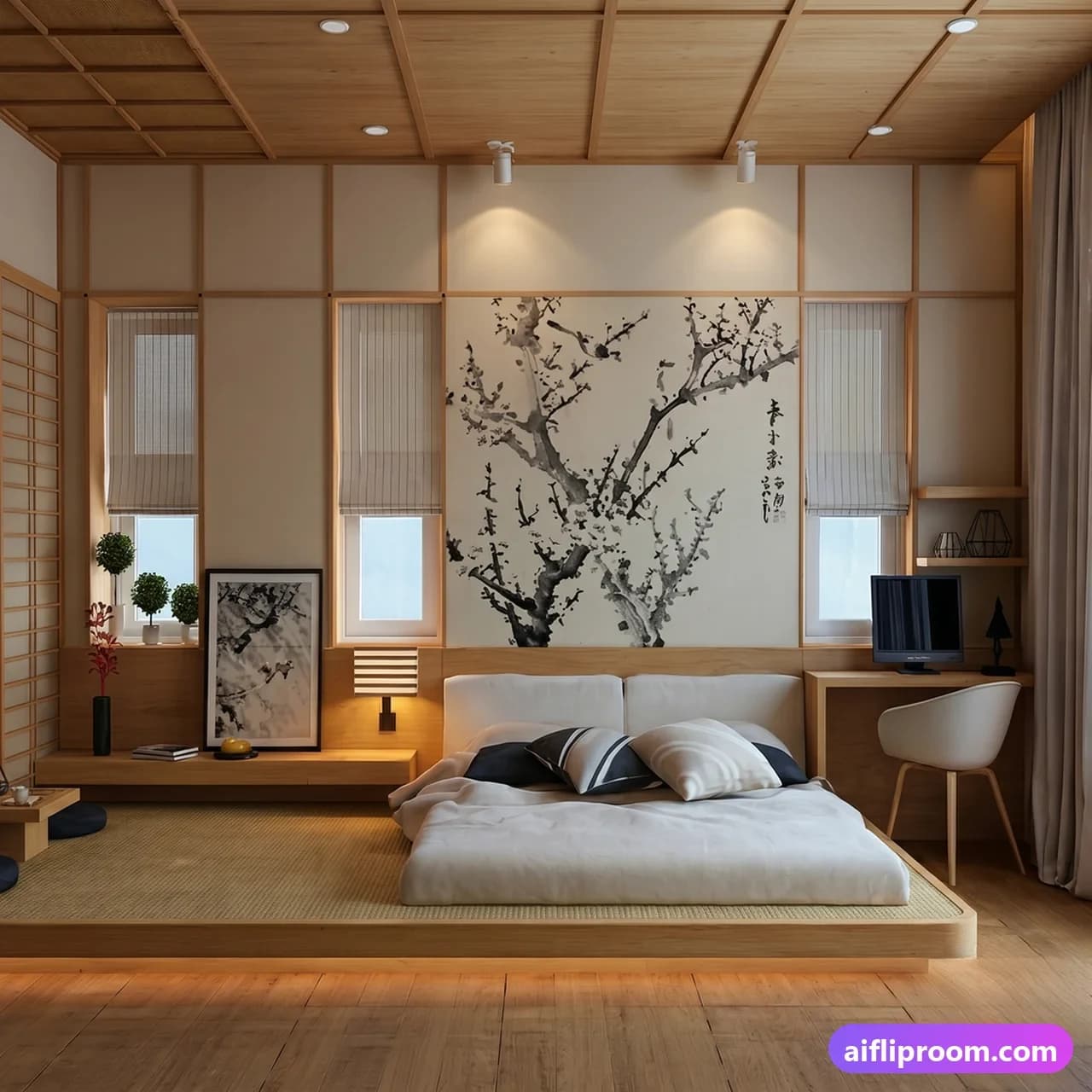
A low bed or a futon, undyed linen bedding that is allowed to look slept in, and a single wooden stool or crate as a nightstand. One branch in a vessel. Nothing matched, nothing symmetrical, no headboard. Curtains in unlined linen that lets the morning light through unevenly. The room's discipline is that it has almost nothing in it, and the things it does have are worn, warm and touchable.
Dining area in Wabi-Sabi
A solid timber table with marks in it, benches or mismatched chairs, and handmade ceramics that do not match each other. A single linen runner or nothing at all. Serve on plates with irregular glaze. The style's origin is in the tea room, so this is the space where its logic is easiest to feel: the object you eat from should have been made by hand and should show it.
Bathroom in Wabi-Sabi
Tadelakt, microcement or lime plaster on the walls, a stone or hand-thrown basin, and timber that is allowed to weather. Hemp or linen towels, a wooden stool, a single ceramic dish. Fittings in unlacquered brass so they patinate rather than staying bright. This room benefits most from the style, because it is the room where most people install the most uniform, hardest, shiniest surfaces available.
Entryway in Wabi-Sabi
A plaster wall, a rough timber bench, a stone or ceramic dish for keys, and one branch or dried stem. Nothing decorative. Entryways are usually where a home tries hardest to impress, and the wabi-sabi version does the opposite deliberately, which is why it registers.
Wabi-Sabi mistakes to avoid
- Buying imperfection new. A factory-made object designed to look weathered is the exact opposite of the idea. One genuinely old or genuinely handmade piece is worth ten distressed ones.
- Confusing it with neglect. Wabi-sabi rooms are meticulously kept; what they accept is age and irregularity, not dirt or disrepair.
- Uniform surfaces. Flat matt paint, machine-cut stone and identical ceramics undo it. Variation across a surface is the point.
- Too much of it. Half a dozen weathered objects on a shelf is a collection. One is the style.
- Bright or even lighting. The aesthetic depends on shadow and warmth; a well-lit wabi-sabi room stops working.
Wabi-Sabi questions, answered
What does wabi-sabi mean?
It is a Japanese aesthetic sensibility with roots in Zen Buddhism and the tea ceremony, describing the beauty of things that are simple, imperfect, incomplete and marked by time. In interiors it translates as favouring handmade and weathered materials over uniform ones, and leaving the evidence of age visible instead of correcting it.
What is the difference between wabi-sabi and Japandi?
Japandi is a hybrid decorating style that blends Japanese restraint with Scandinavian warmth, and it is resolved and comfortable. Wabi-sabi is older, austerer and more philosophical: fewer objects, rougher surfaces, more shadow, and a deliberate acceptance of imperfection. Japandi rooms look finished; wabi-sabi rooms look quietly unfinished on purpose.
Is wabi-sabi the same as minimalism?
They share sparseness and part company on texture and precision. Minimalism aims for clean, resolved, often machine-perfect surfaces. Wabi-sabi wants the opposite finish — uneven plaster, irregular glaze, weathered wood — while keeping the same restraint about quantity.
How do I start a wabi-sabi room without buying anything?
Remove rather than add. Take two-thirds of the objects out of the room, take down most of what is on the walls, turn off the overhead light and use one warm lamp instead. Then put back a single handmade or old object and one branch or stem. Most of the work in this style is subtraction.
Does wabi-sabi work for staging a property?
Rarely as a full scheme, because it is sparse enough that buyers struggle to judge scale and can read the rooms as unfurnished. Its instincts are useful though — clearing surfaces, warm light, natural materials — and applied gently over a more conventional staging they make rooms photograph calmly.
Guides to read next
Longer reads on getting a room photographed and restaged well.
- See Your Own Room in a New Style Before You Buy AnythingPreview your actual room in a new style before buying furniture or hiring anyone: what a preview settles, what it can't, and five steps to a useful one.
- How to Photograph Rooms for Virtual Staging: 7 RulesDaylight, lamps off, a level phone at chest height, the 1x lens not 0.5x, one room per frame, clear surfaces — seven habits that make AI staging look real.
- What Is Virtual Staging? The Complete Guide: How It Works, Cost, Rules, ExamplesVirtual staging explained in plain language: how AI furnishes a photo of a real room, what it costs, what agents think of it (NAR 2025), who it helps, the rules and how to spot bad staging.
See your room in Wabi-Sabi
Upload a photo and our AI restages it in the Wabi-Sabi look in 15–60 seconds, depending on how much detail your room has — keeping your walls, windows and layout intact.
Try Wabi-Sabi on your room