Scandinavian Living Room Ideas
How to design a Scandinavian living room — pale walls, light wood, layered textiles and the warmth that stops it reading as minimalism.
Stage your living room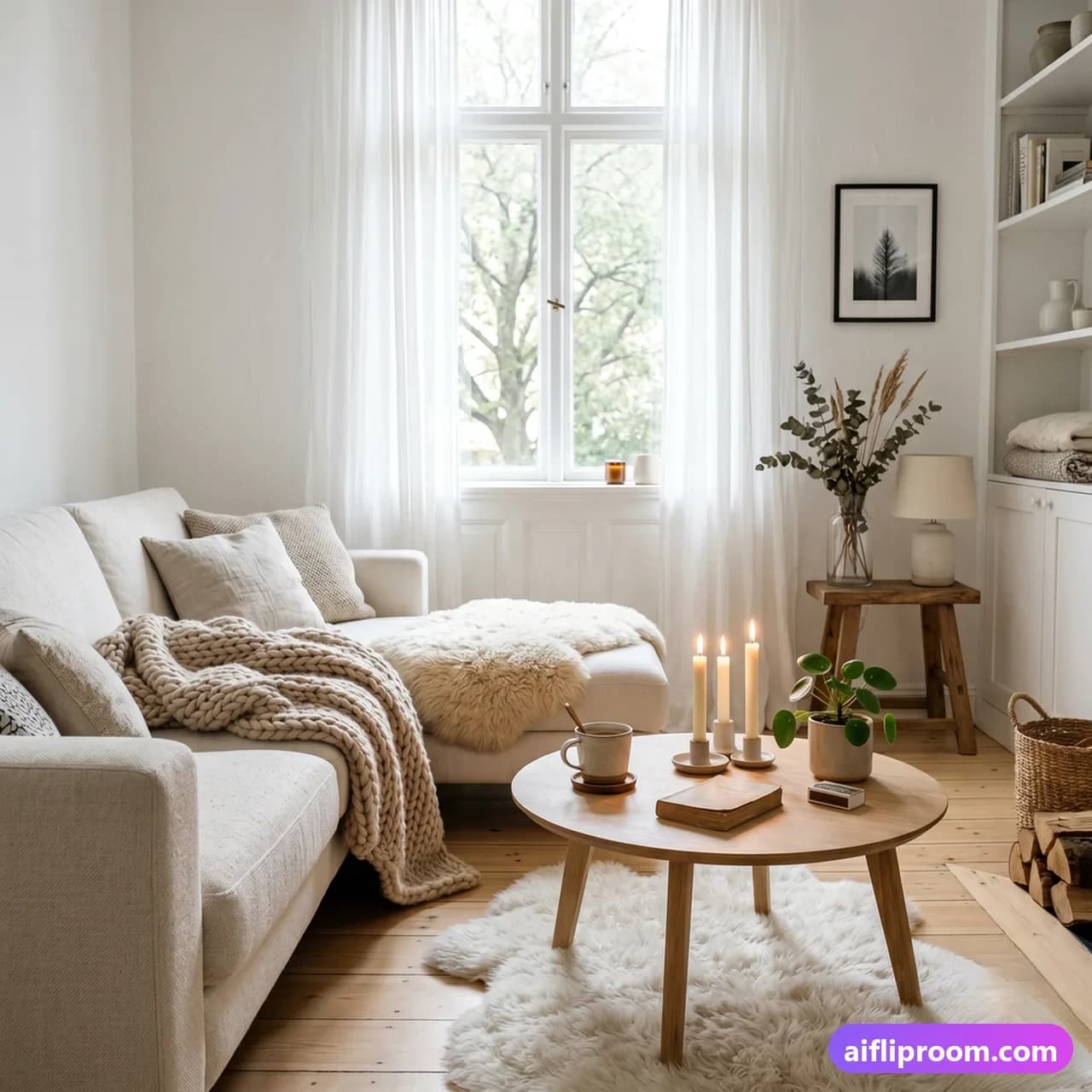
Scandinavian in a living room
A Scandinavian living room has one job that people consistently underestimate: it has to be comfortable. The style is admired for its light, its pale wood and its lack of clutter, and copied as though those were the whole recipe — which produces a room that photographs beautifully and feels cold to sit in. The textiles are not decoration in this style. Wool, sheepskin and knit are half of what makes it work, and a room without them is minimalism in Nordic colours.
The other thing worth knowing is that the palette is a response to a specific problem. These interiors developed where winter days are short and the light is thin, so pale surfaces, unobstructed windows and light-framed furniture exist to make the most of whatever daylight there is. That means the style is unusually well suited to a dark or north-facing room, which is the opposite of most people's instinct in a gloomy space.
Layout and furniture
Raise everything off the floor. A sofa on visible legs, a coffee table with a light frame, and enough gap underneath that the floor runs continuously through the room — that is what makes a Scandinavian living room read as larger than it is. Keep the sofa in a light neutral and place it where it does not block the window.
One or two occasional chairs rather than a matching suite, a low sideboard for storage that closes, and a rug that reaches under the front legs of the seating. Shelving should be sparse and hold books and a few objects, not a display. If the room has a fireplace or a good window, arrange the seating to acknowledge it rather than defaulting to facing a screen.
Leave floor space. Scandinavian rooms are not empty, but they are edited, and the clear floor is doing as much work as any piece of furniture.
Colours, materials and finishes
Walls in a warm off-white rather than a blue-white, which turns grey under low Nordic-style lighting. Floors and furniture in birch, ash or light oak with a matt or oiled finish so the grain shows. Then the layers that make it liveable: a chunky wool throw, a sheepskin over one chair arm, linen or cotton cushions, and a rug with genuine pile.
Black appears in small deliberate doses — a chair frame, a lamp base, a window surround — and provides the contrast the pale palette needs. Accent colour, if any, is dusty rather than bright: sage, terracotta, faded blue, mustard. One or two simple framed prints and a large plant finish the room. Anything glossy, ornate or heavily patterned sits outside the style.
Lighting
Several warm sources at different heights, and no reliance on a single ceiling fixture. A floor lamp beside the seating, a table lamp on the sideboard, and something low in the corner that is currently dark. Bulbs at 2700K, dimmable where possible.
At the window, sheer linen or nothing. Heavy curtains contradict the entire premise, which is getting daylight into the room. If privacy is needed, a light blind that sits above the glass when raised keeps the window clear during the day. In a genuinely dark room, placing a mirror where it faces the window rather than opposite a wall does more than any lighting decision.
What goes wrong in this room
- Skipping the textiles. Without wool, sheepskin and knit the room is cold, and no amount of pale wood fixes that.
- A blue-white wall colour. It reads grey under warm light. Choose a white with warmth in it.
- Heavy curtains. The style exists to maximise daylight; lined drapes undo it.
- One central ceiling light. Several small warm sources is the scheme, not a preference.
- Furnishing the whole room from one flat-pack range. One solid wood or vintage piece among the affordable items is what stops it looking like a showroom.
Living room questions, answered
What colour should I paint a Scandinavian living room?
A warm off-white — something with a hint of yellow, cream or grey-beige in it rather than a cool blue-white. Under the low warm lighting the style uses, blue-whites go grey and flat. If you want more than white, a very soft greige or a pale muted sage both work as long as the wood and textiles stay light.
How do I stop a Scandinavian room feeling cold?
Add texture rather than colour. A rug with real pile, a chunky wool throw, a sheepskin, linen cushions in two or three weaves. Then warm bulbs at low level instead of an overhead light. Those two changes will do more than repainting or replacing furniture, and neither requires buying anything large.
Does Scandinavian style work in a small living room?
It is one of the best styles for one. Furniture on visible legs, a pale palette and unobstructed windows all make a small room read larger, and the discipline about clutter is what a small space needs anyway. Choose fewer pieces at normal scale rather than several small ones.
What is the difference between Scandinavian and minimalist living rooms?
Minimalism removes until nothing is unnecessary and often ends up hard-surfaced and quite cool. Scandinavian removes clutter but deliberately keeps comfort — throws, rugs, plants, books, a few personal objects. In practice the difference you notice first is how much texture is in the room.
Guides to read next
Longer reads on photographing a room and restaging it without changing it.
- Scandinavian Interior Design Guide: Palette, Wood, RoomsWhat defines Scandinavian interior design: the typical palette and woods, how it differs from Japandi and minimalism, room-by-room notes, common mistakes.
- See Your Own Room in a New Style Before You Buy AnythingPreview your actual room in a new style before buying furniture or hiring anyone: what a preview settles, what it can't, and five steps to a useful one.
- How to Photograph Rooms for Virtual Staging: 7 RulesDaylight, lamps off, a level phone at chest height, the 1x lens not 0.5x, one room per frame, clear surfaces — seven habits that make AI staging look real.
See your living room in Scandinavian
Upload a photo and our AI restages it in 15–60 seconds, depending on how much detail your room has — keeping your walls, windows and layout intact.
Try Scandinavian free