Ontario Virtual Staging Rules: PropTx MLS Rule 5.01, Quoted
AI Flip Room · 10 min read
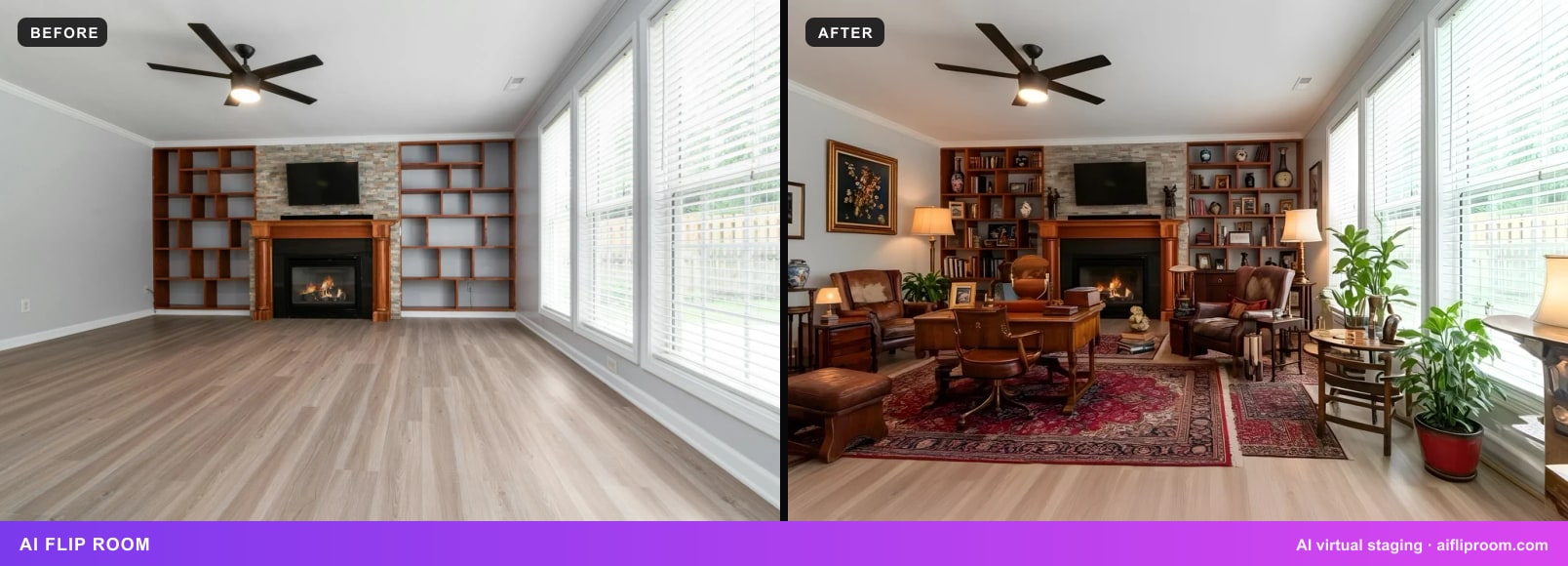
If you search for virtual staging rules in Ontario, you will find a lot of confident writing and very little quotation. The short answer, from the rulebook itself: virtual staging is not banned on the Ontario MLS — what is banned is any altered image, AI-made or not, "that do not accurately depict the listed real estate". Several widely shared articles say that artificial intelligence and virtual staging are now outright banned. Others state a specific requirement: one unstaged photo for every virtually staged photo. Almost none of them quote the rule they are describing.
So we downloaded the PropTx MLS® Rules — the rulebook that has governed most of Ontario's MLS listings since 2 December 2024, sixty pages of it — and read the parts about images. This article reports what is in that document, what is not in it, and where the genuinely difficult judgement sits. It is not legal advice, and the closing sections explain exactly where you should be checking rather than taking our word for it.
Is AI virtual staging banned on the Ontario MLS?
No. The PropTx MLS® Rules do not ban artificial intelligence, digital alteration or staging as such. Rule 5.01 bans digitally altered images — including AI-created or AI-enhanced ones, and including digital staging — that do not accurately depict the listed real estate. The test is whether the specific image is accurate, not which tool produced it.
The relevant provision is rule 5.01, in Article 5 of the rulebook, the article headed "Advertising". Here is the part about altered images, word for word:
Read that last clause carefully, because it is doing all the work: that do not accurately depict the listed real estate.
The rule does not prohibit AI. It does not prohibit digital alteration. It prohibits digitally altered images — including AI-created or AI-enhanced ones, and including digital staging — that do not accurately depict the property. An article that reports this as "AI virtual staging is banned on the MLS" has dropped the qualifier that the entire rule turns on.
That is not a small distinction. Under a flat ban, correcting the exposure on a photograph would be a breach. Under the rule as written, the test is accuracy, and accuracy is a question about the specific image rather than about the tool that made it.
Two neighbouring clauses of the same rule are worth knowing, because they are absolute where 5.01(a) is conditional. Rule 5.01(d) bans "any persons or digital representations of persons", so a render that drops in a figure for scale is out however accurate the room is. And the rule closes by noting that it "does not preclude PropTx or the Association from adding a watermark to the photographs" — an edit the rulebook itself contemplates, which sits oddly with the idea that it bans editing.
What people write versus what the rulebook says
We searched the full text for the claims that circulate most often about Ontario. Here is each one beside the rule it is supposedly based on.
| What you will read elsewhere | What the PropTx MLS® Rules say | Rule |
|---|---|---|
| "AI and virtual staging are banned on the Ontario MLS" | Digitally altered images — AI-made or not, digital staging included — are banned when they do not accurately depict the listed real estate. The test is accuracy, not the tool. | 5.01(a) |
| "One unstaged photo is required for every staged photo" | No such rule. The only image-count rule is a minimum: at least one image of the listed real estate. | 3.07(c) |
| "Staged photos must carry a 'virtually staged' label" | No labelling rule for staged images. Labels are required for architectural drawings, floor plans, maps, aerial and distance photographs, and model-home photos. | 5.01(c), 3.07(c) |
| "The rulebook regulates virtual staging specifically" | The phrase "virtual staging" never appears; neither do "virtually staged" or "unstaged". "Digital staging" appears once, inside 5.01(a). | full text |
| "If the room is accurate, anything goes" | Not quite. Persons and digital representations of persons are banned outright, as are images of amenities not in view of the property and images carrying marketing messages. | 5.01(b)–(d) |
Does Ontario require one unstaged photo per staged photo?
No. There is no rule in the PropTx MLS® Rules requiring an unstaged photo to accompany a staged one. The only rule about how many images a listing needs is 3.07(c), and it is a minimum: a listing is not accepted unless it comes with at least one image of the listed real estate. Nothing about pairs, before-and-after, or ordering.
We looked specifically, because that claim is repeated in several places as though it were a numbered requirement. Rule 3.07(c) says a listing will not be accepted if "it is not accompanied by at least one image of the listed real estate", with an exemption for property that has not been built yet — which may use a photograph of the land, an artist's rendering, a map, or a photograph of the model home "with a photograph label indicating as such". That is the whole of it.
The pairing rule is real — but it is a California rule. CRMLS requires the unaltered original to sit in the listing immediately before or after a staged image, and California also regulates altered listing images by statute. We went through both in virtual staging rules in California. That is very likely where the rule being quoted at Ontario agents came from.
Do staged photos need a label in Ontario?
Not under the PropTx MLS® Rules. The rulebook requires labels, but for other things: architectural drawings, floor plans, maps, aerial and distance photographs must be "labelled as such", and a model-home photograph must carry a label saying so. A staged photograph is not mentioned. That absence is not permission; it means the question is handled by the accuracy test instead.
The phrase "virtual staging" does not appear anywhere in the rulebook. Neither does "virtually staged". Neither does "unstaged". We searched the full text for all three: zero occurrences. The only related term used is "digital staging", and it appears exactly once, inside rule 5.01(a) quoted above.
So the rulebook handles staging through the accuracy test in 5.01 rather than through a labelling procedure, and anyone quoting a specific pairing or labelling rule to you should be asked which rule number they mean. Whether you should label anyway is a separate question, and our answer is yes: a plain "virtually staged" note costs nothing, and the province's Code of Ethics — which does reach your listing photos — is about not misleading anyone. Our guide to virtual staging disclosure rules covers the ways to do it.
What does "accurately depict" mean for a staged photo?
The rulebook does not say; here we stop reporting and start reasoning. Our reading: an image accurately depicts the property when everything a buyer is actually purchasing — walls, windows, ceiling height, dimensions, layout, permanent fixtures, condition — is as photographed. Adding movable furniture leaves all of that intact. Widening a room, adding a window or hiding damage does not.
The rule bans altered images that do not accurately depict the listed real estate. Virtual staging adds furniture that is not in the property. Whether that makes an image inaccurate is precisely the question the rule leaves open, and reasonable people read it differently.
A cautious reading — the one we would suggest to an agent who does not want to argue the point in front of a discipline panel — goes like this. The elements the rule is protecting are the ones a buyer is actually purchasing: walls, windows, ceiling height, dimensions, layout, permanent fixtures, condition. An image that keeps every one of those exactly as they are and adds movable furniture is depicting the real estate accurately, whatever is sitting on the floor. An image that widens a room, straightens a wall, removes a support column, adds a window, hides damage or repaints a stained ceiling is not depicting it accurately, and the fact that a person did it in Photoshop rather than an AI doing it makes no difference to the rule.
The practical line is therefore between furnishing and altering. Furnishing changes what is in the room. Altering changes the room. The first is arguably compatible with 5.01; the second plainly is not.
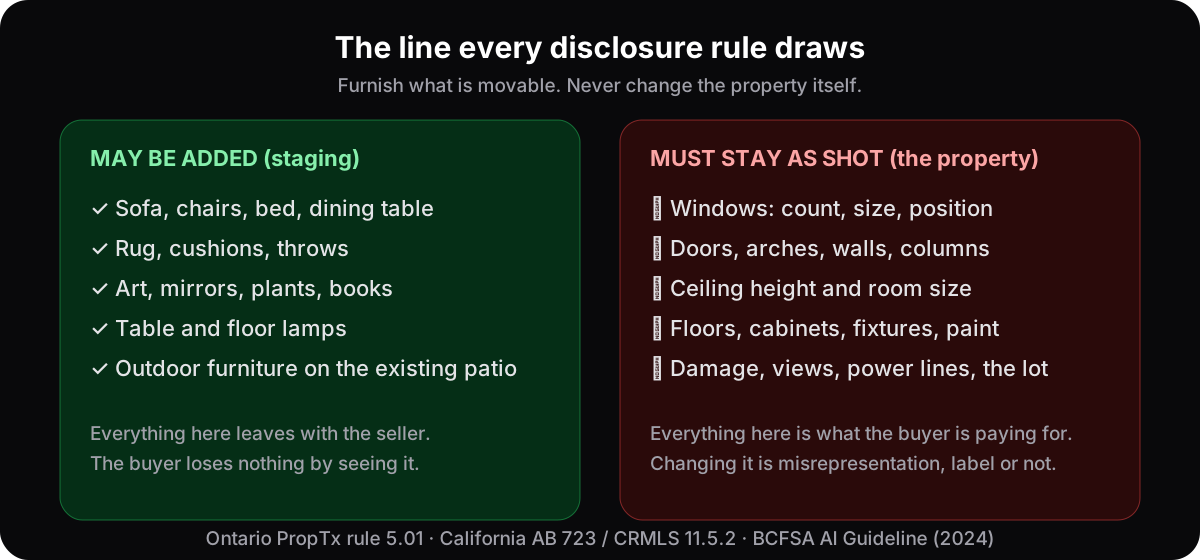
What that looks like on a real frame:
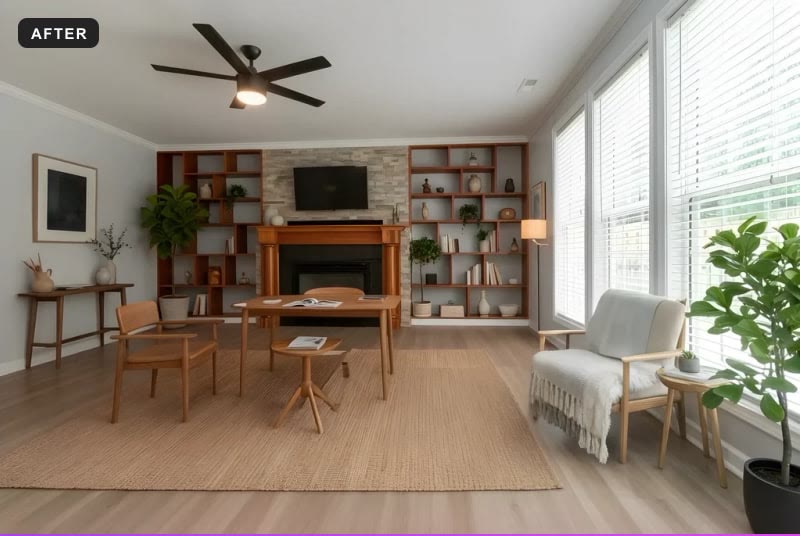
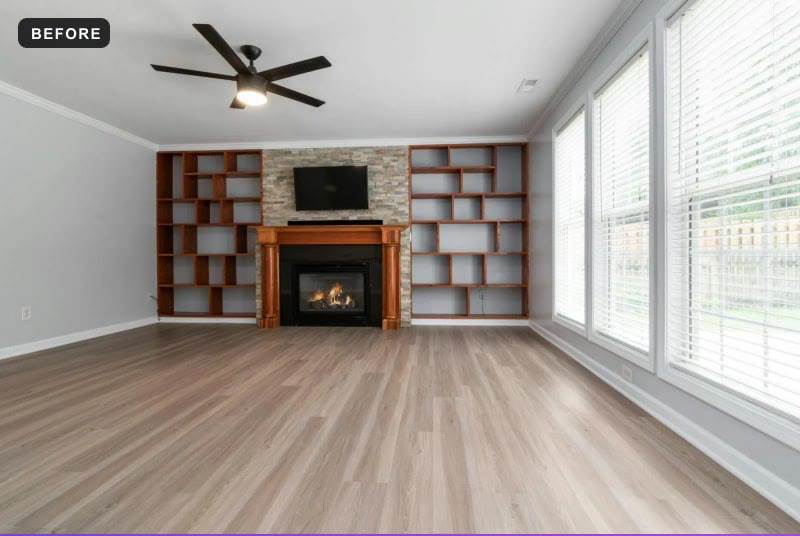
Two caveats on that reading, stated plainly because they matter more than the reading does. First, it is our interpretation, not the rulebook's, and PropTx has not published a worked example that settles it. Second, an interpretation that is defensible is not the same as one that is safe: if you are unsure, the conservative choice is to keep staged images off the MLS entirely and use them where the rule does not reach.
Where does rule 5.01 not reach?
Rule 5.01 governs images submitted to the MLS® System. Your own website, social channels, email campaigns, printed brochures and paid advertising sit outside the PropTx rulebook. They are not outside the law: the Code of Ethics under Ontario's real estate legislation applies to advertising wherever it appears, and it requires that representations not be false, misleading or deceptive.
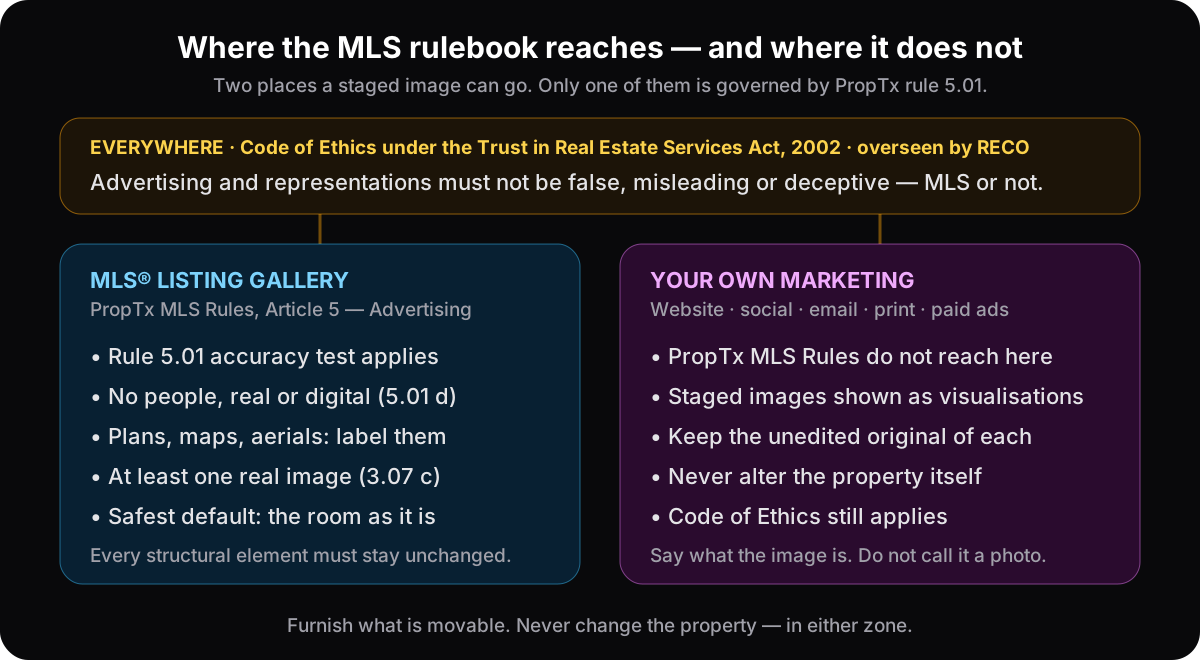
That is why the sensible workflow for a lot of Ontario agents is to keep the MLS gallery to photographs of the property as it stands, and use staged images in the marketing they control — clearly presented as visualisations, with the untouched original kept alongside.
Sitting above all of it is the regulator. Ontario registrants are overseen by the Real Estate Council of Ontario under the province's real estate legislation, the Trust in Real Estate Services Act, 2002, and its Code of Ethics, which requires that advertising and representations must not be false, misleading or deceptive. That obligation applies wherever you advertise, including the places the MLS rules do not govern. We have not reproduced a specific ethics rule number here, because unlike the PropTx rulebook we have not read the current regulation end to end, and repeating a number we have not verified is the exact error this article is about.
What should an Ontario agent actually do?
Keep the property exactly as photographed, keep the MLS gallery to real photographs by default, use staged images in the marketing you control and call them visualisations, keep the unedited original of every staged frame, and ask your brokerage and board before relying on anyone's reading of 5.01 — including ours. In detail:
If you list in Ontario, the following is defensible without needing anyone's interpretation to be correct:
- Never alter the property itself. No widened rooms, no removed columns, no added windows, no concealed damage, no corrected ceilings. This is the part of 5.01 that is not ambiguous.
- Keep the MLS gallery honest by default. Photographs of the property as it is. If you include a staged image, satisfy yourself that every structural element in it is unchanged, and be ready to say so.
- Use staged images freely in your own marketing, described as visualisations rather than as photographs of the home — and keep the unedited original of every staged frame. It is the first thing a careful buyer is entitled to ask for.
- Ask your brokerage and your board before you rely on any of this. Boards differ, rules are amended, and PropTx may publish guidance that settles the question after this article was written.
If most of your listings are vacant, our page for listing agents shows how a staging tool fits inside that position: furnish the room, keep its geometry, keep the original.
Why we wrote this
We make an AI virtual staging tool, so we have an obvious interest in the answer being permissive. That is a reason to be more careful rather than less. Every quotation above can be checked against the PropTx MLS® Rules document, and the two places where we are interpreting rather than reporting are labelled as such.
If your reading of 5.01 differs from ours we would genuinely like to hear it — get in touch. For the general principles behind disclosure rather than the Ontario specifics, our guide to virtual staging disclosure rules covers the wider picture, while the listing agent's workflow covers how staging fits into preparing a listing in the first place.
For a third approach again, British Columbia's regulator has published its own guidance on AI in real estate — the only one of the three where the regulator, rather than a listing platform or a legislature, addresses virtual staging directly.
Questions Ontario agents ask
Is AI virtual staging banned on the Ontario MLS?+
No. The PropTx MLS® Rules, in force since 2 December 2024, ban digitally altered images — including AI-made ones and digital staging — that do not accurately depict the listed real estate. That is an accuracy test, not a ban on the tool. A staged image that leaves every wall, window, ceiling and fixture exactly as photographed is arguably within it; one that changes the room is not.
Does Ontario require an unstaged photo for every virtually staged photo?+
No. We searched the full PropTx rulebook: there is no pairing rule. The only rule about image count is 3.07(c), which requires at least one image of the listed real estate. The one-original-per-staged-image requirement is real, but it belongs to California's CRMLS, and California's statute AB 723 adds a link to the unaltered image. Ontario's rulebook has neither.
Do virtually staged photos need a label in Ontario?+
Not under the PropTx MLS® Rules. They require labels for architectural drawings, floor plans, maps, aerial and distance photographs and model-home photos, and never mention staged images. We still recommend a plain "virtually staged" note on the image or in its caption: it costs nothing, and the Code of Ethics that governs all of your advertising is about not misleading anyone.
Can I use virtually staged images on my own website and social media?+
Yes. Rule 5.01 governs images submitted to the MLS® System; your website, social channels, email, print and paid ads sit outside the PropTx rulebook. They still sit under RECO's Code of Ethics, so present staged images as visualisations rather than as photographs of the home, keep the untouched original, and change only what is movable — never the property itself.
Who decides — PropTx or RECO?+
Both, at different levels. PropTx and its member boards apply the MLS® Rules to listings on their system; a breach is a listing-platform matter. RECO administers the Trust in Real Estate Services Act, 2002 and its Code of Ethics, which govern every registrant's conduct and advertising, MLS or not. An image can be accepted by the MLS and still be misleading under the Code, so both tests apply.
Last checked against the PropTx MLS® Rules effective 2 December 2024 on 10 September 2026. Rules change; verify before relying on this.
See it on your own room
Upload a photo and watch AI restage your space in 15–60 seconds, depending on how much detail it has — free to try, no credit card.
Try AI Flip Room freeRelated reading
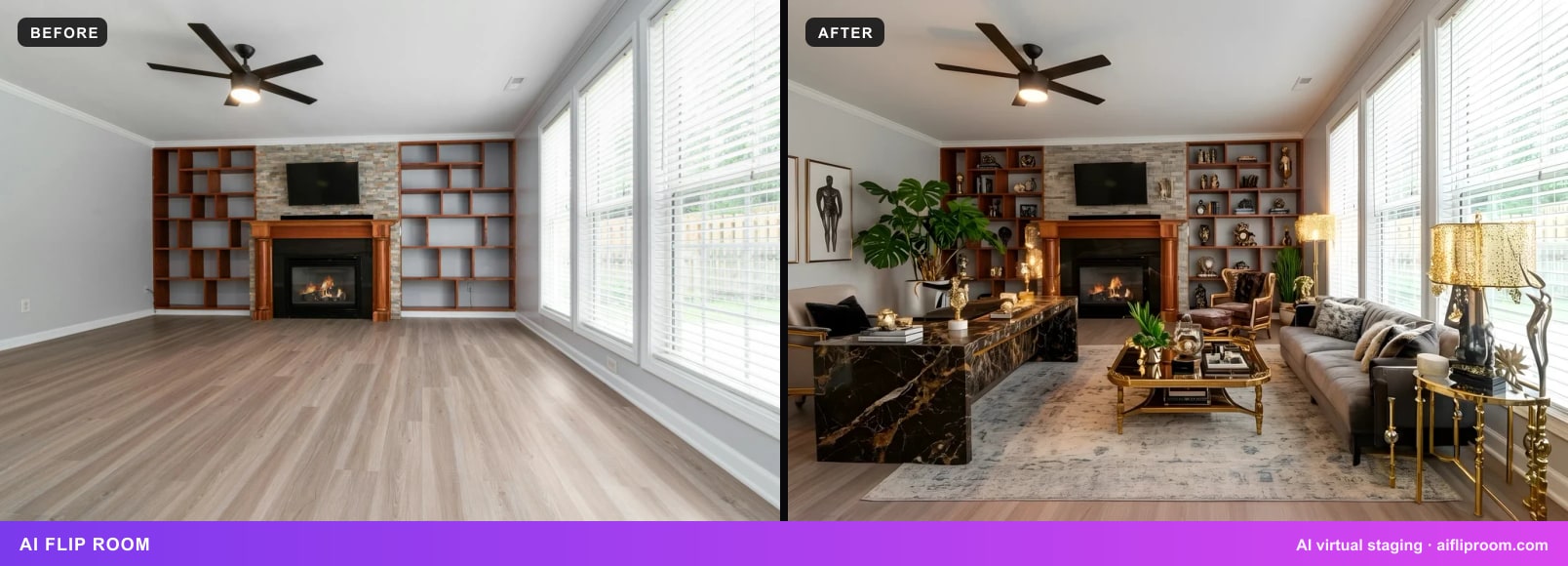
Virtual Staging Disclosure Rules: How to Label Staged Photos
Why disclosure is required, three ways to label a virtually staged photo, what you may change vs never touch, and the Ontario, California and BC rules.
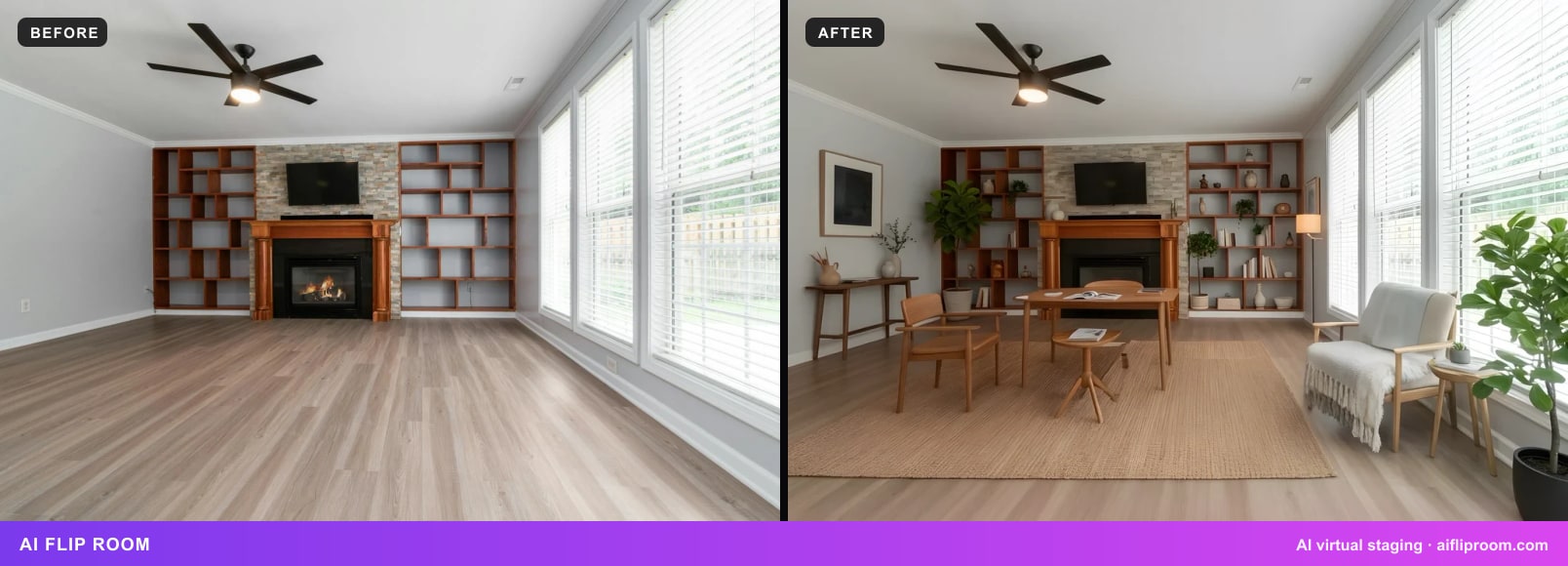
Virtually Staged Listing? 5 Things a Buyer Can Demand
AI staging is legal in Ontario, California and BC — with conditions. Here is what a buyer is entitled to ask for, what the rules actually say, and the one line no photo may cross.
California Virtual Staging Rules: AB 723 + CRMLS 11.5.2
Since 1 January 2026 California regulates altered listing photos by statute. What AB 723 requires, what CRMLS 11.5.2 adds, the $250 fine, and a checklist.