Virtually Staged Listing? 5 Things a Buyer Can Demand
AI Flip Room · 10 min read
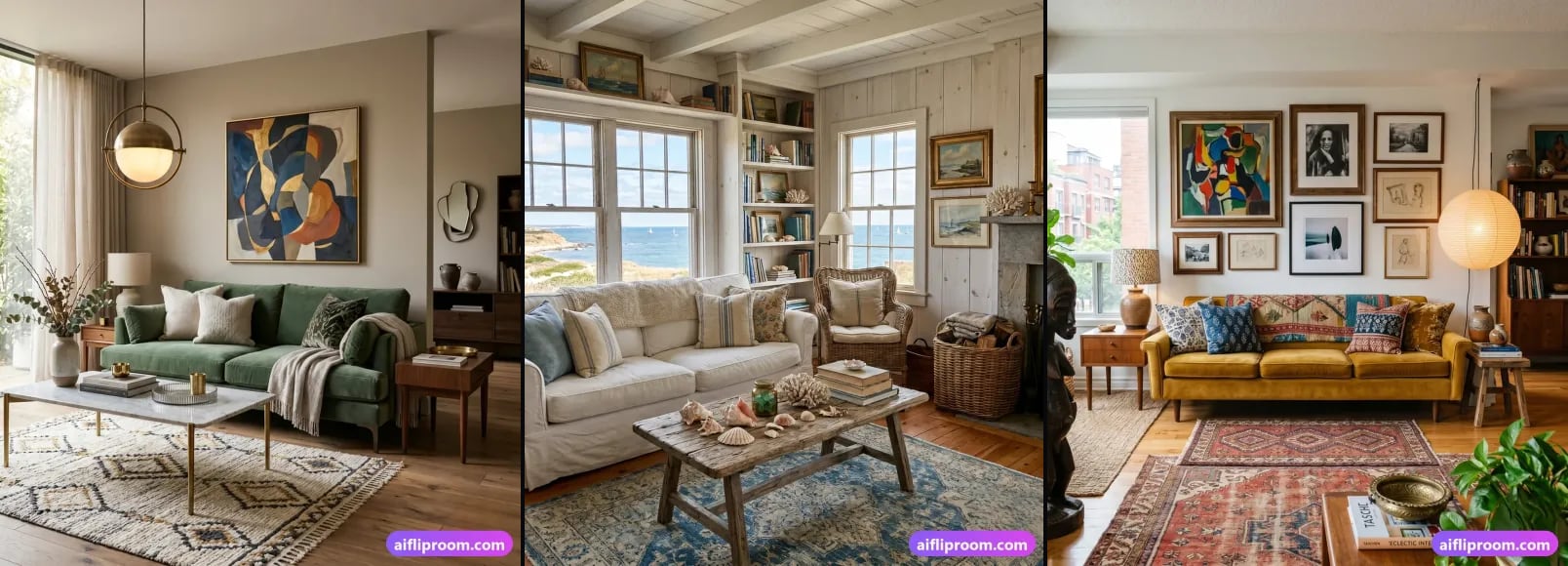
You open a listing. The living room is warm, furnished, lit like a magazine. You drive over and find an empty box with a stain on the ceiling and a window half the size it looked. The photo said "virtually staged" in small letters, so the agent shrugs: it was disclosed.
That shrug is wrong, and in every place we have read the rules for — Ontario, British Columbia, Quebec, Alberta, California, New York, Florida, Texas, Washington, Arizona, Illinois, the Bright MLS region of the Mid-Atlantic, Georgia, Colorado, Australia and the United Kingdom — it is wrong in writing. Disclosure covers the fact that a photo was edited. It does not cover what was edited. Here is what a buyer is entitled to, and how to tell staging from a lie. (If you only need the label decoded, start with what “virtually staged” means.)
The one line every rulebook draws
Strip away the legal language and every jurisdiction we have read draws the same line: furnishing is allowed, altering is not.
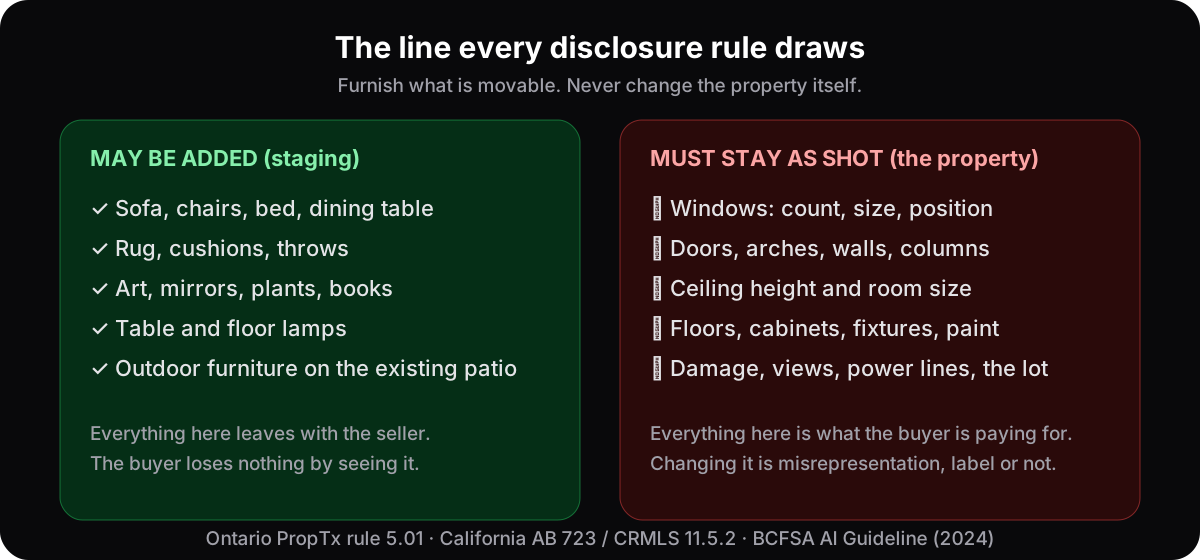
Ontario's PropTx MLS rule 5.01 bans altered images "that do not accurately depict the listed real estate" — an accuracy test, not a ban on the tool. California's AB 723 defines an altered image as one that adds, removes or changes elements, and the state's largest MLS spells out what may not be touched: wall colour, flooring, cabinets, wall dimensions, landscaping. British Columbia's regulator says it in plainer words still.
Furniture is movable; it leaves with the seller, and the buyer loses nothing by seeing it. The walls, windows, ceilings and floors are what the buyer is actually paying for. That is why a sofa in an empty room is staging and a window that grew twenty percent is misrepresentation — and why a label fixes the first and not the second.
What honest staging looks like
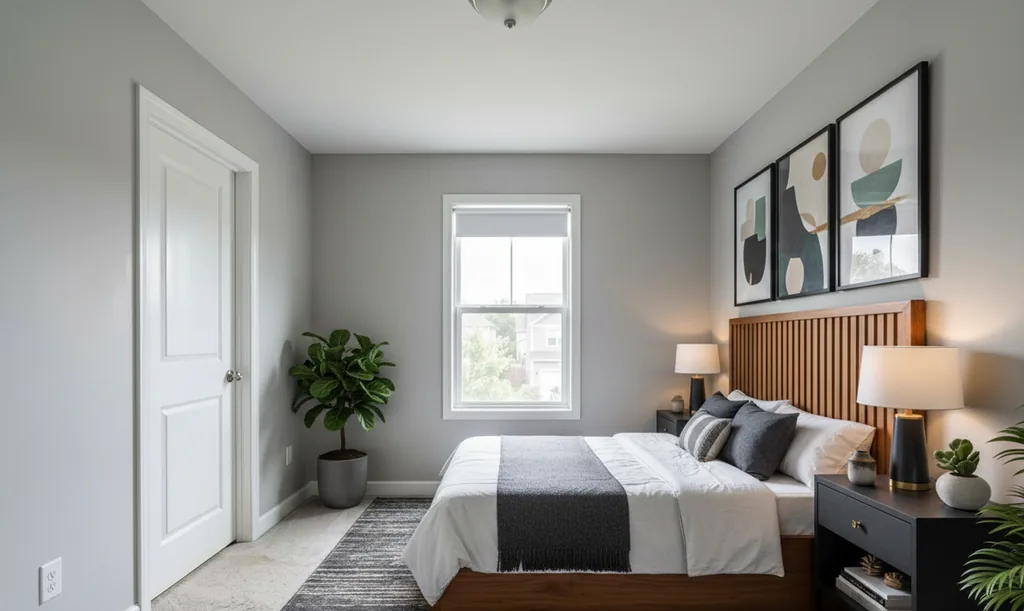
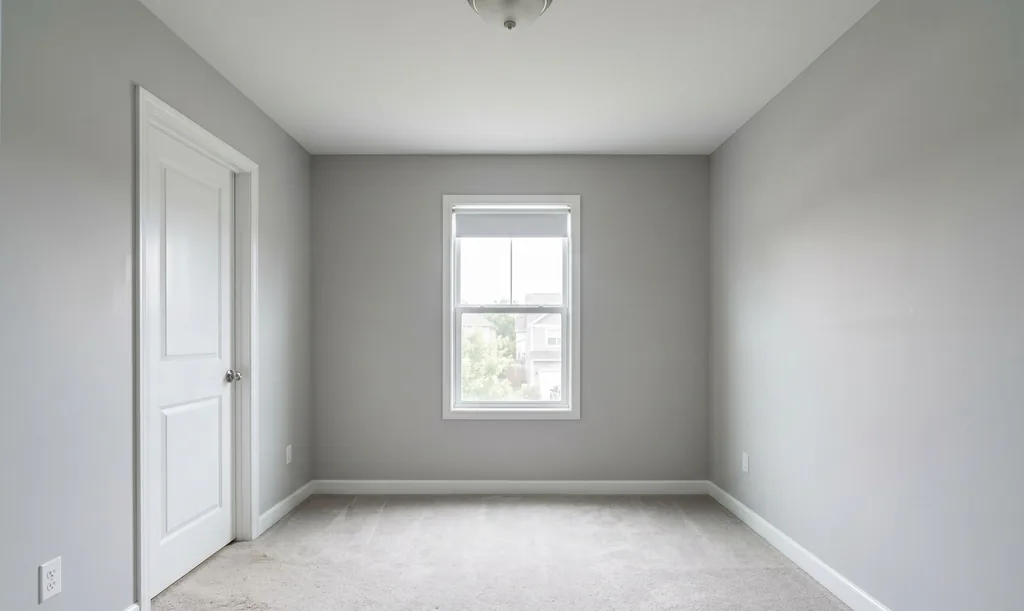
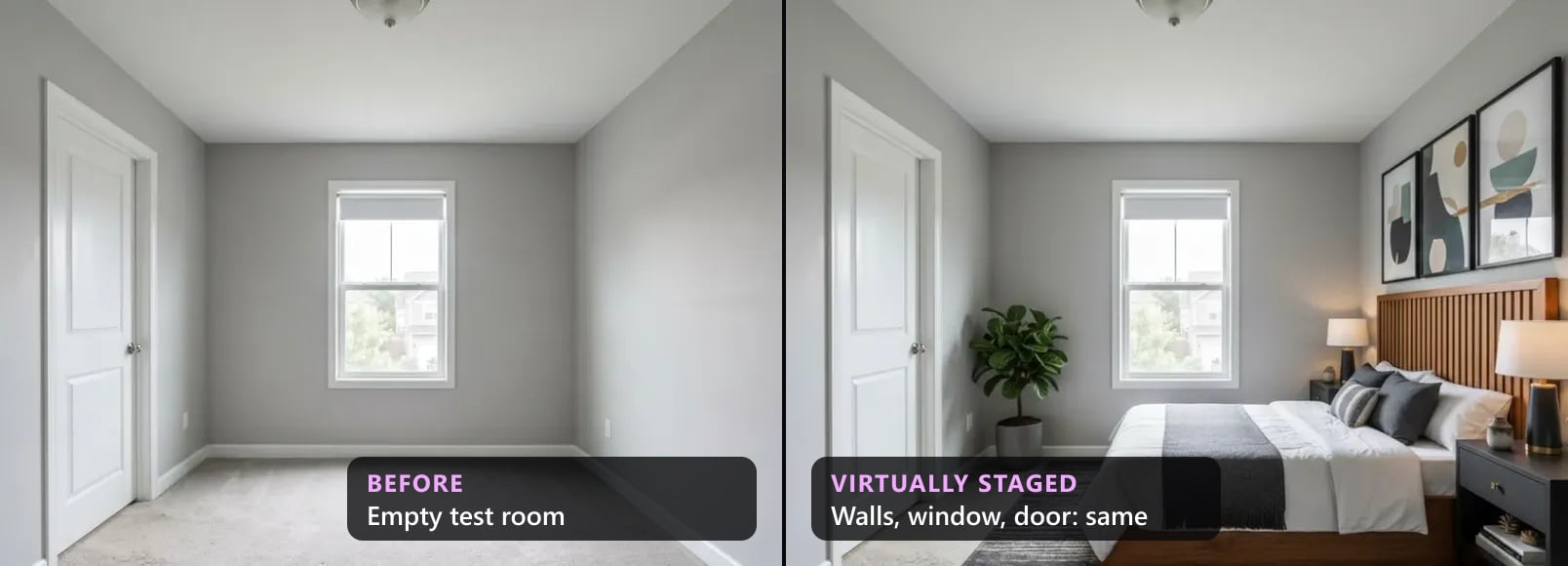
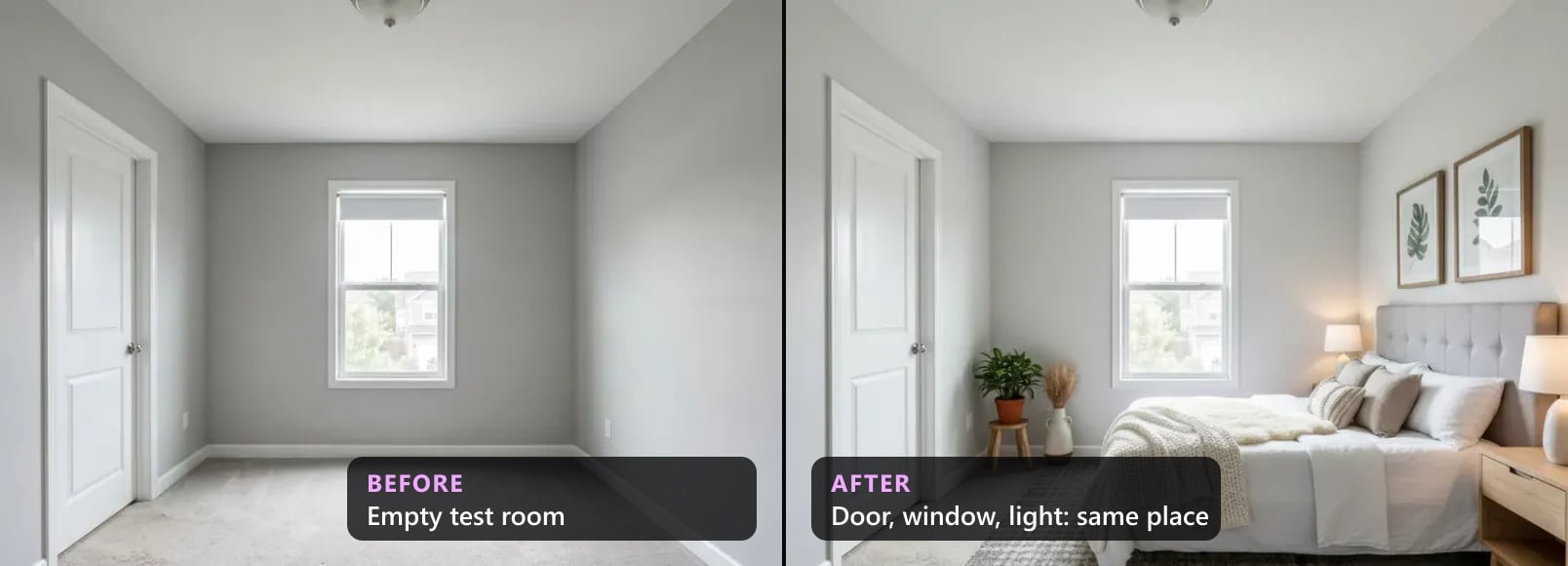
Look at the boring parts, not the furniture. The door and its frame, the window and its roller shade, the ceiling light, the grey walls: identical. The floor is the same floor. Nothing was moved, widened, brightened or repaired. If a listing's staged photo passes that test against its original, the staging is doing its job. Every look in our style library is held to the same line: the furniture changes, the room does not.
What you can demand
What to ask for, in order
- 1The unedited original of every staged photoSame angle, full size, not a thumbnail. In a CRMLS listing it must already be there, immediately before or after the staged image; on an upstate New York MLS, directly before it; on Arizona's ARMLS, directly before or after it; on Georgia MLS, under its 2020 photo policy, immediately before or immediately after it; on Austin's Unlock MLS, somewhere in the listing; on Colorado's elevateMLS, uploaded with the listing, place not prescribed. Elsewhere, ask — a listing agent who staged honestly has the file and will send it.
- 2A written list of what was changed besides furniturePaint colour, floor finish, lighting, sky. Any of these is a design preview, not a listing photo, and the agent should say so before you drive over.
- 3The room dimensions from the floor plan or measurementThe most common complaint from buyers is furniture that would never fit. Compare the staged sofa to the measured wall; if it could not fit, the render changed the scale.
- 4A look at the windows, one by oneCount them in the original and in the staged image. Same number, same size, same position. Windows are the first thing a careless render enlarges.
- 5The disclosure label itselfOn the photo or in its caption. If a listing has staged images with no label at all, that is worth a note to the brokerage wherever the listing is.
Where the rules are strictest, and where they are vaguest
California has the most specific regime. Since 1 January 2026, AB 723 requires a conspicuous statement that an image was altered plus a link to the unaltered original; CRMLS rule 11.5.2 goes further and requires the original to appear in the listing immediately before or after the staged image, names the acceptable label wording, and bans altering any real part of the property outright. A violation earns a warning, then a $250 fine. A buyer on a CRMLS listing who cannot find the original next to a staged photo has already found a rule breach; in Los Angeles, check which MLS it is, because The MLS™/CLAW asks for a label and a link instead of the pair.
Ontario relies on a single sentence. The PropTx rulebook that governs most of the province's listings does not use the phrase "virtual staging" and has no pairing requirement — we read the rulebook end to end to check. What it has is rule 5.01's accuracy test, and above it section 37 of TRESA, the Act RECO administers, which bans false, misleading or deceptive advertising everywhere, MLS or not. An Ontario buyer has no rule that hands them the original; they have to ask.
Alberta writes it into the MLS rulebook. Its provincial MLS rules define virtual staging as adding unattached furniture of realistic size, require it to be disclosed in the public remarks, and do not permit "virtually enhanced" images at all. There is no pairing rule there either; a buyer who wants the original has to ask.
New York depends on the MLS. Upstate, the Alliance MLS rules require "Virtually Staged" written on every staged photo and the unaltered original directly before it, so a buyer there should not have to ask. In New York City and on Long Island we found no staging rule; the state's demand for "an honest and accurate description of the property" still applies, so ask.
Florida depends on the MLS too, and mostly keeps the label off the photo. Stellar MLS wants "Virtually staged" in each staged photo's description and public remarks that open with "One or more photo(s) was virtually staged."; it has no pairing rule, so ask for the original. In Northeast Florida, realMLS requires a non-enhanced photo "to show the difference".
Texas has no state rule and four MLS rulebooks that differ. In Houston, HAR limits staging to "furnishings and wall décor", wants the note in the Photo Description, and allows an image that alters the property only under a fixed watermark, beside the unaltered view and never as the primary photo, so a Houston buyer who sees that watermark should look for the real view next to it. In Austin, Unlock MLS requires "a non-virtually staged image of the same view", so ask where it is if you cannot find it. In Dallas–Fort Worth, NTREIS allows "only a true current photograph" without modifications that misrepresent, and in San Antonio SABOR wants the virtually staged option ticked under the photo description; neither has a pairing rule, so ask.
Washington is the state with the least in writing. No statute or Department of Licensing rule mentions staging; what a buyer has is RCW 18.85.361, which disciplines a licensee for false descriptions they knew or with reasonable care could have known to be false, and the DOL's test that an advertisement must not be "capable of misleading a reasonable consumer". The rulebook most of the state follows, NWMLS's, is members-only; a secondary source says it requires a "virtually staged" label. Ask for the original: nothing published in Washington hands it to you.
Arizona puts the label on the photo and the original next to it. Since 28 May 2026, ARMLS rule 8.23 requires every digitally altered photo, staging included, to carry the MLS's own "Digitally Altered" watermark and to sit directly before or after its unaltered original, so a buyer there should never have to ask. The same watermark also covers bigger edits — ARMLS lets an altered pool or landscaping through if it is disclosed — so compare the pair before you drive out. In Tucson, MLSSAZ wants "virtual staged" along the top of the image and the unmodified photo adjacent.
Illinois keeps the label off the photo and in the listing. MRED, the MLS of the Chicago area and much of the state, allows staged photos of furniture and other personal property, bans adding or removing anything outside the owner's control — a view of the Chicago Bean that cannot be seen from the property, power lines, water towers, a highway — and requires the answer Y in a field, "Are Any Property Photos Virtually Staged?", which adds a note to every report and the photo browser. It has no pairing rule, so ask for the original. In the Metro East, MARIS wants the original after an altered photo but exempts staging from that duty, so ask there too.
Bright MLS, the MLS of Maryland, Delaware, the District of Columbia and parts of Pennsylvania, New Jersey, Virginia and West Virginia, puts the label in the listing's text. Since 22 July 2026 its rules allow staged furniture and décor, ban adding or removing anything outside the owner's control — an impossible view, power lines, water towers, nearby roads — and require the Private and Public Remarks to say the image is "virtually staged or digitally modified". No watermark is required and text added to a photo is banned, so read the remarks. Bright has no pairing rule either, so ask for the original.
In Georgia, the three MLSs we read give three answers. FMLS, Georgia MLS and Hive MLS all allow staged furniture and décor and want the fact in the public remarks. FMLS bans text on the photo and Georgia MLS bans watermarks, so on those two read the remarks; Hive MLS also wants the label on the photo or in its description. Georgia MLS's photo policy of 9 September 2020 puts the current-state image immediately before or immediately after each staged one, so a buyer there should find the pair; on FMLS and Hive MLS there is no pairing rule, so ask for the original.
In Colorado, the answer depends on the MLS. REcolorado, IRES and elevateMLS all allow staged furniture; REcolorado and elevateMLS ban any photo where the true appearance of the property has been manipulated, the landscape included. REcolorado and IRES ask for no label, so read the remarks and ask; elevateMLS, in Colorado Springs, wants the exact phrase "Virtually Staged" in the Property Description and the Photo Remarks, puts its own "Virtually Staged" watermark on the photo and wants the unaltered original uploaded as well, so a buyer there should find both the label and the original in the listing.
In Australia, no statute or regulator we read names staging; the Consumer Law, the state regulators and the portals ban a misleading photo. NSW Fair Trading says agents must not "change the appearance of a property by digitally removing or adding features", so the room, the view and the surroundings should be as photographed; realestate.com.au requires AI-edited photos to carry a disclosure "on or adjacent to the relevant content", so look for it on or beside the image; on Domain, which allows no text on images, read the description and ask. No Australian rule we read asks for the original; ask for it.
In the United Kingdom, no law or code we read names staging; the consumer law, the codes and two of the portals ban a misleading picture. Rightmove says AI images "should not be used to disguise the property's true condition, add features that do not exist" and "should be displayed alongside genuine photographs of the property", so on Rightmove look for the real photo in the gallery; Zoopla's member terms say a member whose photos are made with AI "will make this clear", so read the description. No other UK text we read asks for the original; ask for it.
British Columbia and Quebec are the two provinces where the regulator itself has addressed AI. BCFSA's guideline says licensees should label altered photos, and its advertising guidance draws the garbage-can-versus-power-lines line quoted above. It is guidance, not statute — but it is the regulator's stated reading of a rule that is binding. Quebec's OACIQ goes further: a clear, visible AI label as a minimum, and the originals kept on file for anyone who asks.
Why buyers are right to be suspicious
A recent thread in a Victoria community forum about a local listing gathered more than a hundred replies in two days, and the tone was not "this is fine because it was labelled". Buyers described furniture that could not physically fit the room, windows that had grown, a shed rendered as a lounge, light levels that bore no relation to the real space. The consensus was blunt: if the photos are that far from reality, what else is the agent hiding?
We build a staging tool, so read this with that in mind: those buyers are right. Staging that changes the room is not a stronger version of staging. It is a different act, and the rules in every place we have read already say so. The fix is not to ban the tool — it is to hold every staged photo to the original, and to make asking for the original normal. Not every gap between the listing and the viewing is staging, though: the lens, the light and the age of the photos do more of it than people think, and we went through them one by one in why the house didn’t look like the photos.
For agents reading this
The buyer's checklist above is your pre-publication checklist. Keep the original of every staged frame, label plainly, list anything that changed besides furniture, and never let a render touch a wall, a window or the light. If a tool cannot promise that, it is the wrong tool for a listing — use it for design previews and say so. Our own approach to that line is in why the geometry never moves, the listing workflow that keeps you inside the rules is in the agent's staging workflow, and the short version for a practice — what a render may change, what it never touches, what it costs — is on virtual staging for agents.
Questions buyers ask
Is AI virtual staging legal in real estate listings?+
Yes, in every place we have read the rules for — Ontario, British Columbia, Quebec, Alberta, California, New York, Florida, Texas, Washington, Arizona, Illinois, the Bright MLS region of the Mid-Atlantic, Georgia, Colorado, Australia and the United Kingdom — with conditions. All of them require that the image not misrepresent the property, and most ask for a label. California adds a statutory requirement for a link to the unaltered image; CRMLS, upstate New York's Alliance MLS rules, Arizona's ARMLS and, under its 2020 photo policy, Georgia MLS require the original to sit next to the staged photo, Austin's Unlock MLS requires an unstaged image of the same view, and Colorado's elevateMLS requires the unaltered original uploaded with the listing.
Can I demand the original, unstaged photo?+
In a CRMLS listing you should not have to — the rule places the original immediately before or after the staged image; on an upstate New York MLS it goes directly before, on Arizona's ARMLS directly before or after, and on Georgia MLS, under its 2020 photo policy, immediately before or immediately after; on Colorado's elevateMLS the unaltered original must be uploaded with the listing, though the rule does not say where; in Australia no rule we read asks for it; in the United Kingdom, Rightmove's help page says AI images "should be displayed alongside genuine photographs of the property", and no other UK text we read asks for the original. Everywhere else, ask the listing agent directly. An honest staging job keeps the original by definition; a refusal tells you something.
What is the difference between virtual staging and misrepresentation?+
Staging adds movable furniture and decor to a photo of the room as it is. Misrepresentation changes the room: a wider space, a bigger window, a repaired ceiling, a repainted wall, hidden damage, a different view. The disclosure rules in every jurisdiction we have read turn on that distinction, not on the tool used.
Does a 'virtually staged' label make any edit acceptable?+
No. The label discloses that editing happened. It does not license structural changes. CRMLS says so outright: users cannot add, remove or modify any real part of the property. Ontario's rule bans altered images that do not accurately depict the property regardless of labelling.
Who do I complain to about a misleading staged photo?+
The listing brokerage first; then the local real estate board or MLS; then the regulator — RECO in Ontario, the Department of Real Estate in California, BCFSA in British Columbia, the OACIQ in Quebec, RECA in Alberta, the Department of State in New York, the Florida Real Estate Commission in Florida, the Texas Real Estate Commission in Texas, the Department of Licensing in Washington, the Department of Real Estate in Arizona, the Department of Financial and Professional Regulation in Illinois, the Maryland Real Estate Commission, Pennsylvania's State Real Estate Commission, the Virginia Real Estate Board, the Georgia Real Estate Commission and the Colorado Real Estate Commission; in Australia, the state regulator (NSW Fair Trading, Consumer Affairs Victoria, Queensland's Office of Fair Trading, Consumer Protection in Western Australia) and, for the Consumer Law, the ACCC; in the United Kingdom, local Trading Standards (in Northern Ireland, the Department for the Economy), the agent's redress scheme, such as The Property Ombudsman for its members, and the ASA for the advert itself. Keep the staged image and the original side by side as your evidence.
This is not legal advice. Rules change; the articles on each jurisdiction linked above quote the primary sources and say what we did and did not verify.
See it on your own room
Upload a photo and watch AI restage your space in 15–60 seconds, depending on how much detail it has — free to try, no credit card.
Try AI Flip Room freeGot a question about this?
Something unclear or not covered? Ask here. We read every question and answer the useful ones right in the article. Nothing you write is published.
Related reading
AI Staging in Ontario: What the CBC Story Means (2026)
CBC Toronto looked at AI-staged listing photos in Ontario. What it found, what PropTx, ITSO and RECO require, and how to stage without misleading buyers.
We Checked 300 AI-Staged Renders: What Breaks (2026)
Our quality checker's data on 300 AI-staged renders, Aug–Oct 2026: how many failed, what broke most (windows, archways, doors), what to check by eye.
Virtual Staging Cost in 2026: Free to $75+ per Photo
Physical vs hand-done virtual staging ($10–75 per photo) vs AI (free to a few dollars). Real 2026 ranges, what drives price, and which fits your listing.