Does Virtual Staging Help Sell Homes? An Honest Answer
AI Flip Room · 10 min read
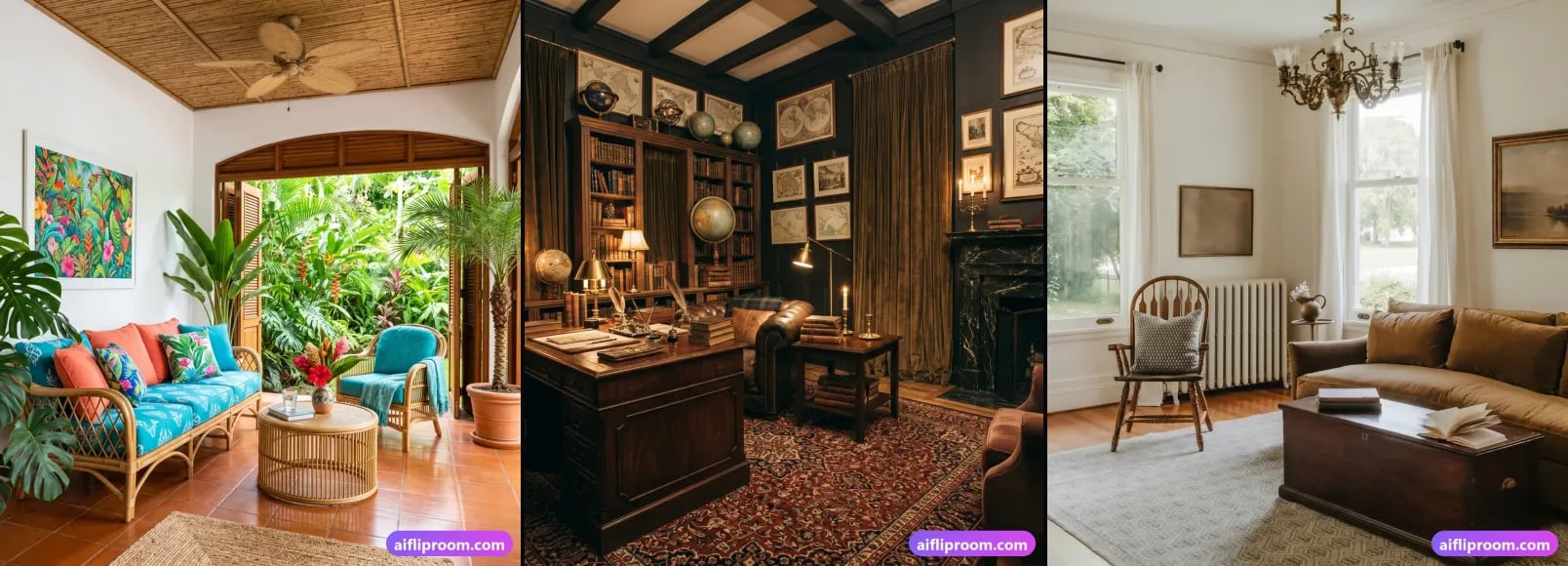
Walk into an empty house and you feel it at once: footsteps echo, the rooms look smaller than they are, and your eye lands on every scuff and outlet. Put a sofa under the window, a rug on the floor and art on the walls, and the same room reads as a place someone could live. That shift is the whole reason staging exists, and it is why sellers ask, before they list, whether virtual staging is worth it.
The honest answer is more useful than a plain yes. Virtual staging changes one thing, the listing photo, and the photo decides whether a buyer clicks and books a showing. It does not change the price, the condition or the location, and it is not in the room at the showing. This article says where that one lever helps, where it is wasted, what the evidence actually measures, and what goes wrong when people ask a photo to do more. We make an AI staging tool, so read it knowing that.
Does virtual staging sell homes?
Not on its own, and nobody honest will tell you otherwise. Virtual staging changes the listing photo, and the photo decides whether a buyer clicks, saves and books a showing. It does not change the price, the condition or the location. It helps most where the photo was the problem: vacant homes and rooms buyers cannot read.
"Sell" is doing a lot of work in that question. A sale has several steps, and staging touches the first of them. Buyers meet a listing on a screen before they meet it at the door, scrolling a grid of thumbnails and deciding in a glance which ones to open. At that moment the photo is the listing, and a bare room in the lead position says "vacant, do the imagining yourself". A furnished room says "look closer". That is the click, and the click is what becomes a saved listing, a showing request and, eventually, a person standing in the room.
From the showing onward, staging is gone. The buyer walks through the real room, empty or not, and decides on what they can see, what the inspection finds and what the comparables say. A staged photo cannot move any of that, and it should not try. What it can do is make sure the right buyers turn up in the first place, which for a vacant listing is most of the battle; the playbook for that case is in how to sell an empty house faster.
What does staging actually change?
Three things, all of them in the buyer's head. It removes the imaginative work of furnishing a blank room, it gives the eye a yardstick for scale, and it turns a thumbnail that says vacant into one that says look closer. Everything staging does for a sale comes through one of those three doors.
Put those three on the path from listing to offer and you can see exactly how far staging reaches, and where it stops.
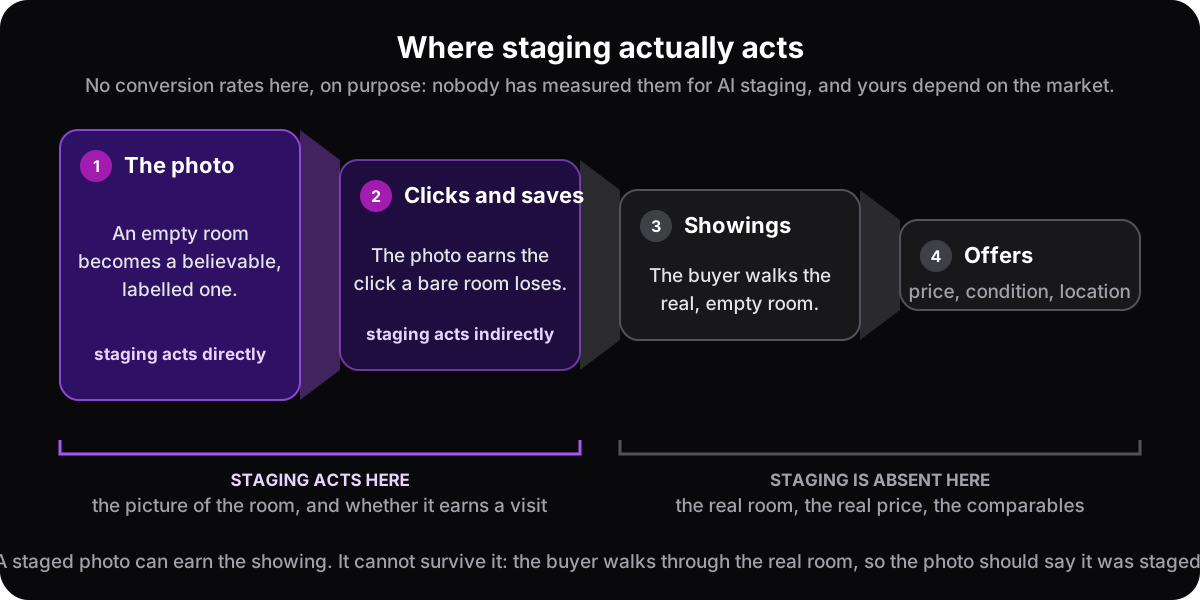
Each link in that chain is reasonable, and none is guaranteed on any single listing. A better lead photo tends to earn more clicks; more clicks tend to bring more showings; more showings widen the pool of buyers, and a wider pool tends to support stronger offers and less time on the market. Staging is a cheap way to push the first domino. It has no hand on the last one.
When does it help most, and when is it wasted?
It helps most when the photo is the weak point: a vacant home, a room nobody can read, a dated interior with good bones, an empty patio. It is wasted when the problem lies elsewhere: a home that is already furnished and photographs well, a price the comparables do not support, or condition a photo would have to hide.
| Situation | What the staged photo changes | What it cannot change | Verdict |
|---|---|---|---|
| Vacant home | Scale, warmth and purpose appear in every room; the lead photo earns the click | The echo at the showing — the buyer still walks an empty house, which the label prepares them for | The clearest win |
| Awkward or hard-to-read room | Gives the space a job: office, nursery, reading corner | The room's actual size and shape | Strong |
| Dated interior, sound structure | Furniture pulls the eye from tired finishes and shows the potential | The finishes themselves — counters, carpet and paint stay as shot | Helps, if labelled and nothing is altered |
| Empty patio or deck | Outdoor furniture on the surface that exists shows the space in use | The lawn, the planting, the fence, the view | Helps |
| Already furnished, photographs well | Little — staging over a good photo adds a label and not much else | — | Usually skip |
| Overpriced for its market | More clicks, then more disappointed viewings | The comparables — informed buyers do not overpay for a photo | Fix the price first |
| Condition problems: damage, a missing window, a low ceiling | Nothing it may change; these must appear as they are | The property — hiding a defect is misrepresentation, label or not | Fix or disclose, never render away |
| Weak source photo: dim, tilted, cluttered | A weaker render, whatever tool makes it | The camera work | Re-shoot first |
The middle rows are where sellers go wrong in both directions: staging a furnished home that did not need it, and asking staging to fix a price or a condition problem it cannot touch. The top row is the case with the most to gain, and if the idea is new to you, what virtual staging is covers the basics. For the bottom row, the photo habits that matter are in how to photograph rooms for virtual staging.
What does the evidence say?
The strongest public evidence is about physical staging, and it is encouraging but modest. In the National Association of Realtors' 2025 survey, 83% of buyers' agents said staging made it easier for buyers to envision a home as theirs, 49% of sellers' agents saw less time on market, and 29% of agents reported offers 1–10% higher.
All four figures come from NAR's 2025 Profile of Home Staging, a February 2025 survey of 1,266 Realtors released in May 2025. Read them carefully, because they say less than they are often made to say. They describe physical staging: real furniture, delivered and rented for the life of the listing, present at every showing. They are agents' observations, not a controlled comparison of staged and unstaged homes. And the headline numbers are not majorities: 49% of sellers' agents saw shorter time on market, which means the other half saw no difference or could not tell, and 29% saw offers 1–10% higher, which means most did not.
What carries over to virtual staging, and what does not: the 83% figure is about a picture in the buyer's head, and a photo can put it there. That is the part virtual staging shares with physical staging, at a fraction of the cost. The time-on-market and offer figures also include something a photo cannot deliver, the furnished room at the showing. Nobody has surveyed AI staging at NAR's scale, and we would be suspicious of a number that claimed to; if you see a percentage without a source, ask for the source. The cost side of the comparison, with the arithmetic, is in what virtual staging costs.
What can go wrong?
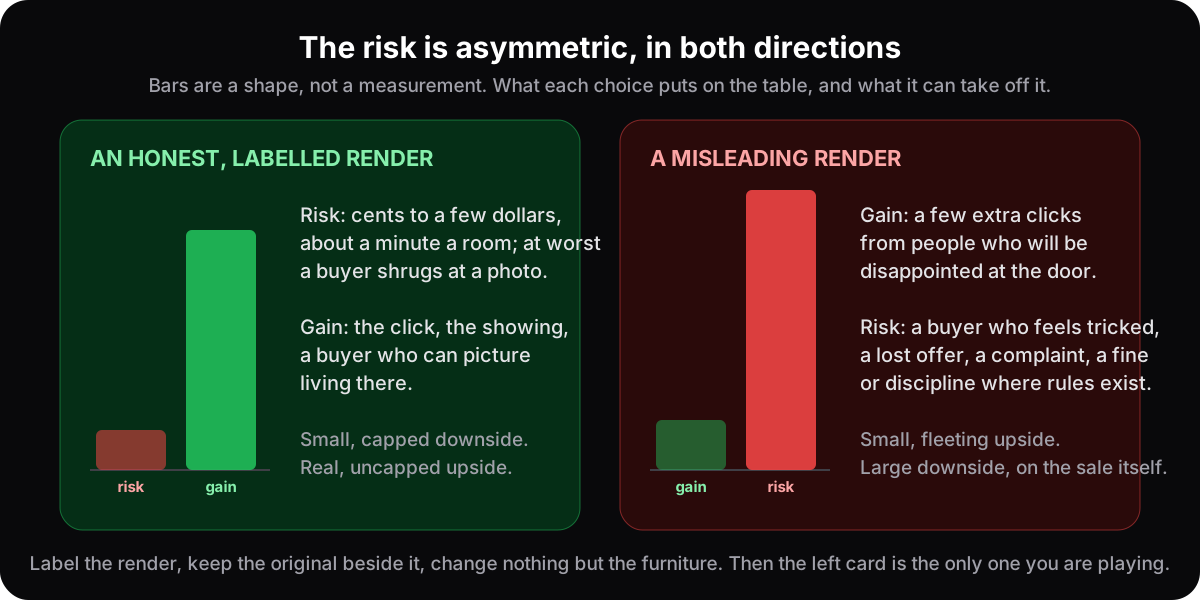
Five things, all of them avoidable. The render promises a room the showing cannot deliver. It changes the property instead of the furniture. It goes out without a label. It is built on a dim, tilted source photo. Or it is asked to rescue a price. Each costs more than the render ever saved.
- The expectation gap. The buyer who fell for the photo walks into the real room. If the render flattered what is there, the visit confirms it; if it invented a room, the visit ends in distrust at exactly the wrong moment. The same NAR survey has a line worth remembering: 58% said buyers were disappointed by how homes looked compared with those portrayed on TV shows. Buyers arrive with a picture already in their heads; a staged photo should narrow the gap between picture and room, not widen it.
- Altering the property. Erasing a water stain, patching a ceiling, adding a window, "renovating" a kitchen in pixels: none of that is staging. It is misrepresentation whether or not the photo carries a label, and it is what a buyer can hold you to. Furnish what is movable; leave what the buyer is paying for as it was shot.
- No label. The written rules differ in form and agree in substance. California requires disclosure by statute: a visible statement that the image was altered and a link to the original. British Columbia's regulator says staging may be acceptable if the photo is labelled, backed by the ban on misleading advertising. Ontario's MLS rulebook has no label rule for staged images, only the test that every altered image must accurately depict the property, and a label still costs nothing there. The wording and the three ways to label are in virtual staging disclosure rules; what a buyer is entitled to ask for is in what buyers can demand from a virtually staged listing.
- A weak source photo. Any tool restages what it is given. A dim, cluttered, tilted photo produces a weaker room, and no style choice fixes that. Open the blinds, switch the lamps off, hold the phone level, shoot the whole room.
- Asking it to fix the price. Better photos on an overpriced home bring more viewings and the same offers. If the comparables say the price is wrong, staging will not argue with them.
What does an honest staged photo look like?
Like the same room, furnished. The fireplace, the shelving, the windows, the fan and the floor are where the photographer left them; only what would leave with the seller is new, and the photo says so. If the window count matches in both frames, the render is doing its job.
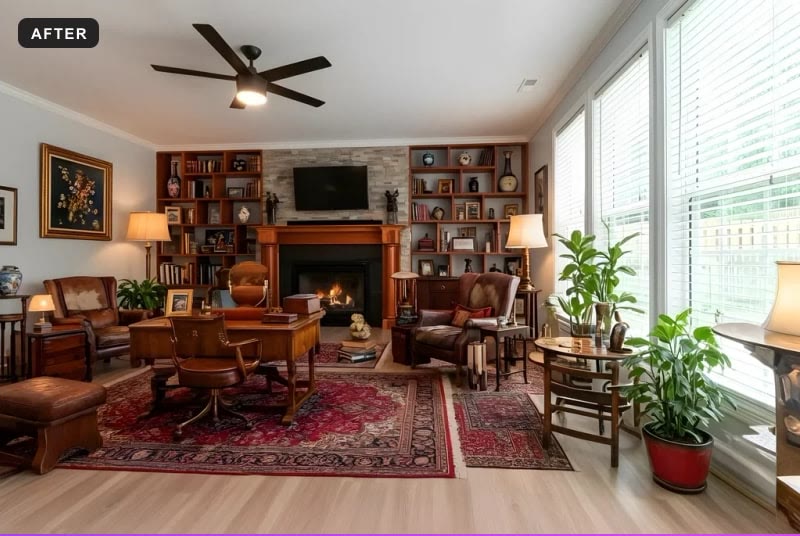
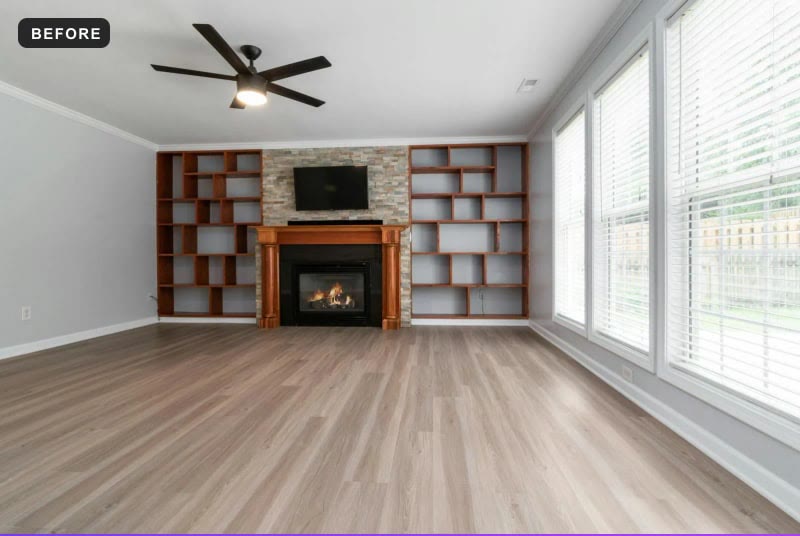
That check, count the windows and find the fireplace, is the whole discipline. At AI Flip Room it runs automatically on every render before you see it, comparing the result with the original photo (how that works), but keep the habit whatever tool you use, and keep the unstaged photo in the listing so the buyer sees both. More pairs are in the showcase.
How do you decide for your listing?
Ask five questions in order. Is it vacant or sparsely furnished? Are there rooms a buyer cannot read? Do the photos represent the home well? Can the render be honest and labelled? Which look fits the likely buyer? A yes at the top and a yes on honesty make staging worth doing; a no on honesty ends it.
- Is it vacant or sparsely furnished? If yes, staging is almost always worth it; the gap between empty and furnished is where the gains live.
- Are there rooms buyers might struggle to read? Awkward layouts, unclear-purpose spaces and tight rooms benefit most from a defined, furnished look.
- Do the photos represent the home well? Clean, level, daylight shots produce a stronger render. Fix the photos first.
- Can you stage it truthfully? If the render matches the home's real potential and you will label it, you are on solid ground. If it would have to hide something, do not.
- What look fits your buyer? Neutral and consistent beats bold; browse the style library and match the room to the person most likely to buy it.
The cost side settles the rest. Physical staging had a median cost of $1,500 with a professional service in NAR's survey; an AI render is free to a few dollars, and every AI Flip Room account starts with three free renders, no card required — the plans are on the pricing page. When a cheap, capped, reversible action carries a real upside, and the honest version carries almost no downside, the answer to "does virtual staging help sell homes" is: for the right listing, presented truthfully, yes, and the decision is easier than the question sounds. Upload one empty room and see it furnished in 15–60 seconds — start for free.
Questions people ask about staging and selling
Does virtual staging increase the sale price?+
There is no primary evidence that it does, and we do not claim it. The closest measurement is NAR's 2025 survey of physical staging, in which 29% of agents reported offers 1–10% higher on staged homes, which also means most saw no difference or could not tell. Virtual staging shares the photo effect with physical staging, not the furnished showing. Treat any price-lift figure for AI staging that arrives without a named source as marketing.
Are buyers put off by virtually staged photos?+
Not when the photo is honest and labelled. Buyers read a labelled staged image as a possibility rather than a promise, and it still helps them judge scale and picture the room. What puts them off is a gap between the photo and the showing: a render that hid damage, changed a window or invented a finish. Keep the unstaged photo beside the staged one and the label visible, and the render earns trust instead of spending it.
Is virtual staging as effective as physical staging?+
For the online glance, yes: a buyer scrolling thumbnails is looking at pixels either way. At the showing, no: only physical staging puts furniture in the room the buyer walks through. That is the trade. NAR's 2025 survey puts the median cost of a professional staging service at $1,500; a virtual render is free to a few dollars. The practical split is renders for the gallery and physical staging for the rare listing that truly needs the furnished walk-through.
Does virtual staging work on a home that is already furnished?+
Rarely worth it. If the rooms are furnished and photograph well, a render adds a label and little else, and it invites the question of what was changed. The exception is a room whose furniture works against the sale, a heavy or dated set that hides the room's size, where staging can show the space as a buyer would use it. Even then, the original photo stays in the listing and the render is labelled.
See it on your own room
Upload a photo and watch AI restage your space in 15–60 seconds, depending on how much detail it has — free to try, no credit card.
Try AI Flip Room freeGot a question about this?
Something unclear or not covered? Ask here. We read every question and answer the useful ones right in the article. Nothing you write is published.
Related reading

How to Sell an Empty House Faster With Virtual Staging
Why vacant listings sit longer, which 5 rooms to stage first, how to shoot them, and how to virtually stage an empty house honestly — a 6-step playbook.

Virtual Staging Cost in 2026: What You Will Really Pay
Physical vs hand-done virtual staging ($10–75 per photo) vs AI (free to a few dollars). Real 2026 ranges, what drives price, and which fits your listing.

Virtually Staged Listing? 5 Things a Buyer Can Demand
AI staging is legal in Ontario, BC, Quebec, Alberta, California, New York, Florida, Texas, Washington, Arizona, Illinois, Georgia, Colorado and Bright MLS, with conditions: what a buyer can demand.