Cyberpunk Interior Design
Neon glow, dark gloss, holographic surfaces, sci-fi futuristic mood.
Stage your room in Cyberpunk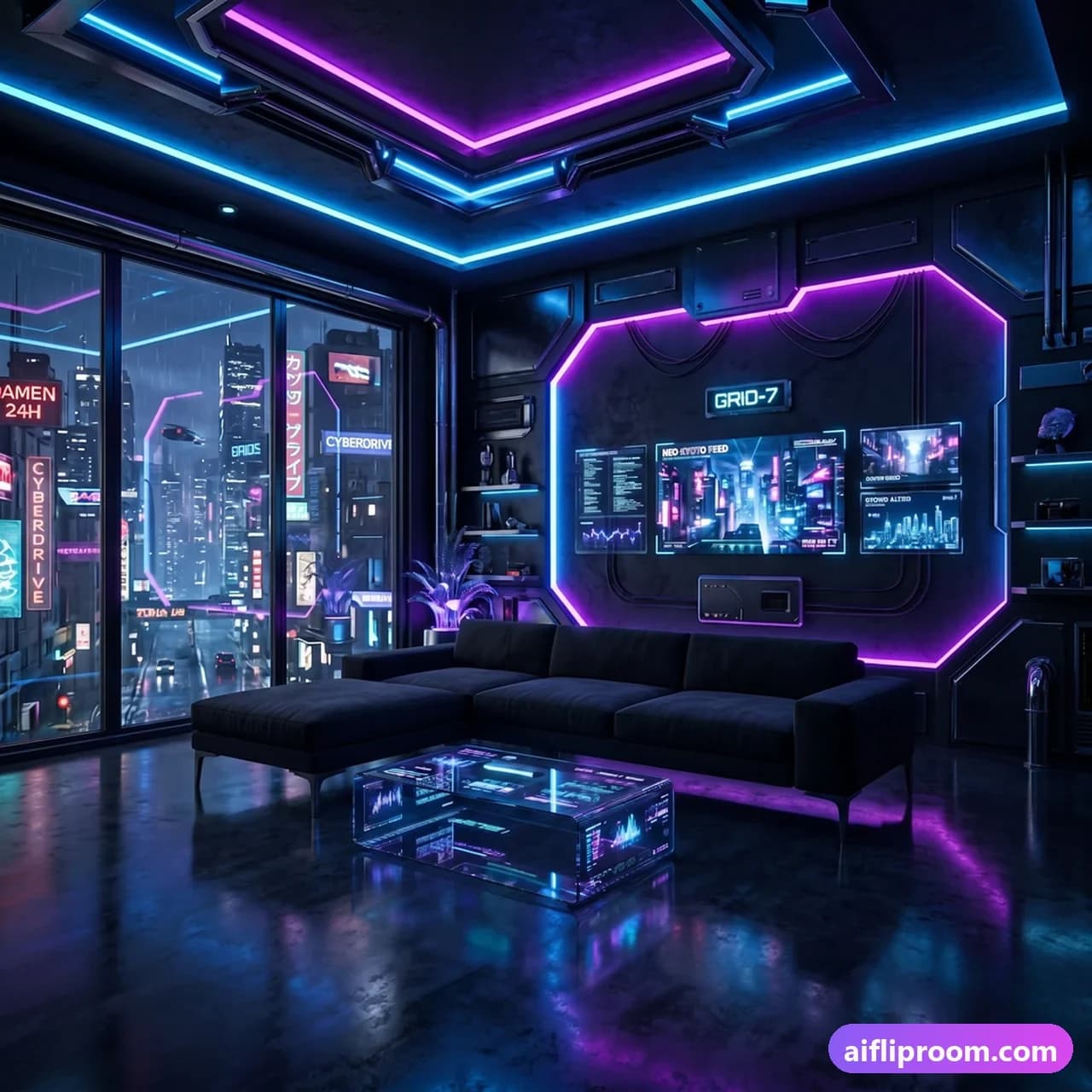
What is Cyberpunk interior design?
Cyberpunk style is a bold, futuristic look drawn from science fiction — the neon-lit, high-tech, night-time city of films and games, translated into a room. It is unapologetically dramatic. Dark charcoal walls and surfaces set a night-time backdrop; neon LED strip lighting in purple and electric blue traces the architecture and furniture; sleek modular pieces and glossy, reflective metallic finishes add a high-tech sheen. The room is often built around an entertainment or screen wall, and the whole effect is moody, immersive and cinematic. This is a style that fully commits. The result is a space with a strong, modern identity. In staging, Cyberpunk is a striking choice for living rooms, media rooms and statement spaces, and it appeals to buyers who want a bold, high-tech, unmistakably contemporary home.
Virtual staging in Cyberpunk: before and after
Cyberpunk is the boldest change in our style list, and the pairs below show how far it goes: the walls turn charcoal, a neon strip follows the ceiling line, and the furniture becomes black leather, smoked glass and lit edges. The windows, the fireplace, the arches and the pass-through stay exactly where they were, and every opening stays clear. The dark paint, and the darker floor in the first room, are finish changes: a picture of a makeover rather than of the room as it is today.
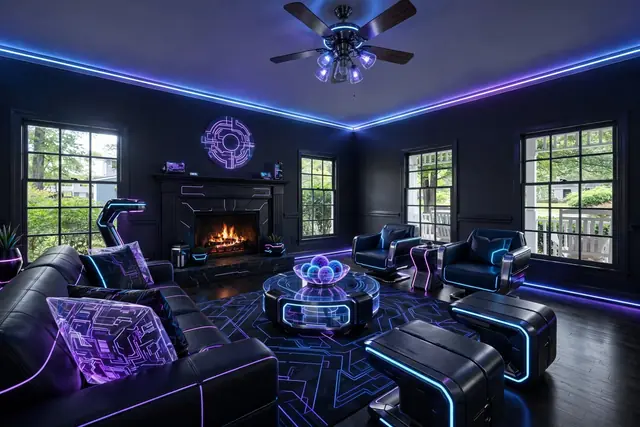

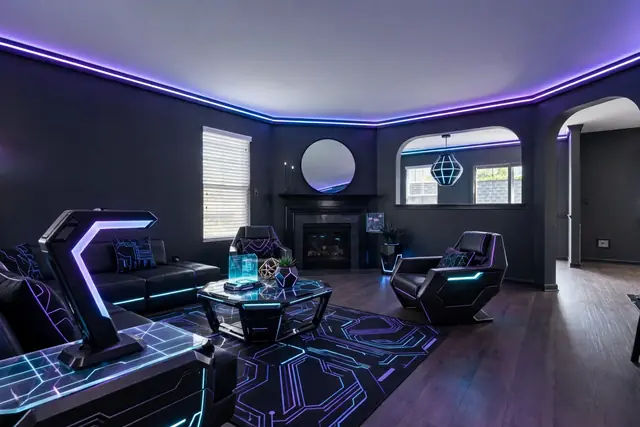

Using a staged photo in a listing? Our free disclosure wording tool gives the label your MLS asks for.
Where Cyberpunk comes from
Cyberpunk began as a literary genre in the 1980s and became a visual language through film — rain-slick streets, neon signage, dense cities, technology everywhere and nothing working properly. Its interiors follow from that fiction rather than from any building tradition: dark rooms lit by screens and signs, exposed services because nobody has repaired the walls, industrial materials, and technology layered on top of decay. Translated into a real home it is essentially industrial style with the lighting rethought, and that is the practical way to approach it. The atmosphere comes almost entirely from what is emitting light, which is unusually good news, because light is the cheapest thing in any room to change.
Key elements of Cyberpunk
- Dark charcoal walls and surfaces
- Neon LED strip lighting in purple and blue
- Sleek modular furniture
- Glossy, reflective metallic finishes
- A high-tech entertainment focus
- A moody, cinematic, night-time atmosphere
When to use Cyberpunk
Living rooms, media rooms and statement spaces for buyers who want a bold, high-tech, unmistakably modern home.
Cyberpunk colours and materials
Near-black base with emitted colour on top. Charcoal, graphite, deep navy and black for walls, floors and furniture, with concrete and gunmetal in between. Then the neon: cyan and magenta above all, plus electric purple, acid green and hot orange, arriving as light rather than as paint. Materials are matt and gloss black, concrete, brushed and blackened metal, smoked glass and acrylic, dark leather and technical fabric. Warmth is deliberately scarce, though one timber or leather element keeps a room habitable. The single defining decision is that the colour in the room should be produced by light sources rather than by surfaces.
Cyberpunk room by room
Living room in Cyberpunk
Dark walls, a low modular sofa in black or charcoal leather, a concrete or blackened-steel coffee table, and a dark rug. Then the light: LED strips behind the media unit and under the sofa, a neon sign or a light panel as the focal point, and no ceiling fixture at all. Cable-managed technology on display rather than hidden — the aesthetic is comfortable with visible equipment. One warm element, usually leather or a single timber surface, stops it feeling like a server room.
Bedroom in Cyberpunk
A low platform bed with backlighting under the frame so it appears to float, dark bedding, and a headboard wall in concrete effect, slats or dark panelling. LED strips in the perimeter of the ceiling or behind the headboard, on a dimmer and warm enough to sleep near. Blackout blinds. Keep the surfaces clear and the storage closed; the room reads as sleek only if nothing is out.
Home office or setup in Cyberpunk
The room the style is really designed for. A large dark desk, monitor arms, a good chair, and lighting from behind the screens rather than in front. LED strips along the desk edge and behind the wall panel, one neon element, and cable management done properly — visible cabling is acceptable only when it looks deliberate. Acoustic panels in dark grey do double duty, improving calls and adding the panelled texture the look wants.
Kitchen in Cyberpunk
Matt black or dark gloss cabinetry, a concrete or stainless worktop, and under-cabinet LED in a single colour. Handle-less fronts, black tapware, integrated appliances. Keep the neon to one location and let the rest of the room be dark and clean. A kitchen is the hardest room to make functional in this palette, so plan the task lighting as white and bright and let the coloured light be atmosphere only.
Bathroom in Cyberpunk
Dark large-format tile or microcement, black fittings, and a backlit mirror in a cool white for actual use plus a coloured strip for atmosphere. A niche with LED behind it. This is a small room where the style works cheaply and completely, since dark surfaces and one light effect are the whole specification.
Cyberpunk mistakes to avoid
- Colour on the walls instead of in the light. Painting a wall magenta is not the same as lighting a charcoal wall magenta, and only one of them looks right.
- No white light anywhere. Neon is atmosphere, not illumination. Every room still needs a functional layer you can cook, read and clean by.
- Cheap adhesive LED strip. Visible individual diodes, uneven colour and a plastic housing on show undo the effect. Recessed channels with diffusers cost slightly more and look completely different.
- Buying the aesthetic as merchandise. Posters, plastic props and themed decals read as a games room. The atmosphere comes from darkness, materials and light.
- Forgetting warmth entirely. A room with no leather, timber or textile anywhere is unpleasant to spend time in regardless of how it photographs.
Cyberpunk questions, answered
What is cyberpunk interior design?
A style derived from cyberpunk fiction and film: dark, industrial rooms lit by neon and LED, exposed services and technology, concrete and blackened metal, and colour delivered by light sources rather than by paint. In practice it is industrial style with the lighting scheme rethought entirely.
How do I get the look without renovating?
Almost all of it is lighting. Turn off the ceiling fixture, add recessed LED strip behind furniture and along edges, and put one neon or light-panel element on the wall as a focal point. Then darken what you can — bedding, curtains, a rug — and keep surfaces clear. Paint is optional; light is not.
What colours are cyberpunk?
A near-black base of charcoal, graphite and deep navy with concrete and gunmetal, and cyan and magenta as the dominant accents, plus electric purple, acid green and hot orange. The accents should be emitted by light sources rather than applied to surfaces.
Is it practical to live in a room like this?
With two adjustments, yes. Keep a functional white lighting layer for cooking, reading and cleaning, and include at least one warm material — leather, timber or a textile — in every room. Without those, the space photographs well and is genuinely unpleasant to spend a day in.
Is cyberpunk suitable for staging a property?
No, for a general listing. Dark walls make rooms read smaller in photographs and the aesthetic appeals to a narrow group. The one exception is a games or media room, where a dark, well-lit-for-screens space is a genuine selling point and is understood as a dedicated room rather than a taste imposed on the house.
Guides to read next
Longer reads on getting a room photographed and restaged well.
- Cyberpunk Room Ideas: Neon, Dark Gloss and a Room You Can Still Live InHow to build a cyberpunk room that looks like a film set at night and still works on a Tuesday morning: palette, four layers of light, furniture, room-by-room ideas and mistakes to avoid.
- See Your Own Room in a New Style Before You Buy AnythingPreview your actual room in a new style before buying furniture or hiring anyone: what a preview settles, what it can't, and five steps to a useful one.
- How to Photograph Rooms for Virtual Staging: 7 RulesDaylight, lamps off, a level phone at chest height, the 1x lens not 0.5x, one room per frame, clear surfaces — seven habits that make AI staging look real.
See your room in Cyberpunk
Upload a photo and our AI restages it in the Cyberpunk look in 15–60 seconds, depending on how much detail your room has — keeping your walls, windows and layout intact.
Try Cyberpunk on your room