Cyberpunk Room Ideas: Neon, Dark Gloss and a Room You Can Still Live In
AI Flip Room · 9 min read
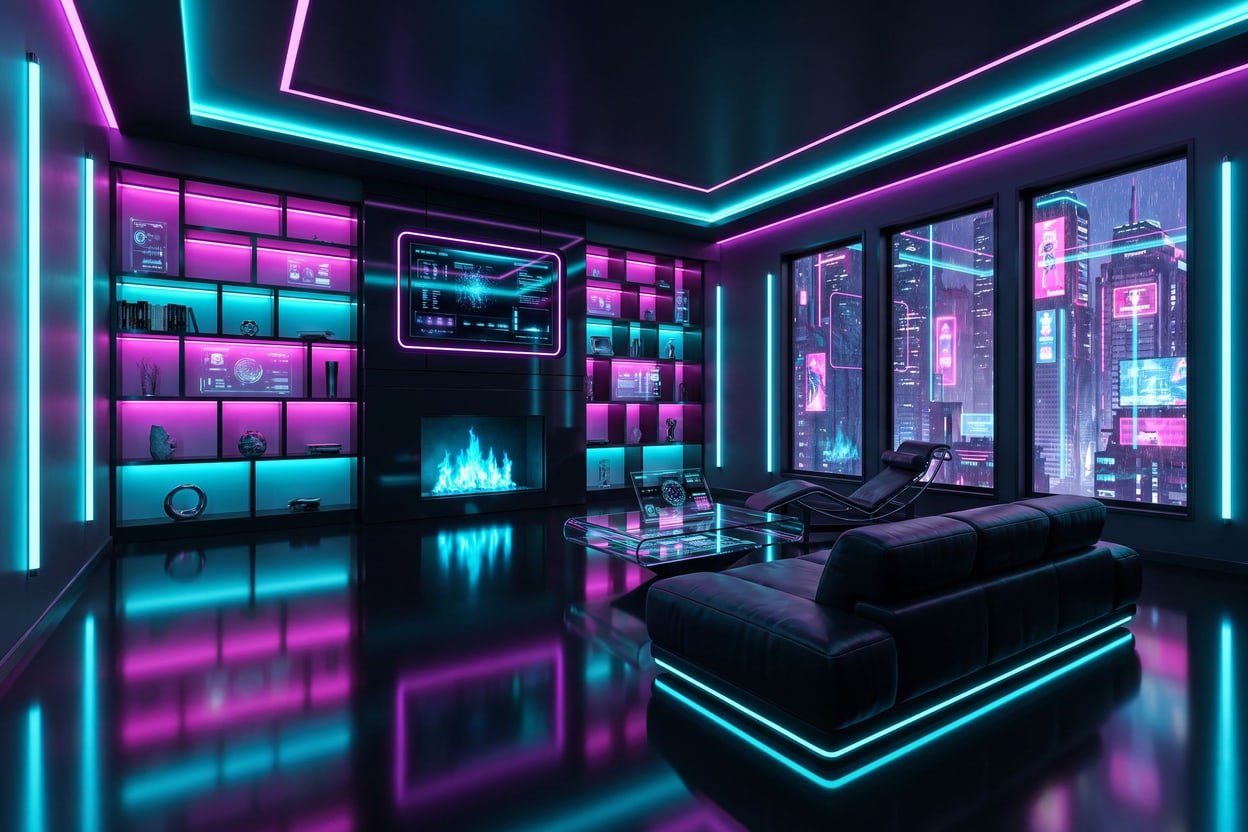
There is a particular kind of room people have in their heads when they say cyberpunk. It is night. It is raining somewhere outside. The room is dark, but not gloomy — lit in cyan and magenta from places you cannot quite see, with a sofa that seems to float and a screen that is the brightest thing in the city. It is a film set, basically, and the wonderful news is that you can build most of it in a weekend, because nearly all of it is light.
This guide is about getting that room without ending up in one of the two usual places: a teenager's games den covered in posters, or a black box that photographs brilliantly and is miserable to wake up in. It covers the palette, the four layers of light that do almost all the work, the furniture, what changes room by room, and what to spend money on first. Near the end it shows the same living room in cyberpunk and in its exact opposite, and how to try the style on a photograph of your own room. We make that tool, AI Flip Room, so read that part with the interest in mind.
What is cyberpunk interior design?
Cyberpunk interior design is a dark, high-tech style borrowed from science-fiction film and games: charcoal and black surfaces, low sleek furniture, metal and glass, visible technology, and colour that arrives as light — neon, LED strips, screens — rather than as paint. It is closest to industrial style, with the lighting rethought from scratch.
The genre started in books in the 1980s and became a look through film and, later, games: rain-slick streets, dense cities, signs in languages you half recognise, technology everywhere and nothing quite repaired. None of that came from architects, which is why the interior version has no rulebook of joinery or proportion like Japandi does. It has a mood, and the mood is built from three ingredients: darkness, reflection and emitted colour.
That is also why it translates into real homes better than its reputation suggests. You do not need concrete walls or a skyline. You need a room that is dark enough for light to matter, and the discipline to put the colour into the lamps rather than onto the walls.
What colours and materials does it use?
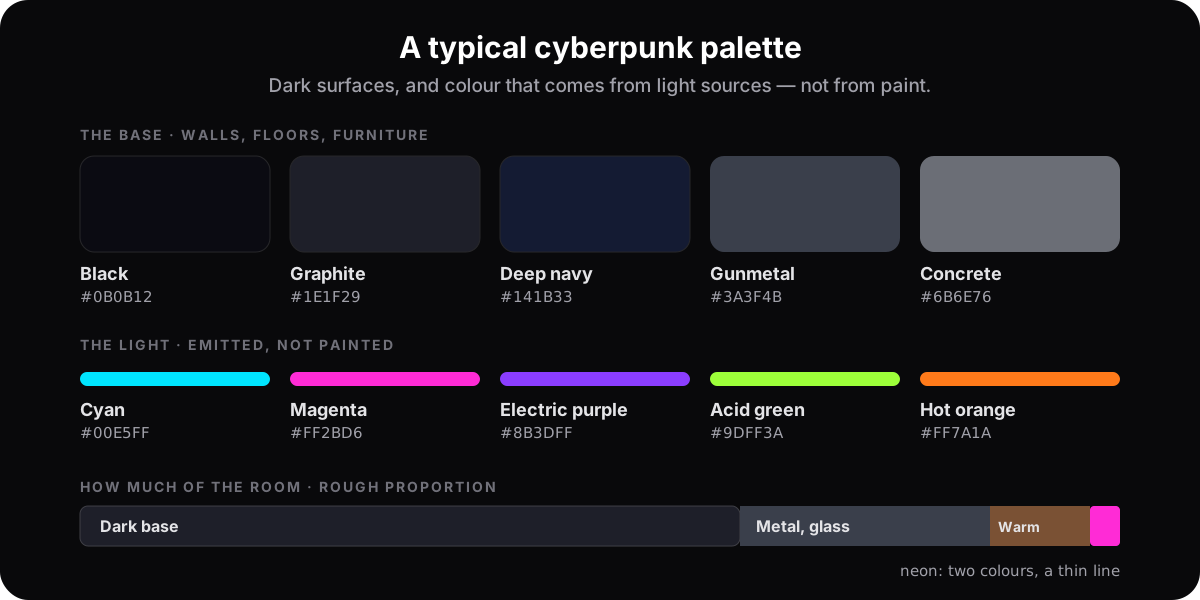
A near-black base — black, graphite, deep navy, gunmetal, concrete — for walls, floors and furniture, and two neon colours on top, most often cyan with magenta or electric purple. Materials are matt and gloss black, brushed and blackened metal, smoked glass, acrylic and dark leather, with one warm material somewhere to keep the room human.
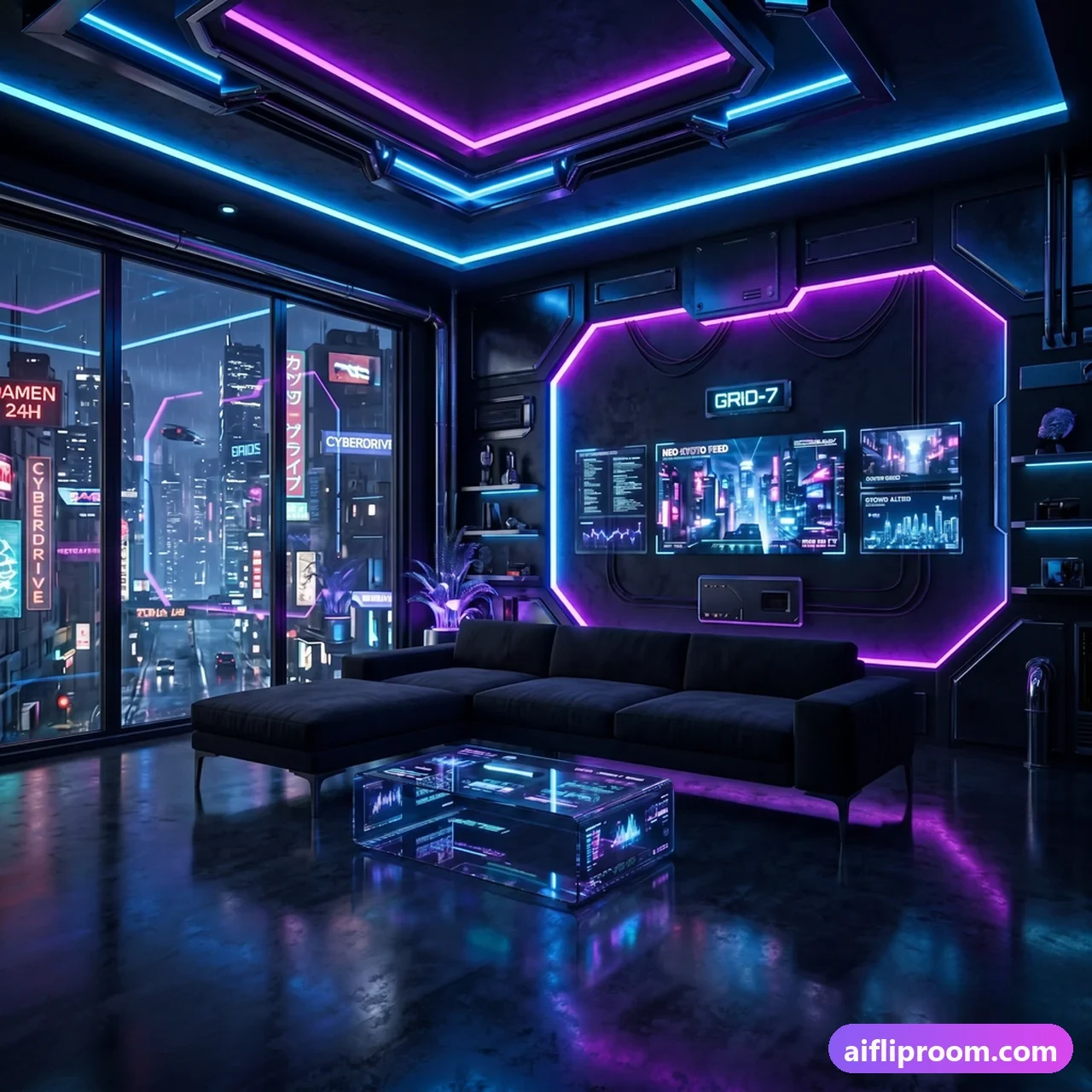
The single decision that makes or breaks the style is this one: the colour in the room should be produced by light sources, not by surfaces. A magenta wall is just a magenta wall. A charcoal wall washed in magenta light is cyberpunk. The difference is obvious the moment you see the two side by side, and it is why people who paint first and light second are usually disappointed.
A few practical notes on materials:
- Gloss where the light lands, matt where you sit. A gloss black side table or a smoked-glass coffee table doubles every light in the room by reflecting it. A gloss sofa does not exist for good reason.
- Metal in small doses. Brushed steel, gunmetal and blackened iron in legs, frames, a lamp or a shelf bracket. A whole room of it reads as a workshop.
- Acrylic and glass for things that glow. A clear or frosted acrylic table with a strip underneath is the single most "cyberpunk" piece of furniture there is, and it is not expensive.
- One warm material, always. Leather, a timber shelf, a wool throw. You will stop noticing it in the photos and notice its absence every evening.
How do you light a cyberpunk room?
In four layers plus one focal piece: a white working light you can read and clean by, a cove line of LED along the top of the wall, backlight behind the TV, shelves and headboard, and a glow under the sofa or bed. Then one neon sign or light panel on one wall. The ceiling light stays off after dark.
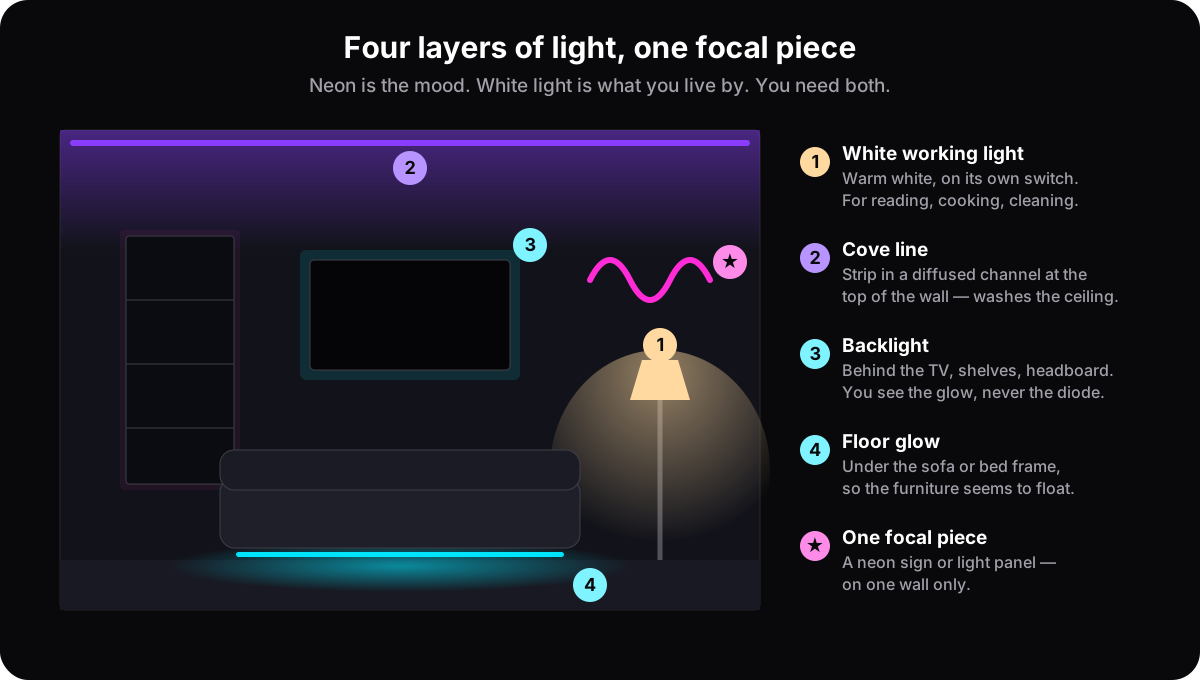
Each layer has one job, and it helps to think of them separately:
- The white working light is non-negotiable and the one everybody forgets. A warm white floor lamp or pendant on its own switch, bright enough to find your keys. Neon is atmosphere, not illumination.
- The cove line washes the ceiling with colour and makes the room feel bigger and softer. Put the strip in an aluminium channel with a diffuser so you see a line of light, not a row of dots.
- The backlight is where the drama lives. Light from behind the TV, the monitor, the shelving and the headboard creates silhouettes and depth. The rule: you should see the glow, never the diode.
- The floor glow under the sofa or bed frame makes heavy furniture seem to float and gives the room its night-time horizon.
And the focal piece — one neon sign, one light panel, one glowing shelf — on one wall. One. A room with three focal pieces has none.
Two small technical points make a large difference. First, buy strip lighting that is dense enough and diffused enough that it reads as a continuous line; cheap strip with visible dots is the fastest way to make the whole room look like a shop display. Second, put the coloured layers on a dimmer or a smart controller. The same room at full brightness and at 30% is two different rooms, and the second one is the one in the films.
Which furniture works?
Low, sleek, dark pieces with clean edges: a modular sofa in black or charcoal leather or technical fabric, a low coffee table in concrete, smoked glass or acrylic, a platform bed, a big dark desk with monitor arms, and closed storage. Fewer pieces than you think — the light needs dark, empty surfaces to land on.
Things that work again and again:
- Low, modular seating in black, charcoal or deep navy. Low furniture keeps the eye down and leaves the walls to the light.
- A table that glows. Acrylic, smoked glass or a dark table with a strip along its edge or underneath.
- A platform bed with a hidden strip beneath the frame — the bedroom version of the floating sofa.
- Closed storage with a lit display. Cabinets with doors for the everyday clutter; one or two open, backlit shelves for the objects you actually want seen.
- Technology on show, deliberately. A good monitor on an arm, a speaker, a console. Cables in trays and channels. Visible equipment is part of the look; visible mess is not.
How does cyberpunk change room by room?
The principles hold everywhere — dark base, colour from light, one warm material — but each room turns on something different. The setup turns on light behind the screens, the bedroom on the floating bed and a dimmer, the living room on the media wall, the kitchen on keeping task light white, the bathroom on one lit niche.
What should you do first?
Turn the ceiling light off and put a strip behind the TV or monitor tonight. Then dark textiles, then one neon piece. Paint and built-in light channels come after, if you are staying. Skip themed decals and posters entirely — they cost little and give the room the look of a games shop rather than a film.
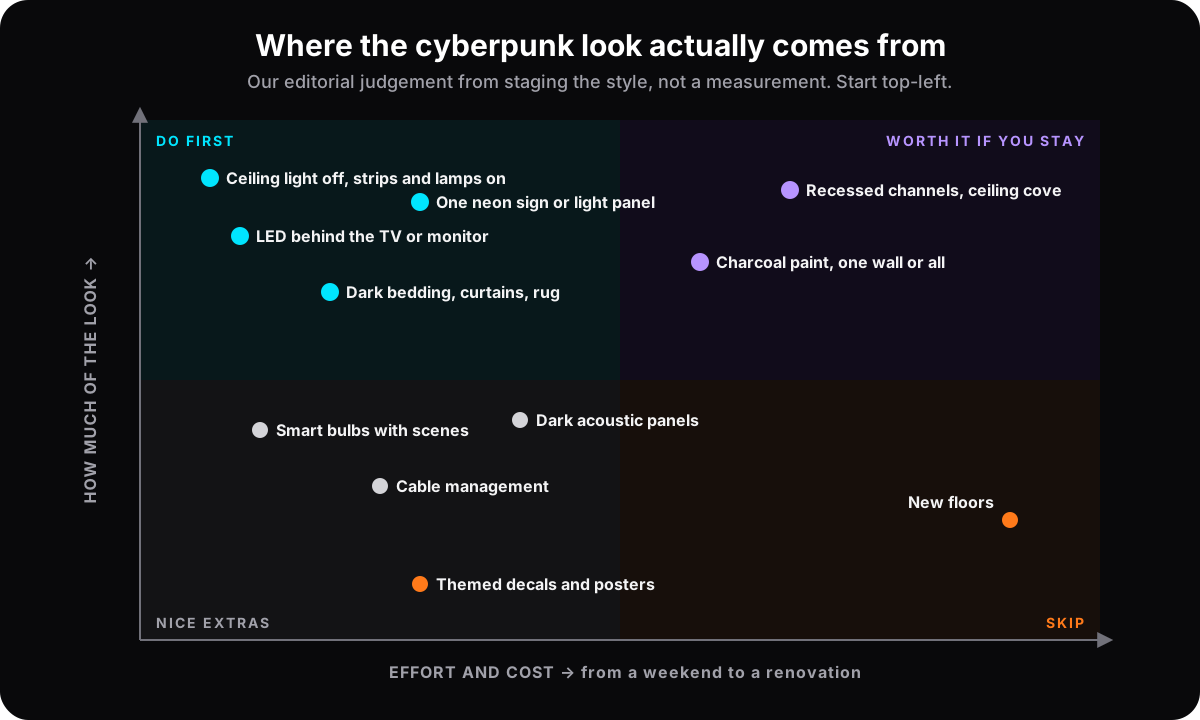
The chart is our judgement, not a survey, but it matches what we see every time we render the style: the moves in the top-left corner deliver most of the effect for very little money, and the expensive ones — new floors especially — change surprisingly little of the mood, because the floor is going to be in shadow anyway. If you are renting, the entire top-left corner goes with you when you move.
What does it look like on a real room?
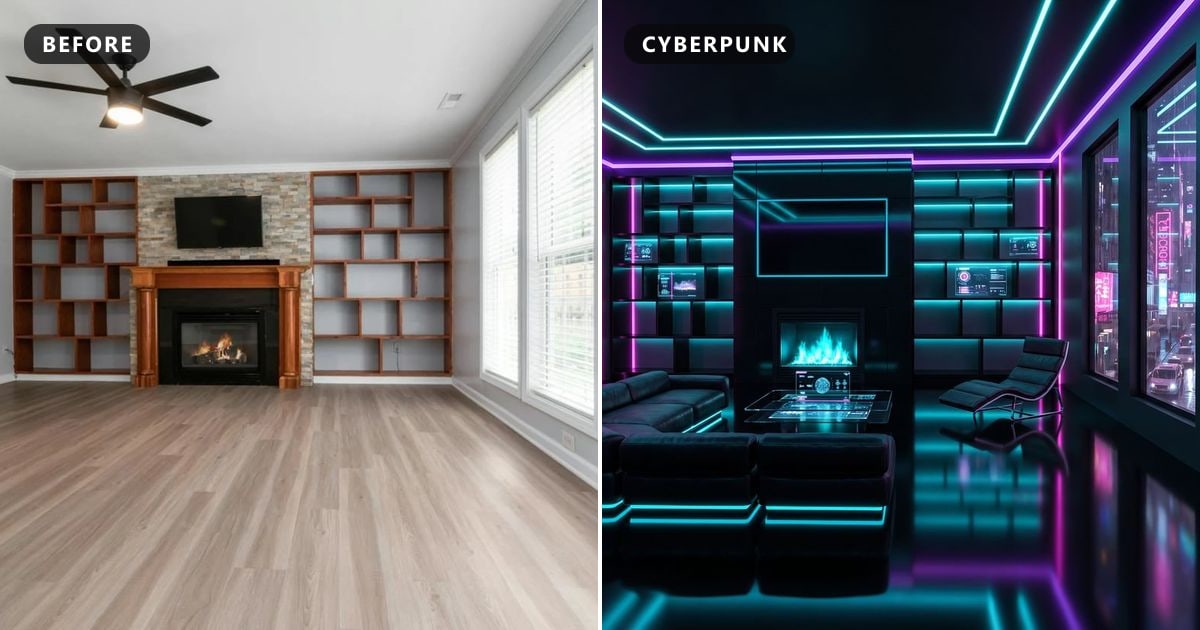
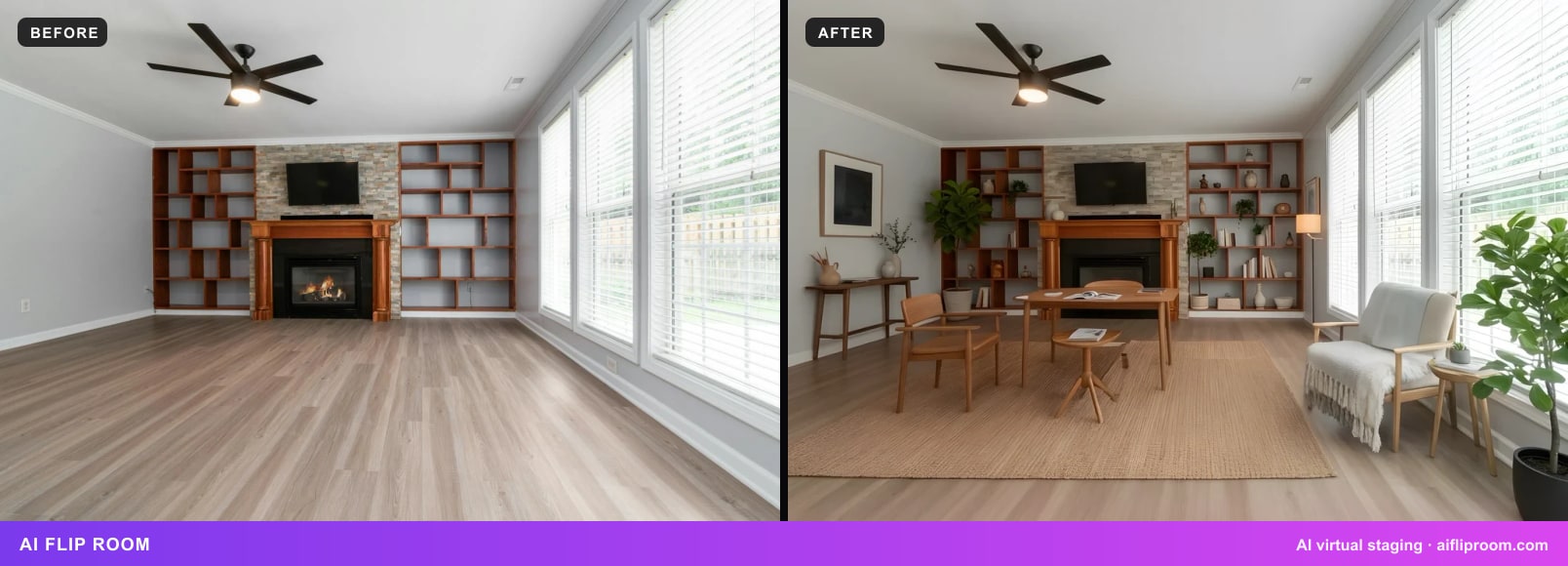
Here is a real, empty living room — the same one our Japandi style guide uses — and the same photograph restyled in cyberpunk. The camera angle, the room, the windows and the fireplace opening stayed; nearly everything else — fan, shelving, stone, floor, the view — was reimagined.
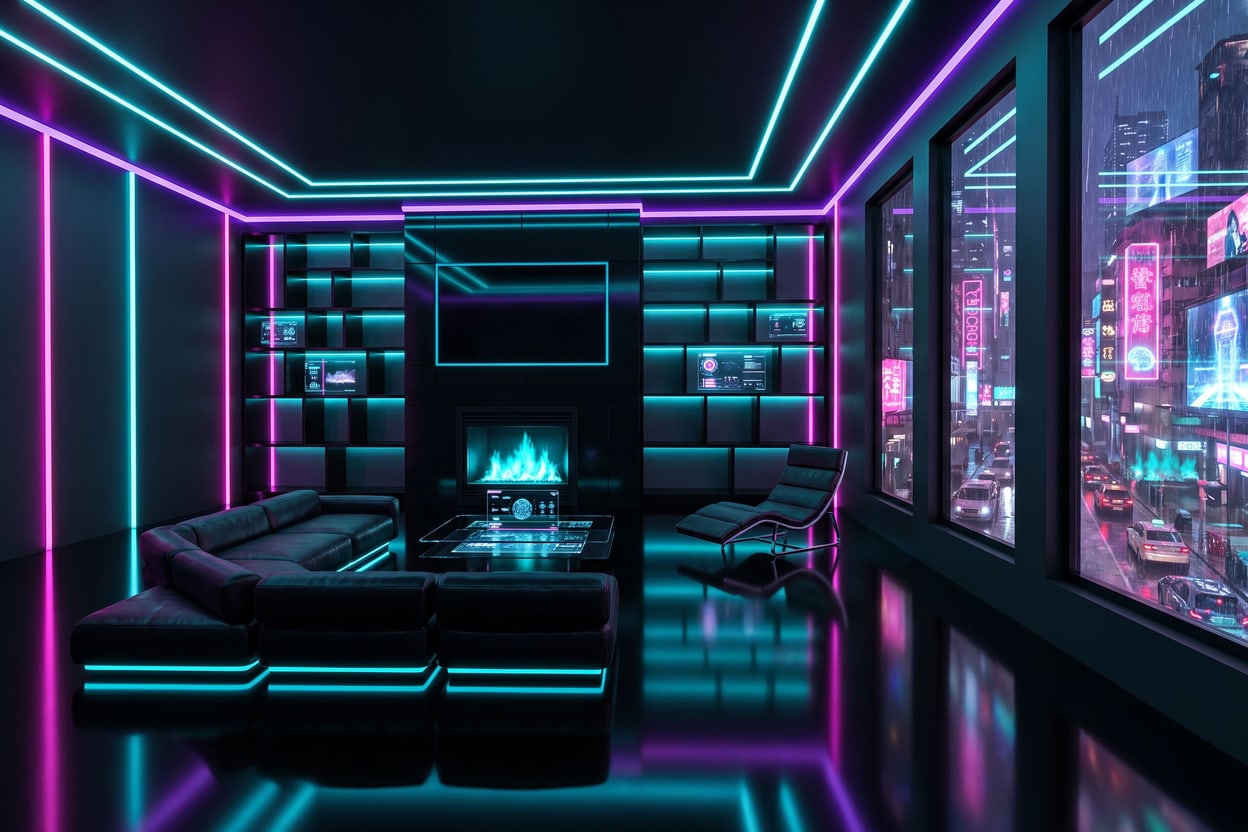
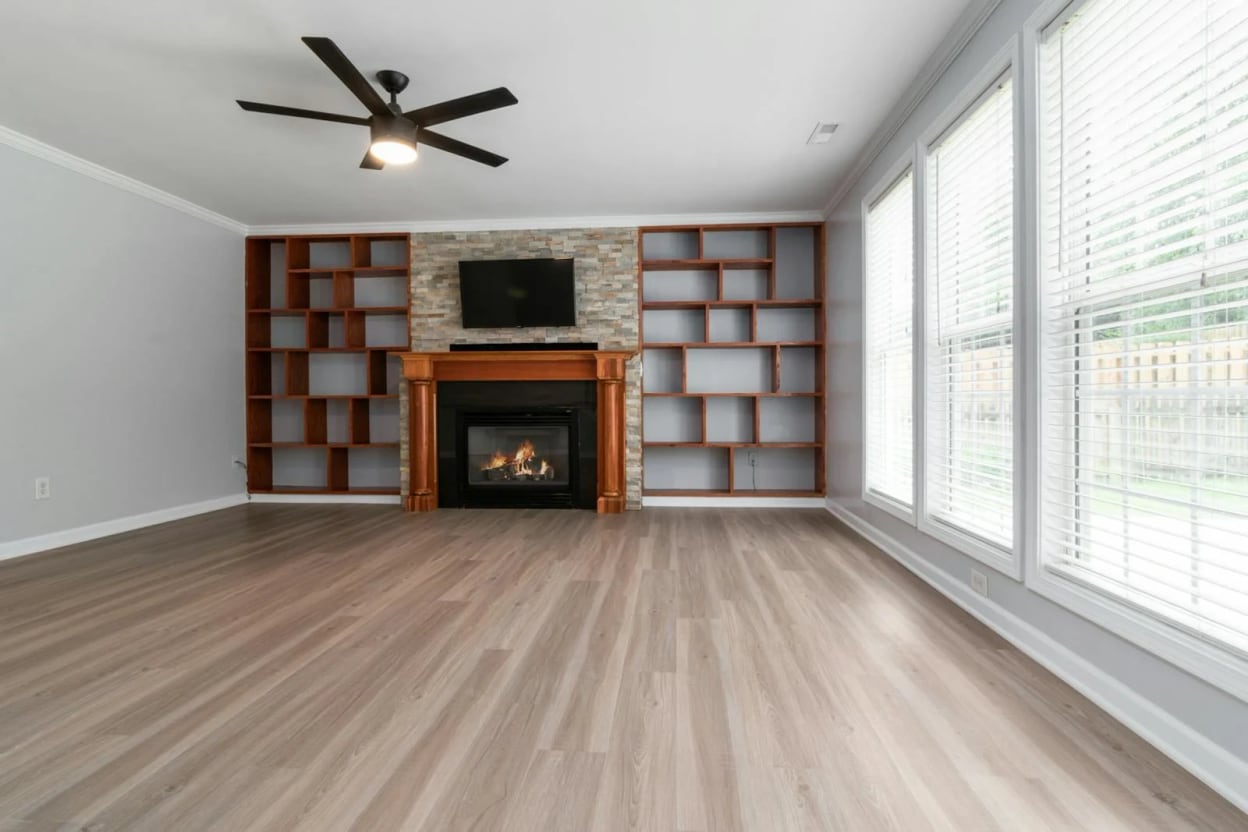
Look at where the colour is. None of it is paint: it is the neon lines running across the black ceiling and down the corners, the light inside the shelving, the strip under the sofa, the blue flame and the city glowing through the glass — and the black gloss floor doubling all of it. Switch those off and the room would be a dark box. That is the whole style in one image, pushed as far as it goes. It is a concept for someone deciding what a room could become, not something to put in a listing, because almost nothing in it is as built.
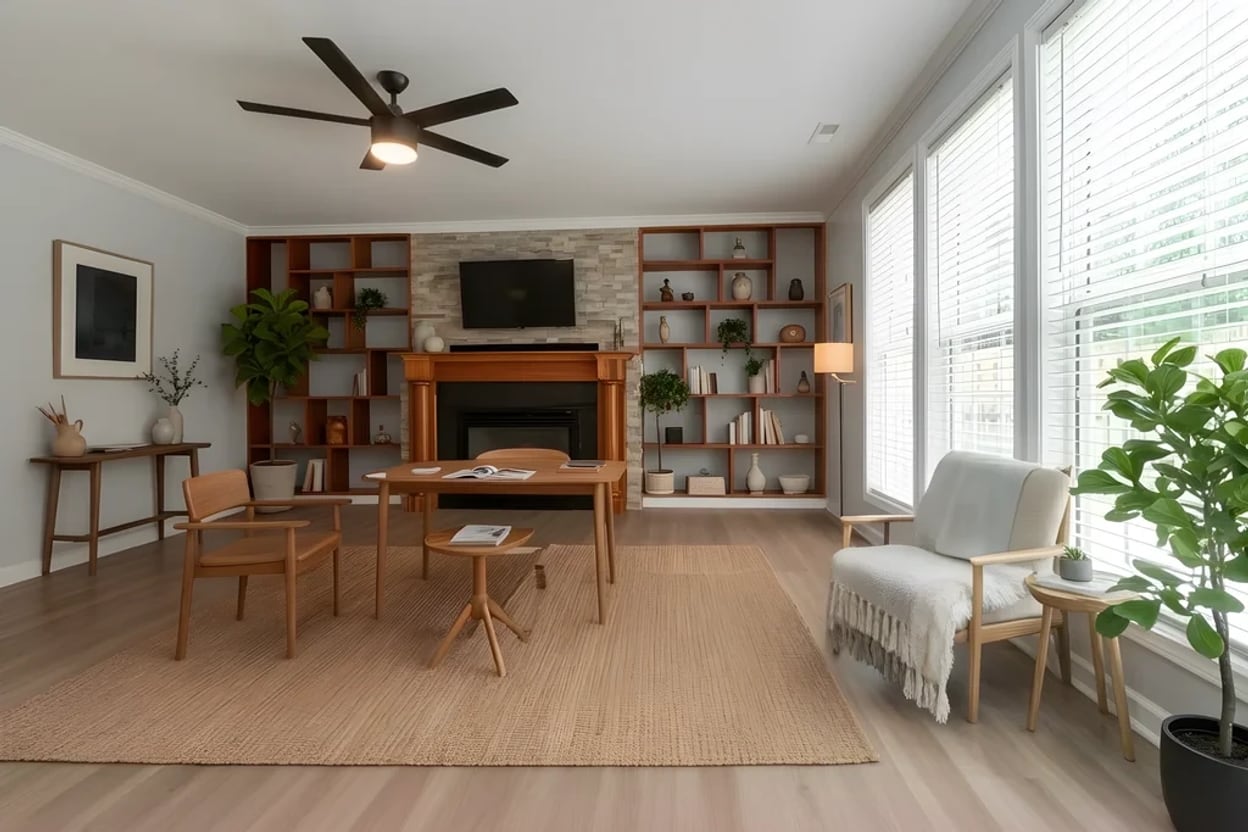
Now the same photograph in the opposite direction.
What are the common mistakes?
Colour on the walls instead of in the light; no white light at all; cheap strip with visible dots; too many neon colours; a room assembled from posters and plastic props; and no warm material anywhere. Most of them are the same mistake: treating cyberpunk as a theme to buy rather than a lighting plan to build.
| Do | Don't |
|---|---|
| Dark surfaces, washed with coloured light | Paint the walls magenta and call it neon |
| Two neon colours, three at most | Every colour the strip controller offers |
| Diffused channels — a line of light | Bare strip with every diode visible |
| One focal sign or panel | A sign on every wall |
| A warm white lamp on its own switch | Coloured light only, even for reading |
| One warm material: leather, timber, wool | All black plastic, all the time |
| Technology on show, cables managed | Posters, decals, plastic props |
Cyberpunk, industrial or synthwave?
Industrial is the daytime cousin: the same concrete, metal and dark timber, lit by warm Edison bulbs and daylight. Cyberpunk is industrial at night, with colour coming from LEDs and screens. Synthwave and vaporwave swap the dark, rainy mood for sunset pinks, retro grids and 1980s nostalgia — brighter, more playful, less noir.
If you like the materials but not the neon, look at industrial chic or urban loft — they keep the concrete and metal and add daylight and warmth. If you want the drama without the sci-fi, a dark, moody style with warm lamps will get you there with fewer strips. The honest way to decide is to see all of them on your own room rather than on somebody else's.
How do you try cyberpunk on your own room?
Photograph the room in daylight, upload it, choose Cyberpunk, and compare the result with a couple of calmer styles on the same photo. The render keeps your windows, walls and camera angle, so you are judging the mood on your room — which matters, because the same neon scheme looks completely different in a small bedroom with one window and in a long living room with three.
That is what the generate page does: upload a photo, pick Cyberpunk, and in under a minute you have a preview you can react to. Every account starts with three free renders and no card. Our guide to seeing your room in a new style before you buy anything explains how to get a preview you can actually decide from, and how to photograph a room covers the one photo it all starts from.
A cyberpunk room is not really about the future. It is about the hour after dark, and about how much a room can change when you stop lighting it from the middle of the ceiling. Get the light right and the rest mostly takes care of itself.
Questions people ask about cyberpunk rooms
What makes a room look cyberpunk?+
Darkness and emitted colour. Dark walls, floors and furniture set a night-time backdrop, and the colour — cyan, magenta, electric purple — comes from LED strips, a neon sign and screens rather than from paint. Add sleek, low furniture, a little metal and glass, and cables that look deliberate rather than hidden. Everything else is decoration.
How do I make my bedroom cyberpunk on a budget?+
Start with light, because it is the cheapest thing in any room to change. Switch off the ceiling light, put an LED strip behind the headboard and under the bed frame, buy dark bedding and a dark rug, and add one small neon sign. That is most of the look for the price of a night out. Paint and furniture can come later, or never.
Which colours work for a cyberpunk room?+
A near-black base — black, graphite, deep navy, gunmetal, concrete — with two neon accents, most often cyan with magenta or purple. Acid green and hot orange work as a small third note. More than three neon colours and the room starts to look like a nightclub rather than a film.
Can a cyberpunk room still be cosy?+
Yes, if you keep two things. A warm white light on its own switch for reading and cleaning, and at least one warm material — a leather chair, a timber shelf, a wool throw. Without them the room looks great in photos and feels like a server room to live in.
Is cyberpunk a good style for staging a house for sale?+
Not for the house as a whole. Dark rooms read smaller in listing photos and the look appeals to a narrow group of buyers. It can work for one dedicated games or media room, where buyers understand it as a room with a purpose. Whatever the style, a staged listing photo should change only furniture and decor — walls, windows and fixtures stay exactly as they are — and say clearly that it is virtually staged.
See it on your own room
Upload a photo and watch AI restage your space in 15–60 seconds, depending on how much detail it has — free to try, no credit card.
Try AI Flip Room freeRelated reading
Japandi Style Guide: Palette, Materials, Furniture, Rooms
What Japandi is, the palette and materials that make it read as real, the furniture that works, how it changes room by room, and the mistakes to avoid.
See Your Own Room in a New Style Before You Buy Anything
Preview your actual room in a new style before buying furniture or hiring anyone: what a preview settles, what it can't, and five steps to a useful one.
How to Photograph Rooms for Virtual Staging: 7 Rules
Daylight, lamps off, a level phone at chest height, the 1x lens not 0.5x, one room per frame, clear surfaces — seven habits that make AI staging look real.