Industrial Chic Interior Design
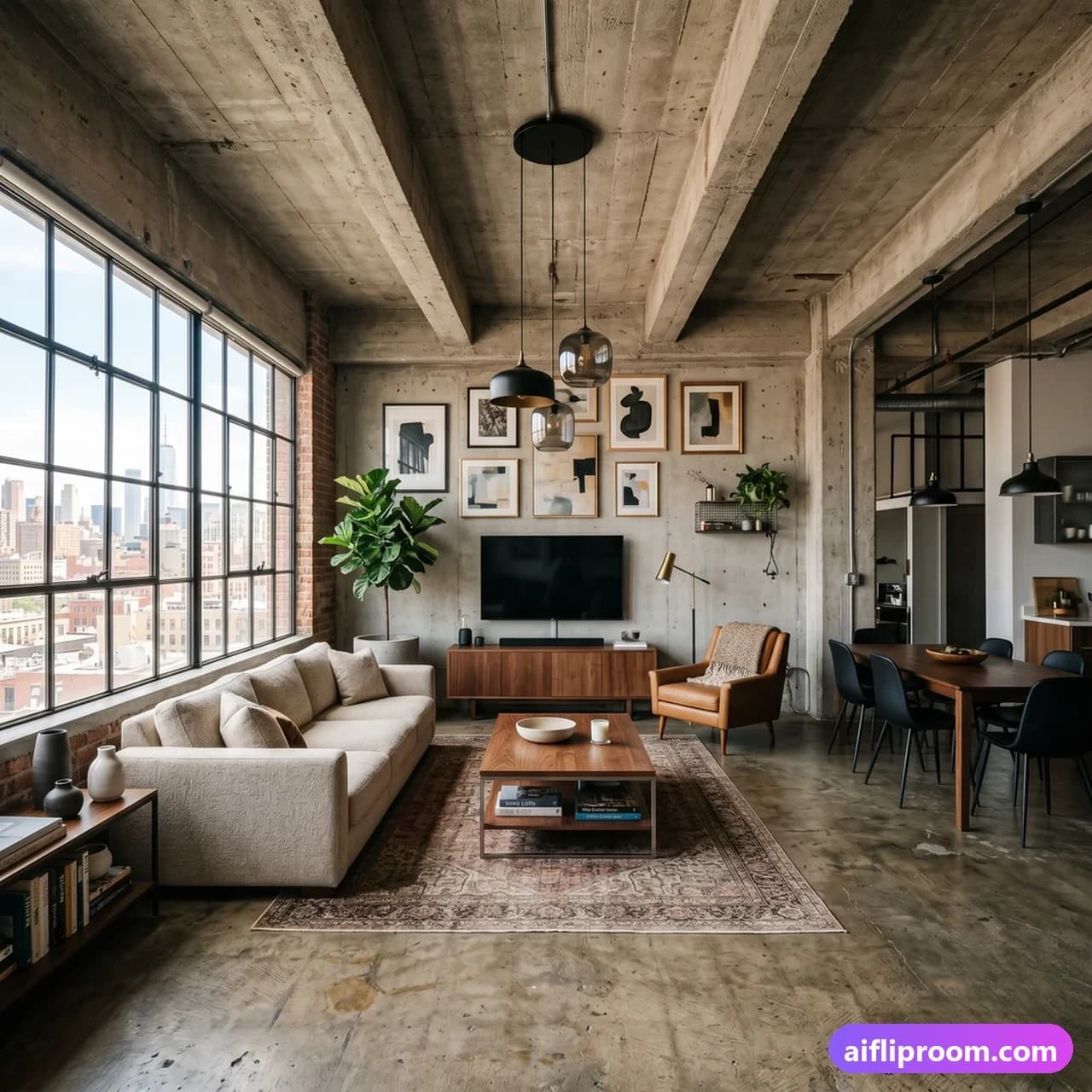
Industrial softened — warm wood and leather meet exposed pipes and brick.
Stage your room in Industrial Chic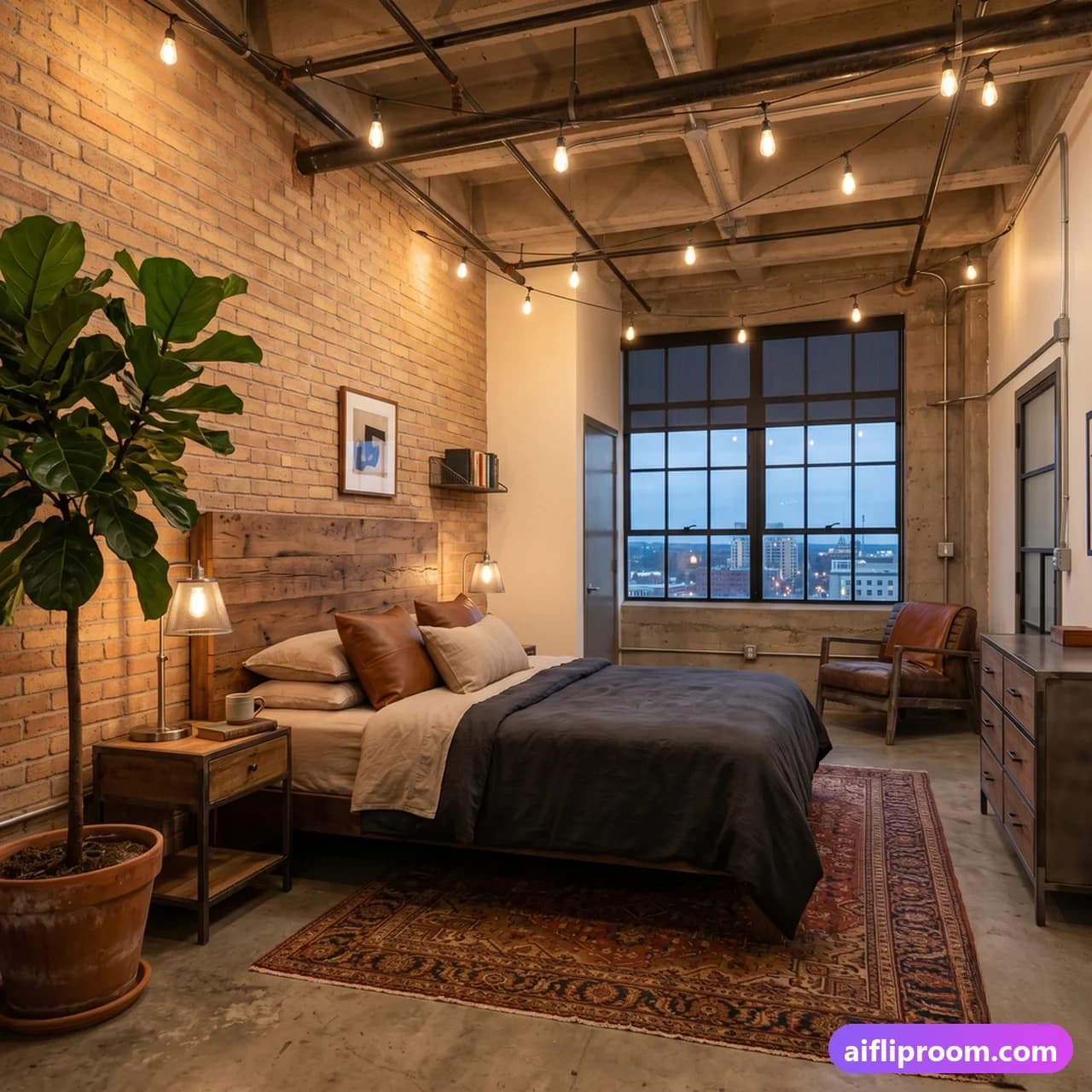
What is Industrial Chic interior design?
Industrial Chic takes the raw, warehouse-inspired industrial look and softens it — keeping the edge, but making it genuinely comfortable to live in. The industrial bones are still on show: exposed pipes and structural elements, concrete, a sense of honest, unfinished material. But they are balanced with warmth. Reclaimed wood softens the metal; brushed-steel and leather furniture add comfort; a warm brick accent wall offsets the concrete; Edison-bulb lighting adds a low, amber glow. The result is a layered mix of raw and refined — characterful and urban, but inviting rather than cold. In staging, Industrial Chic is a strong choice for living rooms and bedrooms in lofts and city apartments: it keeps the desirable industrial edge while reading as warm, liveable and move-in ready.
Where Industrial Chic comes from
Industrial chic is the compromise that made industrial style liveable. The raw warehouse look worked in actual warehouses and was punishing everywhere else — cold, echoing, and short on anywhere comfortable to sit. Restaurants and hotels found the middle ground first, because they needed rooms that photographed as edgy and still worked for people spending three hours in them: keep the exposed brick and the black steel, add leather banquettes, warm timber, rugs and a great deal of soft lighting. Homes followed. The result is the version most people now mean when they say industrial, and it is more honest about being a decorating choice rather than an inherited building.
Key elements of Industrial Chic
- Exposed pipes and structural elements
- Reclaimed wood softening the metal
- Brushed-steel and leather furniture
- A warm brick accent wall against concrete
- Edison-bulb lighting
- A layered mix of raw and refined textures
When to use Industrial Chic
Living rooms and bedrooms in lofts and city apartments. Keeps the industrial edge but reads as warm and liveable.
Industrial Chic colours and materials
The industrial base warmed deliberately. Charcoal, concrete grey, black steel and brick red, brought forward with mid-to-warm timber, tan and oxblood leather, and cream or oatmeal in the soft furnishings. Accents are muted — rust, olive, deep teal. Materials keep the hard ones (metal, brick, concrete, glass) but always in company with wool, leather, linen and timber. The proportion is what defines the style: roughly half hard and half soft, where raw industrial would be almost entirely hard. Filament bulbs are permitted but rationed, and the lighting is layered rather than dramatic.
Industrial Chic room by room
Living room in Industrial Chic
A tan or oxblood leather sofa against one exposed or dark-painted wall, a timber and steel coffee table, and a large wool or vintage-style rug that covers most of the hard floor. Black steel shelving with timber shelves along one wall. Then the softening: floor-length curtains even where privacy is not needed, two or three cushions, a throw, and lamps at low level rather than only pendants. One brick, concrete or dark wall is enough — the other three should be plain and lighter.
Bedroom in Industrial Chic
A metal or metal-and-timber bed frame with generous linen bedding in oatmeal or grey, a rug large enough to step onto from both sides, and curtains rather than blinds. One hard surface behind the bed — brick, concrete effect, dark paint — and warm materials everywhere else. Wall-mounted black reading lights on each side. This is the room where raw industrial fails hardest and where the softened version earns its name.
Kitchen in Industrial Chic
Dark or timber cabinet fronts, a stainless or concrete-effect worktop, open shelving on black brackets, and a butcher-block section for warmth. Two or three pendants over the island, filament or opal, on a dimmer. Bar stools with leather or timber seats rather than bare metal. Visible pipework and a plain extractor are fine; what makes it chic rather than raw is that the joinery is properly finished.
Home office in Industrial Chic
A heavy timber top on a steel frame, a leather chair, black shelving, and one articulated lamp. Add a rug and a curtain — hard rooms are acoustically terrible for calls, and this is the practical reason the softened version exists. One plant, one piece of art, cables routed deliberately rather than hidden badly.
Dining area in Industrial Chic
A timber table with a steel base, mismatched or simple metal chairs with timber or leather seats, and a row of pendants low over the table. A rug underneath, which is unusual for a dining area and does more for the room than anything else. Warm dimmed light in the evening; the whole style depends on it.
Industrial Chic mistakes to avoid
- Keeping it raw and calling it chic. The distinction is the soft half — rugs, curtains, leather, wool. Without them it is just industrial, with all the same problems.
- Filament bulbs everywhere. Atmospheric in small numbers, and genuinely poor working light. Pair them with something practical and put them on dimmers.
- Applying brick slips to every wall. One hard surface per room. Fake brick on four walls reads as a themed bar.
- Ignoring acoustics. Hard floors and walls with no textiles produce an echo that no photograph shows and everyone hears. This is a functional problem, not a decorative one.
- Cool white lighting. Grey and steel under cool light is bleak. Warm bulbs cost nothing and change the room entirely.
Industrial Chic questions, answered
What is the difference between industrial and industrial chic?
Industrial is raw: exposed everything, salvaged furniture, minimal softening, and it needs a building with real structure to reveal. Industrial chic keeps the same materials but balances them roughly half and half with leather, timber, wool and warm lighting. It is the version designed for people to live in rather than for a building to display.
How do I warm up an industrial room?
In order of effect: warm bulbs at 2700K with several low sources instead of one overhead; a large rug covering most of the hard floor; floor-length curtains even if the window does not need them; then leather, wool and timber in the furniture. The concrete and steel can stay exactly as they are.
Does industrial chic work in a normal house?
Better than raw industrial does, because it does not depend on warehouse volume. Choose one element the room can carry — black steel shelving, a dark painted wall, a concrete-effect surface — and let the rest be timber, leather and textile. Skip the exposed ductwork, which needs the original architecture.
What colours suit industrial chic?
Charcoal, concrete grey, black and brick red as the base, with warm timber, tan or oxblood leather, and cream or oatmeal textiles bringing it forward. Muted accents in rust, olive or deep teal. Warmth comes from material rather than from paint.
Is industrial chic good for staging a property?
It is a strong choice for city apartments, loft and warehouse conversions and modern open-plan flats, and it photographs well because the palette is graphic and the softening keeps it from looking cold. It suits suburban family houses and period properties much less, where the materials have nothing to attach to.
Guides to read next
Longer reads on getting a room photographed and restaged well.
- See Your Own Room in a New Style Before You Buy AnythingPreview your actual room in a new style before buying furniture or hiring anyone: what a preview settles, what it can't, and five steps to a useful one.
- How to Photograph Rooms for Virtual Staging: 7 RulesDaylight, lamps off, a level phone at chest height, the 1x lens not 0.5x, one room per frame, clear surfaces — seven habits that make AI staging look real.
- What Is Virtual Staging? The Complete Guide: How It Works, Cost, Rules, ExamplesVirtual staging explained in plain language: how AI furnishes a photo of a real room, what it costs, what agents think of it (NAR 2025), who it helps, the rules and how to spot bad staging.
See your room in Industrial Chic
Upload a photo and our AI restages it in the Industrial Chic look in 15–60 seconds, depending on how much detail your room has — keeping your walls, windows and layout intact.
Try Industrial Chic on your room