Urban Loft Interior Design
SoHo loft — polished concrete, factory windows, walnut warmth, gallery walls.
Stage your room in Urban Loft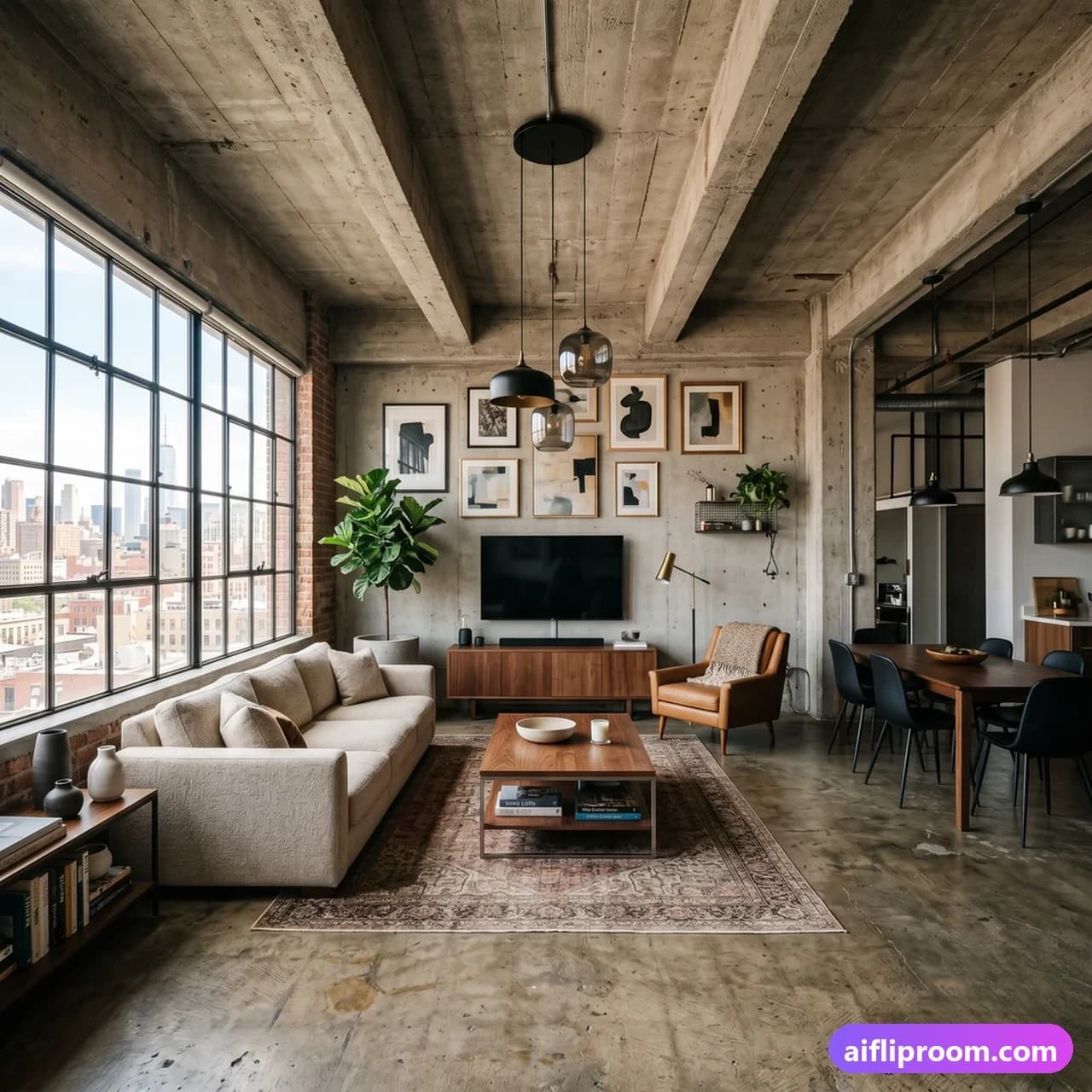
What is Urban Loft interior design?
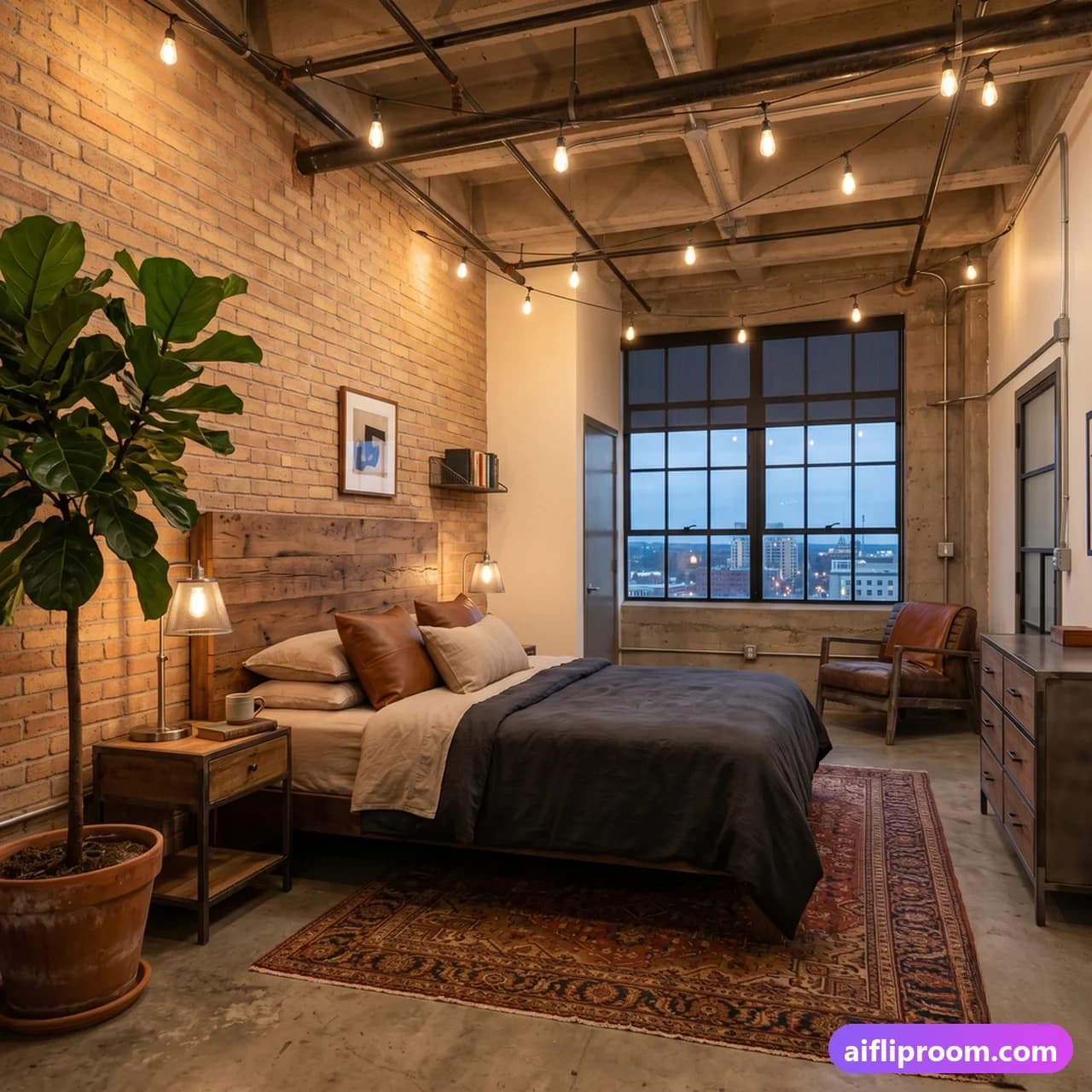
Urban Loft style is the look of a converted city loft — a former warehouse or factory floor in a district like SoHo, turned into an open, characterful home. It celebrates the raw shell rather than hiding it. Polished concrete floors and ceilings, large factory-style windows and an open, high-volume layout are the foundation; warm walnut furniture is set against the concrete so the room feels rich rather than cold. Designer pendant lighting and an art-led, gallery-wall sensibility add polish and personality. The result is spacious, creative and unmistakably urban — industrial bones with a refined, lived-in finish. In staging, Urban Loft style is a strong fit for living rooms and open-plan spaces in city apartments and genuine loft conversions, and it appeals to urban buyers who want a polished, creative home.
Where Urban Loft comes from
The loft is what happened when city manufacturing collapsed and the buildings stayed. From the 1960s onward, artists in New York and then everywhere else moved into empty warehouse and factory floors because the rent was low and the space was enormous. What they inherited — concrete floors, steel columns, exposed services, windows two storeys high — became desirable precisely because no residential building offered it. Developers noticed, and by the 1990s lofts were being built rather than converted. Urban loft as a style is the polished descendant of that: it keeps the volume, the industrial materials and the open plan, but adds warmth, good joinery and comfort, because the people living in it are no longer sleeping next to a kiln.
Key elements of Urban Loft
- Polished concrete floors and ceilings
- Large factory-style windows
- An open, high-volume layout
- Warm walnut furniture against concrete
- Designer pendant lighting
- An art-led, gallery-wall sensibility
When to use Urban Loft
Living rooms and open-plan spaces in city apartments and genuine loft conversions. Appeals to urban buyers who want a polished, creative feel.
Urban Loft colours and materials
Concrete grey and warm walnut, in roughly equal measure. Around them: charcoal, black steel, off-white plaster, and leather in tan or oxblood. Accents are muted and few — rust, olive, deep blue. Materials are polished or honed concrete, blackened steel, walnut and oak, glass, brick where it exists, and leather, wool and linen for softness. It differs from strict industrial style by being finished rather than raw: the concrete is sealed, the steel is powder-coated, the joinery is good. That polish is the whole distinction, and it is why the style suits a normal budget better than a warehouse aesthetic does.
Urban Loft room by room
Open-plan living space in Urban Loft
Lofts are one room, so the furniture does the dividing. Use a large rug to establish the seating area and place the sofa with its back to the rest of the space rather than against a wall. A low walnut or steel-framed coffee table, a leather armchair, and shelving in black steel and timber to make a partial divider. Keep the ceiling and services visible if they are worth seeing. Lighting matters more than in a conventional room: track or pendant lighting at several points, because one central fixture cannot cover a space this shape.
Kitchen in Urban Loft
Treated as furniture rather than as a fitted room, since it sits inside the open plan. A substantial island in concrete, stone or timber, flat-fronted cabinetry in walnut or a dark matt finish, and stainless or blackened steel details. Open shelving on steel brackets. Pendants over the island are usually the only decorative element the whole space gets. Keep the appliance run integrated so the kitchen reads as one solid object seen from the sofa.
Sleeping area in Urban Loft
Often a mezzanine or a zone rather than a room. A low platform bed, plain bedding in grey or oatmeal, and a headboard wall in brick, concrete or timber slats to give the area an edge. If it is genuinely open, a steel-framed glass partition or a slatted screen defines it without losing light. Wall-mounted reading lights instead of bedside lamps, and a rug large enough to soften a hard floor.
Home office in Urban Loft
The style is unusually good for working spaces because its materials are already desk materials. A steel-framed timber desk positioned near a window, a leather chair, open shelving, and one articulated lamp. In an open plan, a bookcase or a slatted screen behind the desk keeps video calls from showing the whole flat.
Bathroom in Urban Loft
Microcement or large-format concrete-effect tile, a steel-framed shower screen, black matt fittings, and a timber or stone vanity. Exposed pipework is acceptable and often deliberate. The one thing worth spending on is warm lighting at face height — concrete and grey under cool light is the fastest way to make a bathroom feel like a basement.
Urban Loft mistakes to avoid
- Leaving it all hard. Concrete, steel and glass with no rug, no curtain and no upholstery produces an echo you can hear on every phone call. Soft materials are functional here.
- Pushing all the furniture against the walls. In a large open space that leaves a void in the middle and makes the room feel like a waiting area. Float the seating.
- One central light. A loft-shaped space needs several sources; a single fixture leaves the corners dead.
- Faking the volume. In a standard-height flat, the full loft treatment reads as costume. Take the materials and the open plan, skip the exposed structure.
- Confusing it with raw industrial. Urban loft is the finished version — sealed concrete, good joinery, comfortable seating. Raw industrial is a different, harder look.
Urban Loft questions, answered
What is the difference between urban loft and industrial style?
Industrial is raw: exposed brick, unfinished concrete, visible ductwork, salvaged furniture. Urban loft keeps the same material family but finishes it — sealed concrete, powder-coated steel, walnut joinery, proper upholstery. Industrial looks like a working building; urban loft looks like a very well-converted one.
Can I get a loft look in a normal apartment?
Yes, by taking the parts that are not architectural. Concrete-effect floors or a microcement surface, black steel shelving and window frames, walnut furniture, leather seating, and an open layout where possible. Skip the exposed ductwork and structural columns, which need the original building to make sense.
How do I divide an open-plan loft without building walls?
Rugs to define zones, furniture placed with its back to the next area, tall open shelving as a partial screen, steel-framed glass partitions where budget allows, and lighting changes to mark the boundary. Keep the floor material continuous so the space still reads as one, which is the reason people want a loft in the first place.
How do you make a loft feel warm?
Wood and textile. Walnut or oak on at least one large surface, leather or wool seating, a substantial rug, and floor-length curtains even if the windows do not need covering. Then warm lighting at several points and low levels. The hard surfaces can stay exactly as they are.
Is urban loft good for staging a property?
It is ideal for warehouse conversions, city apartments and new-build open-plan flats, and it photographs unusually well because the spaces are large and the palette is graphic. It is a poor fit for suburban houses and period properties, where the materials have nothing to attach to.
Guides to read next
Longer reads on getting a room photographed and restaged well.
- See Your Own Room in a New Style Before You Buy AnythingPreview your actual room in a new style before buying furniture or hiring anyone: what a preview settles, what it can't, and five steps to a useful one.
- How to Photograph Rooms for Virtual Staging: 7 RulesDaylight, lamps off, a level phone at chest height, the 1x lens not 0.5x, one room per frame, clear surfaces — seven habits that make AI staging look real.
- What Is Virtual Staging? The Complete Guide: How It Works, Cost, Rules, ExamplesVirtual staging explained in plain language: how AI furnishes a photo of a real room, what it costs, what agents think of it (NAR 2025), who it helps, the rules and how to spot bad staging.
See your room in Urban Loft
Upload a photo and our AI restages it in the Urban Loft look in 15–60 seconds, depending on how much detail your room has — keeping your walls, windows and layout intact.
Try Urban Loft on your room