Eclectic Interior Design
Curated mix of eras, cultures and patterns — collected over time.
Stage your room in Eclectic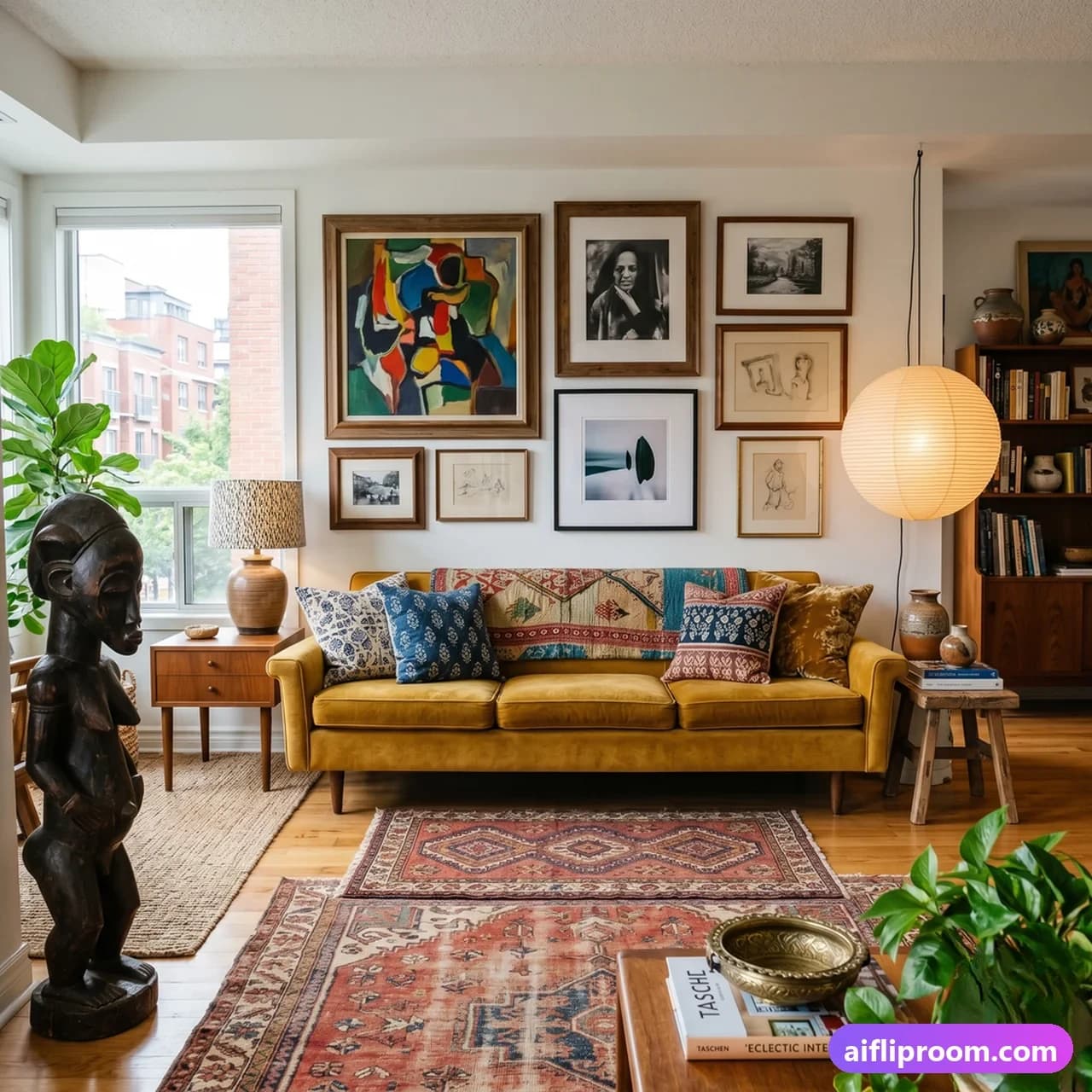
What is Eclectic interior design?
Eclectic style is a deliberate, curated mix of eras, cultures and patterns — and the word deliberate matters. It is not a room that simply lacks a plan; it is a room held together by a confident eye. Furniture from different periods sits side by side; patterns and textures are boldly combined; layered rugs, globally-collected art and objects, and a gallery-wall sensibility give every surface a story. What keeps it harmonious rather than chaotic is restraint somewhere — a repeated colour, a consistent tone, a sense of balance — so the variety reads as intentional. The result is a space full of personality and life. In staging, eclectic style suits living rooms and bedrooms for buyers who want individuality and a collected-over-time feel, rather than a single matching set bought in one go.
Where Eclectic comes from
Eclectic is the oldest way of furnishing a home and the last one to get a name. Before the twentieth century made single-style interiors possible and then fashionable, almost every house was a mix — pieces inherited, pieces bought, pieces made locally, accumulated across decades and generations. The style as a deliberate choice emerged once that was no longer the default: designers began arguing that a room assembled from several periods was more interesting, more personal and more honest than one furnished from a single catalogue. The difficulty is that it looks effortless and is not. A well-executed eclectic room is held together by rules the eye reads without noticing, and the difference between eclectic and merely mismatched is entirely in whether those rules are being applied.
Key elements of Eclectic
- A bold mix of patterns and textures
- Furniture from different eras side by side
- Layered rugs
- Globally-collected art and objects
- A vibrant but harmonised palette
- A gallery-wall sensibility
When to use Eclectic
Living rooms and bedrooms for buyers who want individuality and a collected-over-time feel rather than a single matching set.
Eclectic colours and materials
Whatever you decide, applied consistently — that consistency is the mechanism. Most successful eclectic rooms pick a base of two or three neutrals and allow three or four accent colours, then repeat each accent at least twice in different places and materials. Materials can range as widely as the periods: velvet next to rattan next to lacquer next to raw timber. The constraint that makes it work is that either the colour or the material or the wood tone stays constant across the mix. Remove all three constraints and the room stops reading as a collection and starts reading as a storage unit.
Eclectic room by room
Living room in Eclectic
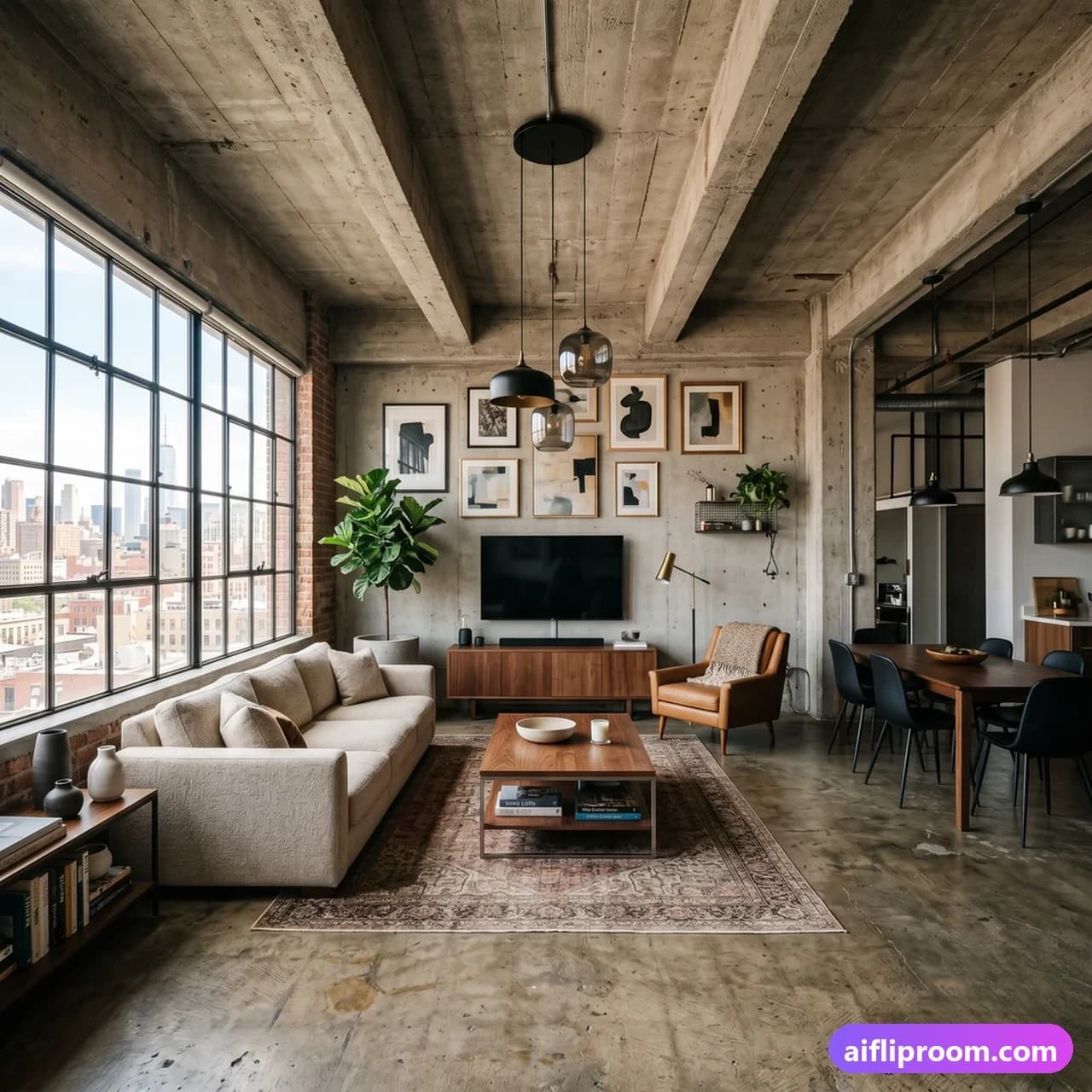
Choose one anchor — a strong sofa, a large rug or a major artwork — and let everything else respond to it. Mix a modern sofa with an antique side table and a mid-century chair, keeping the wood tones in a narrow range so the eye reads them as related. Layer art from different sources in frames that share either a colour or a finish. Vary the pattern scales and repeat each accent colour two or three times around the room. Leave one substantial area plain, usually the walls or the floor, so the mix has somewhere to rest.
Bedroom in Eclectic
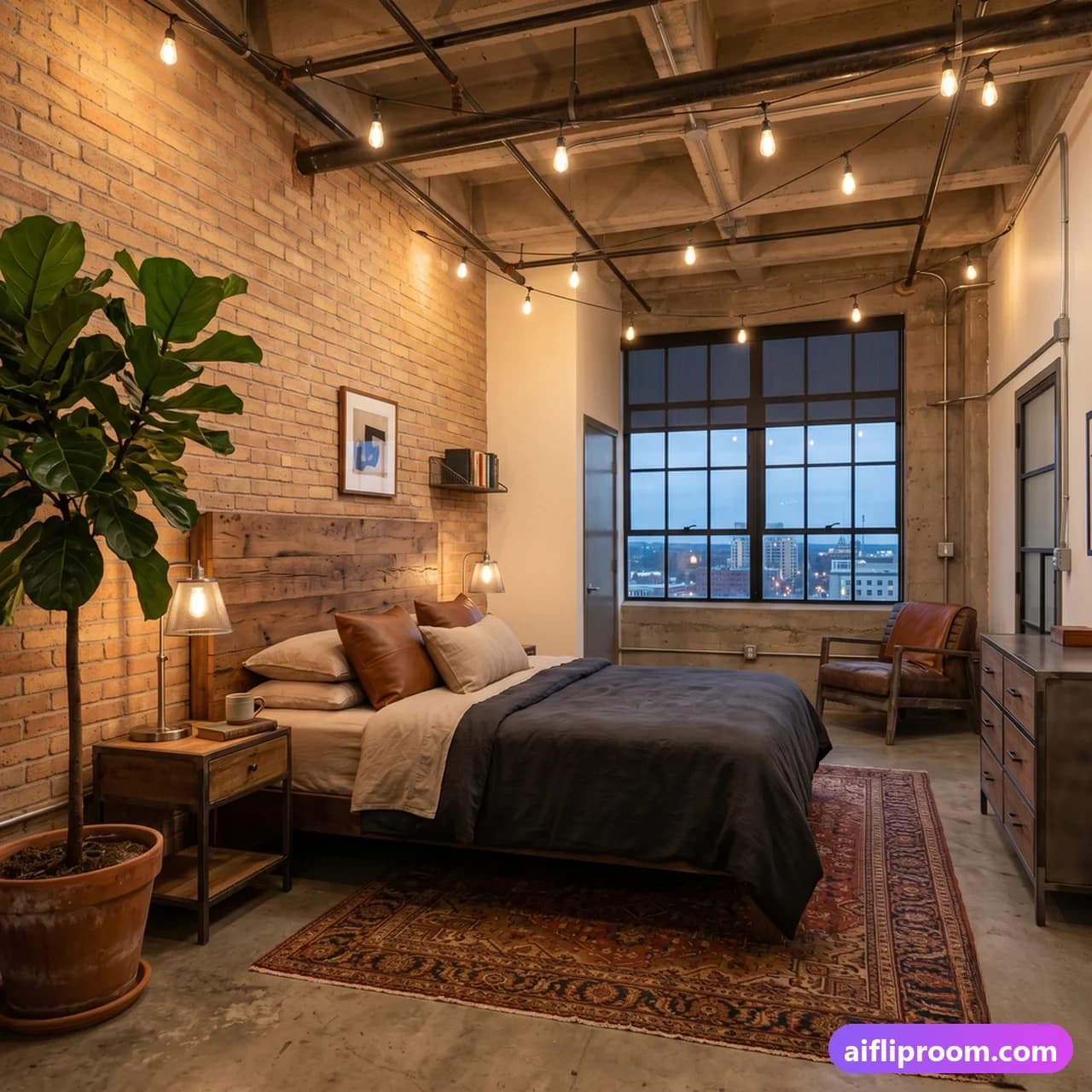
An antique or vintage bed frame with modern bedding, or the reverse — a plain contemporary bed with a very old quilt. Mismatched nightstands of similar height, which is the single rule that makes mismatched pairs look intentional. One patterned textile, one plain, and lamps that differ in shape but agree in metal. Art hung as a group rather than centred. The room should look like it belongs to a specific person rather than to a scheme.
Dining room in Eclectic
Mismatched chairs are the classic eclectic move and they work when one thing is shared — the same seat height, the same colour, the same material, or the same era. A modern table with antique chairs, or an old table with contemporary ones. A statement light from a different period again. Display collected ceramics or glassware rather than a matched set.
Home office in Eclectic
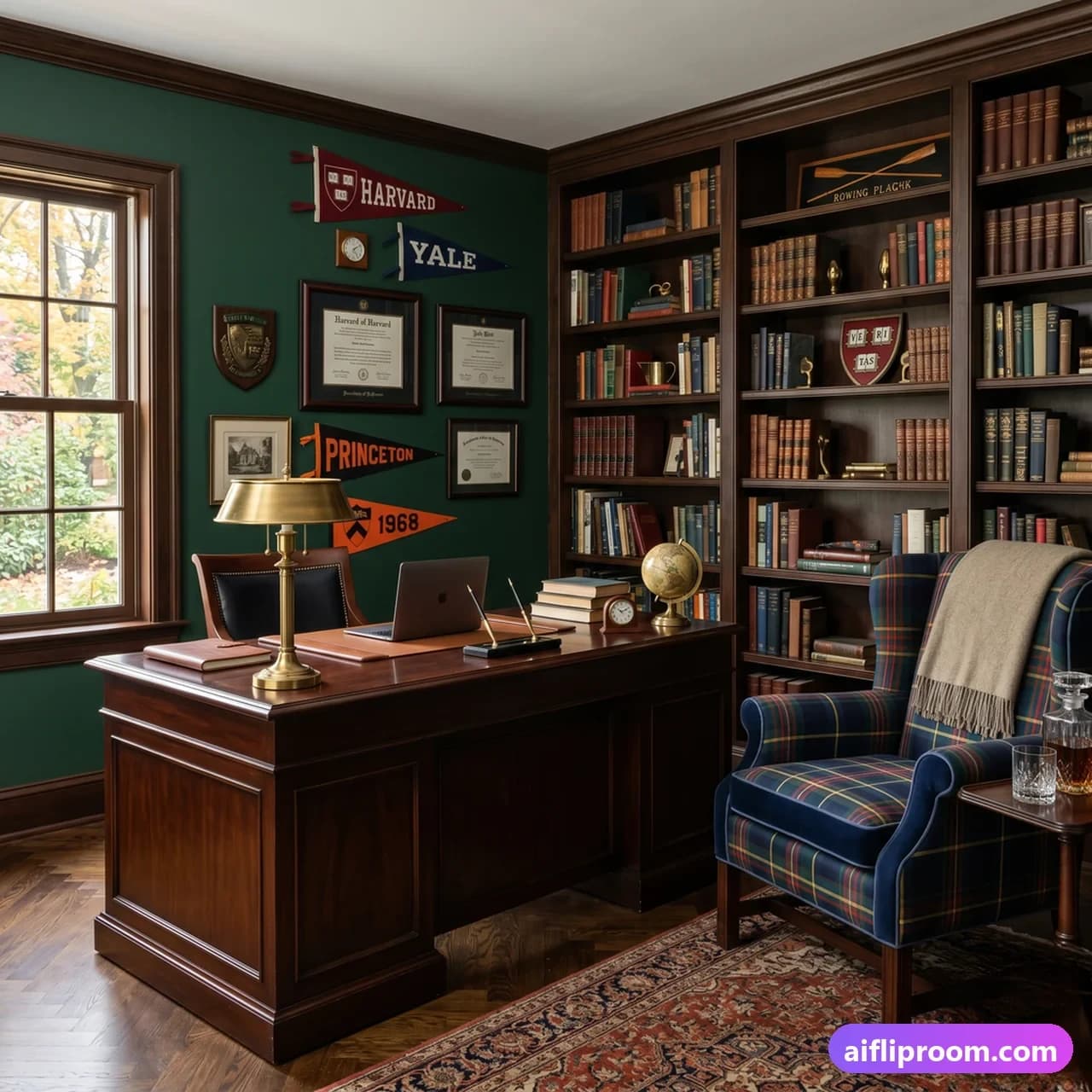
An old desk with a modern chair, shelving that mixes closed and open, and art or objects with personal history rather than decorative filler. Eclectic suits a working room particularly well because the things that accumulate in an office — books, souvenirs, tools — are exactly what the style wants on display. Keep the working surface clear so the room stays usable.
Entryway in Eclectic
A good place to test the approach before committing a whole room. An antique console with a contemporary mirror, a bold rug, and one unexpected object. If the combination works in a hall it will work in a living room, and if it does not, you have lost very little.
Eclectic mistakes to avoid
- Mistaking eclectic for unplanned. Mismatched by accident looks like an accident. The style requires a repeated palette, related wood tones or a consistent material to hold it together.
- No anchor. Without one dominant piece setting the tone, every object competes and none wins.
- Everything at the same scale. Interest comes from contrast — one large, several medium, a few small — in both furniture and pattern.
- Filling every surface. Eclectic rooms need negative space more than uniform ones do, because the eye needs somewhere to recover.
- Buying an eclectic look in one go. The style depends on things having been chosen at different times for different reasons, and that is genuinely hard to fake in a single order.
Eclectic questions, answered
What is eclectic interior design?
A deliberate mix of furniture, periods, styles and origins in one room, held together by a consistent palette, material or scale rather than by a single style. Done well it looks personal and collected; done without those constraints it simply looks mismatched.
How do I make an eclectic room look intentional rather than random?
Apply at least one constant. Repeat each accent colour two or three times in different materials, keep the wood tones within a narrow range, or run one material — brass, black metal, rattan — through several pieces. Then choose a single anchor piece and give the room one large plain area. Those four decisions do almost all the work.
What is the difference between eclectic, bohemian and maximalist?
Eclectic is about mixing periods and origins, and can be sparse or dense. Bohemian is a specific warm, earthy, textile-heavy and plant-filled flavour of eclectic. Maximalist is about density and richness and can be stylistically consistent. A room can be any one of the three without being the others.
Can eclectic style work in a small space?
Yes, with tighter limits. Reduce the number of accent colours to two, keep the furniture footprint small and consistent in scale, and let one wall or the floor stay plain. Small eclectic rooms often succeed because a limited space forces the editing the style needs anyway.
Is eclectic good for staging a property?
A restrained version is genuinely useful — one or two characterful pieces against otherwise neutral furnishing gives listing photos personality without making them personal. A fully eclectic room reads as someone's specific taste, which is the opposite of what staging is trying to achieve.
Guides to read next
Longer reads on getting a room photographed and restaged well.
- See Your Own Room in a New Style Before You Buy AnythingPreview your actual room in a new style before buying furniture or hiring anyone: what a preview settles, what it can't, and five steps to a useful one.
- How to Photograph Rooms for Virtual Staging: 7 RulesDaylight, lamps off, a level phone at chest height, the 1x lens not 0.5x, one room per frame, clear surfaces — seven habits that make AI staging look real.
- What Is Virtual Staging? The Complete Guide: How It Works, Cost, Rules, ExamplesVirtual staging explained in plain language: how AI furnishes a photo of a real room, what it costs, what agents think of it (NAR 2025), who it helps, the rules and how to spot bad staging.
See your room in Eclectic
Upload a photo and our AI restages it in the Eclectic look in 15–60 seconds, depending on how much detail your room has — keeping your walls, windows and layout intact.
Try Eclectic on your room