French Country Interior Design
Provence palette — distressed cabinets, lavender, copper pots.
Stage your room in French Country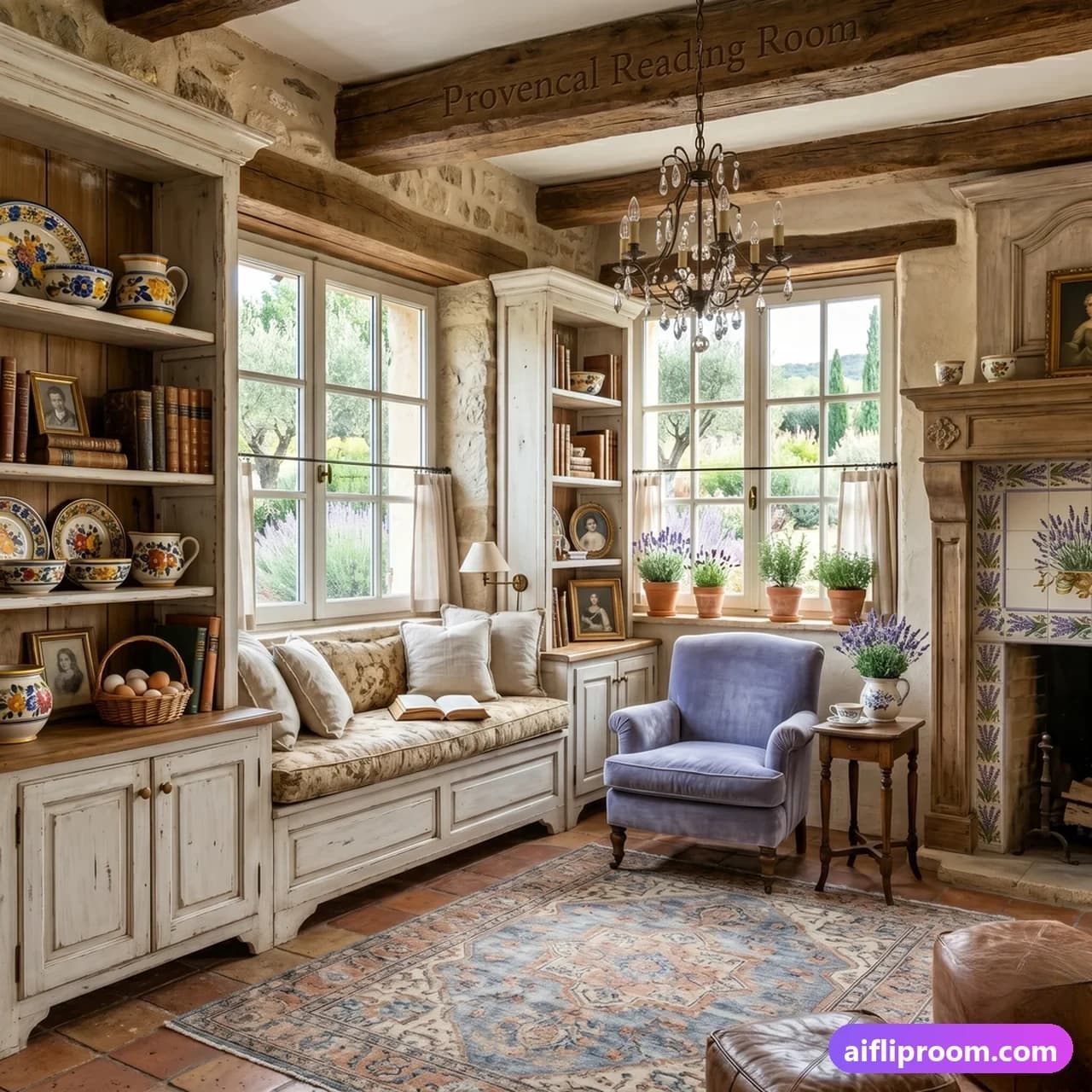
What is French Country interior design?
French country — or Provençal — style brings the warmth of rural southern France indoors. It is rustic and elegant at the same time, which is exactly its charm: hard-working materials handled with a graceful eye. Furniture is often distressed or painted, with curved, classic silhouettes; the palette is soft and sun-faded, leaning on lavender, cream, sage and warm stone. Terracotta floors, natural stone and aged copper add age and craft, while wrought-iron details and toile or gingham textiles complete the picture. Nothing is precious — the look is meant to feel collected and lived-in — but nothing is careless either. The result is a home that feels warm, gracious and unhurried. In staging, French country suits countryside properties and farmhouses, and it appeals to buyers drawn to relaxed, characterful charm over hard modern lines.
Where French Country comes from
French country covers the rural interiors of Provence, the Dordogne and the surrounding regions, where houses were built of local stone with thick walls, terracotta floors and small windows against the summer heat. The furniture came from local workshops and was made to last generations, so the shapes are provincial versions of formal French designs — curved cabriole legs, carved detail, rush seats — executed in oak, walnut and fruitwood rather than in gilt. Over decades the paint on shutters and cupboards faded to the soft blues, greys and greens people now buy deliberately. It sits between rustic and elegant, and the reason it has never gone out of fashion is that it manages both: the rooms are comfortable and a little worn, but the bones of the furniture are formal.
Key elements of French Country
- Distressed and painted wood furniture
- A soft palette of lavender, cream and sage
- Terracotta floors and natural stone
- Wrought iron and aged copper
- Toile and gingham textiles
- A rustic but graceful elegance
When to use French Country
Kitchens, dining rooms and bedrooms. A warm, characterful look for countryside properties and buyers drawn to relaxed, lived-in charm.
French Country colours and materials
Sun-faded and warm. Cream and stone as the base, with lavender, soft blue, sage and olive green, ochre and a faded terracotta or rose. Yellow appears often and should be buttery rather than bright. Woods are mid-toned oak and walnut, frequently painted and rubbed back so the grain shows through. Materials are toile de Jouy, ticking stripe, gingham, linen, wrought iron, copper, terracotta tile, stone and hand-glazed ceramic. Pattern is botanical or classical, used in curtains, upholstery and cushions rather than on walls, which are usually plain plaster or limewash.
French Country room by room
Kitchen in French Country
The most recognisable room in the style. A large stone or wooden worktop, a farmhouse sink, and a range set into a chimney recess. Cabinetry painted in a soft blue-grey or cream with visible wear, and open shelving or a plate rack holding faience and copper pans. A heavy wooden table with rush-seated or ladder-back chairs. Dried lavender and herbs, a bowl of lemons, terracotta tile underfoot. French country kitchens are meant to be worked in and look better slightly untidy.
Living room in French Country
A comfortable sofa in linen or a small toile, armchairs with curved wooden frames and upholstered seats, and a wooden coffee table with some age to it. Plaster or limewash walls, exposed beams if the building has them, and a stone fireplace as the focal point. Curtains in linen or a botanical print, a worn rug, and a large armoire providing both storage and presence. One or two gilt-framed mirrors are period-correct and lift the whole room.
Bedroom in French Country
A carved wooden or iron bed, white linen bedding layered with a quilted boutis or a toile coverlet, and a painted armoire or chest of drawers. Shutters at the window or simple linen curtains. A rush or wool rug on a wooden or tiled floor, a small vase of lavender, and a mirror with a painted or gilt frame. The room should feel cool and slightly bare — these were houses designed to be shady in August.
Dining room in French Country
A long wooden table with a scrubbed or waxed top, mismatched chairs, and a wrought-iron chandelier above. A dresser or buffet displaying faience plates and glassware. Linen napkins, a jug of flowers from the garden, and nothing that looks formally set. This room is where the style's balance between rustic and refined is easiest to see: the table is plain and heavy, the chandelier is not.
Bathroom in French Country
A washstand or a painted vanity with a marble top, a claw-foot or simple freestanding bath, and aged brass or nickel fittings. Terracotta or plain stone tile, a gilt or painted mirror, linen towels and a small chair or stool. Keep the walls plain plaster and let one antique piece — the mirror or the washstand — carry the room.
French Country mistakes to avoid
- Distressing everything. In a real farmhouse, wear appeared where hands and feet touched. Uniformly sanded edges on every piece read as manufactured, because they are.
- Confusing it with shabby chic. Shabby chic is pastel, frilly and mostly painted white. French country is warmer, earthier and structurally more formal, with proper wooden furniture underneath.
- Bright lavender and bright yellow. The Provence palette is faded and dusty. Saturated versions of the same colours look like a themed restaurant.
- Patterned walls. Toile belongs on curtains, cushions and upholstery. Plain plaster or limewash walls are what let the pattern read.
- Filling the room. These houses were sparse — a few large, good pieces and a lot of floor. Modern reproductions of the style tend to be far too crowded.
French Country questions, answered
What is the difference between French country and farmhouse style?
American farmhouse is lighter, plainer and more architectural — shiplap, black hardware, shaker doors, a restrained palette. French country is warmer and more ornate: curved provincial furniture, toile and ticking, gilt mirrors, terracotta and stone. Farmhouse furniture is simple by design; French country furniture is formal furniture that has aged.
What is toile de Jouy?
A printed cotton or linen fabric showing detailed pastoral or narrative scenes in a single colour on a pale ground — most often blue, red or black on cream. It originated in eighteenth-century France and is one of the defining patterns of the style. Used on curtains, cushions or a single upholstered chair it reads as authentic; used on every surface it overwhelms a room.
What colours are French country?
Cream and stone as the base, with lavender, soft blue, sage and olive, ochre, buttery yellow and faded terracotta. Everything is muted, as though it has spent a long time in strong sunlight. Woods are mid-toned and often painted in chalky colours and rubbed back.
Can I do French country in a modern house?
Yes, focusing on furniture, textiles and colour rather than architecture. A painted armoire, a wooden table, linen and toile, a gilt mirror and the faded palette will carry the style without beams, stone walls or terracotta floors. Keeping the walls plain and warm is the most important single decision.
Is French country a good choice for staging a property?
It suits period properties, rural homes and larger character houses, where it flatters what is already there. It is a weaker choice for city apartments and new builds. For a broad market, a lighter version — the palette and the linen without the heavier antique furniture — reaches more buyers.
Guides to read next
Longer reads on getting a room photographed and restaged well.
- See Your Own Room in a New Style Before You Buy AnythingPreview your actual room in a new style before buying furniture or hiring anyone: what a preview settles, what it can't, and five steps to a useful one.
- How to Photograph Rooms for Virtual Staging: 7 RulesDaylight, lamps off, a level phone at chest height, the 1x lens not 0.5x, one room per frame, clear surfaces — seven habits that make AI staging look real.
- What Is Virtual Staging? The Complete Guide: How It Works, Cost, Rules, ExamplesVirtual staging explained in plain language: how AI furnishes a photo of a real room, what it costs, what agents think of it (NAR 2025), who it helps, the rules and how to spot bad staging.
See your room in French Country
Upload a photo and our AI restages it in the French Country look in 15–60 seconds, depending on how much detail your room has — keeping your walls, windows and layout intact.
Try French Country on your room