New Chinese Interior Design
Xinzhongshi — modern Chinese luxury with rosewood, ink wash art, jade.
Stage your room in New Chinese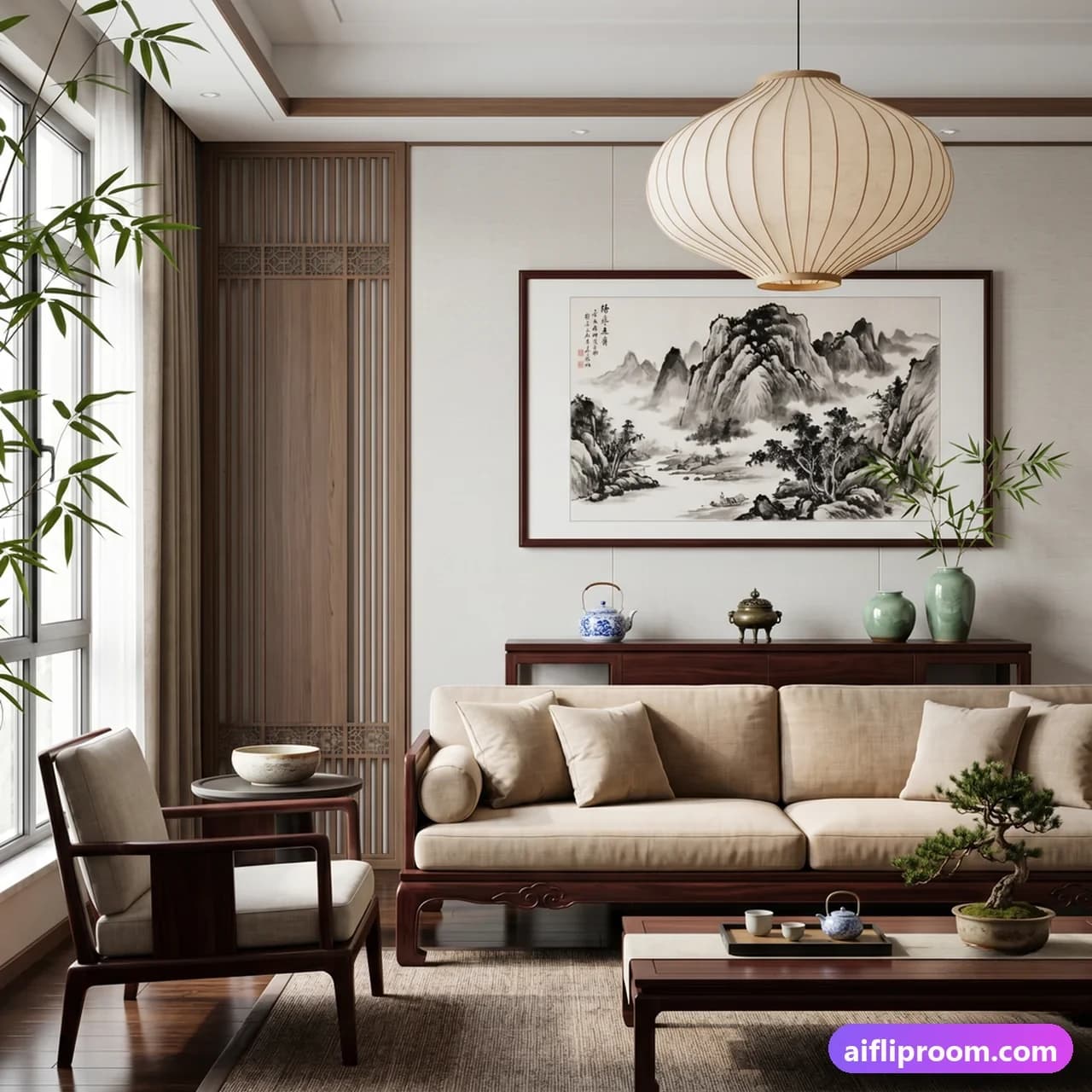
What is New Chinese interior design?
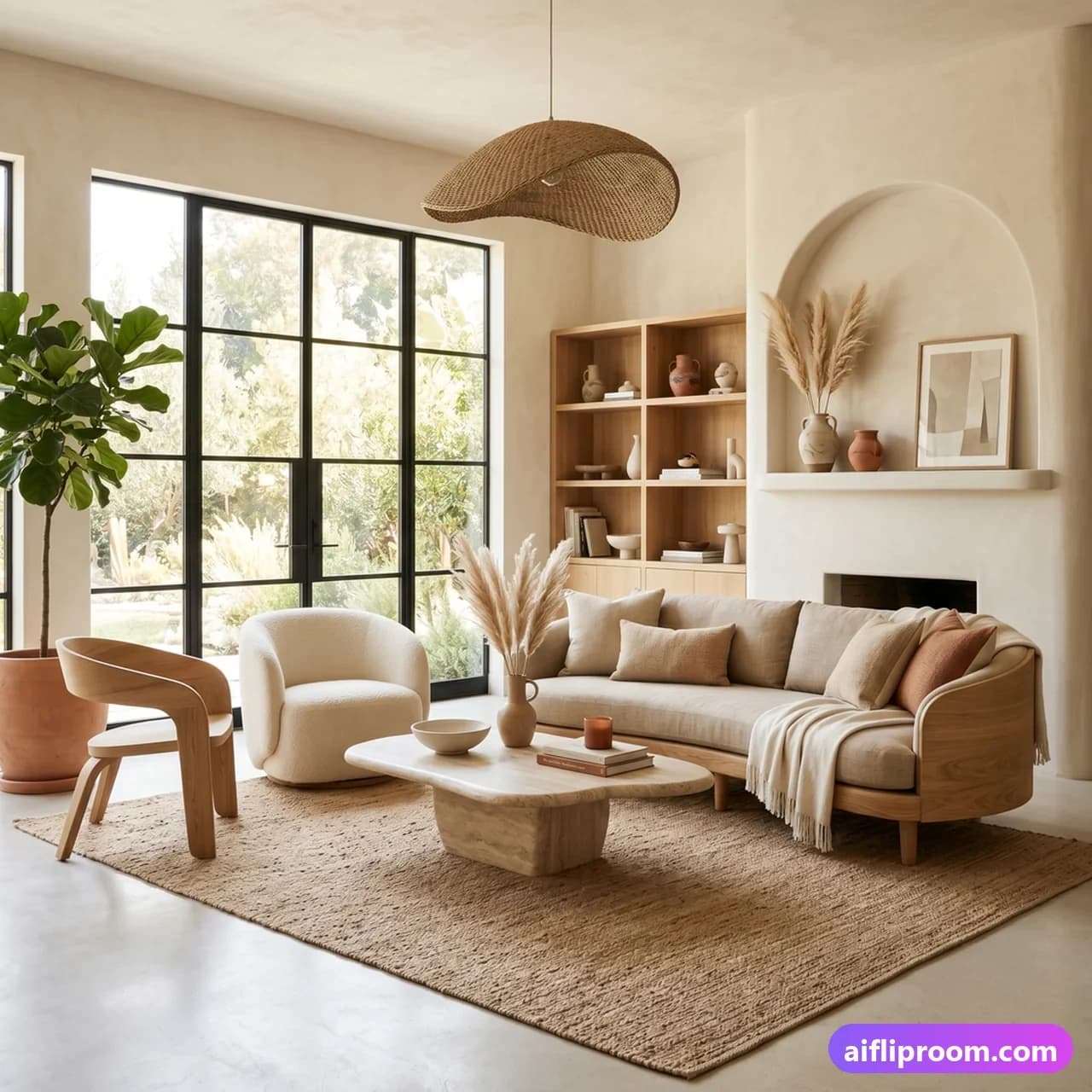
New Chinese — Xinzhongshi — is a contemporary reinterpretation of classical Chinese design. Rather than copying traditional interiors, it distils their spirit — balance, restraint, craftsmanship, a deep respect for natural materials — and expresses it in a clean, modern language. Furniture carries the deep rosewood tones and quiet authority of classical pieces but with simplified, contemporary lines. Ink-wash and calligraphy-inspired art set a contemplative tone; the palette is restrained, with warm beige and accents of jade green; and paper-lantern lighting, bamboo and fine ceramics add texture and cultural depth. Layouts are balanced and unhurried, with space left to breathe. The result is a serene, elegant form of quiet luxury. In staging, New Chinese is a distinctive, sophisticated choice for buyers who want a home with cultural depth and calm rather than a generic neutral interior.
Where New Chinese comes from
New Chinese — Xinzhongshi — developed in mainland China from the 2000s onward as an answer to a specific problem: traditional Chinese interiors are beautiful and heavy, built around dark carved hardwood, elaborate joinery and dense symbolism, and they do not sit easily in a modern apartment. The style keeps the underlying grammar of classical Chinese design — symmetry, framed views, screens that divide without closing, restraint, and the idea that a room should hold a small number of significant objects — and rebuilds it with contemporary proportions and materials. The result is markedly cleaner than the traditional version and considerably warmer than Western minimalism, and it has become the default aspirational look in a great deal of Chinese residential design.
Key elements of New Chinese
- Rosewood-toned furniture with clean modern lines
- Ink-wash and calligraphy-inspired art
- A restrained palette with jade green accents
- Paper-lantern lighting
- Bamboo and fine ceramic accents
- A serene, balanced, unhurried layout
When to use New Chinese
Living rooms and bedrooms. An elegant, distinctive look for buyers who want quiet luxury with cultural depth.
New Chinese colours and materials
Ink, wood and stone. Warm off-white, bone and pale grey as the base, with the reddish browns of rosewood, walnut and elm as the structural colour, and black ink as the accent that gives the style its graphic quality. Jade green, deep blue and a single restrained red appear sparingly, usually in one object rather than in furnishings. Materials are hardwood with visible grain, stone, silk, linen, rice paper, lacquer, bronze and porcelain. Pattern is minimal and geometric — lattice, fretwork, the frame of a screen — rather than floral or ornate.
New Chinese room by room
Living room in New Chinese
Symmetry organises the room. A low sofa in a warm neutral flanked by a matched pair of chairs, a hardwood console against the main wall, and a coffee table with clean joinery rather than carving. A lattice or slatted timber screen dividing rather than enclosing. One ink-wash painting or a single piece of calligraphy, hung with plenty of space around it. A bonsai, an orchid or an arrangement of branches. Keep the surfaces almost empty — the discipline about how few objects are on display is what separates this from traditional Chinese decorating.
Bedroom in New Chinese
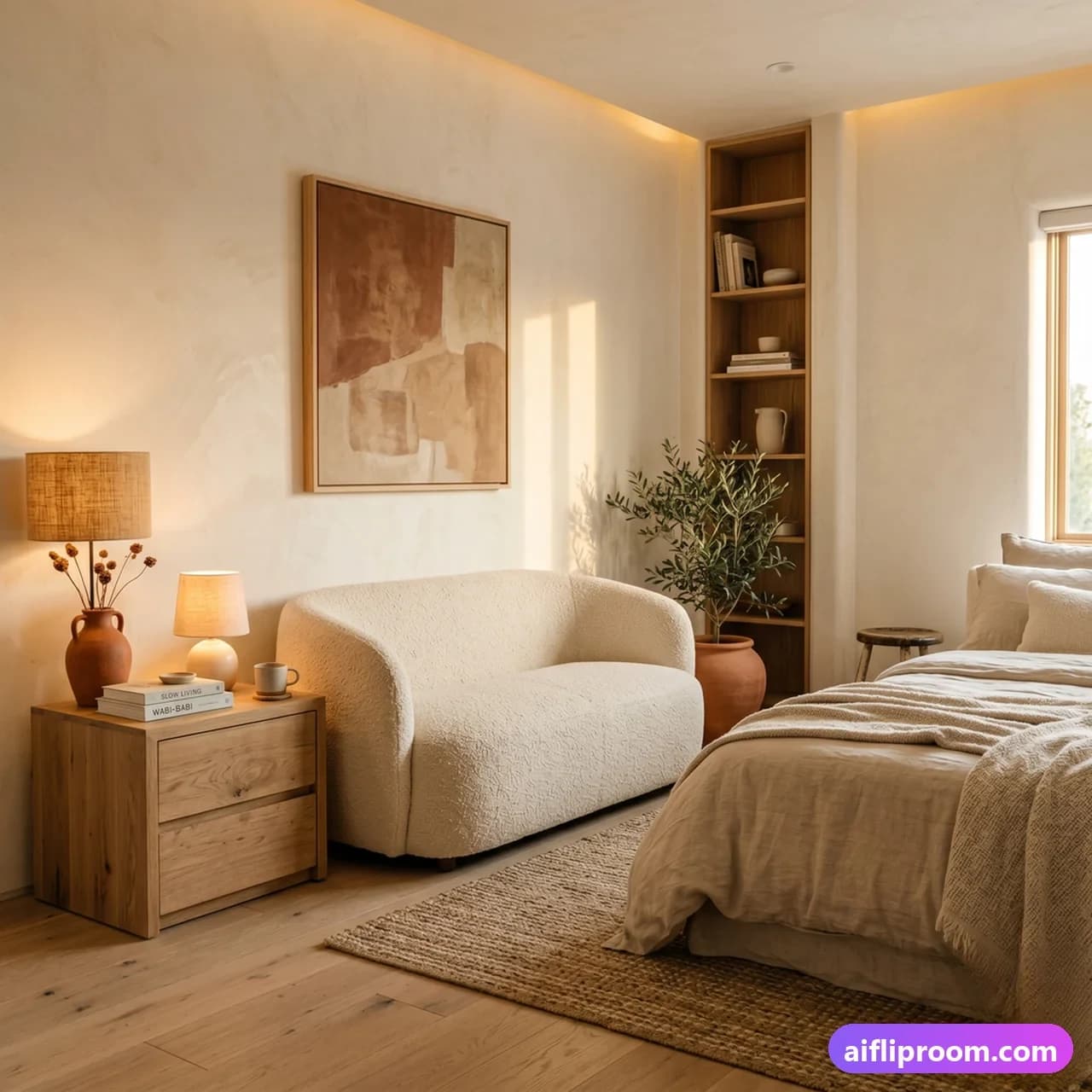
A low platform bed in warm hardwood, bedding in bone or pale grey silk or linen, and a matched pair of nightstands with simple lamps. A timber lattice panel or a paper screen at the window rather than heavy curtains. One artwork, one plant, nothing else on the surfaces. The room should feel ordered and quiet, and the warmth comes entirely from the timber tone.
Dining room in New Chinese
A round hardwood table — round is both traditional and practical for shared dishes — with simple chairs in a matching timber, and a single pendant centred above. A console or cabinet along one wall displaying two or three pieces of porcelain. Keep the table clear except for one arrangement. Symmetry and centring do the decorating here; there is very little else in the room.
Study or tea room in New Chinese
The most characteristic room in the style. A hardwood desk or a low tea table, a comfortable chair, shelving with a lattice or asymmetric grid, and a small number of objects displayed deliberately — a scholar's stone, an inkstone, a ceramic. One work of calligraphy. If the room has a window onto planting, frame the view and keep the sill clear; the relationship between the room and what can be seen from it is structural in Chinese design rather than incidental.
Entryway in New Chinese
A hardwood console with a mirror or an ink painting above, a pair of matching lamps or objects flanking it, and a screen or lattice panel shielding a direct view into the living space. Traditional Chinese planning avoids a straight sightline from the door through the house, and reproducing that with a screen makes an entrance feel considered rather than abrupt.
New Chinese mistakes to avoid
- Confusing it with chinoiserie. Chinoiserie is a European fantasy of Chinese decoration — hand-painted wallpapers, lacquered pagoda motifs, dragons — invented for Western drawing rooms. New Chinese is a contemporary Chinese style with a different grammar entirely.
- Overloading the symbolism. Traditional motifs carry specific meanings, and scattering them decoratively reads as superficial. One significant object beats five ornamental ones.
- Heavy carved reproduction furniture. That is traditional Chinese, and its weight is exactly what this style was developed to move away from.
- Losing the symmetry. The order is not incidental — it is the structure the restraint hangs on. Asymmetric arrangements make the same furniture look sparse rather than composed.
- Filling the surfaces. A small number of objects, well spaced, with real emptiness between them. This is the discipline the whole style depends on.
New Chinese questions, answered
What is New Chinese style?
Xinzhongshi, a contemporary Chinese interior style that emerged from the 2000s. It keeps the grammar of classical Chinese design — symmetry, screens, framed views, restraint, hardwood, a small number of significant objects — and rebuilds it in modern proportions with cleaner lines and lighter materials.
What is the difference between New Chinese and traditional Chinese interiors?
Traditional interiors use dark, heavily carved hardwood, elaborate joinery, dense symbolism and rich colour. New Chinese keeps the layout logic and the material palette but simplifies drastically: less carving, lighter timber tones, a warm neutral base, far fewer objects, and modern furniture proportions.
Is New Chinese the same as chinoiserie?
No, and the two are frequently confused. Chinoiserie is a European decorative style from the seventeenth and eighteenth centuries, imitating Chinese motifs for Western interiors — pagodas, dragons, hand-painted bird-and-flower wallpaper. New Chinese is an actual contemporary Chinese style with a different visual language and no interest in ornament.
What woods are used in New Chinese interiors?
Warm reddish-brown hardwoods are the reference point — rosewood, elm, walnut and ash — usually in a matt or lightly oiled finish so the grain reads. The tone matters more than the species: the timber should look warm against a bone or off-white wall rather than dark and heavy.
Does New Chinese style work for staging a property?
It photographs as calm, ordered and expensive, and it suits apartments and modern homes well. In markets with Chinese buyers it is an obvious fit. Elsewhere it reads as a warm, restrained contemporary scheme, which is broadly safe — the symmetry and the empty surfaces are exactly what staging wants.
Guides to read next
Longer reads on getting a room photographed and restaged well.
- See Your Own Room in a New Style Before You Buy AnythingPreview your actual room in a new style before buying furniture or hiring anyone: what a preview settles, what it can't, and five steps to a useful one.
- How to Photograph Rooms for Virtual Staging: 7 RulesDaylight, lamps off, a level phone at chest height, the 1x lens not 0.5x, one room per frame, clear surfaces — seven habits that make AI staging look real.
- What Is Virtual Staging? The Complete Guide: How It Works, Cost, Rules, ExamplesVirtual staging explained in plain language: how AI furnishes a photo of a real room, what it costs, what agents think of it (NAR 2025), who it helps, the rules and how to spot bad staging.
See your room in New Chinese
Upload a photo and our AI restages it in the New Chinese look in 15–60 seconds, depending on how much detail your room has — keeping your walls, windows and layout intact.
Try New Chinese on your room