Mediterranean Outdoor Design
Terracotta, olive trees, lavender — Tuscan villa courtyard.
Stage your outdoor space in Mediterranean Outdoor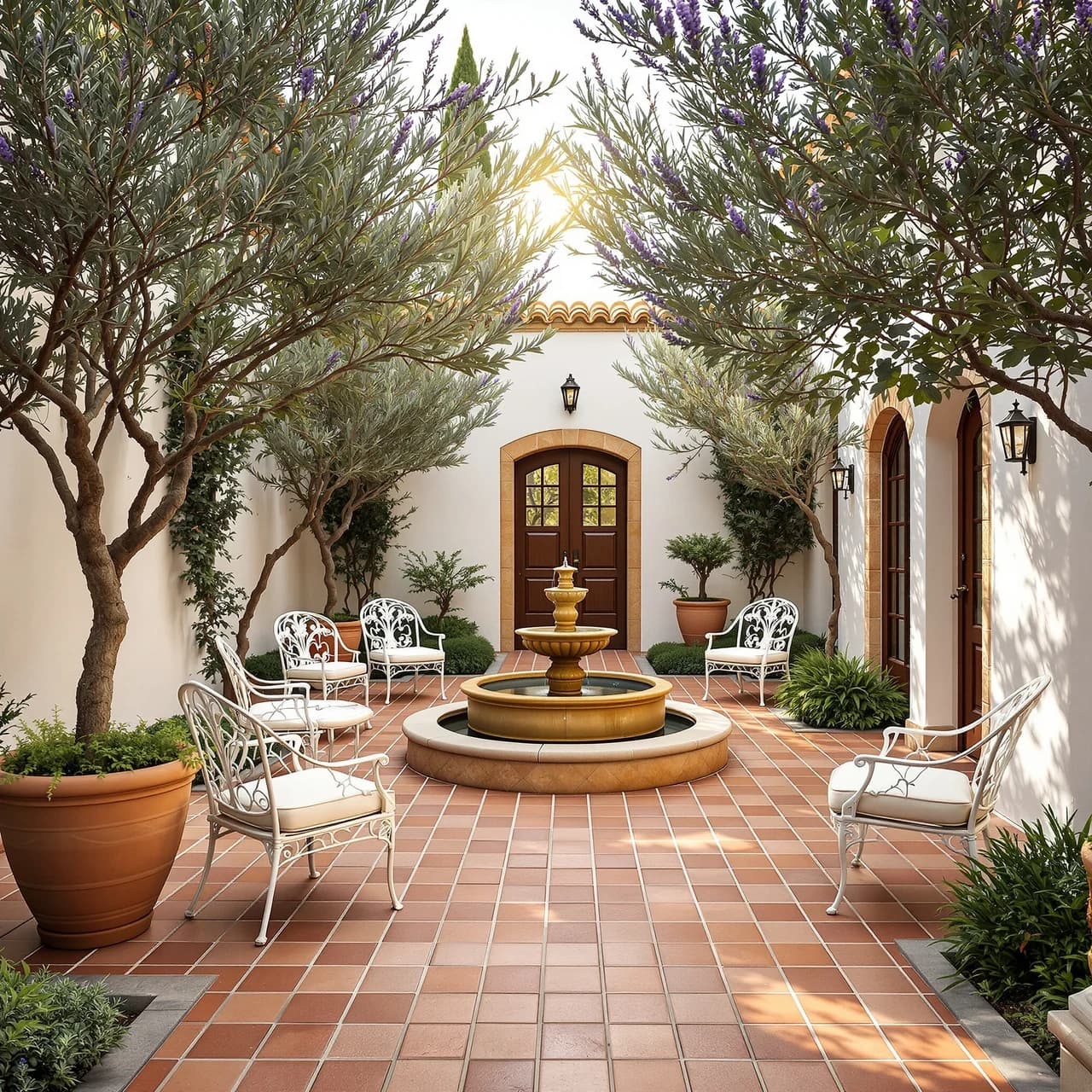
What is Mediterranean Outdoor design?
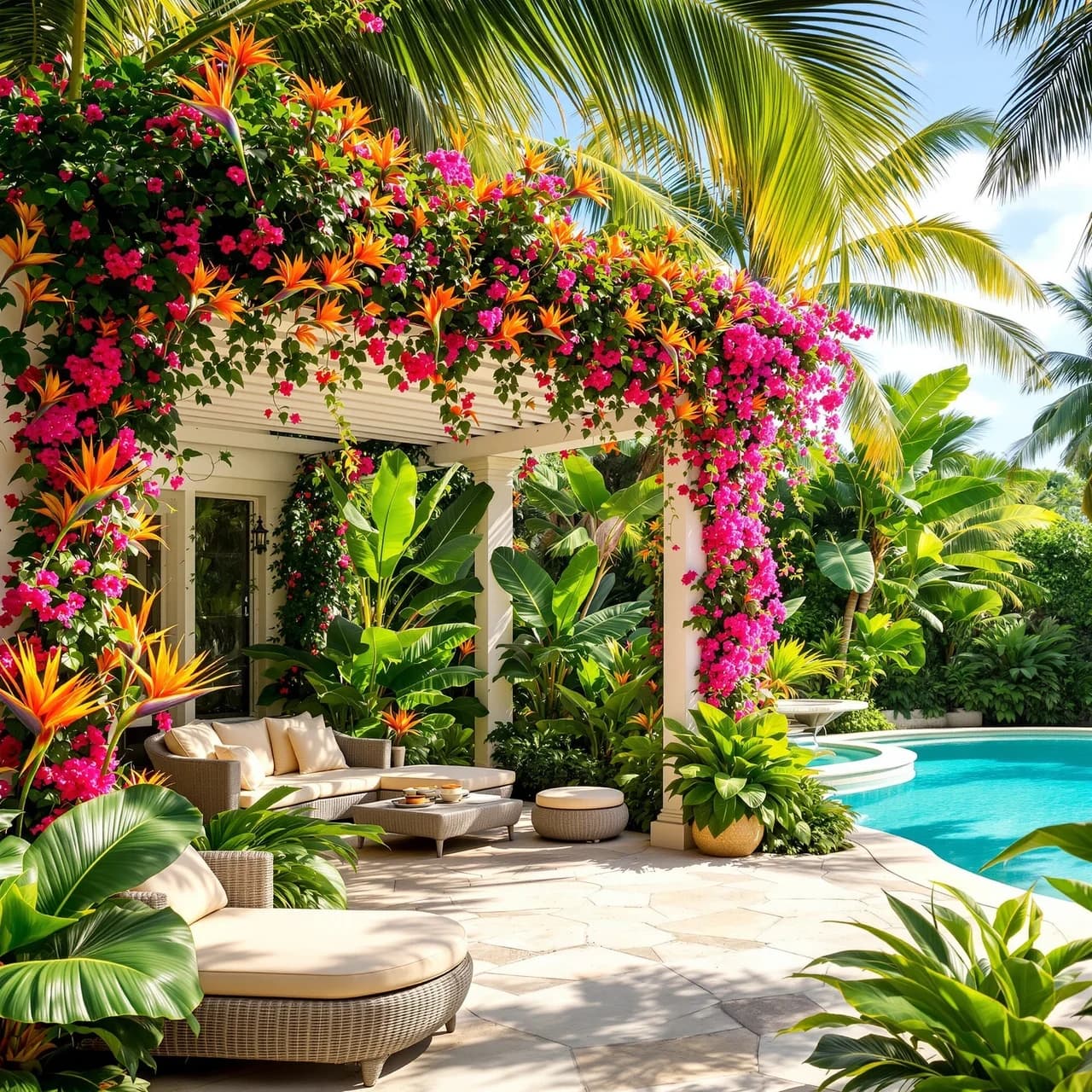
Mediterranean outdoor design recreates the sun-warmed courtyard of an Italian or Spanish villa — an outdoor room built for long, slow afternoons. Terracotta tile runs underfoot; olive trees stand in clay pots; fragrant lavender and rosemary edge the space; white stucco walls carry climbing jasmine. Wrought-iron furniture and a central stone fountain complete the scene. The planting is drought-tolerant and the palette is warm and earthy, lifted by touches of blue-and-white tile. The result is a relaxed, gracious outdoor space that feels like a holiday and asks little in upkeep. In staging, Mediterranean outdoor design is well suited to warm-climate and villa-style properties, and it helps a buyer picture an easy, outdoor-leaning way of living.
Where Mediterranean Outdoor comes from
The Mediterranean garden was shaped by drought and by sun. Water was scarce, so planting evolved toward species that survive a rainless summer: olive, cypress, rosemary, lavender, citrus, fig and vine, most of them silver-leaved or aromatic because both are adaptations to heat. Shade mattered more than lawn, so the important structures are the ones that make it — a pergola with a vine over it, a wall, a canopy of trees. And because rooms indoors were kept shuttered and cool, the courtyard or terrace became the place where life happened. What is copied now as a decorating style was originally a functional response to a climate, and the versions that convince are the ones that keep that logic.
Key elements of Mediterranean Outdoor
- Terracotta tile flooring
- Olive trees in clay pots
- Fragrant lavender and rosemary
- White stucco walls with climbing jasmine
- Wrought-iron furniture
- A central stone fountain
When to use Mediterranean Outdoor
Courtyards, patios and gardens of warm-climate and villa-style properties. Gives the outdoor space a gracious, holiday feel.
Mediterranean Outdoor colours and materials
Sun-worn and earthen. Whitewash, cream and warm stone for walls and paving, terracotta for pots and tile, and the silvers, greys and dusty greens of drought-tolerant foliage. Colour comes from flowers in a narrow range — lavender purple, geranium red, bougainvillea magenta, citrus yellow — and from the deep blue of shutters or a pool. Materials are lime-washed masonry, terracotta, natural stone and gravel, weathered timber, wrought iron and rattan. Nothing is glossy, and every surface should look as though it has spent decades in strong light.
Mediterranean Outdoor area by area
Shaded terrace in Mediterranean Outdoor
The most important structure in the garden. A pergola planted with grape vine or wisteria, or a simple canvas canopy, over a stone or terracotta floor. Underneath, a long table for eating outside and simple chairs or a built-in bench with cushions. This is where a Mediterranean house is actually lived in for half the year, and it should be sized for more people than usually eat there.
Courtyard in Mediterranean Outdoor
Enclosed, gravelled or paved, with pots rather than borders and a small water feature if possible — a wall spout, a basin, a simple rill. Whitewashed or lime-plastered walls with climbing jasmine or bougainvillea. A pair of chairs and a small table in the shade. Courtyards work because they are cool and quiet, so keep the planting to the edges and leave the centre open.
Planting in Mediterranean Outdoor
Drought-tolerant and largely evergreen. Olive as the specimen tree, cypress for vertical structure, and then lavender, rosemary, santolina, cistus, thyme and sage massed in silvery blocks. Citrus in large terracotta pots. Bougainvillea or jasmine on a wall. Group pots in odd numbers and varied sizes rather than lining them up, and let gravel or stone rather than lawn be the ground surface — grass is the least Mediterranean thing you can plant.
Pool or water in Mediterranean Outdoor
Where there is a pool, keep it rectangular and plain, edged in the same stone as the terrace, with planting close to the edges rather than a ring of paving. Where there is not, a wall fountain, a stone basin or a small rill delivers the sound, which matters more than the size. Water in this tradition is about cooling the air and the ear as much as about looking at it.
Evening in Mediterranean Outdoor
The garden is used most after the heat drops, so plan for it. Lanterns on the table and on the ground, candles in glass, string lights along the pergola, and one or two warm uplights into an olive tree. Nothing bright, nothing cool-toned, and no lighting aimed at where people sit.
Mediterranean Outdoor mistakes to avoid
- Planting a lawn. Grass needs exactly the water this climate does not have, and it looks wrong. Gravel, stone and ground-cover planting are correct and far easier.
- Bright orange terracotta. Real pots weather to a dusty, pale, lichen-marked tone. New ones look right after a season outdoors or a wash of diluted yogurt or lime.
- Skipping the shade structure. A terrace with no pergola, canopy or tree over it is unusable in summer, which is the season it exists for.
- Too many flower colours. Lavender, geranium, bougainvillea and citrus — a narrow set, repeated. A mixed border pulls the garden toward an English cottage.
- Lining pots up in a row. Group them in odd numbers with varied heights; the informality is part of the look.
Mediterranean Outdoor questions, answered
What plants make a garden look Mediterranean?
Olive and cypress for structure, then lavender, rosemary, santolina, cistus, thyme and sage massed in silvery-grey blocks, with citrus in terracotta pots and bougainvillea or jasmine on a wall. Almost all of it is drought-tolerant, evergreen and aromatic, which is what gives the planting its characteristic colour and smell.
Can I have a Mediterranean garden in a cool, wet climate?
Partly. The plants that struggle are the ones that hate winter wet rather than winter cold, so the fix is drainage — raised beds, gravel mulch, grit in the soil. Olive, lavender, rosemary and cistus survive in many temperate gardens treated that way. Citrus and bougainvillea will need to come inside. The hard landscaping and the palette travel without any difficulty at all.
How do I create shade without building a pergola?
A large canvas sail or a market umbrella over the table, a multi-stem tree planted to the south or west of the seating, or a reed or bamboo screen fixed above an existing frame. All are cheap and all deliver the essential function, which is somewhere comfortable to sit at midday.
What surfaces suit a Mediterranean garden?
Gravel, natural stone, terracotta tile and compacted decomposed granite. Ideally one material for the main terrace and gravel elsewhere, so the space reads as calm. Lawn, decking and pressed concrete slabs all pull it toward a different kind of garden.
Does Mediterranean outdoor staging help sell a property?
It works well for warm-climate homes, properties with a courtyard or terrace, and anything with existing stone or plaster to build on. It shows a buyer that the outdoor space is usable rather than ornamental, which is the main thing an empty patio fails to communicate.
Guides to read next
Longer reads on getting a outdoor space photographed and restaged well.
- Outdoor Virtual Staging: Patio, Deck and Backyard IdeasOutdoor virtual staging space by space — patio, deck, balcony, porch, pool deck, backyard: what each may gain, what stays as shot, and landscaping previews.
- How to Photograph Rooms for Virtual Staging: 7 RulesDaylight, lamps off, a level phone at chest height, the 1x lens not 0.5x, one room per frame, clear surfaces — seven habits that make AI staging look real.
- See Your Own Room in a New Style Before You Buy AnythingPreview your actual room in a new style before buying furniture or hiring anyone: what a preview settles, what it can't, and five steps to a useful one.
See your outdoor space in Mediterranean Outdoor
Upload a photo and our AI restages it in the Mediterranean Outdoor look in 15–60 seconds, depending on how much detail your outdoor space has — keeping your walls, windows and layout intact.
Outdoor styles are part of the Pro and Agency plans. New accounts get 3 free renders on the interior styles. How outdoor virtual staging works
Try Mediterranean Outdoor on your outdoor space