Modern Outdoor Design
Clean lines, concrete planters, charcoal furniture, manicured lawn — contemporary backyard.
Stage your outdoor space in Modern Outdoor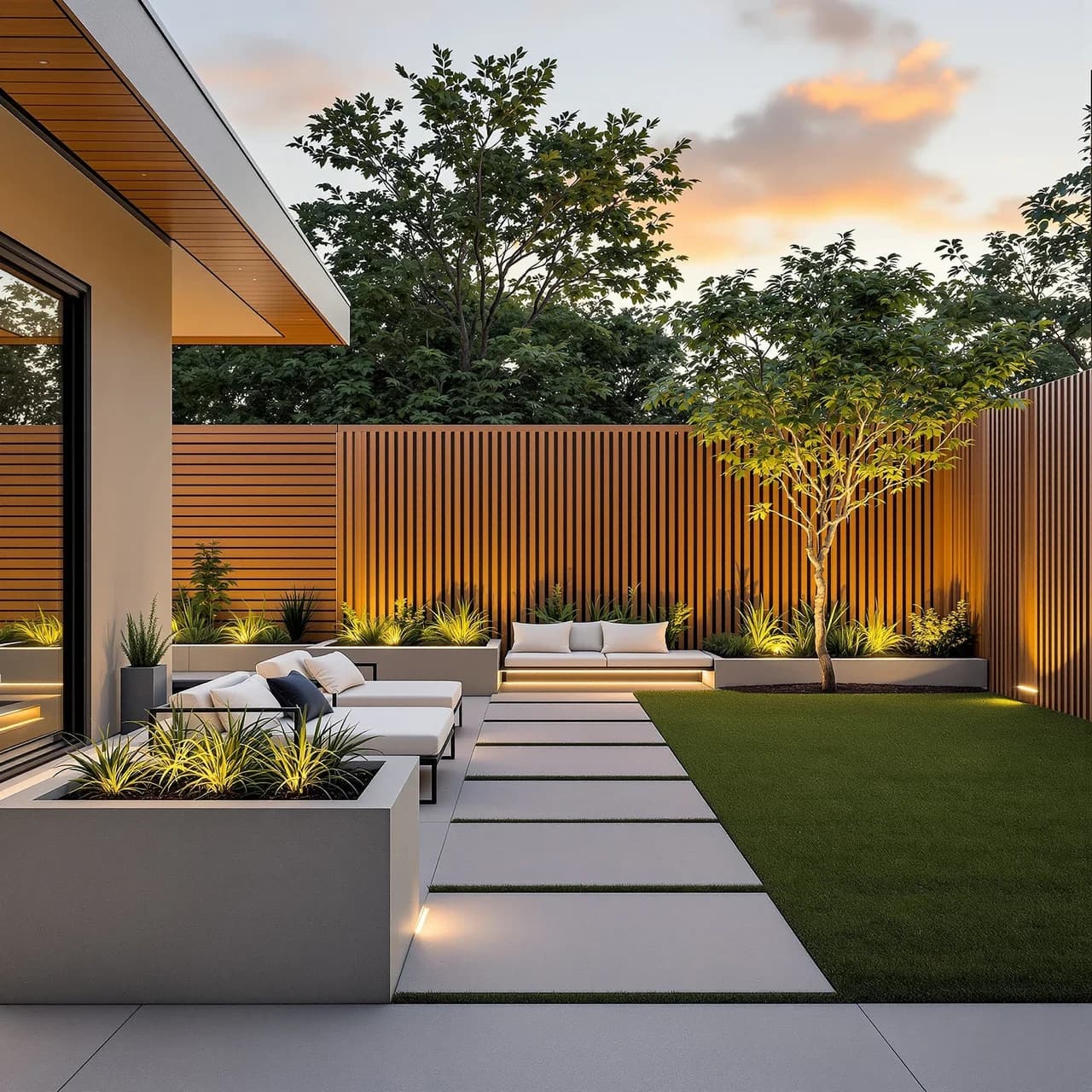
What is Modern Outdoor design?
Modern outdoor design treats a backyard or patio as an extension of a modern home — clean, intentional and uncluttered. Straight lines and geometric forms organise the space; clean concrete planters, charcoal-and-white furniture and a crisply manicured lawn keep it sharp; vertical wood-slat fencing and discreet integrated lighting give it real architectural polish. The planting is deliberate rather than wild, and the palette stays restrained. The result is an outdoor space that looks designed and low-maintenance rather than left to chance — a natural match for a contemporary property. In staging, modern outdoor design signals to a buyer that the garden is as considered as the house, and that it will not demand a weekend of upkeep.
Where Modern Outdoor comes from
Modern landscape design grew out of modern architecture's insistence that a garden should be composed rather than picturesque. Where the English tradition hid its geometry behind informal planting, modernist designers exposed it: straight lines, rectangular pools, level changes as deliberate architecture, and planting used in blocks for texture rather than for seasonal display. Mid-century California made the case most persuasively, treating the garden as an outdoor room continuous with the house, with the same floor level, the same sightlines and the same furniture logic. That idea — the garden as extra floor area rather than as scenery to look at — is the whole basis of how modern outdoor space is designed today.
Key elements of Modern Outdoor
- Clean geometric concrete planters
- Minimalist furniture in charcoal and white
- A crisply manicured lawn
- Vertical wood-slat privacy fencing
- Discreet, integrated lighting
- A restrained, architectural layout
When to use Modern Outdoor
Backyards and patios of contemporary properties. Signals a low-maintenance, designed outdoor space that matches the house.
Modern Outdoor colours and materials
Restrained and architectural. Concrete grey, charcoal, warm timber and off-white as the built palette, with green supplied entirely by the planting and almost no flower colour. Black metal for frames, railings and lighting. Materials are poured or precast concrete, large-format porcelain or stone paving, hardwood decking, powder-coated aluminium, Corten steel and glass. Planting is structural rather than decorative — clipped hedging, ornamental grasses, architectural species such as agave or phormium, and multi-stem trees chosen for their shape. What breaks it is fussiness: mixed paving, curved borders and a wide flower palette all pull it back toward a conventional garden.
Modern Outdoor area by area
Terrace in Modern Outdoor
One paving material, laid in a single direction, running from the house without a threshold change if the levels allow — that continuity is what makes a terrace read as part of the building. A low modular sofa in a neutral outdoor fabric, a rectangular coffee table, and a large outdoor rug to define the area. Keep the furniture low so the sightline over the garden stays open. Built-in seating along one edge does more for the architecture than freestanding chairs and takes less space.
Dining area in Modern Outdoor
A rectangular table with a plain base, chairs in a single colour, and either a pergola overhead or a large cantilever parasol. Position it near the kitchen door rather than at the far end of the garden — modern outdoor design assumes the space is used casually rather than as a destination. A run of built-in bench seating on one side keeps the footprint tight.
Planting in Modern Outdoor
Blocks rather than mixtures. Choose three or four species and repeat them in quantity: a clipped evergreen for structure, an ornamental grass for movement, one architectural specimen, and a ground cover. Rectangular raised beds in Corten, concrete or timber contain the planting and reinforce the geometry. Leave generous gaps of paving or gravel between blocks; the empty space is doing as much work as the plants.
Water and levels in Modern Outdoor
A rectangular reflecting pool, a linear rill or a simple wall spout suits the style better than anything naturalistic. Level changes should be expressed as clean steps or a low retaining wall rather than a slope. Both are expensive, and both do more for a modern garden than any amount of furniture, so if the budget stretches to one structural gesture this is where to put it.
Lighting in Modern Outdoor
Modern gardens are designed to be looked at from inside after dark, which makes lighting a primary rather than a finishing decision. Uplight two or three specimen plants or a wall, wash a step edge, and skip the path lights entirely — a row of glowing bollards is the surest way to make a modern garden look suburban. Everything warm, everything dimmable, nothing pointed at the windows.
Modern Outdoor mistakes to avoid
- Mixing paving materials. One surface, one direction. Two or three materials in a small garden is the single most common way modern outdoor design goes wrong.
- Too many plant species. Repetition in blocks is the method. A one-of-everything border reads as a cottage garden with modern furniture in it.
- Curved borders. The style is geometric. A wavy bed edge undoes the composition immediately.
- Ignoring maintenance. Clipped hedging, gravel and crisp edges look effortless and are not. Choose a level of upkeep you will actually sustain.
- Lighting everything. Two or three focused effects beat a garden lit evenly, which flattens the same way an overhead fixture flattens a room.
Modern Outdoor questions, answered
What makes an outdoor space modern rather than just tidy?
Geometry, repetition and restraint. Straight lines and rectangular forms, one paving material, planting in repeated blocks of a few species, and a deliberate relationship to the house — same level, same sightlines, continuous flooring where possible. A tidy garden can still be conventional; a modern one is composed.
What plants suit a modern garden?
Structural species used in quantity: clipped box, yew or pittosporum for form; ornamental grasses such as miscanthus or calamagrostis for movement; architectural specimens like agave, phormium or bamboo; and multi-stem trees chosen for silhouette. Flower colour is used sparingly if at all — the interest comes from shape and texture.
Is modern outdoor design high maintenance?
It depends entirely on the choices. Clipped hedging and gravel need regular attention and show neglect quickly. Ornamental grasses, evergreen ground cover and generous paving need very little. The style itself is neutral; the specification decides.
How do I make a small garden feel modern?
Small spaces suit this style well. Use one paving material laid in a single direction, build seating in along one edge, plant two or three species repeated in raised beds, and light two focal points after dark. Keeping the furniture low and the palette to grey, timber and green does the rest.
Does modern outdoor staging help a listing?
Considerably, because empty patios and decks photograph as unfinished. Showing a defined seating area, a dining zone and structured planting tells a buyer how the space would be used, which is exactly what an empty slab does not. It suits contemporary homes, new builds and city properties best.
Guides to read next
Longer reads on getting a outdoor space photographed and restaged well.
- Outdoor Virtual Staging: Patio, Deck and Backyard IdeasOutdoor virtual staging space by space — patio, deck, balcony, porch, pool deck, backyard: what each may gain, what stays as shot, and landscaping previews.
- How to Photograph Rooms for Virtual Staging: 7 RulesDaylight, lamps off, a level phone at chest height, the 1x lens not 0.5x, one room per frame, clear surfaces — seven habits that make AI staging look real.
- See Your Own Room in a New Style Before You Buy AnythingPreview your actual room in a new style before buying furniture or hiring anyone: what a preview settles, what it can't, and five steps to a useful one.
See your outdoor space in Modern Outdoor
Upload a photo and our AI restages it in the Modern Outdoor look in 15–60 seconds, depending on how much detail your outdoor space has — keeping your walls, windows and layout intact.
Outdoor styles are part of the Pro and Agency plans. New accounts get 3 free renders on the interior styles. How outdoor virtual staging works
Try Modern Outdoor on your outdoor space