Transitional Interior Design
The bridge between traditional and contemporary — neutral, balanced, timeless.
Stage your room in Transitional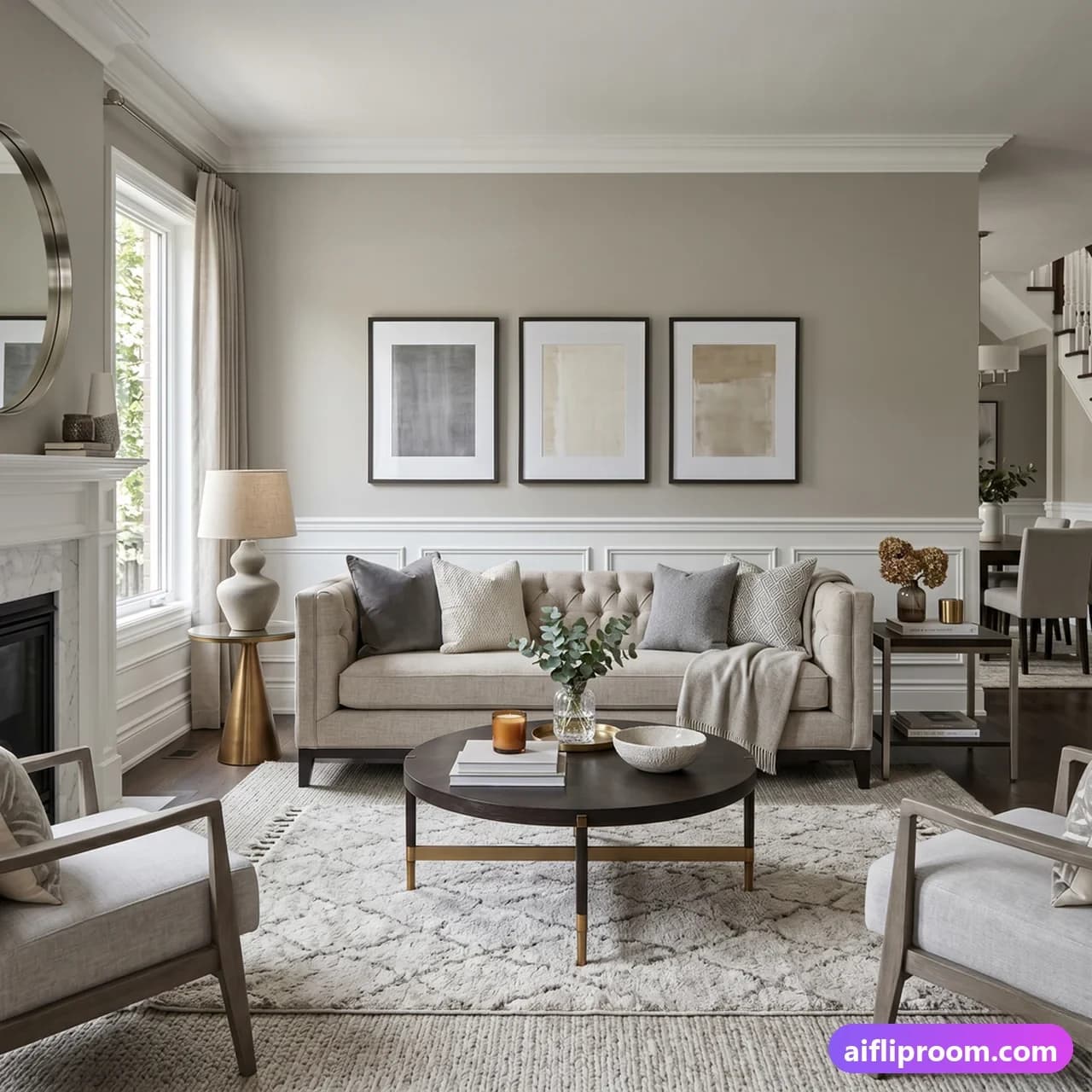
What is Transitional interior design?
Transitional design sits in the middle ground between traditional and contemporary, and that is precisely why it is one of the most popular staging styles there is. It takes the comfort, warmth and familiar silhouettes of traditional design and pairs them with the clean lines, calm palette and lack of clutter of contemporary design. The result keeps the best of both: classic shapes softened by simple upholstery, neutral tone-on-tone colour schemes, restrained texture instead of busy pattern, and a mix of metals and materials handled with a light touch. Nothing dates, nothing jars. For real-estate photography this balance is a real asset — transitional rooms photograph as elegant, current and broadly appealing, and they make it easy for almost any buyer, of almost any taste, to imagine themselves living there.
Where Transitional comes from
Transitional is a designer's answer to a practical problem: most people neither want a period room nor a strictly modern one. It emerged as a working compromise — traditional silhouettes and proportions stripped of ornament, modern restraint warmed by classic shapes — and became the default in a great deal of professional residential work because it satisfies two people with different tastes in the same house. It has no historical period of its own and no manifesto, and that is exactly why it dates so slowly. A transitional room from fifteen years ago still looks current, which is a claim almost no other style can make.
Key elements of Transitional
- A neutral, calming palette
- A blend of classic and modern furniture
- Clean lines softened by comfortable upholstery
- Restrained, tone-on-tone texture
- A light-touch mix of metals and materials
- An uncluttered, balanced layout
When to use Transitional
Almost any room. One of the safest staging styles — broadly appealing, never dated, and easy for most buyers to picture living in.
Transitional colours and materials
Deliberately quiet. Warm whites, greige, taupe, soft grey and cream carry the room, with depth from navy, charcoal, olive or a muted blue. Wood tones are mid-range and warm — oak, walnut — and stone is honed rather than polished. Fabrics are plain or subtly textured: linen, cotton, wool, a tone-on-tone weave. Pattern exists but stays quiet, usually in a rug or a single cushion. Metals are brushed brass, matt black or brushed nickel, and unlike in stricter styles a considered mix of two is normal here. The scheme should read as calm and expensive-adjacent without any single element demanding attention.
Transitional room by room
Living room in Transitional
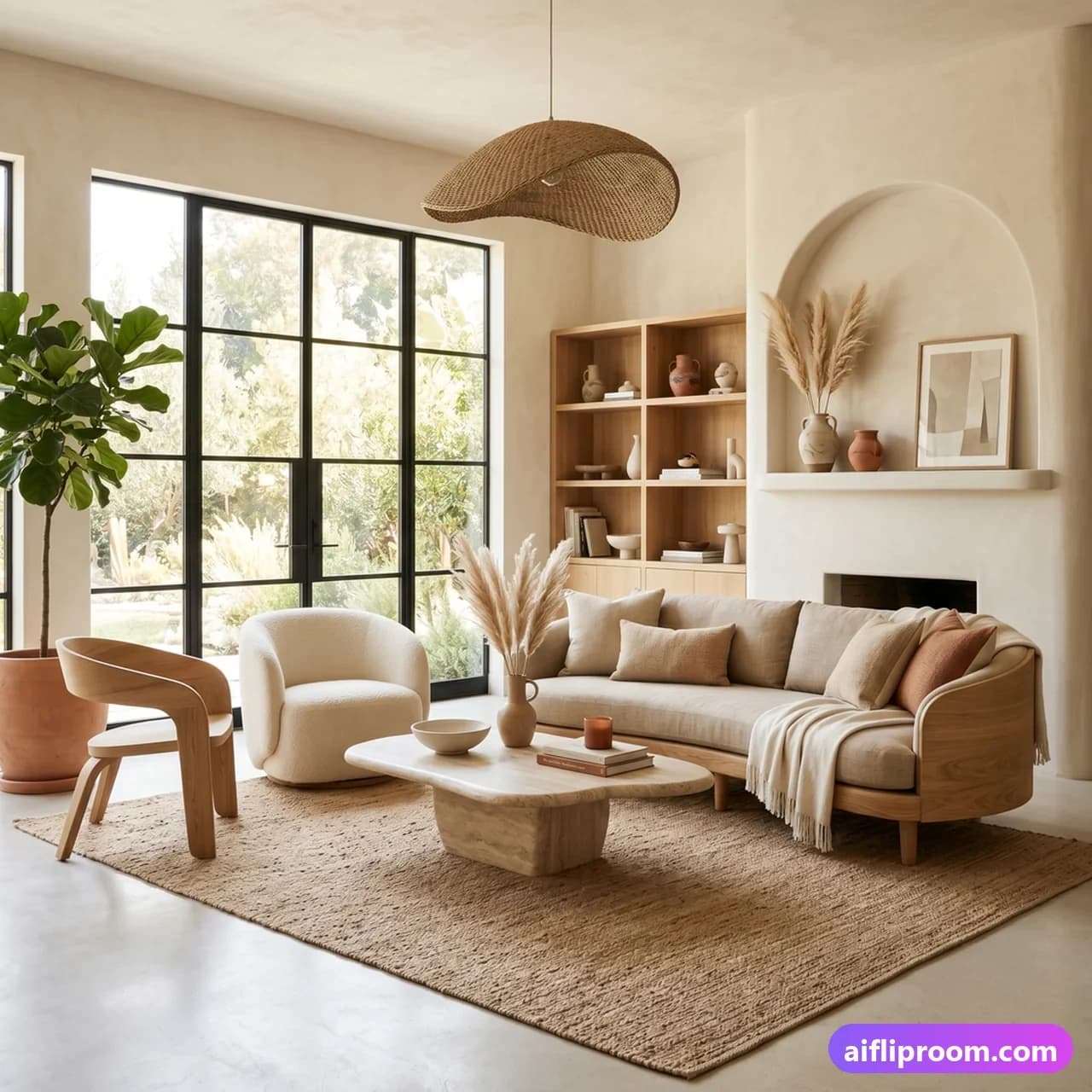
A sofa with a classic silhouette — rolled or track arms — in a plain neutral fabric, paired with a modern coffee table in stone or metal. Two matching armchairs keep the traditional symmetry; a modern floor lamp and a plain rug keep it from tipping period. Curtains hung high and full-length in a solid linen. Art should be simple and large rather than gilt-framed, and accessories few. Transitional living rooms work because the shapes are familiar and the surfaces are clean, so nothing feels either fussy or cold.
Bedroom in Transitional
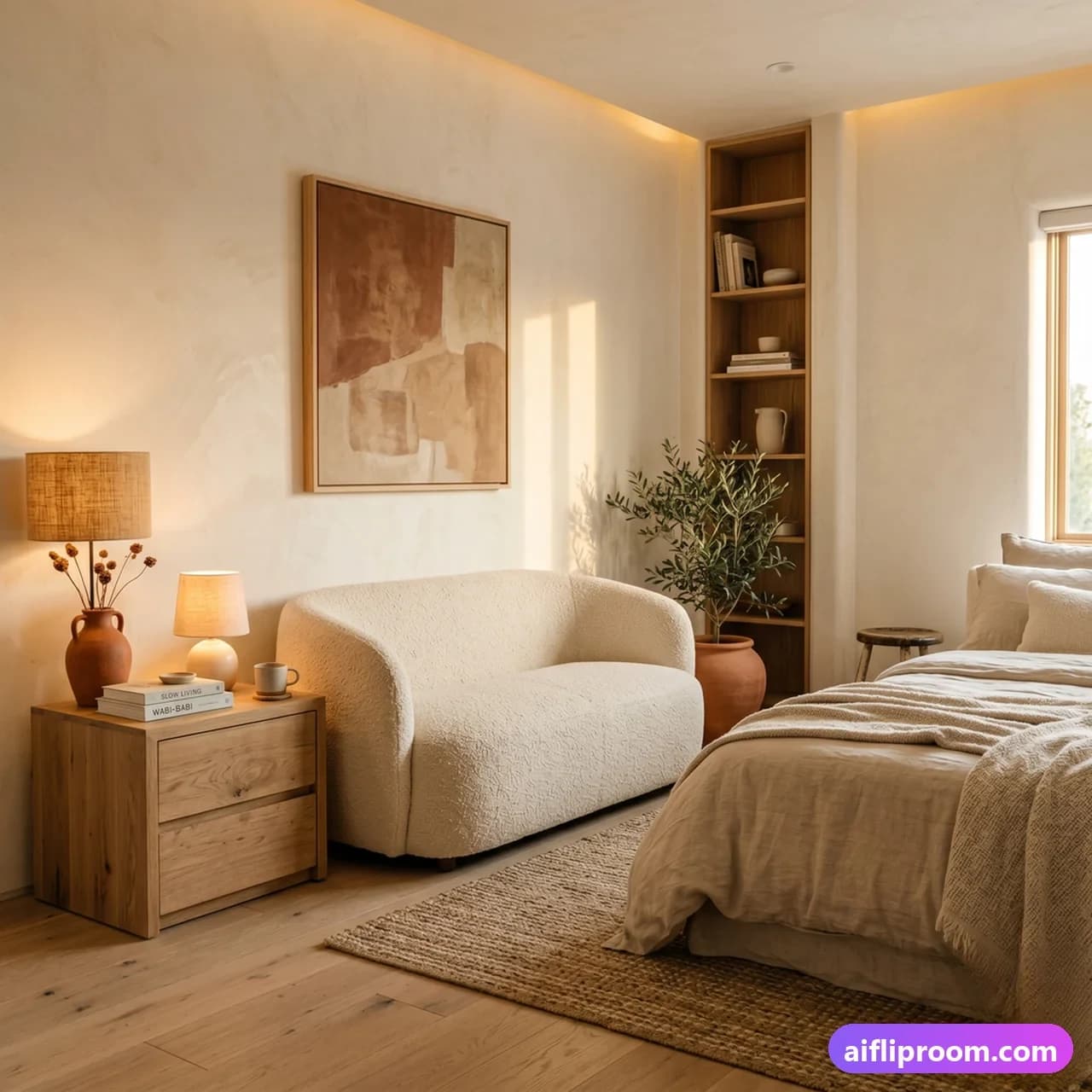
An upholstered bed in a plain neutral, matching nightstands, matching lamps, and bedding in white with one textured layer. The symmetry comes from traditional decorating; the plainness comes from modern. A bench at the foot of the bed and full-length curtains complete it. Keep the wood tones consistent and the palette to three colours, and the room will look considered without looking decorated.
Kitchen in Transitional
Shaker cabinet fronts — the single most transitional element in existence, being neither ornate nor flat — in white, greige or a muted blue-grey, with a contrasting island. Quartz or honed stone worktops, a plain tile splashback, and simple bar or knurled hardware. Pendants over the island with a classic shape in a modern finish. This is the kitchen specification that appears in more renovated homes than any other, for the same reason the style exists: almost nobody dislikes it.
Dining room in Transitional
A wooden table with a simple base, upholstered chairs in a plain fabric, and a light fixture that references a chandelier without the crystal. A sideboard in a plain finish, one large artwork or mirror above it, and a rug sized to hold the chairs. Skip the centrepiece and the runner. The room should look ready for use rather than set for a photograph.
Bathroom in Transitional
A shaker or slim-profile vanity in a soft colour with a stone top, a framed mirror, and fittings in brushed brass or matt black. Large-format tile or a plain metro with a matching grout. One recessed niche, one plant, folded towels. Transitional bathrooms are the easiest room in the house to get right because the style's whole instinct — classic shape, plain surface — is what a bathroom wants anyway.
Transitional mistakes to avoid
- Splitting the difference on every item. Transitional works by pairing a traditional piece with a modern one, not by choosing furniture that is vaguely both. Vagueness reads as indecision.
- Letting it go bland. A room of beige on greige with no contrast is the most common failure. One deep tone, one strong material or one bold light fixture gives the eye a destination.
- Ignoring texture. With pattern and colour reduced, texture is what keeps the room from feeling flat: boucle, linen, a heavy weave, wood grain, honed stone.
- Mixing three or more wood tones. Two is a scheme; three is an accident. Keep the floor, the furniture and the cabinetry deliberately related.
- Undersized rugs and art. Transitional relies on proportion rather than on decoration, so scale mistakes show more here than in a busier style.
Transitional questions, answered
What exactly is transitional style?
A deliberate blend of traditional and contemporary: the comfortable proportions, symmetry and familiar silhouettes of traditional design, combined with the neutral palettes, plain fabrics and clean surfaces of modern design. It keeps the shapes of one and the restraint of the other.
What is the difference between transitional and contemporary?
Contemporary follows current fashion and changes every few years. Transitional deliberately avoids fashion by sitting between two established styles, which is why it ages so slowly. A contemporary room announces its decade; a transitional room is hard to date.
Is transitional style boring?
It can be, and that is its main risk. The cure is contrast and texture rather than colour: one deep tone somewhere in the room, one material with real presence — stone, boucle, a heavy linen — and lighting with a distinct shape. Done well it reads as calm and confident rather than uncommitted.
Is transitional a good choice for staging a property?
It is arguably the best all-round choice. It appeals to the widest range of buyers, works in almost any type of property from a period house to a new build, and photographs cleanly without looking cold or trend-led. When there is no obvious style fit for a home, this is the safe answer.
What colours work in a transitional room?
Warm whites, greige, taupe, soft grey and cream as the base, with navy, charcoal, olive or muted blue for depth. Two or three colours total, plus wood and stone. The restraint is deliberate — the interest is meant to come from shape and texture rather than from the palette.
Guides to read next
Longer reads on getting a room photographed and restaged well.
- See Your Own Room in a New Style Before You Buy AnythingPreview your actual room in a new style before buying furniture or hiring anyone: what a preview settles, what it can't, and five steps to a useful one.
- How to Photograph Rooms for Virtual Staging: 7 RulesDaylight, lamps off, a level phone at chest height, the 1x lens not 0.5x, one room per frame, clear surfaces — seven habits that make AI staging look real.
- What Is Virtual Staging? The Complete Guide: How It Works, Cost, Rules, ExamplesVirtual staging explained in plain language: how AI furnishes a photo of a real room, what it costs, what agents think of it (NAR 2025), who it helps, the rules and how to spot bad staging.
See your room in Transitional
Upload a photo and our AI restages it in the Transitional look in 15–60 seconds, depending on how much detail your room has — keeping your walls, windows and layout intact.
Try Transitional on your room