Canadian Cabin Interior Design
Whistler / Banff lodge — cathedral beams, stone fireplace, plaid, antler.
Stage your room in Canadian Cabin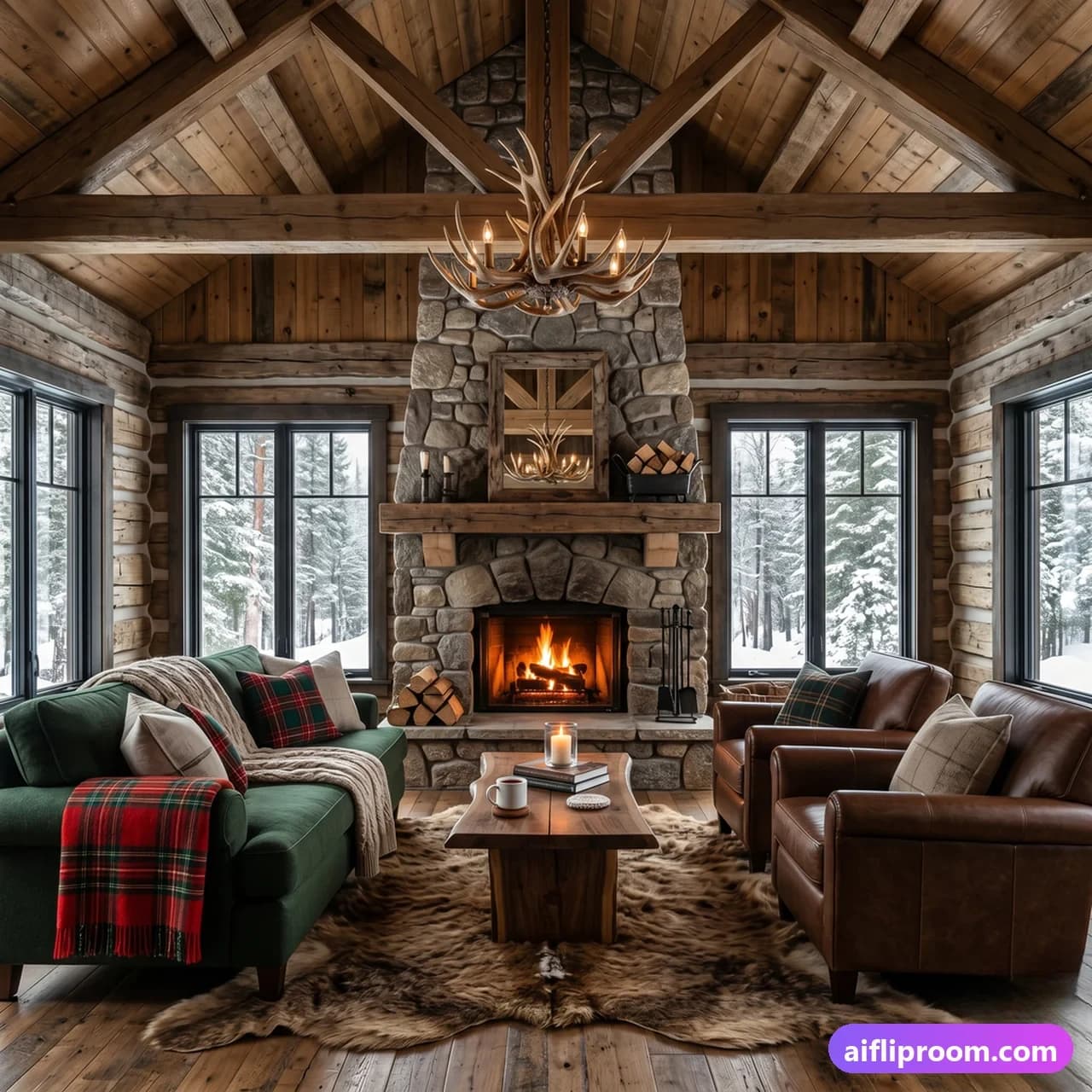
What is Canadian Cabin interior design?
Canadian Cabin style is the warm, grand mountain-lodge look associated with places like Whistler and Banff — a home built to feel sheltering in a dramatic landscape. It is cosy and impressive at once. Soaring timber beams and cathedral ceilings give a room scale; a floor-to-ceiling stone fireplace anchors it; log or timber walls bring natural warmth. Plaid and wool textiles, a deep palette of forest green and walnut, and sturdy lodge-style furniture complete the picture. Large windows frame the surrounding forest or lake. The result is a space that feels both generous and snug — a true retreat. In staging, Canadian Cabin style is a natural fit for living rooms in cabins, chalets and mountain or lakeside properties, where it matches the setting and speaks to buyers looking for an escape.
Virtual staging in Canadian Cabin: before and after
Canadian cabin is the one style here that changes the room itself, not just its furniture: it adds log-style wall cladding, timber ceiling beams and antler lighting to go with the plaid throws, leather armchairs and live-edge wood. The windows, doors, arches, fireplace and ceiling height stay as they were. That makes these renders a renovation idea for a homeowner rather than listing photos; to stage a listing in this mood, keep the walls and ceiling and bring in only the furniture.
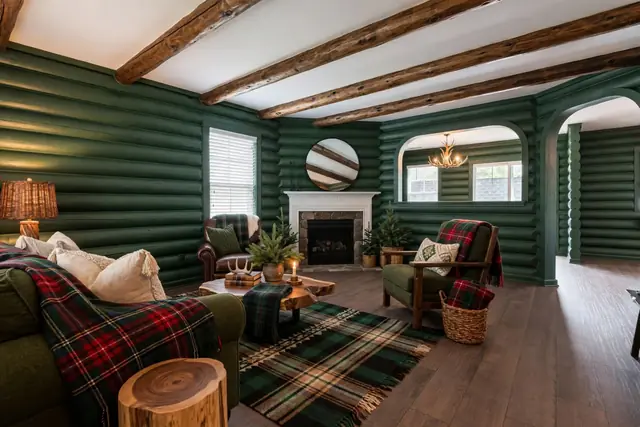

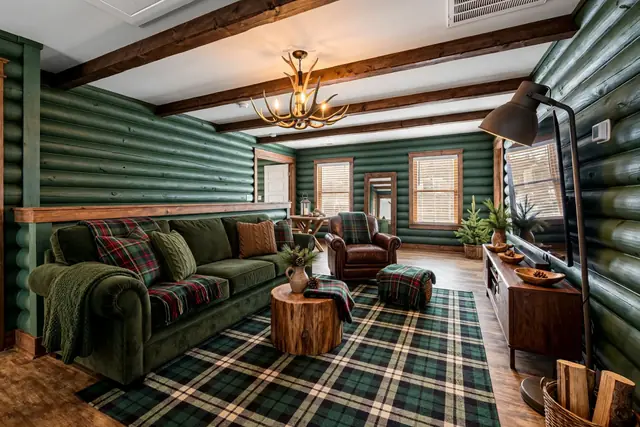
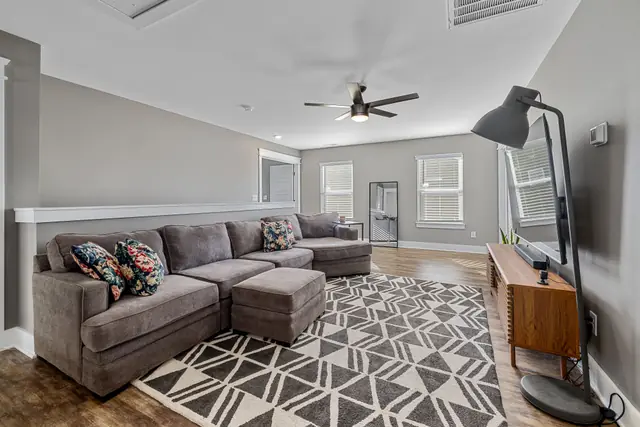
Using a staged photo in a listing? Our free disclosure wording tool gives the label your MLS asks for.
Where Canadian Cabin comes from
The Canadian cabin is a building type before it is a style. Log and timber-frame construction was what the land supplied, the stone fireplace was the heating system, and the plan was organised around it: one main room where everyone gathered, small bedrooms off it, and a porch or dock facing the water. Cottage culture across Ontario, Quebec and British Columbia turned that practical arrangement into something people now build deliberately, adding better insulation and larger windows while keeping the timber, the stone and the deliberate lack of formality. What separates it from American mountain lodge style is scale and restraint — Canadian cabins tend to be smaller, plainer and more focused on the lake than on the trophy.
Key elements of Canadian Cabin
- Soaring timber beams and cathedral ceilings
- A floor-to-ceiling stone fireplace
- Log or timber walls
- Plaid and wool textiles
- A deep forest-green and walnut palette
- Sturdy, lodge-style furniture
When to use Canadian Cabin
Living rooms in cabins, chalets and mountain or lakeside properties. A cosy, grand look that matches the setting and appeals to buyers seeking a retreat.
Canadian Cabin colours and materials
Forest and firelight. Warm timber in every mid-to-dark tone, grey and charcoal stone, and cream or oatmeal in the textiles, with forest green, deep red, navy and mustard as accents — largely arriving through plaid. Black iron for hardware and lighting. Materials are logs, timber cladding and beams, fieldstone, wool and Hudson-stripe blankets, plaid flannel, leather, canvas, hide and cast iron. Nothing is glossy. The palette is essentially what you can see from the window in autumn, which is the point.
Canadian Cabin room by room
Great room in Canadian Cabin
One large space with the fireplace as the organising element. A stone hearth floor to ceiling, timber beams overhead, and seating arranged in a loose circle around the fire rather than facing a screen. A deep sofa in canvas or leather, armchairs, a large timber coffee table, and wool blankets within reach of every seat. A hide or wool rug. Keep the window wall clear — the view is the best thing in the room and no decoration competes with it.
Bedroom in Canadian Cabin
Timber walls or one clad accent wall, a simple wooden or iron bed, flannel or linen bedding with a wool blanket folded across, and a hide or braided rug. A wooden chest, hooks rather than a wardrobe, and a bedside lamp with a warm bulb. Cabin bedrooms are deliberately small and plain; the living happens in the main room and outside.
Kitchen in Canadian Cabin
Timber or plain painted cabinetry, a butcher-block or stone worktop, open shelving, and a deep sink. Cast iron on the hob, enamelware, and a big kettle. A wooden table with benches, an iron or enamel pendant above it. Cabin kitchens are for feeding a lot of people simply, so counter space and a large table matter more than any finish decision.
Bunk room in Canadian Cabin
A genuinely Canadian room type and worth including if the layout allows. Built-in bunks in plain timber with individual lights and hooks, plaid or striped bedding, and storage underneath. It sleeps four or six in the footprint of a small bedroom, and for cottage use it is the most practical room in the building.
Porch or dock in Canadian Cabin
Where the cabin actually gets used. Muskoka chairs in weathered timber, a small table, a lantern, and a stack of towels. If there is a fire pit, arrange the seating around it. Nothing here should be precious — everything gets wet, sat on in swimwear, and left out in the weather, and it should be chosen accordingly.
Canadian Cabin mistakes to avoid
- Antler and bear decor bought as a set. Novelty lodge decoration is the fastest way to turn a cabin into a theme restaurant. Real objects with a use — snowshoes that were worn, a canoe paddle that was paddled — read completely differently.
- All timber, all the way. Log walls, timber ceiling, timber floor and timber furniture with no relief is oppressive. Break it with plaster, stone, textiles or one painted surface.
- Plaid on everything. One or two pieces. Plaid curtains, plaid cushions, plaid bedding and a plaid rug in one room is too much of a good thing.
- Blocking the view. The window is the reason the building is where it is. Furniture and heavy curtains should stay out of its way.
- Precious materials. Anything that cannot cope with wet swimsuits, muddy boots and a wood fire does not belong in a cabin.
Canadian Cabin questions, answered
What is the difference between cabin, lodge and rustic style?
Rustic is the broad category — raw timber, stone, heavy natural materials. Lodge is its larger, grander American cousin, with more antler, more trophy and more scale. Canadian cabin is the smallest and plainest of the three: timber, stone, plaid and wool, organised around a fireplace and a view, with an emphasis on being practical rather than impressive.
How do I stop a timber interior feeling dark?
Break up the wood. Paint or plaster one surface — often the ceiling between beams — introduce cream and oatmeal textiles, keep the window wall clear, and add several warm lamps at low level rather than relying on one fixture. Lighter timber on the floor with darker beams above also helps considerably.
What is a Muskoka chair?
The Canadian name for the wide wooden slatted outdoor chair with a fan back and sloping seat, known in the United States as an Adirondack chair. Both are named after cottage regions. In cabin settings they are close to obligatory, and weathered grey ones look better than freshly painted.
What colours suit a Canadian cabin?
Warm timber and grey stone as the base, cream and oatmeal in textiles, with forest green, deep red, navy and mustard as accents — usually arriving through plaid or striped wool blankets. Black iron for hardware and lighting. Everything matt.
Is cabin styling good for staging a property?
It is excellent for cottages, lakefront and mountain properties and rural cabins, where buyers are specifically looking for that feeling and the architecture supports it. It is a poor fit for city apartments and suburban homes, where heavy timber and plaid read as costume rather than context.
Guides to read next
Longer reads on getting a room photographed and restaged well.
- See Your Own Room in a New Style Before You Buy AnythingPreview your actual room in a new style before buying furniture or hiring anyone: what a preview settles, what it can't, and five steps to a useful one.
- How to Photograph Rooms for Virtual Staging: 7 RulesDaylight, lamps off, a level phone at chest height, the 1x lens not 0.5x, one room per frame, clear surfaces — seven habits that make AI staging look real.
- What Is Virtual Staging? The Complete Guide: How It Works, Cost, Rules, ExamplesVirtual staging explained in plain language: how AI furnishes a photo of a real room, what it costs, what agents think of it (NAR 2025), who it helps, the rules and how to spot bad staging.
See your room in Canadian Cabin
Upload a photo and our AI restages it in the Canadian Cabin look in 15–60 seconds, depending on how much detail your room has — keeping your walls, windows and layout intact.
Try Canadian Cabin on your room