Coastal Interior Design
Light blues, whites, natural textures, beach-inspired calm.
Stage your room in Coastal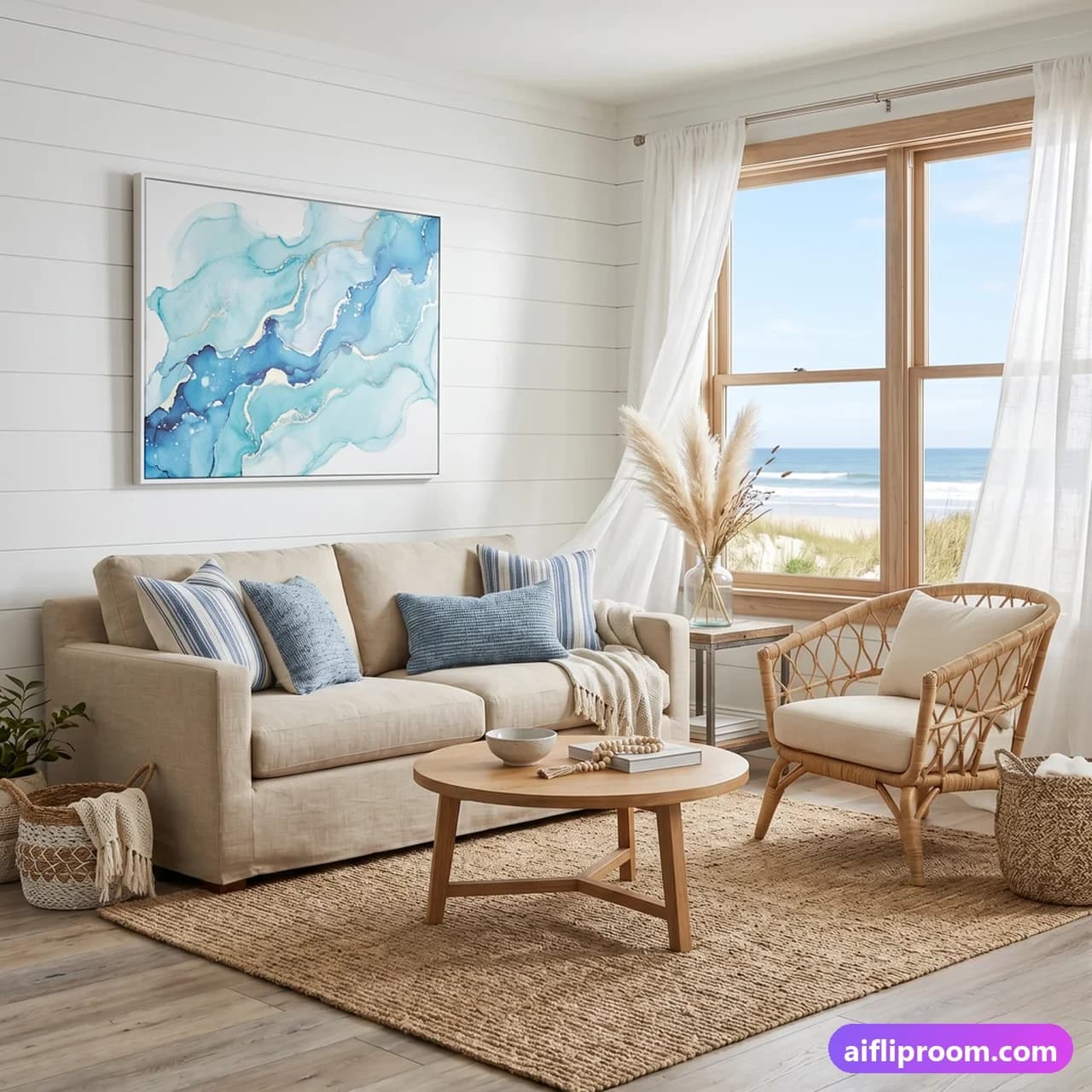
What is Coastal interior design?
Coastal style brings the calm and light of the shoreline indoors. It is built around a simple promise: a home should feel like a deep breath. The palette is light and watery — soft blues, sandy neutrals and plenty of white — and natural textures do the rest, with rattan, jute, linen and weathered wood standing in for sand, rope and driftwood. Windows are left to do their job; sheer fabrics keep things breezy rather than blocking the light. Nautical or beach-inspired touches appear, but sparingly — coastal style is relaxed, not themed. The layout stays open and uncluttered so a room feels airy and unhurried. For real-estate photography this look is a natural fit for any property near water or in a warm climate, and more broadly it appeals to any buyer drawn to the idea of a calmer, lighter way of living.
Where Coastal comes from
Coastal interiors come from houses that had to cope with sun, salt and sand. Surfaces were pale because pale reflects heat and hides the sand; fabrics were cotton and linen because they wash; furniture was slipcovered because it gets sat on in wet swimwear. Windows stayed uncovered or lightly dressed because the view and the breeze were the point of the house. Every characteristic people now copy for the look was originally a practical answer to living by the sea. That is a useful thing to remember, because the versions of coastal that feel convincing are the ones that stay practical, and the versions that feel like a gift shop are the ones that add anchors and starfish instead.
Key elements of Coastal
- A light palette of soft blues, sandy neutrals and white
- Natural textures — rattan, jute, linen, weathered wood
- Abundant natural light and breezy sheer fabrics
- Beach-inspired accents used sparingly, never themed
- An open, uncluttered, airy layout
- A relaxed, unhurried overall mood
When to use Coastal
Living rooms and bedrooms, especially for properties near water or in warm climates. Appeals to buyers picturing a calmer, lighter lifestyle.
Coastal colours and materials
Whites and sand tones carry the room, with blue used as an accent rather than as a theme — soft sky, faded denim, greyed teal, occasionally a deeper navy for contrast. Green appears in the seagrass and the plants. Materials do the heavy lifting: jute, rattan, cane, weathered or whitewashed timber, linen and cotton in plain weaves or simple stripes. Metals stay soft and unpolished — brushed nickel, aged brass, sometimes rope and wicker where a hard material would feel wrong. What breaks it is high-gloss surfaces, heavy dark wood and any shade of blue bright enough to look like a swimming pool.
Coastal room by room
Living room in Coastal
A slipcovered sofa in white or oatmeal, a jute or sisal rug, and a coffee table in weathered or light timber. Keep the window treatments sheer or absent so the light stays in the room. Layer texture rather than colour: linen cushions, a cotton throw, a woven basket, a rattan chair. One or two pieces of art referencing landscape or water is plenty — the style tips into kitsch quickly, and the safest test is whether an object would still make sense fifty miles inland.
Bedroom in Coastal
White or pale bedding in cotton or washed linen, a timber or cane bed frame, and a jute rug underfoot. Add one blue element — a throw, a cushion, a headboard in faded denim — and stop there. Bedside lamps with linen or woven shades soften the light. Louvred or shuttered wardrobes and plantation-style blinds are the details that read as coastal without any decorative object being involved at all.
Kitchen in Coastal
Shaker or beaded cabinet fronts in white, soft grey-green or pale blue, with a light worktop and simple tile behind the range. Open shelving holding plain white ceramics, a wooden board, a bowl. Woven pendant shades over an island are close to a signature of the style. Keep the hardware unpolished and the palette calm, and let one natural material — a timber worktop section, a rattan stool — supply the warmth.
Bathroom in Coastal
White tile, a pale timber or painted vanity, and brushed or aged fittings rather than chrome. A large simple mirror, cotton towels, a woven basket and one plant. Beadboard or vertical panelling on the lower half of the wall is the single most effective coastal detail in a bathroom, and it works in properties nowhere near the sea.
Outdoor space in Coastal
Coastal is one of the few interior styles that runs straight out of the door. Teak or whitewashed timber furniture, striped or plain cushions in white and faded blue, an outdoor rug in a natural weave, and a market umbrella. Keep planting simple and drought-tolerant — grasses, olive, lavender, agapanthus — and let the furniture look as though it is regularly used rather than arranged.
Coastal mistakes to avoid
- Decorating with nautical objects. Anchors, ship wheels, rope-wrapped lamps and starfish are the fastest route from coastal to souvenir shop. The style is about light and texture, not props.
- Using bright blue. Coastal blues are faded, greyed and soft. A saturated blue reads as a child's bedroom or a swimming pool.
- Heavy dark wood. It fights the palette and swallows the light the whole style is built around.
- Forgetting texture. Without jute, rattan, cane and linen, a white-and-blue room is just a white-and-blue room.
- Dressing the windows heavily. The look assumes daylight; long, light curtains or nothing at all are correct, and blackout drapes are not.
Coastal questions, answered
What is the difference between coastal and nautical style?
Coastal is about light, air and natural texture — pale surfaces, linen, jute, faded blues. Nautical is a decorative theme built on maritime motifs: navy and white stripes, anchors, rope, ship imagery. Coastal is a way of treating a room; nautical is a set of objects placed in it. The two get confused constantly, and the confusion is why so much coastal decorating goes wrong.
Can coastal style work in a home not near the sea?
Easily, if you keep the light and the texture and drop the references. Pale walls, slipcovered furniture, jute underfoot, linen at the window and one soft blue accent make any room feel airy and relaxed. It is only the literal seaside props that look out of place inland.
What blue should I use for a coastal room?
Something desaturated and slightly grey — faded denim, soft sky, greyed teal, or a chalky navy used sparingly for contrast. Test it against a warm white and a jute rug rather than against a paint chart; the right blue almost disappears until you look for it.
Is coastal style good for staging a property?
It is very effective for anything near water, for holiday lets and for bright rooms generally, because it makes spaces read as airy and easy. It is also broadly liked. The main caution is location plausibility — full coastal styling in an urban apartment can look like a theme rather than a home, so a lighter touch works better there.
What flooring suits a coastal interior?
Pale or whitewashed timber first, then light engineered oak or a natural-toned tile in wetter rooms. Layer a jute or sisal rug on top, which is where much of the style's texture comes from. Dark, glossy or heavily grained floors work against the palette.
Guides to read next
Longer reads on getting a room photographed and restaged well.
- See Your Own Room in a New Style Before You Buy AnythingPreview your actual room in a new style before buying furniture or hiring anyone: what a preview settles, what it can't, and five steps to a useful one.
- How to Photograph Rooms for Virtual Staging: 7 RulesDaylight, lamps off, a level phone at chest height, the 1x lens not 0.5x, one room per frame, clear surfaces — seven habits that make AI staging look real.
- What Is Virtual Staging? The Complete Guide: How It Works, Cost, Rules, ExamplesVirtual staging explained in plain language: how AI furnishes a photo of a real room, what it costs, what agents think of it (NAR 2025), who it helps, the rules and how to spot bad staging.
See your room in Coastal
Upload a photo and our AI restages it in the Coastal look in 15–60 seconds, depending on how much detail your room has — keeping your walls, windows and layout intact.
Try Coastal on your room