Farmhouse Interior Design
Shiplap walls, rustic wood, vintage accents, warm and cozy.
Stage your room in Farmhouse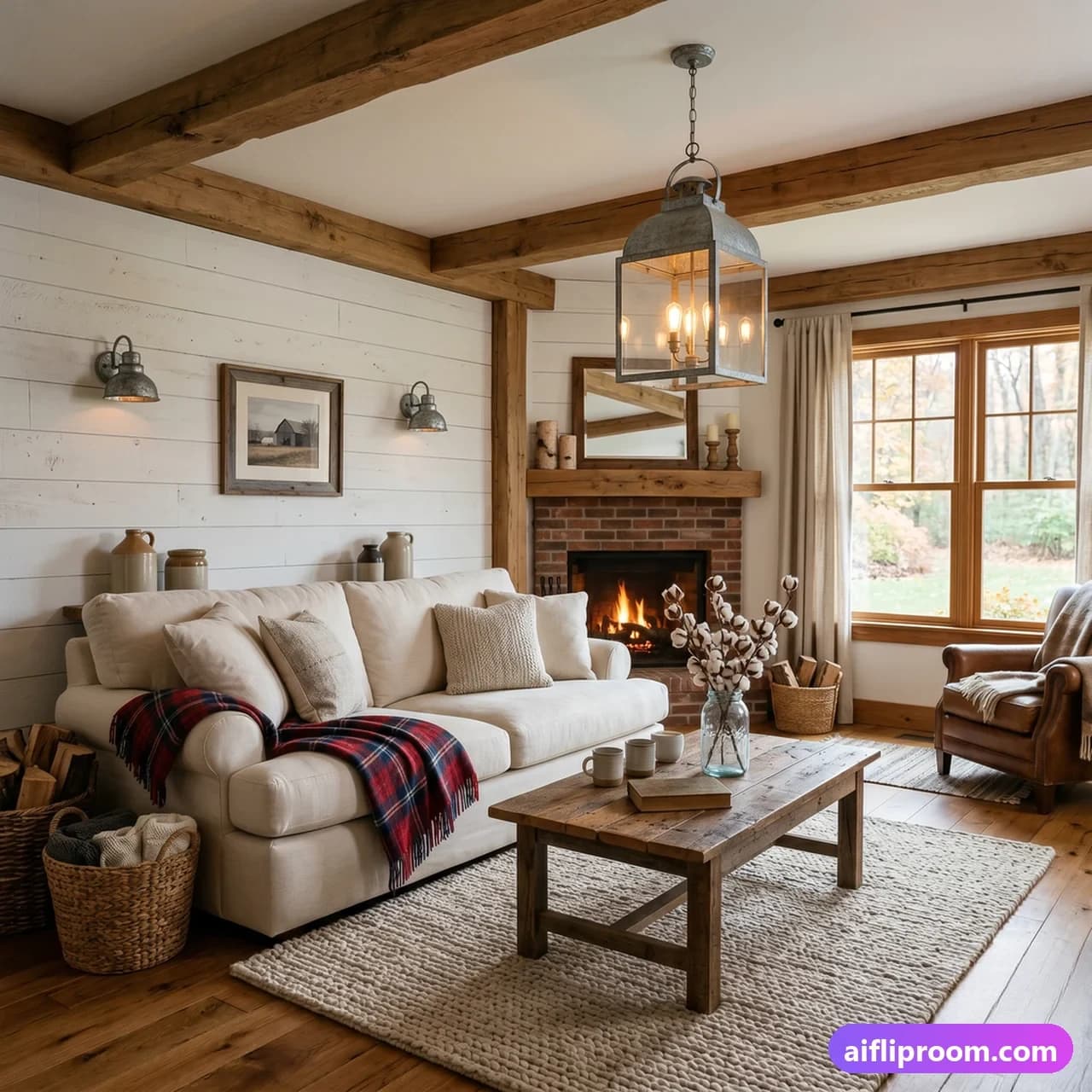
What is Farmhouse interior design?
Farmhouse style is rooted in the practical comfort of rural homes, where rooms were built to be hard-working and welcoming in equal measure. The look has stayed popular because it delivers exactly that feeling: warm, honest and easy to be in. Shiplap or panelled walls give rooms texture; rustic and reclaimed wood appears in beams, tables and floors; the palette is a warm range of whites, creams and soft greys. Vintage and handmade accents — enamelware, woven baskets, simple ceramics — add character without clutter, and the furniture is comfortable and unpretentious. Practical touches like apron-front sinks belong here too. The result is a home that feels grounded and genuinely lived-in. For staging, farmhouse is one of the most broadly likeable looks available: it suits suburban and rural listings, photographs as cosy and well-kept, and rarely puts a buyer off.
Where Farmhouse comes from
Farmhouse interiors descend from working rural houses, where the look was a by-product of use rather than a decision. Rooms were built around the kitchen because that is where the heat was; surfaces were scrubbed timber and stone because they survived being scrubbed; furniture was sturdy, repairable and often handed down. Nothing was styled. What we now call farmhouse style is an affectionate reconstruction of that practicality, and the versions that work best are the ones that keep the honesty rather than only the props. A deep sink, a big table and a well-worn wood floor are farmhouse. A brand-new sign reading FARMHOUSE is not, and the difference is visible immediately.
Key elements of Farmhouse
- Shiplap or panelled walls
- Rustic and reclaimed wood
- A warm neutral palette — white, cream, soft grey
- Vintage and handmade accents
- Comfortable, unpretentious furniture
- Practical staples — apron sinks, woven baskets
When to use Farmhouse
Kitchens, living rooms and dining spaces. A warm, broadly likeable look that suits suburban and rural listings.
Farmhouse colours and materials
Warm and soft rather than bright. Creams, warm whites, oatmeal, putty and sage form the base, with black used sparingly for definition — window frames, hardware, a light fixture. Wood is mid to warm toned and usually shows its grain and its marks: reclaimed oak, pine, hickory. Metals lean matt black, aged brass and galvanised steel rather than polished chrome. Fabrics carry the comfort: cotton ticking, linen, checked and plaid weaves, jute underfoot. The palette should look as though it has faded gently in sunlight rather than been chosen off a chart.
Farmhouse room by room
Kitchen in Farmhouse
The heart of the style and the room worth spending on. A deep apron-front sink, shaker cabinet doors, and open shelving holding everyday crockery rather than display pieces. Butcher-block or honed stone worktops, matt black or aged brass hardware, and a plain subway or handmade-look tile behind the range. A freestanding table or a chunky island gives the room its centre. Farmhouse kitchens are allowed to look used — a wooden board leaning at the back of the counter, a bowl of fruit, a hanging pan rack — and that lived-in quality is exactly what makes them appealing in photographs.
Living room in Farmhouse
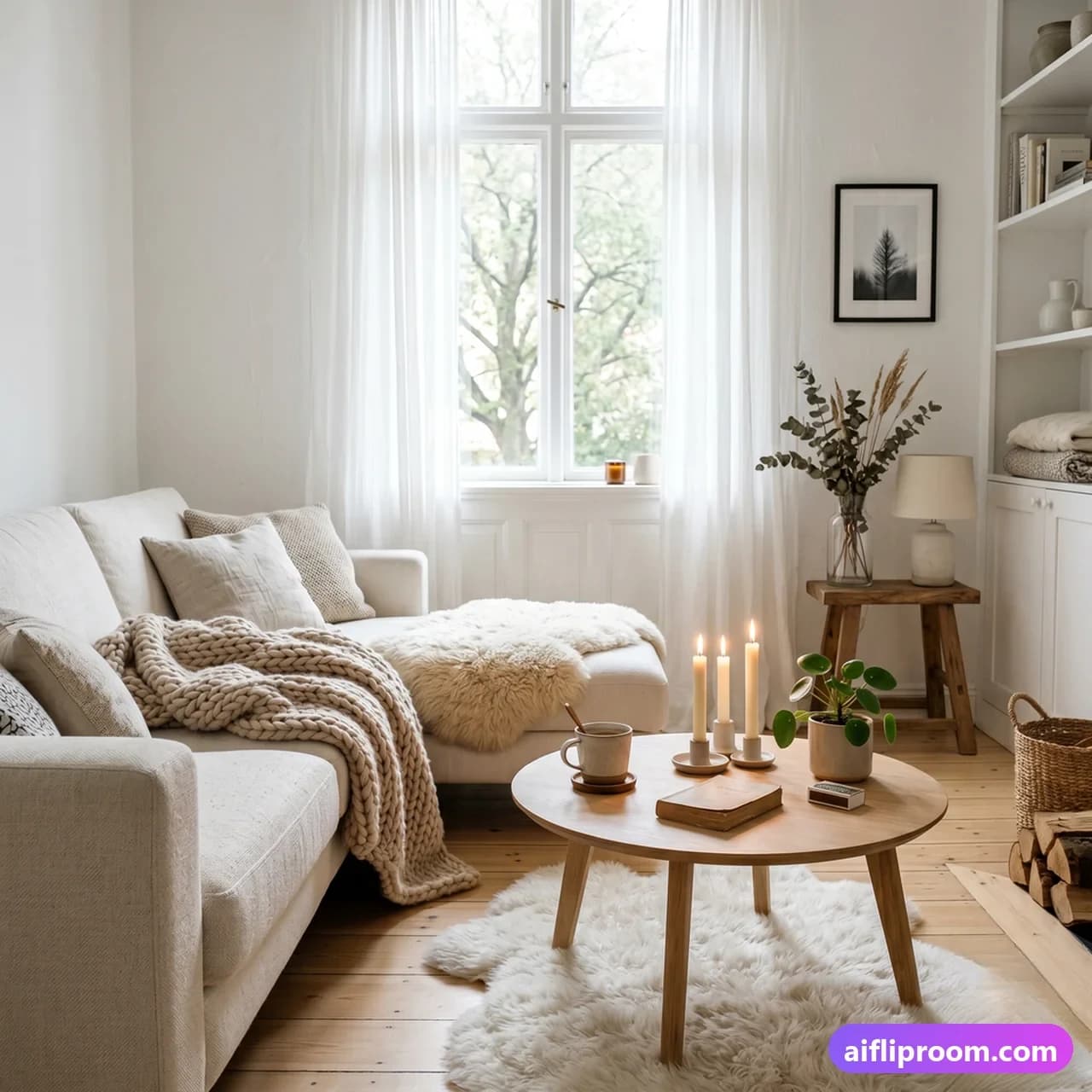
A deep, comfortable sofa in a light neutral with slipcovers you could actually wash, a reclaimed wood coffee table, and a jute or vintage-style rug. Add a wooden beam, a shiplap wall or a simple brick fireplace if the room has one to work with. Layer cotton throws and a couple of checked cushions. One or two antique or antique-looking pieces — a trunk, an old cabinet, a ladder holding blankets — keep it from looking like a catalogue, and a big woven basket is more useful and more in keeping than a plastic storage box.
Bedroom in Farmhouse
Iron, timber or a simple upholstered bed frame, white cotton or linen bedding, and a quilt folded at the foot. Nightstands can be mismatched; in a real farmhouse they would have been. Keep the walls calm — shiplap, a warm white, or a soft sage — and hang something with age to it above the bed rather than a new print. Woven baskets, a wooden bench at the end of the bed and a rag or jute rug finish the room without any need for decorative clutter.
Dining room in Farmhouse
A long, solid wood table is the whole room. Pair it with bench seating on one side and simple chairs on the other, hang a black metal or wooden pendant above it, and leave the tabletop mostly bare. A sideboard or hutch in painted timber gives the room its storage and its character. This is the one place where farmhouse actively wants scale — a table that seats eight makes a room feel generous even when only two people are eating at it.
Bathroom in Farmhouse
White subway or hexagon tile, a timber vanity or a repurposed dresser, and a wide basin with a bridge or gooseneck tap in matt black or brass. A freestanding tub earns its space if the room can take one. Keep the accessories simple — a wooden stool, a woven basket for towels, a plain framed mirror — and let one warm material stop the tile from feeling clinical.
Farmhouse mistakes to avoid
- Buying the theme instead of the style. Decorative signs, mass-produced distressed frames and slogan cushions read as costume; genuine texture and a couple of real old pieces do the job properly.
- Distressing everything. Wear looks convincing on one or two items and staged on ten. Real farmhouses had a mix of worn and plain.
- Cool grey as the base colour. Farmhouse depends on warmth; a grey-white palette drains the style of the thing it exists to deliver.
- Shiplap on every wall. One wall, or one room, is a feature. The whole house is a texture nobody can escape.
- Forgetting that the kitchen leads. If the budget only stretches to one room, it is this one — farmhouse style is legible in a kitchen in a way it is not in a hallway.
Farmhouse questions, answered
What is the difference between farmhouse and modern farmhouse?
Traditional farmhouse is warmer, more layered and more antique-leaning: mixed woods, patterned textiles, collected furniture. Modern farmhouse takes the same ingredients and cleans them up — crisper white walls, sharper black accents, simpler lines, less pattern. Modern farmhouse looks newer and photographs more graphically; traditional farmhouse feels older and cosier.
Is farmhouse style still popular?
The heavily themed version that peaked in the late 2010s has faded, and decorative signage in particular now reads as dated. The underlying style has not gone anywhere — warm neutrals, natural wood, practical materials and comfortable furniture continue to be widely liked. The current direction is quieter and less literal about the farm.
Does farmhouse work in a city apartment?
In a restrained form, yes. Keep the warm neutral palette, the natural woods and the comfortable seating, and drop the barn doors, the shiplap and the rustic beams, which need the architecture to justify them. What you end up with reads as warm and unpretentious rather than rural, and that translates to an apartment perfectly well.
What colours work best in a farmhouse interior?
Warm white and cream as the base, with putty, oatmeal, sage green and soft blue as secondary colours. Black is used in small doses for contrast — window frames, hardware, light fixtures. Avoid cool greys and anything highly saturated; the palette should look sun-faded rather than freshly mixed.
Is farmhouse a good style for staging a house?
It is a strong choice for older, rural and suburban family homes, where it flatters the architecture and reads as welcoming. It is less suited to modern city apartments and new-build flats, where the style has nothing to attach itself to. As with any staging, the look should feel plausible for the actual building.
Guides to read next
Longer reads on getting a room photographed and restaged well.
- Modern Farmhouse Interior Design: Elements, Rooms, MistakesModern farmhouse explained: six ingredients, a typical palette, its place between rustic and contemporary, room by room, and the mistakes that date it.
- See Your Own Room in a New Style Before You Buy AnythingPreview your actual room in a new style before buying furniture or hiring anyone: what a preview settles, what it can't, and five steps to a useful one.
- How to Photograph Rooms for Virtual Staging: 7 RulesDaylight, lamps off, a level phone at chest height, the 1x lens not 0.5x, one room per frame, clear surfaces — seven habits that make AI staging look real.
See your room in Farmhouse
Upload a photo and our AI restages it in the Farmhouse look in 15–60 seconds, depending on how much detail your room has — keeping your walls, windows and layout intact.
Try Farmhouse on your room