Japandi Bathroom Ideas
How to design a Japandi bathroom — matt stone, timber that survives damp, warm light and the quiet bathhouse feeling rather than a spa brochure.
Stage your bathroom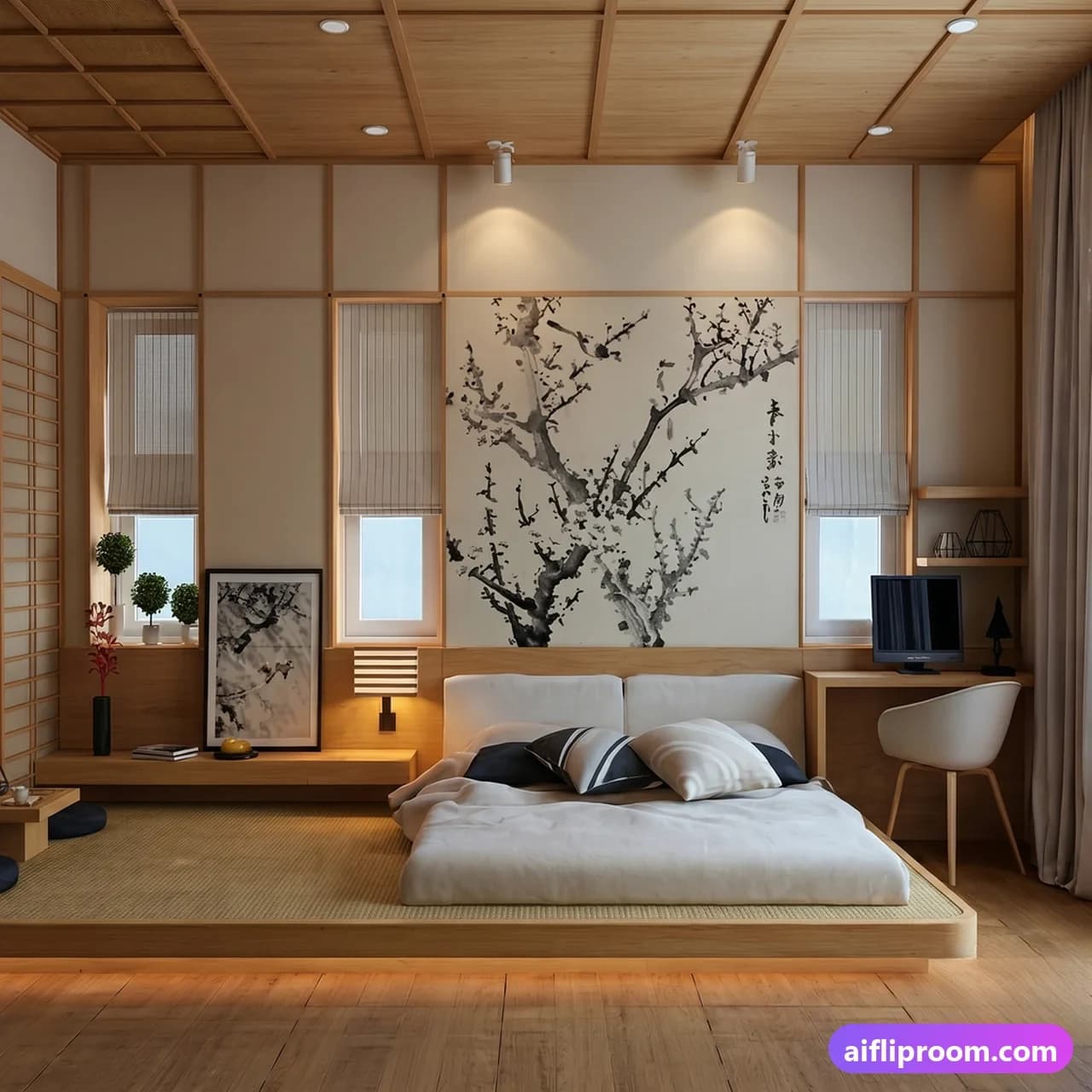
Japandi in a bathroom
The aim in a Japandi bathroom is the feeling of a quiet bathhouse, not a hotel spa. The distinction is worth holding on to, because most bathrooms sold as calm are actually cold: white gloss tile, chrome, bright even light and a great many small bottles. Japandi gets to the same restfulness by the opposite route — warm matt surfaces, timber, very few objects and light you would happily bathe under.
It is also one of the cheapest rooms to move a long way with small decisions. Changing the bulbs, adding a timber stool and a duckboard, and clearing everything off the basin edge will take an ordinary bathroom most of the distance before any tiling is considered.
Layout and furniture
Keep the floor as clear as possible and put storage on the wall. A wall-hung vanity with a stone or timber top, a concealed cistern, and a mirror cabinet or a niche rather than open shelves. Where there is a bath, a deep one rather than a long one is more in keeping — the Japanese tradition is soaking upright rather than lying down, and a shorter deeper tub also fits smaller rooms better.
A walk-in shower with a large-format tile or microcement lining and a recessed niche instead of a caddy. A timber duckboard or a slatted stool inside or beside it. Every surface should have as few joints and edges as the budget allows; grout lines are visual noise and the style is trying to remove noise.
Colours, materials and finishes
Matt tile in warm stone, off-white or a soft greige, in the largest format the room can take. Microcement or tadelakt where a seamless wall is possible. Timber survives bathrooms perfectly well when it is sealed properly — teak, oak or cedar on a vanity, a stool, a duckboard or a bath tray — and it is the material that turns the room from clinical to warm.
Fittings in matt black or aged brass rather than chrome. A stone, ceramic or matt composite basin with a simple profile. Textiles in linen or waffle cotton, folded rather than rolled, in one colour. One plant that tolerates humidity, and nothing else on any surface.
Lighting
Two layers and both warm. Something at face height beside or around the mirror, so shaving and make-up are actually possible, and something low and soft for bathing — a wall light, a lit niche, or candles. Skip the single bright ceiling downlight, which is what makes most bathrooms feel like a clinic.
If the room has a window, keep as much of the daylight as privacy allows: a lower obscured panel with a clear top, or a linen blind rather than a solid one. A Japandi bathroom with natural light needs almost no styling at all.
What goes wrong in this room
- Gloss white tile and chrome. Functional and the opposite of this style. Matt surfaces and unpolished metal cost the same and change the room entirely.
- Nowhere to put anything. If bottles have to live on the basin edge, no amount of tiling will make the room look calm.
- Cool bright lighting only. A single 4000K downlight undoes every other decision. Two warm layers, one of them low.
- Rolled towels and a tray of props. Fold the towels, remove the props. The style is quiet, not styled.
- Untreated timber. Wood belongs in this room but it has to be properly sealed or oiled, or it will stain and swell and prove the sceptics right.
Bathroom questions, answered
Can you really use wood in a bathroom?
Yes, provided it is a suitable species and properly finished. Teak and cedar handle damp naturally; oak and ash need a good oil or a hardwax finish and periodic reapplication. Keep timber off the shower floor and away from standing water, ventilate the room properly, and it will last for years. A duckboard, a stool and a vanity front are the low-risk places to start.
What colours work in a Japandi bathroom?
Warm off-white, greige, sand and soft stone as the base, with timber supplying the warmth and one darker element — a black tap, a charcoal towel, an ink-glazed dish — supplying the contrast. Cool grey and bright white both make the room read clinical rather than calm.
Is microcement worth it over tile?
It gives the seamless surface the style wants and removes grout lines entirely, which is its main advantage. The trade-off is that it must be installed and sealed properly or it will stain, and repairs are harder than replacing a tile. Large-format matt porcelain gets most of the way there with fewer risks and is the safer choice in a rental or a quick renovation.
How do I make a small bathroom feel Japandi?
Wall-hang everything you can so the floor is visible, use one large-format matt tile rather than several materials, put storage behind a mirror, add a timber stool or duckboard, and change the lighting to two warm layers. Then take everything off every surface. Small bathrooms suit the style well because the discipline it requires is also what a small room needs.
Guides to read next
Longer reads on photographing a room and restaging it without changing it.
- Japandi Style Guide: Palette, Materials, Furniture, RoomsWhat Japandi is, the palette and materials that make it read as real, the furniture that works, how it changes room by room, and the mistakes to avoid.
- See Your Own Room in a New Style Before You Buy AnythingPreview your actual room in a new style before buying furniture or hiring anyone: what a preview settles, what it can't, and five steps to a useful one.
- How to Photograph Rooms for Virtual Staging: 7 RulesDaylight, lamps off, a level phone at chest height, the 1x lens not 0.5x, one room per frame, clear surfaces — seven habits that make AI staging look real.
See your bathroom in Japandi
Upload a photo and our AI restages it in 15–60 seconds, depending on how much detail your room has — keeping your walls, windows and layout intact.
Try Japandi free