Rustic Interior Design
Natural wood beams, stone walls, earthy tones, mountain-cabin warmth.
Stage your room in Rustic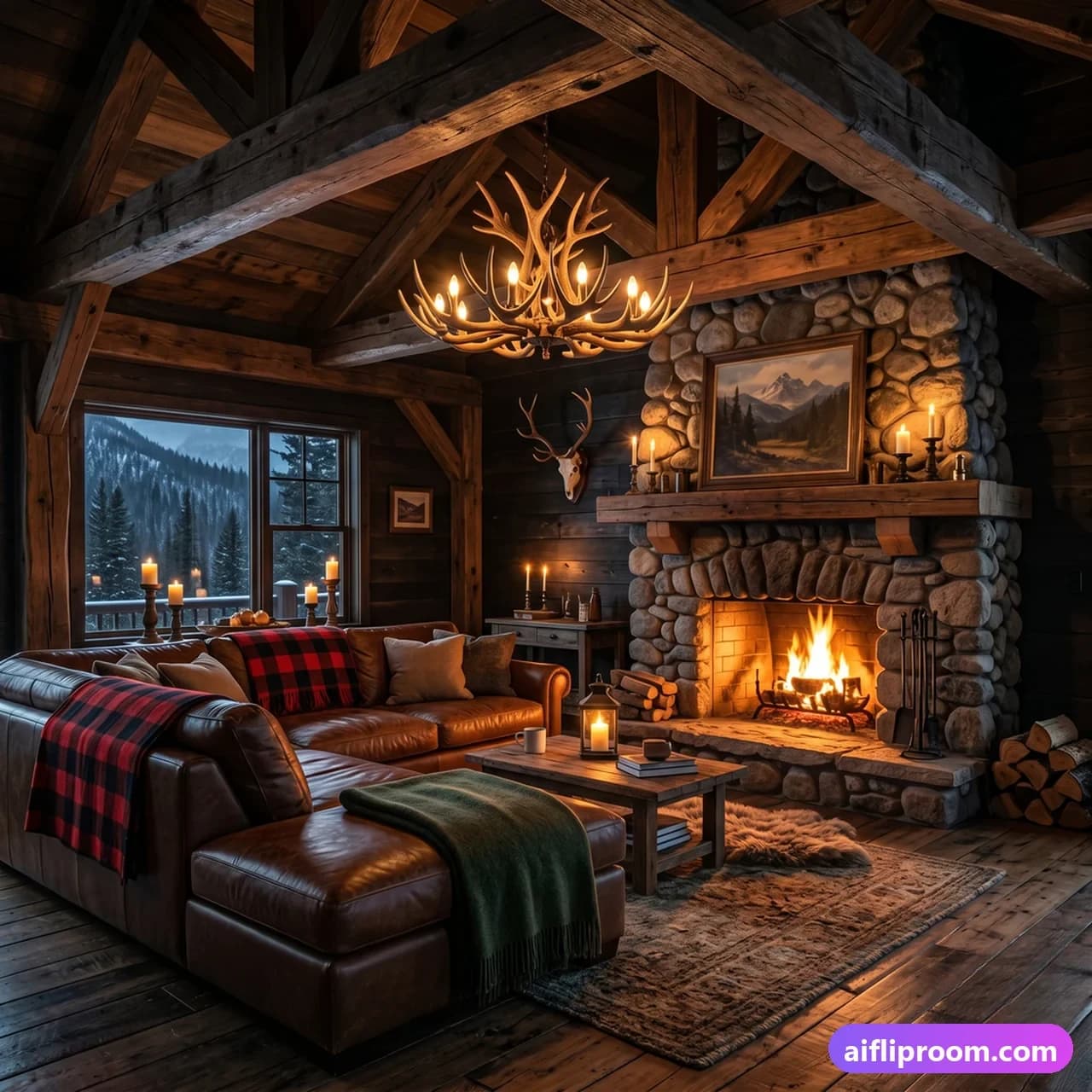
What is Rustic interior design?
Rustic style celebrates materials in their most raw and natural state. Where polished styles hide the workings of a room, rustic puts them on show: rough-sawn timber, exposed beams, natural stone, hand-finished surfaces. The palette is drawn straight from the landscape — browns, greys, deep greens and warm earth tones — and textiles lean on leather and wool for warmth. Furniture is sturdy, handcrafted and built to last rather than to impress, and a stone fireplace often anchors the main room. The overall mood is cosy, grounded and lodge-like: a home that feels sheltering and connected to its surroundings. For real-estate photography, rustic staging works hardest on mountain, lakeside and countryside properties, where a warm, natural treatment matches the setting and helps buyers imagine an unhurried escape from city life.
Where Rustic comes from
Rustic design comes from building with whatever the land provided. Mountain and forest houses were made of the timber and stone within reach, and the results were heavy, warm and unrefined because refinement was expensive and unnecessary. Beams stayed exposed because covering them served no purpose; stone walls were left as they were laid; furniture was built by people who were not furniture-makers. The style now sits close to farmhouse and cabin looks, and the distinction worth keeping is that rustic is rougher. Farmhouse is painted and tidy; rustic is raw, dark-toned and structural, and it looks best in buildings that can actually carry the weight of it.
Key elements of Rustic
- Exposed beams and rough-sawn timber
- Natural stone walls and fireplaces
- An earthy palette of brown, grey and green
- Leather and wool textiles
- Sturdy, handcrafted furniture
- A warm, sheltering, lodge-like atmosphere
When to use Rustic
Living rooms and cabins, especially mountain, lakeside or countryside properties where a cosy, grounded feel matches the setting.
Rustic colours and materials
Earth taken literally: brown, ochre, moss, clay, stone grey and charcoal, warmed by firelight tones of rust and deep red. Wood dominates and is mid-to-dark, unpainted, often reclaimed and left with saw marks, knots and splits visible. Stone appears as walls, hearths and floors. Textiles are heavy and natural — wool, sheepskin, hide, canvas, chunky knits — and metals are wrought iron, blackened steel and old copper. Nothing is glossy. The test for a rustic material is whether it would look better after ten years of use, and if the answer is no, it belongs in a different style.
Rustic room by room
Living room in Rustic
Build the room around the fireplace — in rustic interiors it is the reason the room exists. A stone or brick hearth, a heavy timber mantel, a deep sofa in leather or a hard-wearing weave, and armchairs angled toward the fire. Layer sheepskin and wool over the seating and a large natural-fibre rug on the floor. Exposed beams overhead, iron or antler-style lighting, and a solid wood coffee table that looks like it was made from one piece. Storage in old trunks and baskets rather than in cabinetry.
Bedroom in Rustic
A heavy timber or wrought-iron bed, layered with flannel or linen bedding, a wool blanket and a sheepskin at the foot. Timber-clad or stone walls if the building allows, and a rug thick enough to be pleasant on a cold floor. Lighting should be low and warm — bedside lanterns or iron wall lights rather than anything bright. A wooden bench or chest at the end of the bed, and one or two pieces of art or a mounted piece of wood; rustic bedrooms are sparse because the materials are already doing the decorating.
Kitchen in Rustic
Solid timber cabinetry or open shelving on iron brackets, a butcher-block or stone worktop, and a deep sink. A range in a stone or brick recess anchors the room. Copper pans hanging within reach, ceramic crocks, a chunky wooden table with benches. Rustic kitchens look best when they look worked in, so leave the boards, the crocks and the pans visible rather than putting everything away.
Dining room in Rustic
A long, thick-topped wooden table with visible grain and bench seating, an iron or antler chandelier above, and as little else in the room as possible. If the room has a stone wall or exposed beams, keep the walls otherwise bare. Candles rather than decorative centrepieces. This is the room where rustic is at its most convincing, because a genuinely heavy table has a presence no other style needs to match.
Entryway in Rustic
A hard-wearing floor in stone or timber, iron hooks on a reclaimed board, a bench with storage underneath, and a basket for boots. Rustic entryways are functional first — this is a house where people come in wet and muddy — and the practicality is exactly what makes them look right. One lantern-style light and a mirror in a rough timber frame finish it.
Rustic mistakes to avoid
- Using it in a building that cannot carry it. Heavy beams and stone in a small modern flat with low ceilings look applied rather than structural. Rustic needs either the architecture or a much lighter hand.
- Making it dark all the way through. Dark wood, dark stone and dark textiles produce a cave. Keep at least one light surface — plaster walls, pale textiles — so the room does not close in.
- Buying new distressed furniture. Manufactured wear is obvious next to real wear. One genuinely old piece does more than five imitations.
- Confusing it with farmhouse. Farmhouse is painted, tidier and lighter; rustic is raw and heavy. Mixing the two produces something that reads as neither.
- Neglecting the lighting. Rustic materials absorb light, so a single fixture leaves the room gloomy. Several warm, low sources are essential.
Rustic questions, answered
What is the difference between rustic and farmhouse style?
Farmhouse is lighter, painted and tidier — white and cream walls, shaker cabinets, cotton textiles, a general sense of things being scrubbed. Rustic is rawer and darker: unpainted timber, exposed stone, wrought iron, heavy wool and hide. Farmhouse can work in a suburban house; rustic really wants a building with some structure to reveal.
How do I make a rustic room feel less heavy?
Keep the walls light — plaster, limewash or a warm white — and let the timber and stone be the dark elements rather than everything at once. Add several warm light sources at low level, choose lighter textiles for the soft furnishings, and leave one wall almost bare. Rustic rooms feel oppressive when every surface is a texture.
Does rustic style work in a city apartment?
In a restrained form. Keep the palette, the wool and sheepskin, the solid timber furniture and the iron details, and drop the beams, the stone cladding and the antler lighting, which need the architecture. What you end up with reads as warm and grounded rather than as a cabin, and that suits an apartment well.
What wood is used in rustic interiors?
Reclaimed and roughly finished timber above all — oak, pine, cedar, chestnut and barnwood, left with knots, saw marks and colour variation visible. The finish should be oil or wax rather than lacquer. Perfectly uniform, machine-finished boards look wrong even when the species is right.
Is rustic a good choice for staging a property?
It is excellent for cabins, mountain and lakeside homes, barn conversions and rural properties, where buyers are specifically looking for that character. It is a poor choice for city apartments and new builds, where it fights the building. As always, the staging should be plausible for the property it belongs to.
Guides to read next
Longer reads on getting a room photographed and restaged well.
- See Your Own Room in a New Style Before You Buy AnythingPreview your actual room in a new style before buying furniture or hiring anyone: what a preview settles, what it can't, and five steps to a useful one.
- How to Photograph Rooms for Virtual Staging: 7 RulesDaylight, lamps off, a level phone at chest height, the 1x lens not 0.5x, one room per frame, clear surfaces — seven habits that make AI staging look real.
- What Is Virtual Staging? The Complete Guide: How It Works, Cost, Rules, ExamplesVirtual staging explained in plain language: how AI furnishes a photo of a real room, what it costs, what agents think of it (NAR 2025), who it helps, the rules and how to spot bad staging.
See your room in Rustic
Upload a photo and our AI restages it in the Rustic look in 15–60 seconds, depending on how much detail your room has — keeping your walls, windows and layout intact.
Try Rustic on your room