Traditional Interior Design
Classic furniture, rich colors, elegant timeless details.
Stage your room in Traditional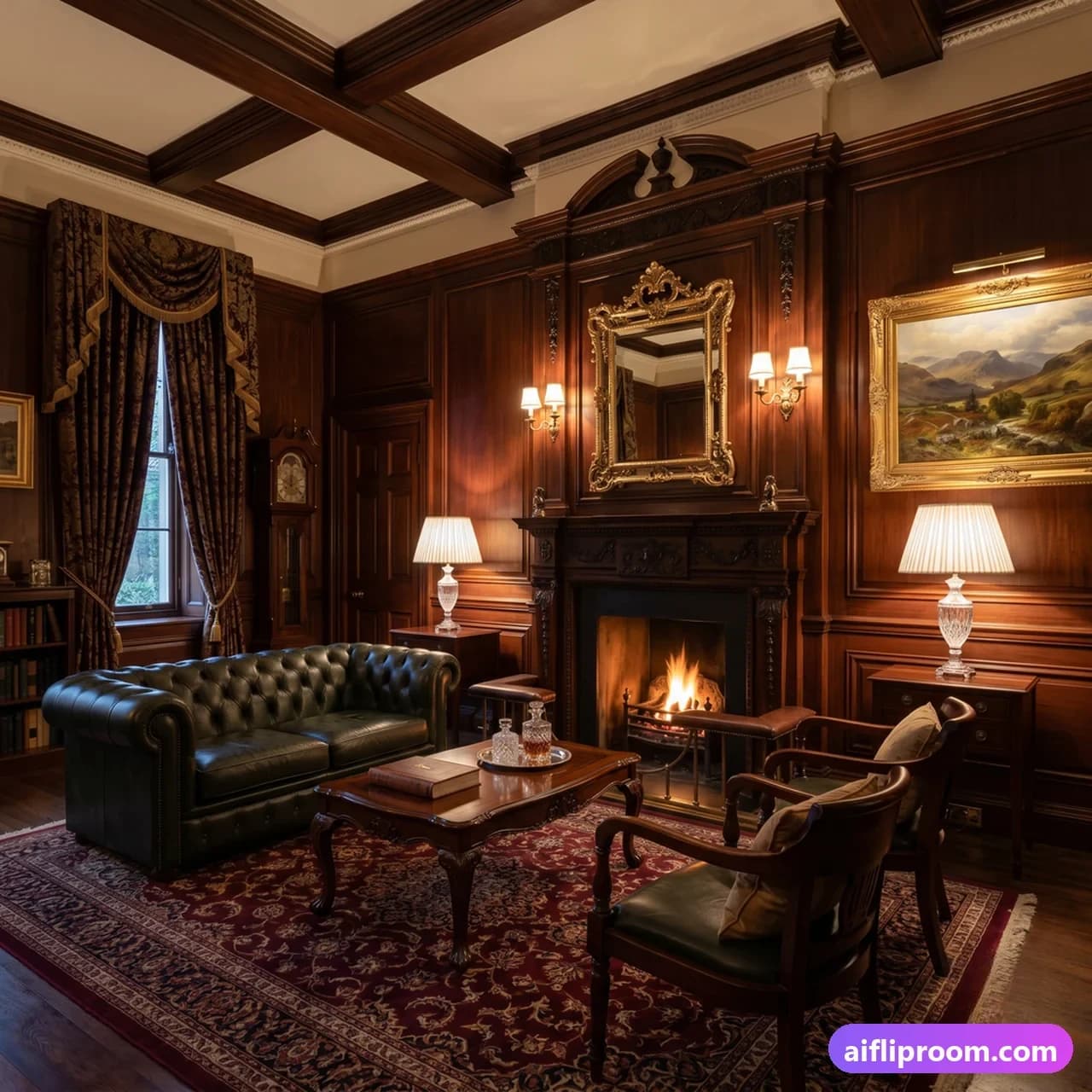
What is Traditional interior design?
Traditional interior design is built on classic, time-tested furnishings and the principles that have organised comfortable homes for generations. It values symmetry and balance — pairs of lamps, matching chairs, a clear focal point — and a sense of order that feels reassuring rather than rigid. Rich woods, warm colours and elegant architectural detail such as crown moulding and wainscoting give rooms depth, while patterned rugs and refined textiles add layers of comfort. Furniture uses classic silhouettes: rolled arms, turned legs, tufted upholstery. Everything is coordinated and polished, but the goal is always warmth and liveability, not a museum. In staging, traditional style is a safe, broadly reassuring choice — it photographs as established and well cared for, and it is an especially natural fit for family homes and more formal or period properties.
Where Traditional comes from
Traditional interiors descend from eighteenth and nineteenth-century European decorating, filtered through a couple of centuries of adaptation. The organising idea is order: rooms arranged symmetrically around a focal point — usually a fireplace — with matched pairs, considered proportion and furniture whose shapes have been refined over generations rather than invented recently. Detail is welcome and often the point, from panelled walls and cornices to turned legs and carved feet. Where modern design strips a room to its function, traditional design dresses it, and does so according to conventions that are widely understood. That shared vocabulary is why the style still feels reassuring: almost everyone can read a traditional room without being taught how.
Key elements of Traditional
- Classic furniture silhouettes
- Symmetrical, balanced layouts
- Rich woods and warm colours
- Elegant detail — crown moulding, wainscoting
- Patterned rugs and refined textiles
- Coordinated, polished styling
When to use Traditional
Living rooms, dining rooms and primary bedrooms. A safe, reassuring choice for family homes and more formal or period properties.
Traditional colours and materials
Warm, muted and slightly historical. Creams, soft golds, sage, powder blue, dusty rose and deep reds and greens for the more formal rooms. Woods are mid to dark — cherry, mahogany, walnut, oak — usually polished rather than matt. Fabrics carry the character: damask, chintz, toile, velvet, tapestry weaves and needlepoint, with patterns that are floral, striped or classically geometric. Metals are warm — antique brass, bronze, aged gold. The scheme should look as though it accumulated over time, which in practice means avoiding a single accent colour repeated too obviously through the room.
Traditional room by room
Living room in Traditional
Arrange the room symmetrically around the fireplace or the largest window: a sofa facing it, a matched pair of armchairs, a pair of lamps, a mirror or painting centred above the mantel. Use a patterned area rug with a defined border, and layer curtains in a heavy fabric with a proper heading. Occasional tables in polished wood, a wing chair in the corner, and a bookcase or cabinet with some presence. Traditional rooms are allowed to be full — the discipline is in the balance rather than in the quantity.
Bedroom in Traditional
An upholstered or carved wooden bed, ideally with a canopy or a tall headboard, dressed in layers: a quilted coverlet, a folded throw, cushions in coordinating rather than identical fabrics. Matching nightstands and matching lamps on either side — symmetry is doing most of the work here. A skirted or wooden dressing table, a wing chair, and framed art hung in a considered arrangement rather than scattered. Curtains should be lined and full-length.
Dining room in Traditional
The most naturally traditional room in any house. A polished wood table with turned or carved legs, upholstered chairs with a carver at each end, a chandelier centred above, and a sideboard against the wall. A large mirror or a landscape painting above the sideboard, and a rug sized so the chairs stay on it when pulled out. This is where the style earns its keep: a formal dining room reads as generous and hospitable in a way few contemporary schemes manage.
Kitchen in Traditional
Raised-panel or inset cabinet doors, often painted in cream, sage or a soft blue-grey, with a contrasting island. Granite or a honed natural stone worktop, a farmhouse or apron sink, and antique brass hardware. Decorative details belong here — a plate rack, a glazed cabinet door, a proper cornice above the wall units, a range in a chimney recess. Open shelving is less traditional than glass-fronted cabinetry, which is the more historically consistent choice.
Entryway in Traditional
A console table with a mirror above it, a pair of lamps or a pair of small pictures flanking, and a runner rug. Traditional entryways signal the rest of the house immediately, and symmetry is the whole trick: whatever you place on one side, place its partner on the other. A grandfather clock, an umbrella stand or a bench with a cushion completes it without needing anything decorative.
Traditional mistakes to avoid
- Matching everything from one suite. A traditional room should look collected over time; a bedroom set where every piece came from the same catalogue reads as furniture-shop rather than as home.
- Ignoring scale. These are large-boned pieces. A traditional sofa in a small modern room with low ceilings will dominate — either scale down or choose a lighter style for the space.
- Over-darkening. Dark wood plus dark walls plus heavy curtains produces a room that photographs as gloomy. Keep the walls light if the woods are dark.
- Too much pattern at the same scale. Mixing a floral, a stripe and a check works when their scales differ; three medium patterns fight each other.
- Fake period detail. Thin applied mouldings and plastic corbels are more noticeable than no detail at all. Plain and well proportioned beats ornate and cheap.
Traditional questions, answered
What is the difference between traditional and transitional design?
Traditional commits to period furniture, pattern, symmetry and detail. Transitional keeps the comfortable proportions and the calm symmetry but strips the ornament and the pattern, landing between traditional and contemporary. If a room has curved wooden legs and a floral fabric it is traditional; if it has the same silhouette in a plain neutral fabric with modern lighting, it is transitional.
Is traditional style outdated?
The heavily formal version — matched suites, dense pattern, dark rooms — has gone out of favour. The underlying principles have not: symmetry, quality timber, real curtains, comfortable seating and rooms arranged around a focal point are all in wide use today, usually in a lighter palette. That updated version is what most people now buy when they buy traditional.
How do I make a traditional room feel lighter?
Keep the walls pale and warm, reduce the pattern to one or two fabrics, choose lighter upholstery against the dark woods, and swap heavy swagged curtains for simple full-length panels. Adding lamps at several heights matters more than it sounds — traditional rooms often feel dark because they rely on one central fixture.
What furniture defines traditional interiors?
Rolled-arm and camelback sofas, wing chairs, four-poster and sleigh beds, secretary desks, sideboards, and occasional tables with turned or cabriole legs. Materials are polished hardwoods and traditional upholstery. Shapes are curved and detailed rather than straight and plain.
Is traditional a good choice for staging a property?
It is a strong fit for period homes, larger family houses and any property with original detail, because it flatters the architecture and appeals to buyers already drawn to those homes. In a modern apartment it usually works against the building. For a broad market, a transitional version — traditional shapes in a lighter, plainer palette — tends to reach more buyers.
Guides to read next
Longer reads on getting a room photographed and restaged well.
- See Your Own Room in a New Style Before You Buy AnythingPreview your actual room in a new style before buying furniture or hiring anyone: what a preview settles, what it can't, and five steps to a useful one.
- How to Photograph Rooms for Virtual Staging: 7 RulesDaylight, lamps off, a level phone at chest height, the 1x lens not 0.5x, one room per frame, clear surfaces — seven habits that make AI staging look real.
- What Is Virtual Staging? The Complete Guide: How It Works, Cost, Rules, ExamplesVirtual staging explained in plain language: how AI furnishes a photo of a real room, what it costs, what agents think of it (NAR 2025), who it helps, the rules and how to spot bad staging.
See your room in Traditional
Upload a photo and our AI restages it in the Traditional look in 15–60 seconds, depending on how much detail your room has — keeping your walls, windows and layout intact.
Try Traditional on your room