Tropical Interior Design
Lush plants, rattan, bright colors, resort vibes.
Stage your room in Tropical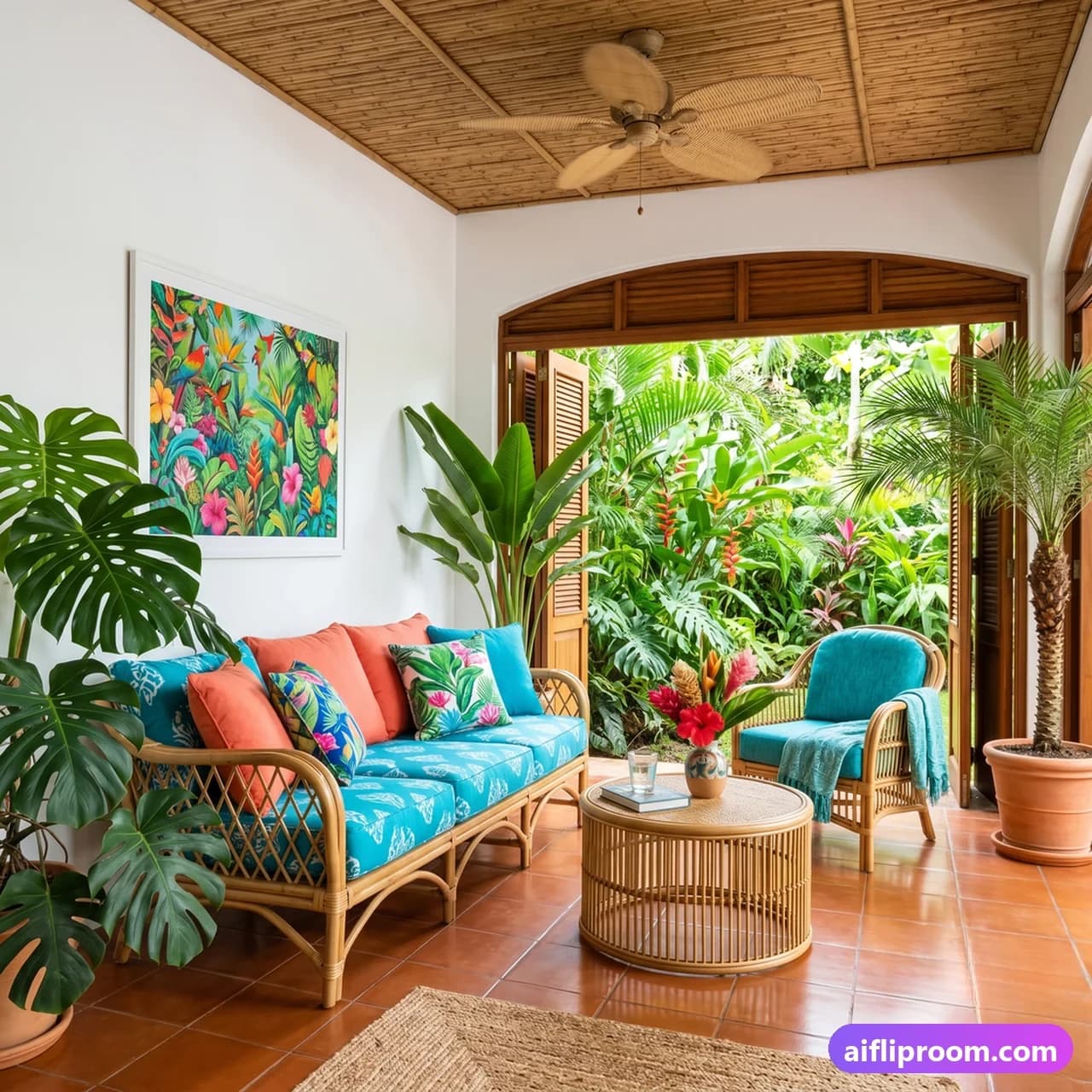
What is Tropical interior design?
Tropical style brings the feeling of a lush resort into an everyday home. It is built around greenery — big, glossy, large-leaf plants that make a room feel alive — and natural materials like rattan and bamboo that carry a relaxed, holiday mood. The palette is fresh: plenty of green, crisp white, and bright accent colours borrowed from flowers and fruit. Fabrics are light and breezy, woods are natural, and patterns nod to palm leaves and botanicals without tipping into kitsch. The layout stays open and airy so the room feels cool and easy. The overall effect is bright, cheerful and restorative — a space that feels like a break. In staging, tropical style suits warm-climate listings and any property you want to present as a relaxed escape, and it gives sunrooms and bright living rooms an instant lift.
Where Tropical comes from
Tropical interiors come from building in heat and humidity, and every characteristic is a response to one or the other. Rooms were open and cross-ventilated because air movement was the only cooling available. Ceilings were high so heat could rise away from people. Furniture was cane, rattan and teak because those breathe, resist damp and are locally grown. Shutters and deep verandas kept sun off the walls while letting the breeze through. The look people now buy is partly this vernacular and partly the mid-century resort version of it, which added bold botanical prints and a certain amount of theatre. Both share the same underlying idea: the boundary between inside and outside should be as soft as the climate allows.
Key elements of Tropical
- Lush, large-leaf plants
- Natural rattan and bamboo
- A fresh palette of greens, white and bright accents
- Light, breezy fabrics
- Natural wood and woven textures
- An open, airy, holiday-like layout
When to use Tropical
Living rooms and sunrooms. Works well for warm-climate listings and properties you want to present as a relaxed escape.
Tropical colours and materials
Green first and everywhere — from pale palm to deep jungle — over a base of white, cream or natural fibre. Then the accents: coral, turquoise, hibiscus pink, saffron and a warm terracotta. Woods are mid to dark and warm, especially teak, mahogany and bamboo. Materials are rattan, cane, wicker, jute, seagrass, linen and cotton, with a botanical print or two doing the decorative work. Metals stay warm — brass, bronze, aged gold. The one thing to avoid is a cool grey anywhere, which drains the whole palette instantly.
Tropical room by room
Living room in Tropical
A rattan or cane sofa with generous white or natural cushions, a teak coffee table, and a jute or seagrass rug. Then plants at three scales — one large palm or monstera in a floor basket, a mid-height cluster, something trailing. One botanical print in cushions or a chair, not on every surface. A ceiling fan is period-correct and genuinely useful. Keep the windows as clear as possible and the furniture arranged so the room reads as open rather than filled.
Bedroom in Tropical
A cane or teak bed frame, white cotton or linen bedding, and a mosquito-net canopy if the room can carry one — it is the single most evocative detail in the style. Shutters or bamboo blinds at the window, a woven rug, and one or two plants that tolerate the light. Keep the palette almost entirely white and green so the room stays cool-looking, and put the colour in one cushion or a piece of art.
Kitchen in Tropical
Timber or white cabinetry, a warm stone or timber worktop, and open shelving holding ceramics and glass. Rattan pendant shades over an island or table, cane-backed stools, and a bowl of fruit that is actually eaten. Bamboo or timber blinds. Tropical kitchens are informal and light — the aim is a room that feels ventilated even when it is not.
Bathroom in Tropical
The humidity that makes tropical bathrooms difficult also makes them the best growing environment in the house. Ferns, calathea and orchids thrive. Pair them with teak or bamboo, white or green tile, a stone basin and brass fittings. A timber duckboard, a woven basket and a large mirror in a rattan frame. Louvred cabinet doors are both period-correct and practical.
Veranda or outdoor room in Tropical
The centre of the style rather than an addition. Deep shade from a roof, pergola or large umbrella, teak or rattan seating with washable cushions, a ceiling fan if there is a roof, and dense planting in large pots. A daybed or hammock if the space allows. This is where a tropical house was actually lived in, and reproducing even a small version of it changes how the interior feels.
Tropical mistakes to avoid
- Buying the print instead of the plants. Palm-leaf wallpaper with no living greenery is a resort gift shop. Real plants are the load-bearing element.
- Botanical print everywhere. One or two uses — cushions, a chair, a single wall — against plain white and natural fibre. More than that and the room stops being restful.
- Cool greys. They kill the palette. Every neutral should be warm: cream, sand, natural fibre, white with a hint of yellow.
- Dark heavy curtains. The style is built on light and airflow; blinds, shutters or sheer linen are correct.
- Cheap synthetic rattan. Real cane and rattan age beautifully and are widely available second hand; plastic imitations look wrong immediately and do not last.
Tropical questions, answered
What is the difference between tropical and coastal style?
Coastal is pale, breezy and blue-and-white, built on jute, linen and faded sea colours. Tropical is greener, warmer and more saturated, built on lush planting, dark teak, rattan and botanical print. Coastal suggests a beach in a temperate climate; tropical suggests a veranda in a hot one.
Can tropical style work in a cold climate?
Yes, with adjustments. Keep the rattan, teak, plants and warm palette, and drop the assumptions about airflow — you will want curtains, rugs and proper heating that a genuinely tropical house does not. The result reads as warm and green rather than as a resort, which is usually what people want anyway.
What plants make a room feel tropical?
Large-leaved species do the work: monstera, bird of paradise, banana, fiddle-leaf fig, kentia and areca palms, philodendron, and a trailing pothos. Group them at different heights rather than spacing them evenly, and match the species to your actual light — most tropical-look plants want bright indirect light rather than full sun.
What colours are tropical interiors?
A base of white, cream and natural fibre, dominated by green in every shade, with accents of coral, turquoise, hibiscus pink, saffron and terracotta. Woods are warm and mid to dark. Cool greys and cold whites work against the whole scheme.
Is tropical styling good for staging a property?
It works well for holiday properties, warm-climate homes and anything with outdoor space or a strong indoor-outdoor relationship. For a general-market home in a temperate city it can read as a theme, so a lighter version — plants, rattan, warm neutrals, no botanical print — usually reaches more buyers.
Guides to read next
Longer reads on getting a room photographed and restaged well.
- See Your Own Room in a New Style Before You Buy AnythingPreview your actual room in a new style before buying furniture or hiring anyone: what a preview settles, what it can't, and five steps to a useful one.
- How to Photograph Rooms for Virtual Staging: 7 RulesDaylight, lamps off, a level phone at chest height, the 1x lens not 0.5x, one room per frame, clear surfaces — seven habits that make AI staging look real.
- What Is Virtual Staging? The Complete Guide: How It Works, Cost, Rules, ExamplesVirtual staging explained in plain language: how AI furnishes a photo of a real room, what it costs, what agents think of it (NAR 2025), who it helps, the rules and how to spot bad staging.
See your room in Tropical
Upload a photo and our AI restages it in the Tropical look in 15–60 seconds, depending on how much detail your room has — keeping your walls, windows and layout intact.
Try Tropical on your room