Vintage Interior Design
Antique furniture, warm patina, nostalgic retro decor.
Stage your room in Vintage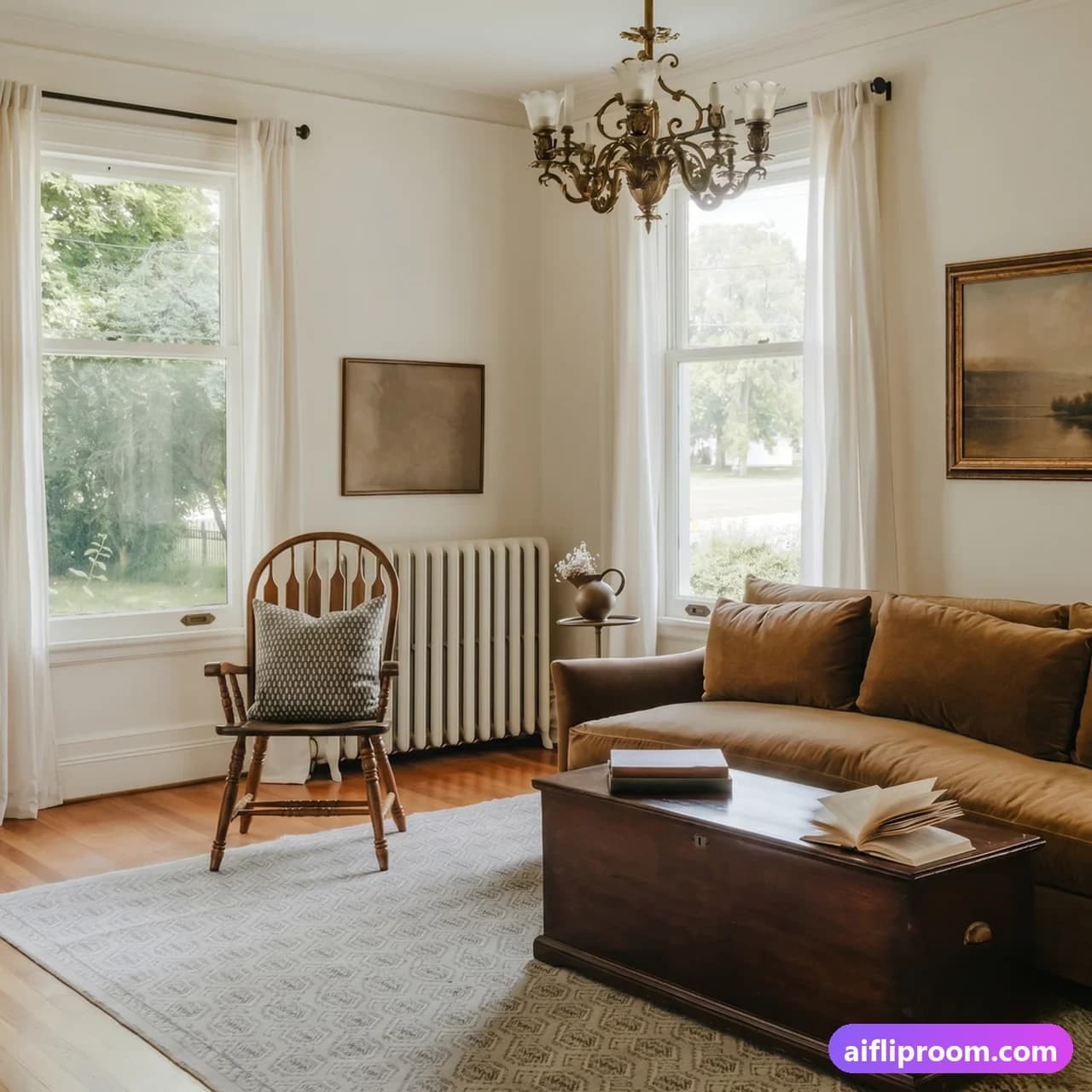
What is Vintage interior design?
Vintage style furnishes a room with pieces that carry history. Rather than chasing the newest thing, it values furniture and objects from earlier decades — for their craftsmanship, their materials and the warmth of age. Antique and second-hand pieces mix freely; wood and metal show an honest patina; textiles are patterned and a little faded. The palette tends to be warm and slightly muted, and the arrangement feels collected over years rather than bought in a single afternoon. The effect is characterful, comfortable and quietly personal — a room with a sense of having been somewhere. In real-estate photography, vintage staging adds soul and warmth, and it is particularly valuable in period properties, where a fully modern treatment can feel at odds with the architecture and a vintage hand instead works with the building's character.
Where Vintage comes from
Vintage is not a period, it is a way of buying. The term generally covers objects roughly twenty to a hundred years old — younger than antique, older than second-hand — and a vintage interior is one furnished largely from that pool rather than from current retail. It grew from thrift and necessity into a deliberate choice for several reasons at once: the furniture is often better made than its modern equivalent, it is usually cheaper, it has a patina no factory can reproduce, and buying it is markedly better environmentally than commissioning new. The result is a style defined by provenance rather than by a look, which is why two vintage rooms can share almost no visual language and still both be correctly described that way.
Key elements of Vintage
- Antique and second-hand furniture
- A warm, slightly muted palette
- Patinated wood and aged metals
- Nostalgic decorative objects
- Patterned rugs and textiles
- An unhurried, collected-over-time arrangement
When to use Vintage
Living rooms and bedrooms. Adds warmth and character, and suits period properties where modern staging can feel at odds with the architecture.
Vintage colours and materials
Warm and slightly faded, because that is what time does to colour. Cream, ochre, olive, dusty rose, teal, mustard and warm browns, with black or deep green for contrast. Woods are mid to dark and waxed rather than lacquered — oak, walnut, teak, mahogany, and painted pieces where the paint has worn. Materials are the ones that age well: solid timber, brass, cast iron, leather, wool, velvet, cotton, enamel and glass. The unifying quality is patina — a surface that has been touched for decades — and it is the one thing that reliably tells a vintage room from a room styled to look like one.
Vintage room by room
Living room in Vintage
One large anchor piece with real age — a leather chesterfield, a mid-century sideboard, a worn armchair — and build outward from it. Mix eras deliberately: a 1950s cabinet can sit with a 1930s lamp and a much older rug provided the wood tones and the palette agree. A vintage or overdyed rug, framed art and mirrors collected rather than bought as a set, and books and ceramics on open shelving. Leave one modern comfort — usually the sofa or the lighting — so the room is livable rather than a display.
Bedroom in Vintage
An iron, brass or carved wooden bed, a chest of drawers with age to it, and a mismatched pair of nightstands. Bedding plain and modern under a vintage quilt or eiderdown, which is the combination that keeps the room comfortable and the look intact. A mirror with a worn frame, one or two pieces of old art, and a wool or rag rug. Lighting is where to allow yourself one real find: an old bedside lamp changes the room more than any textile.
Kitchen in Vintage
Vintage kitchens work best as a mix. Modern appliances and a functional layout, with a free-standing dresser or a repurposed cabinet, enamelware, a scale or a set of tins in daily use, and open shelving with collected crockery. A large old table with mismatched chairs. Nothing here should be so precious that it stops being used, which is also the fastest test of whether a vintage kitchen is real or staged.
Dining room in Vintage
An old table with marks on it, chairs from more than one source, and a sideboard or dresser displaying glassware. A single strong light fixture with age — an industrial pendant, a brass chandelier, an opaline shade. Linen napkins and mismatched plates. The whole point of the room is that it looks accumulated, so resist the urge to complete the set.
Home office in Vintage
A wooden desk with a history, a leather or bentwood chair, an old anglepoise or bankers lamp, and shelving holding books rather than styled objects. A rug with wear. A vintage office is one of the easiest rooms to assemble second hand, because desks and shelving from the mid-century are plentiful and were built to survive institutional use.
Vintage mistakes to avoid
- Buying new things made to look old. Reproduction distressing is the one thing that reliably reads as fake, because real wear happens where hands and feet go and manufactured wear happens on edges.
- Matching the era exactly. A room from a single year is a period set. Vintage is a mix, held together by palette and wood tone rather than by date.
- Refinishing everything. Stripping and re-lacquering an old piece removes the patina that made it worth having. Clean and wax rather than restore, unless the piece is genuinely damaged.
- Ignoring comfort. Old sofas and mattresses are frequently unpleasant. Keep the modern one and put the age into the pieces you look at rather than sit on.
- Collecting without editing. The line between vintage and cluttered is whether the objects were chosen or merely acquired.
Vintage questions, answered
What is the difference between vintage, antique and retro?
Antique conventionally means at least a hundred years old. Vintage usually means roughly twenty to a hundred. Retro means new items made in the style of an earlier period — a retro fridge is manufactured now and looks like 1955. Vintage is about the actual age of the object; retro is about the appearance only.
How do I mix vintage pieces with modern furniture?
Agree on two things and the rest follows: keep the wood tones within a narrow range, and keep the palette consistent. Then let the shapes differ freely. A practical starting ratio is one strong vintage anchor per room against otherwise plain modern pieces — that reads as deliberate, while an even split often reads as unresolved.
Where do I find good vintage furniture?
House clearance and estate sales, local auction houses, charity and second-hand shops, and online marketplaces where you can collect in person. Auctions are usually the best value and the most intimidating; marketplaces are easiest. Check joints, drawer runners and any veneer before buying, and be relaxed about surface marks, which are the reason to buy old in the first place.
Is vintage furniture better quality than new?
Often, at the same price. Mid-century and earlier furniture was more likely to be solid timber with proper joinery rather than particleboard with dowels, simply because that was the cheap way to make it at the time. It is not a universal rule — plenty of poor furniture was made in every decade — but a hundred-year-old chest that is still square has already proved something a new one has not.
Does vintage styling work for staging a property?
A light version does: one or two characterful pieces against otherwise neutral furnishing gives listing photos warmth and personality without making them personal. A fully vintage interior is harder, because it reads as someone's specific taste, and staging works by leaving room for the buyer's own imagination.
Guides to read next
Longer reads on getting a room photographed and restaged well.
- See Your Own Room in a New Style Before You Buy AnythingPreview your actual room in a new style before buying furniture or hiring anyone: what a preview settles, what it can't, and five steps to a useful one.
- How to Photograph Rooms for Virtual Staging: 7 RulesDaylight, lamps off, a level phone at chest height, the 1x lens not 0.5x, one room per frame, clear surfaces — seven habits that make AI staging look real.
- What Is Virtual Staging? The Complete Guide: How It Works, Cost, Rules, ExamplesVirtual staging explained in plain language: how AI furnishes a photo of a real room, what it costs, what agents think of it (NAR 2025), who it helps, the rules and how to spot bad staging.
See your room in Vintage
Upload a photo and our AI restages it in the Vintage look in 15–60 seconds, depending on how much detail your room has — keeping your walls, windows and layout intact.
Try Vintage on your room