What Does “Virtually Staged” Mean? The Listing Label, Explained
AI Flip Room · 5 min read
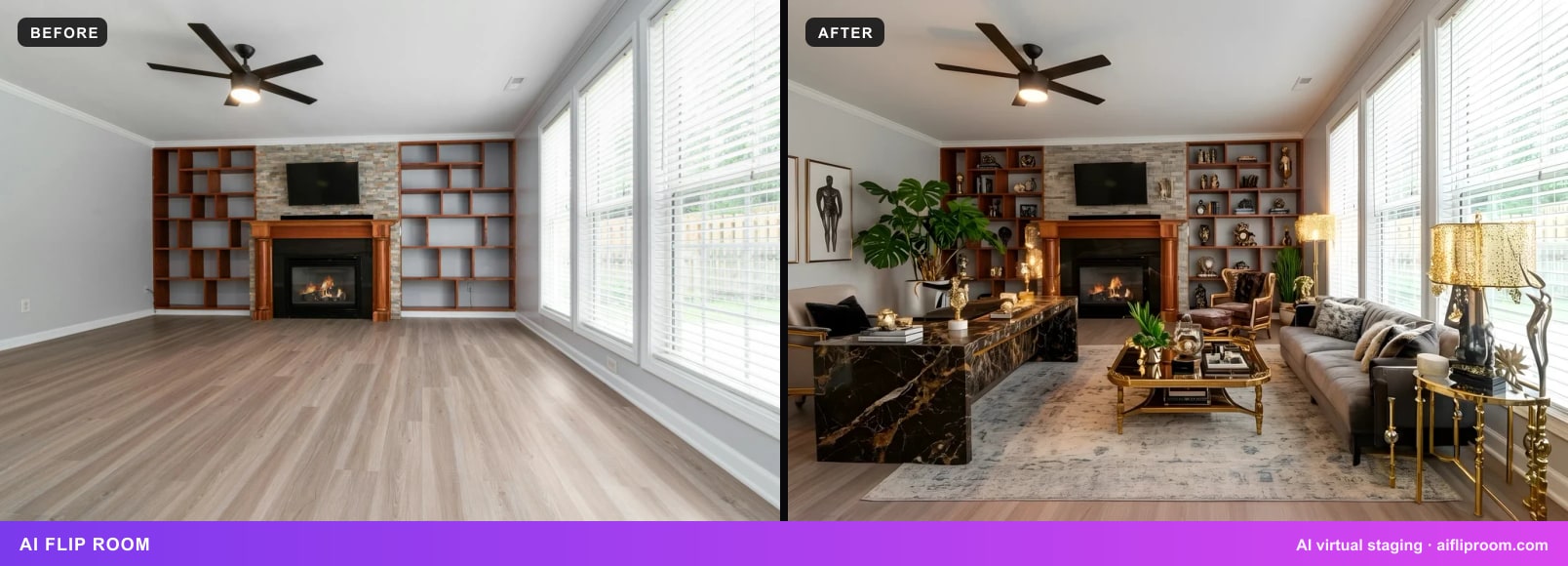
“Virtually staged” on a listing photo means the furniture you see was added by software. The room was photographed as it is, usually empty, and a sofa, a bed, rugs, art and plants were then placed into the picture. The room itself — walls, windows, doors, floors, ceiling, fixtures and view — is supposed to be exactly what you will find at the showing. The furniture will not be there.
That is the whole definition. The rest of this guide covers what the label allows and what it does not, the other labels you may run into, where the label appears depending on the MLS, and how to read a staged listing without being misled. We make an AI staging tool, so weigh the last section with that in mind.
What does “virtually staged” mean?
It means the photo is real and the furnishings are not. A photographer took a picture of the room as it is, and the furniture and décor were added digitally, by hand or with AI, to show how the space could be used. The label tells you that what you see in the room is a suggestion; the room around it is the property.
Sellers use it mostly for vacant homes, because empty rooms are hard to judge from a photo: there is no sense of scale, and nothing to show what a corner is for. A staged photo answers both questions. It does not change what is being sold.
What can a virtually staged photo change, and what must stay the same?
Furniture and décor, nothing else. The rulebooks we have read draw the same line in different words: Houston's MLS limits staging to “furnishings and wall décor”, Alberta's MLS rules define it as adding “unattached goods (chattels) of realistic size”, and upstate New York's rule says “adding furnishings and wall décor”. Everything that conveys with the house stays as photographed.
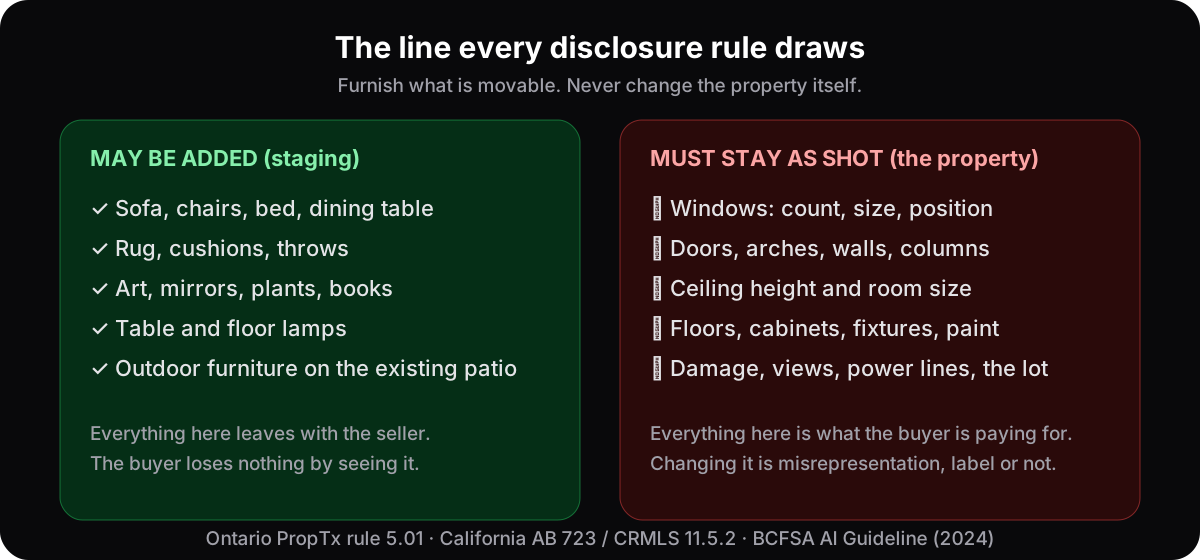
Some edits fall outside staging even though they seem small. Digitally emptying a furnished room counts as an alteration in California. A changed wall colour, new landscaping, a better view out of the window or a hidden water stain are changes to the property, and no staging label covers them.
What other labels might you see on a listing photo?
“Virtually staged” is the most common label, but not the only one, and the others mean something different.
| Label | What it means | Where it comes from |
|---|---|---|
| Virtually staged | Furniture and décor added to a real photo of the room | The common term; required as text on the photo itself by the New York State Alliance MLSs since 1 September 2026, in the photo description on Houston's HAR and Florida's Stellar MLS, in the public remarks in Alberta |
| Digitally altered | The broader legal term: anything added, removed or changed beyond routine corrections, staging included | California's AB 723 and CRMLS rule 11.5.2; lighting, colour correction, cropping and exposure do not count |
| Virtually enhanced | Features that affect the property's value were changed, such as walls or windows | Alberta's MLS rules (1.01 hh) — not permitted on the MLS® System (2.04 h) |
| Image does not represent actual property as is | The property itself was altered in the image | HAR's required watermark for such images, which also need the unaltered view beside them and cannot be the main photo |
| Image generated by artificial intelligence | The image was created or changed with AI | The example statement in Quebec's OACIQ advertising guideline (6.3.1) |
The difference matters. “Virtually staged” promises that only furniture changed. A label about alteration or enhancement warns you that the house in the photo is not quite the house for sale.
Where does the “virtually staged” label appear?
It depends on the listing service, and the rules disagree. Upstate New York's Alliance MLSs want the words on the photo and the unaltered original directly before it; a caption alone is “NOT acceptable”. Florida's Stellar MLS wants the opposite: the label in the photo description, a checkbox and the remarks, and words on the photo “strictly prohibited”. California wants a conspicuous statement plus a link or QR code to the original wherever the photo is advertised. Ontario's PropTx rulebook has no labelling rule for staged photos at all; its test is whether an image accurately depicts the property.
So the absence of text on a photo does not mean the photo is unstaged. Check the photo description and the remarks, and look for a pair of near-identical shots, one empty and one furnished. The details for each jurisdiction are in our disclosure rules guide.
How should you read a virtually staged listing?
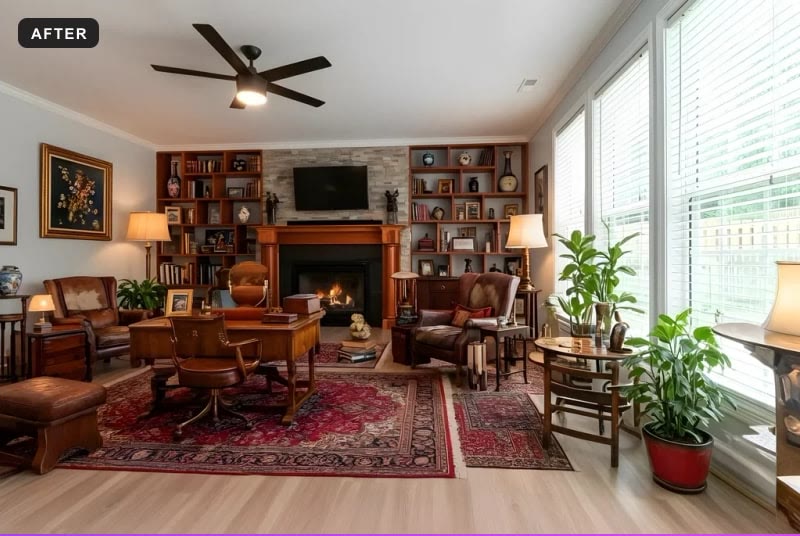
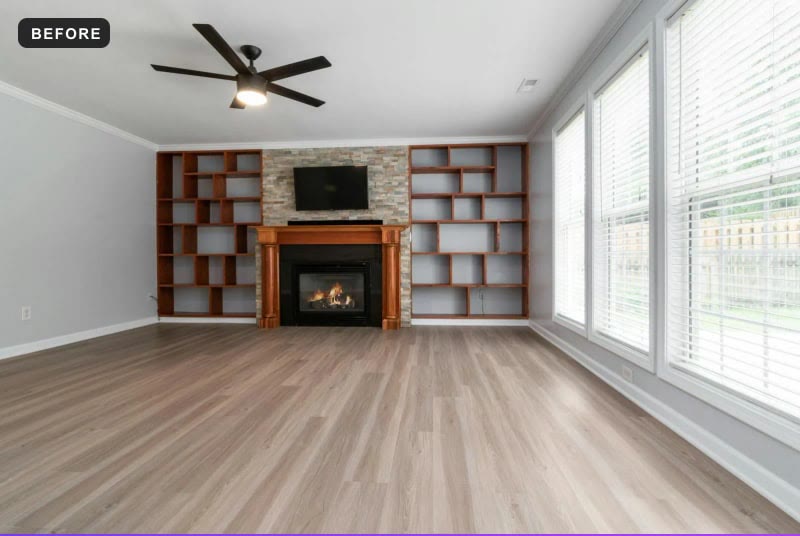
Use the staged photo for what it is good at — showing how a room could be used — and the original and the floor plan for everything else.
How to read a virtually staged listing
- 1Find the originalLook for the unstaged photo of the same view — on some MLSs it must sit right before or after the staged one. If it is not in the listing, ask the agent; it is the file the render was made from.
- 2Check the parts that cannot moveCount the windows and doors, look at the ceiling, the floor, the light fixtures and the view. They should match the original exactly. Only furniture, rugs, art and plants may differ.
- 3Judge size by the fixed thingsFurniture is the yardstick a staged photo gives you, and furniture can be scaled. Florida's Stellar MLS bans “placing small furniture to make a room appear larger than it actually is” for that reason. Use doors, windows, the floor plan and the listed measurements instead.
- 4Treat the room as a suggestionThe staged photo shows one way the room could be used: a bed where the bed fits, a table where a table fits. It is a possibility, not a promise, and nothing in it comes with the house.
- 5Compare at the showingStand where the camera stood. If a window is smaller, a doorway narrower or a ceiling lower than in the staged photo, you have found an altered photo, not a staged one — see what a buyer can demand.
A staged photo is not a trick when it is labelled and limited to furniture. It is a way of doing the imagining for you. The problems begin only where the label is missing or the room in the picture is not the room in the house.
Is a virtually staged listing a red flag?
No. A labelled, honest staged photo is common practice and in many places a required disclosure. It usually means the home is vacant and the seller wanted buyers to see what the rooms are for. The red flags are different: a staged photo with no label, no unstaged original available on request, or a room that looks bigger, brighter or better finished than the original. Those point to an altered photo, and what a buyer can demand covers what to do about it.
If you want to see the difference on a room of your own, three free renders are enough to compare the original and the staged version side by side.
Questions people ask about the “virtually staged” label
Does “virtually staged” mean the furniture comes with the house?+
No. Nothing in a virtually staged photo exists except the room. The furniture, rugs, art and plants were added to the picture, so there is nothing to include in the sale. Even in physical staging the furniture usually belongs to a staging company and leaves when the house sells.
Is a virtually staged house empty?+
Often, but not always. Most virtual staging starts from a photo of an empty room. Some starts from a furnished room whose furniture was replaced in the picture, so the house may be empty, furnished differently or still lived in. The unstaged original tells you which.
Is virtual staging legal?+
Yes, where it is disclosed and limited to furniture and décor. California requires disclosure by statute (AB 723); most MLS rulebooks we have read require a label; and everywhere the general ban on misleading advertising applies. Changing the property itself — a window, a wall, a view, a hidden defect — is a different matter in every jurisdiction we have checked. Our rules series quotes the rulebooks.
What is the difference between staged and virtually staged?+
Where the furniture is. A staged home has real furniture placed in the rooms, so you see it at the showing too. A virtually staged home has furniture only in the photos. Both are meant to help buyers picture the space; only physical staging is still there when you walk in.
Can a virtually staged photo hide damage?+
It must not. Hiding damage is the clearest case of misrepresentation in the rulebooks we have read — Florida's Stellar MLS bans it by name — and a label does not make it acceptable. If a staged photo hides a stain, a crack or a broken fixture that the original shows, raise it with the agent.
See it on your own room
Upload a photo and watch AI restage your space in 15–60 seconds, depending on how much detail it has — free to try, no credit card.
Try AI Flip Room freeRelated reading
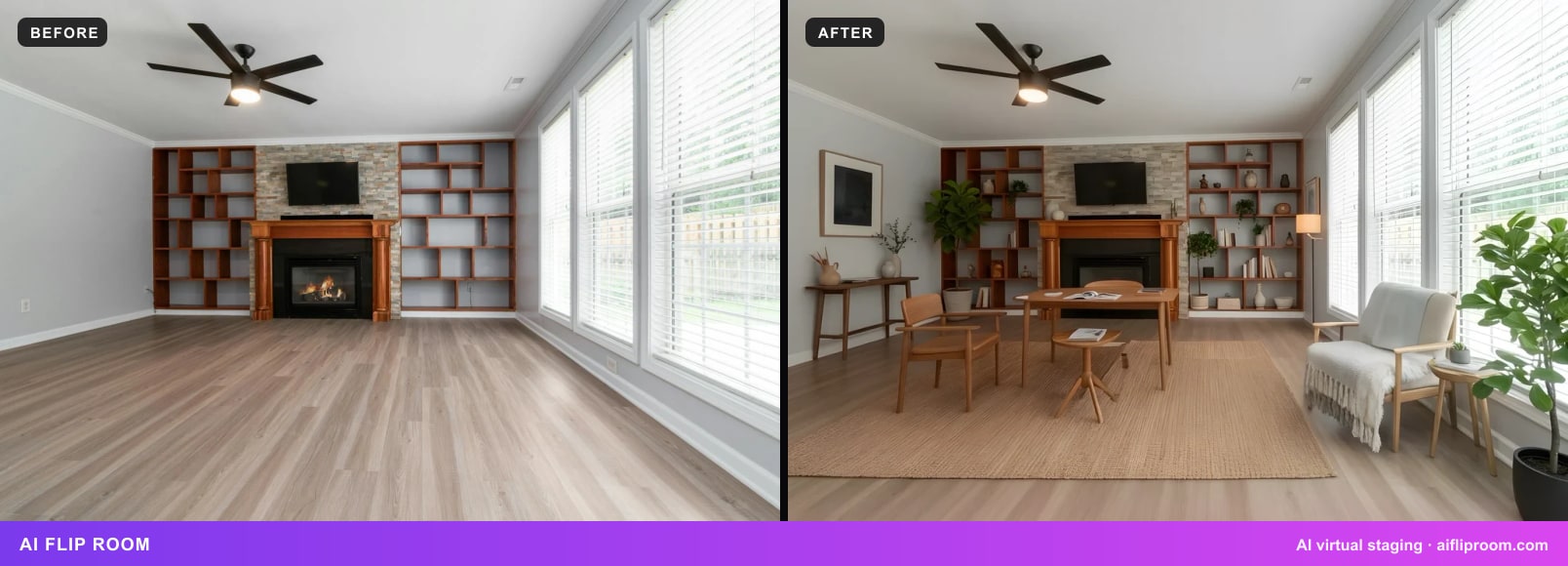
Virtually Staged Listing? 5 Things a Buyer Can Demand
AI staging is legal in Ontario, BC, Quebec, Alberta, California, New York, Florida, Texas and Washington, with conditions: what a buyer can demand.
Virtual Staging Disclosure Rules: How to Label Staged Photos
Why disclosure is required, three ways to label a virtually staged photo, what you may change vs never touch, and the rules of nine jurisdictions compared.
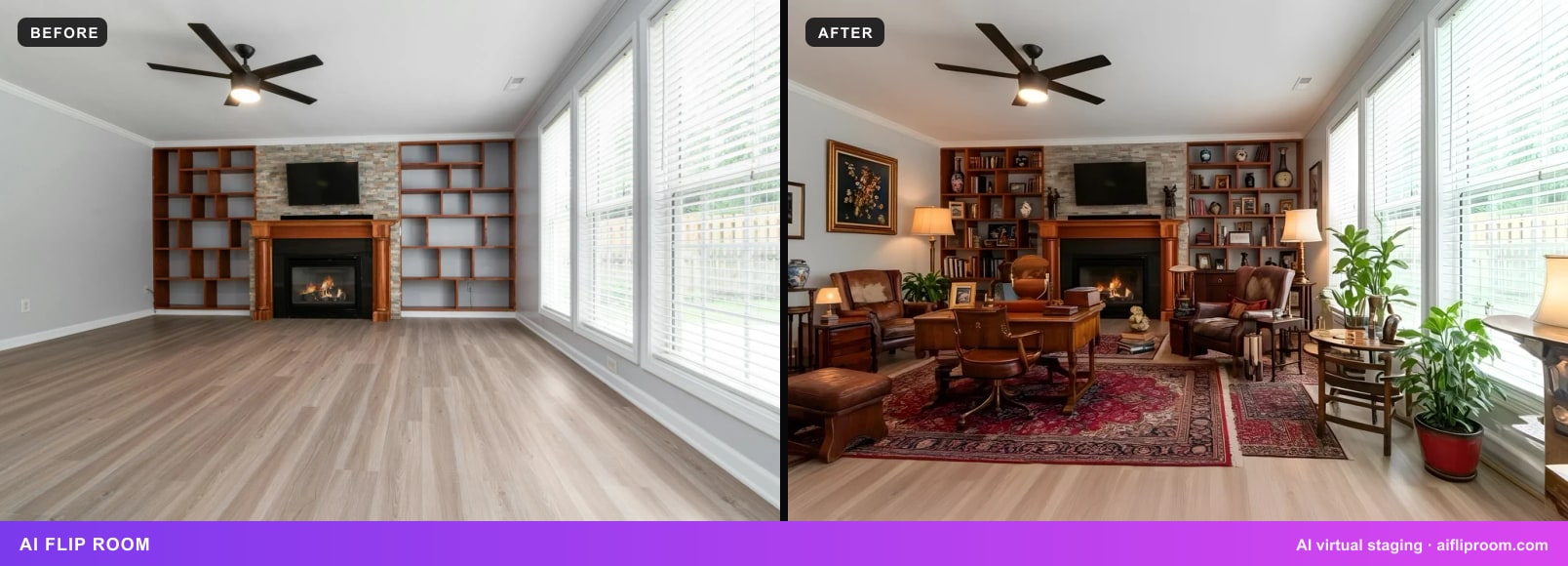
What Is Virtual Staging? The Complete Guide: How It Works, Cost, Rules, Examples
Virtual staging explained in plain language: how AI furnishes a photo of a real room, what it costs, what agents really think of it (NAR 2025), who it helps, the rules and how to spot good and bad staging.