Virtual Staging in Canada: Rules by Province and How It Works
AI Flip Room · 5 min read
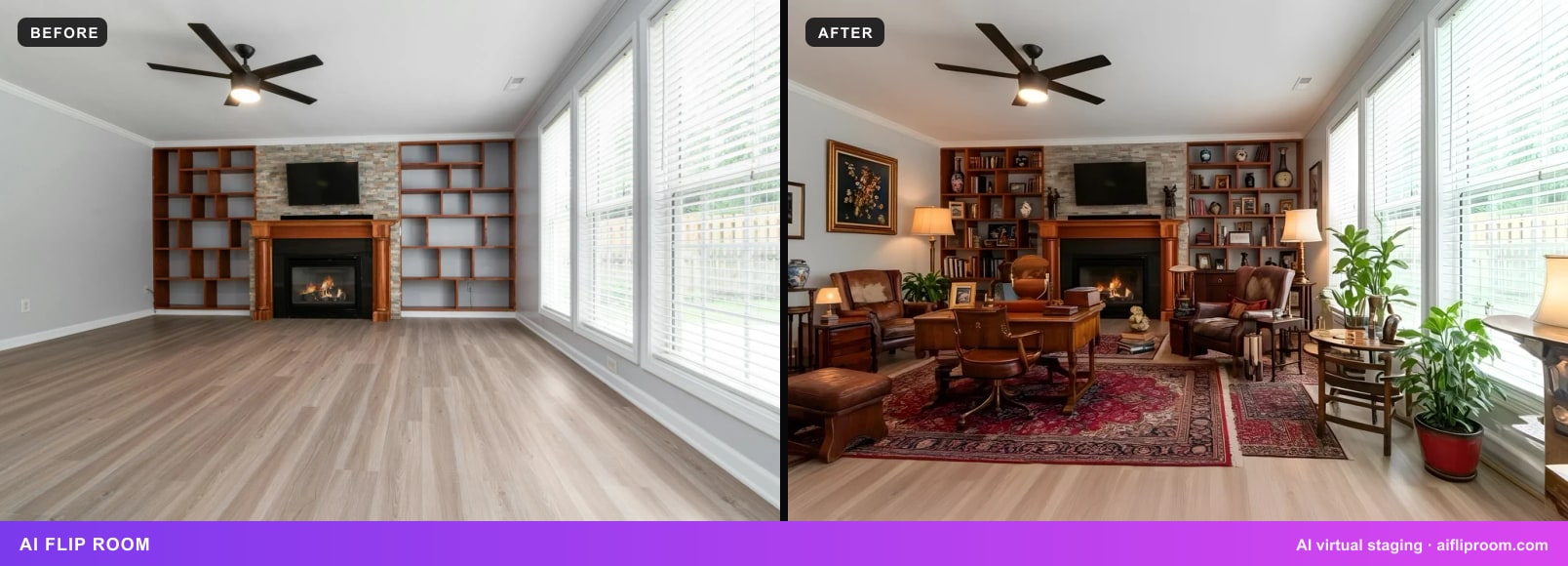
Virtual staging is legal in Canada and widely used, but there is no single Canadian rule for it. The rules sit with each province's real estate regulator and with the MLS® systems the local boards use, and they disagree on one practical point: where the label goes. In Alberta it goes in the public remarks; in Quebec, in French; in Ontario the MLS rulebook does not ask for one at all and tests accuracy instead.
We are based in Toronto, and this page pulls together the four provinces whose rules we have read in full — Ontario, British Columbia, Alberta and Quebec — with links to the article on each, plus what staging costs and how to do it honestly. It is not legal advice, and we make an AI staging tool, so weigh the parts about tools with that in mind.
Is virtual staging legal in Canada?
Yes, in every province whose rules we have read, as long as the photo is honest about the property. None of them bans the tool. What all of them ban, in different words, is an image that misrepresents what is for sale: Ontario's MLS rulebook bans altered images “that do not accurately depict the listed real estate”, Alberta's keeps “virtual enhancing” off the MLS® System, British Columbia's regulator says AI staging “may be okay” if altered photos are labelled, and Quebec's says never to use AI to hide defects or alter the structure.
What does each province require?
| Province | Who sets the rule | What it says | The label |
|---|---|---|---|
| Ontario | The PropTx MLS® Rules, which govern most of Ontario's MLS listings since 2 December 2024; above them, RECO's Code of Ethics | Rule 5.01 bans altered images — AI-made or not, digital staging included — that do not accurately depict the property; people in photos are banned outright (5.01(d)) | No label rule for staged photos; no pairing rule — Ontario rules |
| British Columbia | BCFSA's Artificial Intelligence Guideline (22 February 2024), interpreting Rules section 41 on misleading advertising | Staging with AI “may be okay” if altered photos and videos are labelled; informed consent before client information goes into an AI tool | Label altered photos — guidance, not a rule — BC rules |
| Alberta | The provincial MLS® rules shared by ten boards, Calgary and Edmonton included; above them, RECA's rules | Staging adds “unattached goods (chattels) of realistic size”; virtual enhancing of walls or windows is not permitted (2.04 h) | A line in the public remarks (2.04 g); text on the photo is risky (2.04 b) — Alberta rules |
| Quebec | The OACIQ advertising guideline, section 6.3.1 (updated 17 June 2026), interpreting section 112 of the brokerage Regulation | Virtual staging named and allowed; never alter the structure, hide defects or misrepresent the property; keep the originals on file | A clear, visible statement such as “Image generated by artificial intelligence”, in French — Quebec rules |
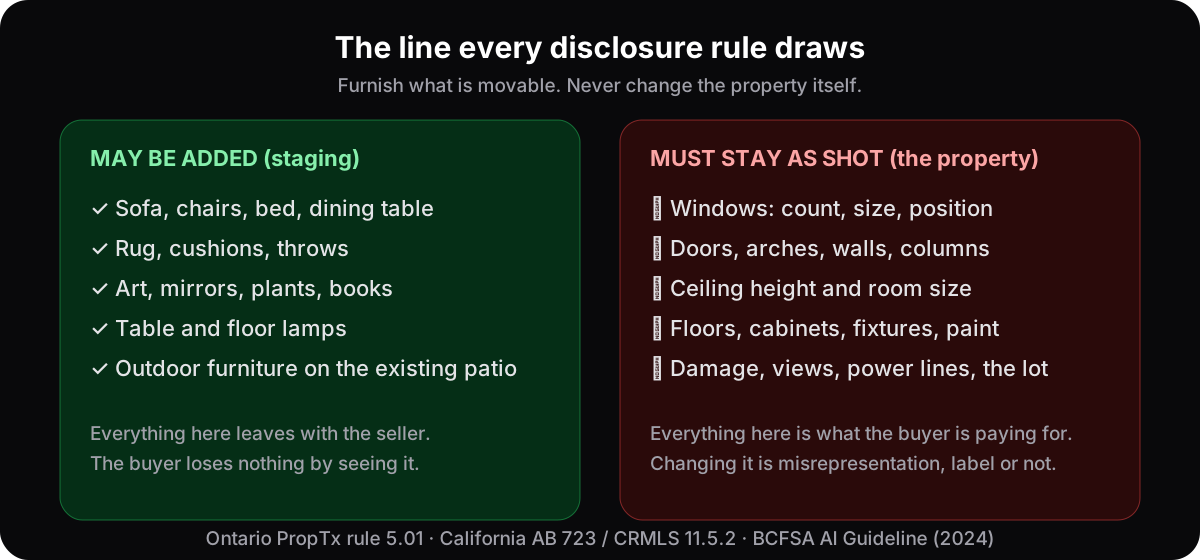
Two things stand out. First, no Canadian rulebook we read requires the unstaged original beside the staged photo, which California and upstate New York do; keep it anyway. Second, only Alberta's rulebook defines virtual staging, and its definition is the clearest statement of the line every province draws.
What about the rest of Canada?
We have read the rules of four provinces. For Saskatchewan, Manitoba, the Atlantic provinces and the territories we have not, and we would rather say so than guess. What we can say is that every rulebook we have read, in Canada and in the United States, bans misleading advertising in some form. Until you have checked the rules of your board and your regulator, do what the four provinces agree on: furniture and décor only, a clear label, and the original kept on file. The disclosure guide compares all nine jurisdictions we cover, Canadian and American.
Do you need a French label in Quebec?
How much does virtual staging cost in Canada?
The most-cited survey of physical staging is American: the National Association of Realtors' 2025 survey put the median cost of a professional staging service at $1,500, and $500 when the agent staged the home, plus furniture rental while it is listed. Treat that as a benchmark, not a Canadian price list.
Hand-done virtual staging, where a person edits each photo, is commonly quoted at $10 to $75 or more per photo. AI virtual staging costs less again. At AI Flip Room every account gets three free renders for life, with no credit card; a one-time Room Pack is 20 renders for $9, with no subscription; and Pro is $46 a month, or $39 a month billed annually, for people who stage every week. Our prices are in US dollars, so a Canadian card shows the converted amount on the statement. The full comparison is in what virtual staging costs, and current plans are on the pricing page.
How do you stage a Canadian listing photo honestly?
How to stage a Canadian listing photo honestly
- 1Shoot the room as it isLevel camera at chest height, daylight, lamps off, the normal 1x lens. Staging furnishes the photo it is given; it cannot fix a tilted or stretched one. See how to photograph a room for staging.
- 2Add only what leaves with the sellerFurniture, rugs, art, lamps and plants, at a realistic size for the room. Nothing that conveys with the house: no new flooring, no wall moved, no window enlarged, no stain painted over.
- 3Check every render against the originalWindows, doors, openings, ceiling, floor, fixtures, the view and where the camera stood. If any of them changed, discard the render; a label does not fix it.
- 4Label it the way your province asksA line in the public remarks in Alberta. A clear, visible statement in French in Quebec. A label on altered photos in British Columbia. In Ontario the rulebook asks for accuracy rather than a label, and a label does no harm.
- 5Keep the originalOn file always, and next to the staged photo whenever the listing allows it. It is what a buyer, a board or a regulator will ask for.
- 6Get consent for your clients' photosBritish Columbia's regulator asks for informed consent before a client's information goes into an AI tool, and to read the provider's privacy disclosures. Our privacy policy lists the providers that process photos; they are primarily based in the United States.
What should you stage first in a Canadian home?
The rooms that make the emotional case: the main living space, the primary bedroom and the kitchen or dining area. Two kinds of space deserve a mention.
Condos. In a small condo the whole point of staging is scale: a buyer cannot tell from an empty photo whether the living area takes a sofa and a dining table. Stage the open living and dining space and the bedroom, and keep the furniture at a realistic size. Undersized furniture makes a room look bigger than it is, which is exactly what Alberta's “of realistic size” is there to prevent.
Finished basements. An empty basement photographs as storage. Staged as a family room, a home office or a guest room, it reads as living space — which is what the seller is selling. The same line applies: furniture yes, new windows or a raised ceiling no.
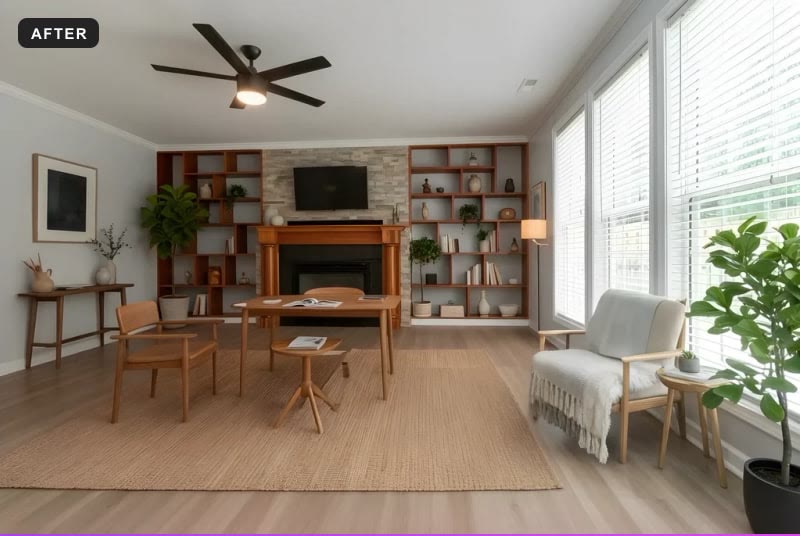
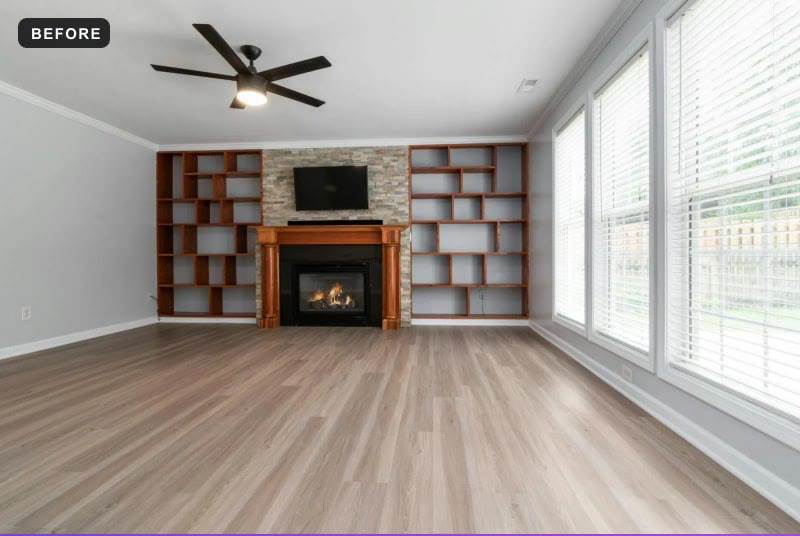
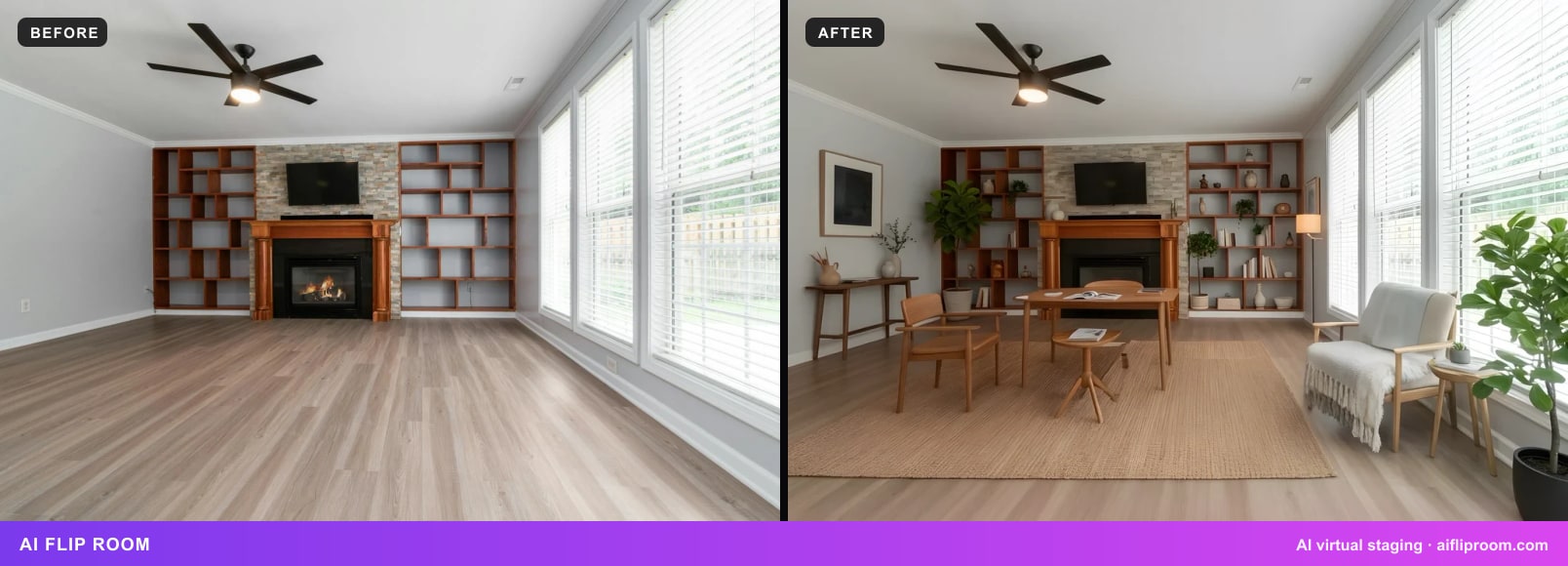
For the room-by-room order and the photo checklist, see how to sell an empty house faster. If you want to see your own room first, three free renders are enough to compare the original and the staged version side by side.
Questions people ask about virtual staging in Canada
Is virtual staging legal in Canada?+
Yes, in every province whose rules we have read — Ontario, British Columbia, Alberta and Quebec — provided the image is honest about the property. What none of them allows is changing the property itself: walls, windows, floors, fixtures, damage or the view. The rules sit with each province's regulator and with the MLS systems the local boards use, so check the one your listing is on.
Do I have to label virtually staged photos in Ontario?+
The PropTx MLS® Rules, which govern most of Ontario's MLS listings, have no label rule for staged photos. Rule 5.01 bans altered images, AI-made or not and digital staging included, that “do not accurately depict the listed real estate”. Outside the MLS, RECO's Code of Ethics forbids misleading advertising. A label costs nothing and shows a buyer what they are looking at, so label anyway. Details: Ontario rules.
Can I put “Virtually staged” on the photo in Alberta?+
Possibly not. Alberta's MLS® rule 2.04 b bars logos, advertising and any message other than “Sample Photo” on listing photos, and whether a plain staging label passes is not settled in the text. The rule that asks for the disclosure, 2.04 g, puts it in the public remarks, so put it there. Details: Alberta rules.
Does a virtually staged listing in Quebec need a French label?+
Very likely. The OACIQ guideline asks for a clear and visible statement such as « Image générée par l'intelligence artificielle », and commercial advertising in Quebec falls under the Charter of the French language. The guideline does not say an English label is insufficient; that is our reading. Brokers must also keep the original photos on file.
How much does virtual staging cost in Canada?+
Hand-done virtual staging is commonly quoted at $10 to $75 or more per photo. At AI Flip Room the first three renders are free for life, a one-time Room Pack is 20 renders for $9, and Pro is $46 a month, or $39 a month billed annually. Our prices are in US dollars, so a Canadian card shows the converted amount. The most-cited survey of physical staging costs is American: NAR's 2025 median was $1,500 with a professional service.
See it on your own room
Upload a photo and watch AI restage your space in 15–60 seconds, depending on how much detail it has — free to try, no credit card.
Try AI Flip Room freeRelated reading
Ontario Virtual Staging Rules: PropTx MLS Rule 5.01, Quoted
Is virtual staging banned on the Ontario MLS? We read the PropTx rulebook: rule 5.01 quoted, the missing "one unstaged photo" rule, and where the line is.
BC Virtual Staging Rules: What BCFSA's AI Guideline Says
BCFSA's 2024 AI guideline, quoted: virtual staging may be okay if labelled, which Rules sections apply, and the client-data consent point most agents miss.
Quebec Virtual Staging Rules: OACIQ's AI Label, Quoted in English and French
Is virtual staging allowed in Quebec? OACIQ guideline 6.3.1 names it, asks for a visible AI label and kept originals. Quoted in English and French.