Is Virtual Staging Worth It? When Yes, When No, and the Math
AI Flip Room · 6 min read
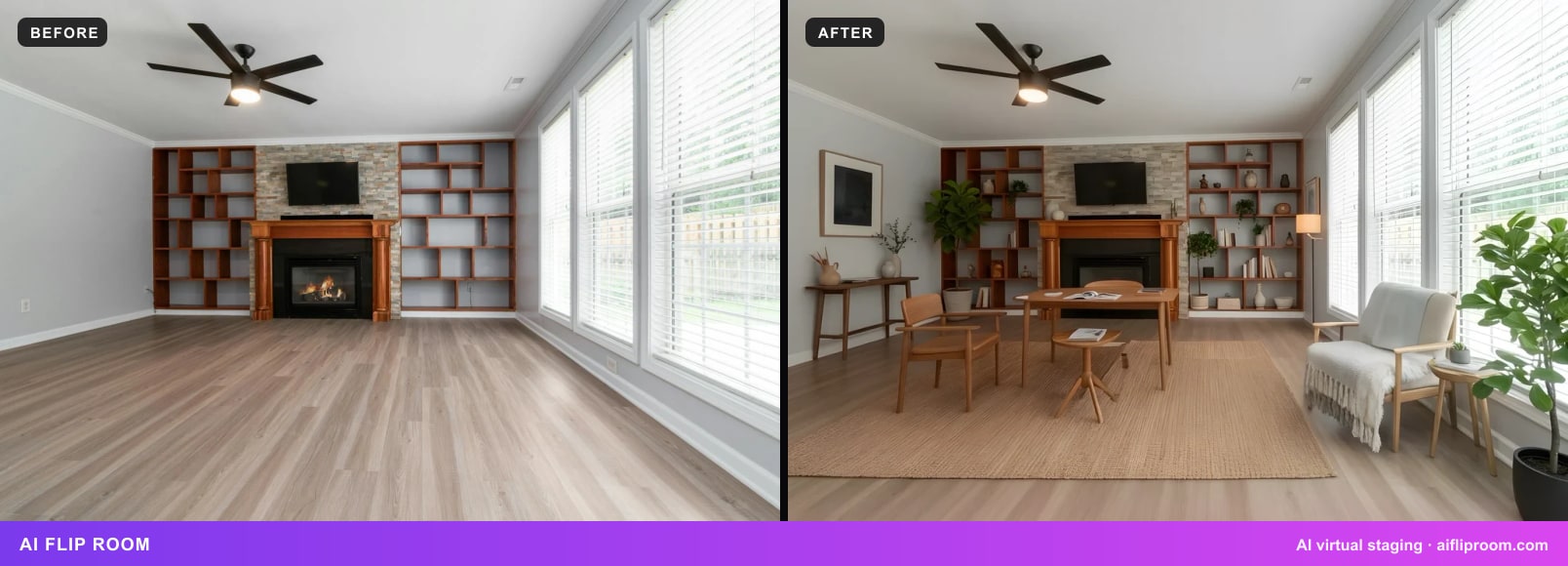
Most people who ask whether virtual staging is worth it want a yes or a no. The useful answer depends on one thing: whether the photo is what is holding the listing back. Where it is, staging is the cheapest fix there is. Where it is not, no amount of furniture in a picture will help, and a render can even cost you a buyer's trust.
This guide gives the verdict by situation, a break-even test you can run with your own numbers, and the costs that never appear on a price tag. Every figure says where it comes from. We make an AI staging tool, so weigh the parts about tools with that in mind.
Is virtual staging worth it?
Yes, when the photo is the problem: a vacant home, a room buyers cannot read, dated furniture that hides a good room, a bare patio. Usually no, when the home is furnished and already photographs well. Never as a fix for price, condition or location. With AI renders the price is rarely the obstacle; the real costs are a usable photo, honest disclosure and checking every render.
That is the short version. The rest of this article is how to tell which side of the line your listing is on.
When is virtual staging worth it, and when is it not?
| Your situation | Worth it? | Why |
|---|---|---|
| Vacant home for sale | Yes — the best case for it | Empty rooms give buyers no scale and read smaller and colder than they are; a staged photo answers both |
| One or two empty rooms in a lived-in home | Yes, for those rooms | The spare bedroom or the emptied office is the photo buyers skip |
| Furnished, tidy, photographs well | Usually no | A render adds a label and the question "what did they change?" |
| Furnished, but the furniture works against the room | Often yes | A heavy or dated set can hide a room's size; show it as a buyer would use it, with the original alongside |
| Rental between tenants | Yes, if the unit is empty | Renters scroll photos the way buyers do, and every vacant week is rent you are not collecting |
| High-end and vacant, where the walk-through decides | Both | Renders for the gallery; physical staging may still earn its cost at the showing |
| The problem is price, condition or location | No | Staging changes the photo, not the price or the roof; a render that hides a defect is a misleading photo |
| Planning a renovation of your own home | Yes | The cheapest way to compare directions before you spend — see your room before you renovate |
| A bare patio or deck | Yes — the cheapest win | Outdoor furniture on paving that already exists — see outdoor virtual staging ideas |
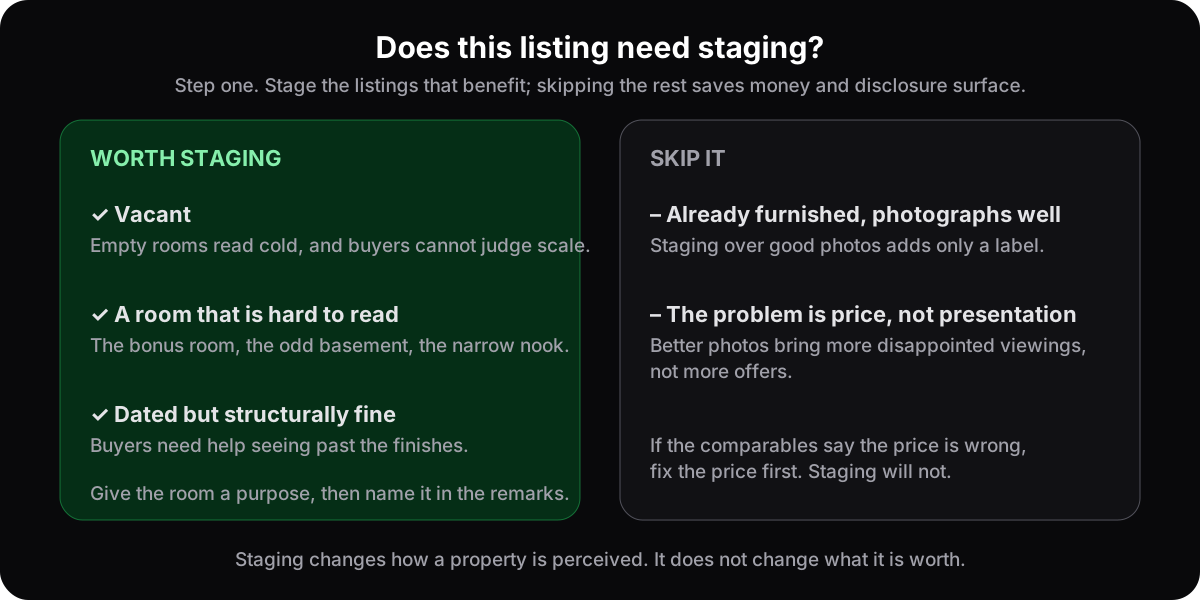
The pattern is the same in every row. Staging is worth it where it answers a question the buyer cannot answer from the photo: how big, what for, how it could feel. It is wasted where the photo already answers it, and harmful where the honest answer is one the seller would rather not give.
Does virtual staging pay for itself?
Nobody can promise that it does, and we will not. The best-known survey of staging, the National Association of Realtors' 2025 Profile of Home Staging, measured physical staging: real furniture, delivered and rented. Nobody has measured AI staging at that scale, and a days-on-market figure for it that arrives without a named source is marketing.
What you can do is turn the question around. Instead of asking how much staging will earn, ask how little it has to do to pay for itself. That takes two numbers you already know.
The break-even test, with your numbers
- 1Price the stagingCount the rooms you would stage — three to five for most homes — and price them the way you would buy them. With us: 3 renders free to decide, then a one-time Room Pack of 20 renders for $9 for a listing-ready gallery, or Pro if you stage every week. For physical staging, NAR's 2025 medians are $1,500 with a service and $500 when the agent stages, plus furniture rental for as long as the home is listed.
- 2Price one week on the marketAdd up what the property costs you each month while it sits: mortgage interest, property tax, insurance, utilities and upkeep — or, for a landlord, the rent you are not collecting. Divide by four and a third.
- 3Divide the first by the secondThe result is the share of one week the staging has to save to pay for itself. For AI renders it is a small fraction of a single day. For physical staging it can be weeks.
- 4Then ask the question that actually decides itIs there anything in the photo you would be tempted to hide? If yes, staging is the wrong tool at any price. If no, the arithmetic has already answered.
An example, with made-up inputs so the arithmetic is easy to follow. Say carrying the house costs $2,400 a month — an illustration, not an average; use your own figure. That is about $80 a day. A staging service at NAR's median of $1,500 has to save about 19 days on the market to pay for itself, before the furniture rental. A $9 Room Pack has to save under three hours. Three free renders do not have to save anything at all.
That is why, for AI renders, the money is rarely what decides. The bar is so low that the only questions left are not about money: is the photo good enough to stage, and is there anything in it you would be tempted to hide?
What does virtual staging cost besides money?
When is virtual staging a waste of money?
When the photo was never the problem. A furnished, tidy home that photographs well gains little from a render, and it gains a label and the question of what was changed. Leave those rooms as they are and spend the effort on light and angles.
When the problem is the price. An overpriced listing sits whatever its photos look like; staging may win the click and lose the buyer at the number. The same goes for condition and location: a render shows a possibility, and the showing delivers the real house.
When the render would have to hide something. Painting over a water stain, a crack or a tired kitchen is not staging; it is a misleading photo, and the rulebooks we have read treat changing the property itself far more strictly than adding furniture. The disclosure guide explains where that line sits.
When the room does not need help. Hallways, bathrooms and laundry rooms read fine as clean, bright photos. Buyers decide on the first few photos, so the renders belong there.
Is virtual staging worth it compared with physical staging?
They do different jobs. Virtual staging furnishes the photo, which is where buyers decide whether to book a showing. Physical staging furnishes the room, which is where they decide whether to make an offer — at a median of $1,500 for a staging service in NAR's 2025 survey, plus furniture rental while the home is listed.
For most listings the photo is the bottleneck, and a render solves it for a fraction of the cost. For a high-end vacant home where the walk-through is the sale, the furnished room can still be worth paying for; the sensible split there is renders for the gallery and real furniture only in the rooms where the walk-through counts. The side-by-side numbers are in what virtual staging costs, and what staging can and cannot do for a sale is in does virtual staging help sell homes.
How can you tell whether it is worth it for your listing?
Try it on the photo that matters, before you spend anything. Within a few minutes you will know whether the staged version is the photo you would lead with.
Find out on your own photo before you spend anything
- 1Pick the room that will lead the galleryUsually the main living space. If staging will not change your lead photo, it will not change much else.
- 2Shoot it level, in daylight, with the 1x lensLamps off, phone at chest height, the whole room in the frame. The details are in how to photograph a room for staging.
- 3Run three free rendersEvery account gets three free renders for life, with no credit card. Try two or three styles on that one photo; each render takes 15–60 seconds.
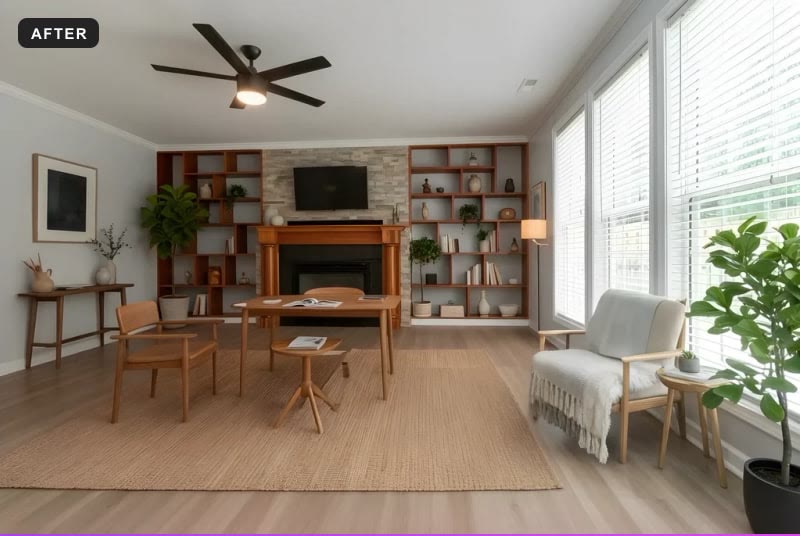
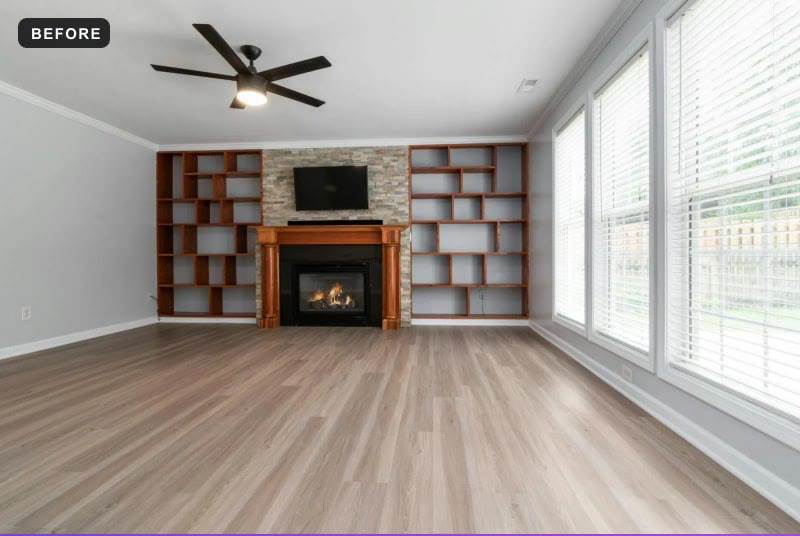
- 4Put each render next to the originalCheck the boring parts first: windows, doors, openings, ceiling, floor and where the camera stood. Only the furniture should be new.
- 5Decide with the picture in handIf the staged photo is the one you would lead with, stage the rest: a $9 Room Pack covers 20 renders with no subscription, and Pro is for people who stage every week. Free renders carry a tiled watermark — fine for deciding, not for a listing.
If the answer is yes, stage the rooms that lead the gallery, label every staged photo and keep the originals beside them. If the answer is no, you have lost a few minutes and learned that your listing's problem lies somewhere else.
Questions people ask about whether staging is worth it
Is virtual staging worth it for a small or inexpensive home?+
Often more than for an expensive one. A staging bill depends on the rooms and the months, not on the asking price, so on a modest home a physical staging service takes a bigger share of the proceeds, while an AI render costs the same cents on any home. Small rooms also gain the most from a scale reference: an empty small bedroom is exactly the room buyers assume will not take a bed.
Is virtual staging worth it for a rental?+
Usually, when the unit is empty between tenants. Renters scroll photos the way buyers do, and every vacant week costs the rent you are not collecting. Label the staged photo and keep the original. In California this becomes law for rentals on 1 January 2027: an ad with an altered photo must disclose it on or next to the image — the California article has the details.
Should I stage every room?+
No. Stage the rooms that make the emotional case — the main living space, the primary bedroom, the kitchen or dining area, one flexible room and any bare outdoor space — and leave hallways, bathrooms and laundry as clean, bright photos. For most homes that is three to five renders, and a $9 Room Pack of 20 leaves room for a second style on each. The room-by-room order is in how to sell an empty house faster.
Is virtual staging better than leaving the rooms empty?+
For the photos, usually. An empty room gives a buyer no sense of scale and no reason to stop scrolling. The empty photo still belongs in the listing next to the staged one, so buyers can see what is real, and the showing will be the empty room either way, which is why the staged photo has to be honest.
Can virtual staging backfire?+
Yes, in two ways: a render that changes the property — a window moved, a doorway narrowed, a crack painted over — and a missing label. Either can turn a showing into a buyer who feels misled and, where rules exist, into a complaint. Both are avoidable: only the furniture changes, every render is checked against the original, and the label goes where your MLS wants it.
See it on your own room
Upload a photo and watch AI restage your space in 15–60 seconds, depending on how much detail it has — free to try, no credit card.
Try AI Flip Room freeRelated reading
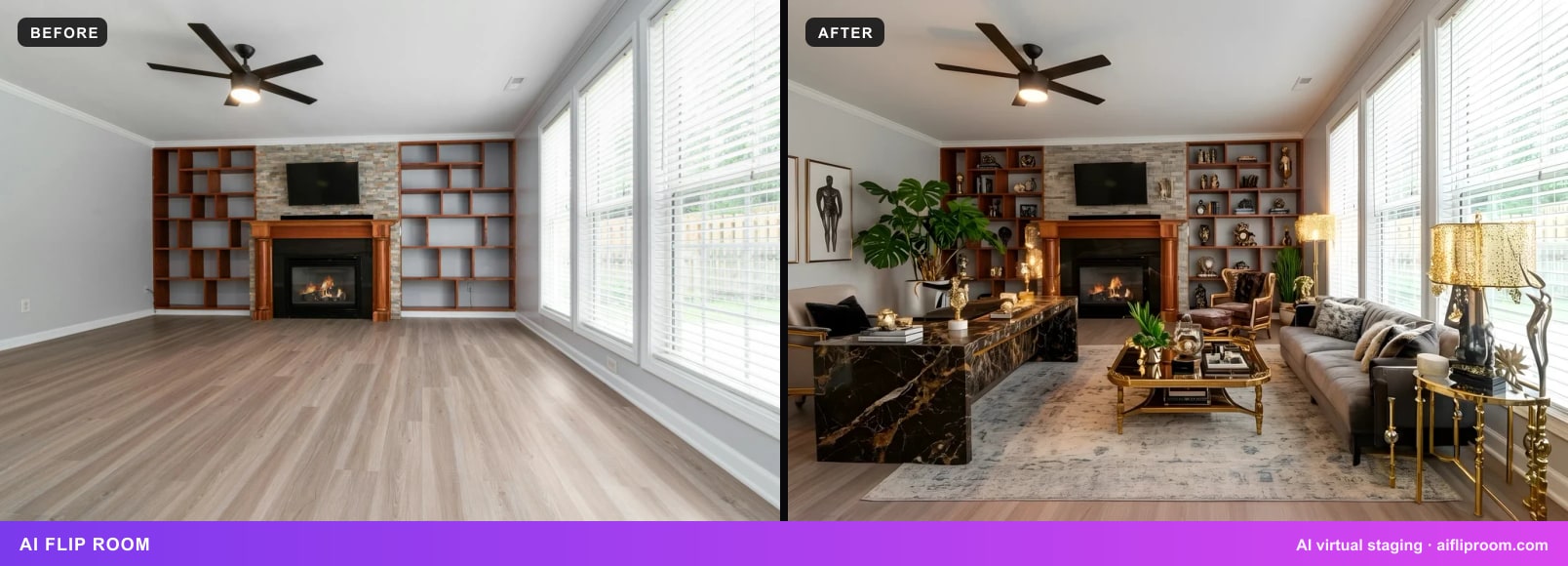
Virtual Staging Cost in 2026: What You Will Really Pay
Physical vs hand-done virtual staging ($10–75 per photo) vs AI (free to a few dollars). Real 2026 ranges, what drives price, and which fits your listing.
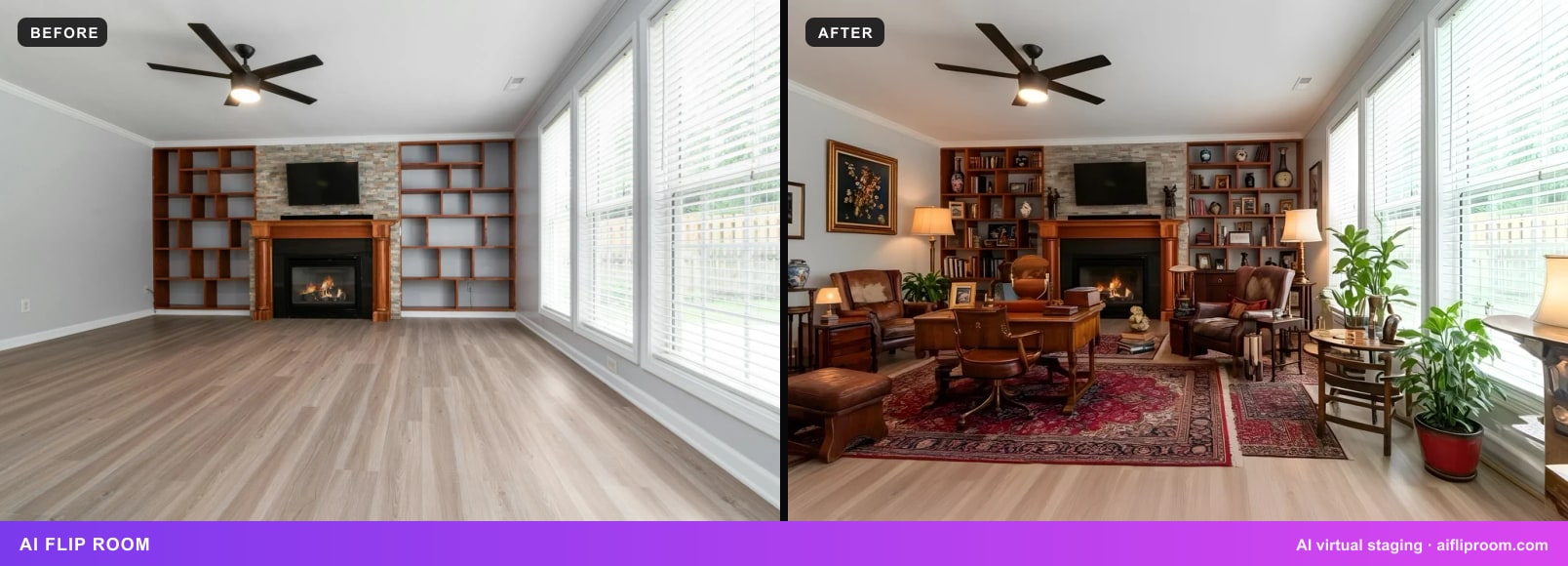
Does Virtual Staging Help Sell Homes? An Honest Answer
Virtual staging changes the photo, not the price. Where it helps, where it is wasted, what NAR's 2025 survey actually measured, and what can go wrong.
How to Sell an Empty House Faster With Virtual Staging
Why vacant listings sit longer, which 5 rooms to stage first, how to shoot them, and how to virtually stage an empty house honestly — a 6-step playbook.