Which Staging Style for Which Listing? Matching Style to Buyer, Price and Region
AI Flip Room · 11 min read
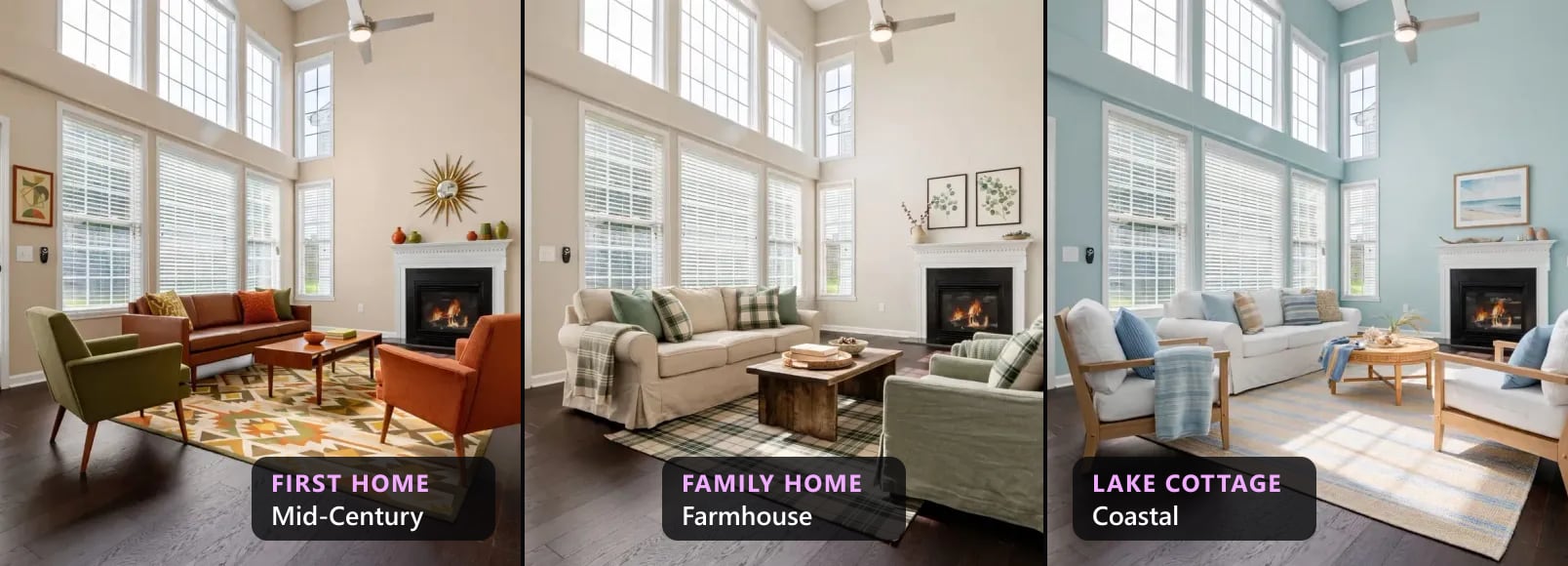
The best virtual staging style for a listing is the one its most likely buyer can picture living in. No style sells faster everywhere, and we know of no study that compares one staging style with another, so this guide gives reasons, not percentages. When you do not know who will buy, a neutral style is the safe default: Transitional, Modern or Scandinavian. When you do know, go more specific.
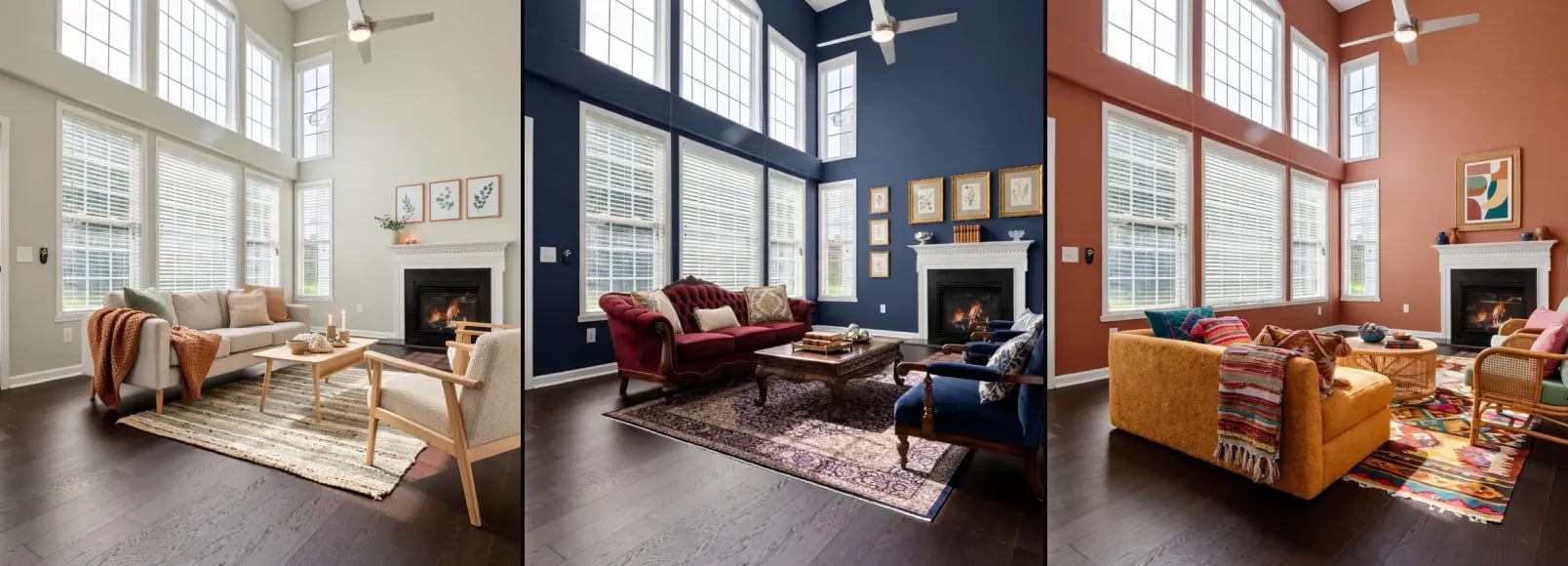
To make the choice visible, we staged one empty living room for six different buyers: a first home, a family, a luxury buyer, a cottage buyer, a downsizer and a renter. Then the same idea by price band and by region. Every staged frame of that room is our own render of one stock photograph, checked against the original, so the only thing that changes from picture to picture is the style. The same room in ten styles side by side is in one empty living room, ten styles.
Start with the buyer, not the style
Most staging goes wrong the same way: the room gets furnished for the person doing the staging. The agent who loves dark green velvet, the seller who wants a magazine cover, the stager with a signature look. None of them is buying the house.
The buyer has changed, too. In the US, the typical first-time buyer is now 40 years old, the typical repeat buyer is 62, and only 24% of buyers have children under 18 living at home, an all-time low. Those are the National Association of Realtors' figures from its 2025 Profile of Home Buyers and Sellers, a survey of 6,103 recent buyers. The young family that every suburban house used to be staged for is one buyer among several, and often not the most likely one.
Staging earns its keep by helping a buyer imagine living there. In NAR's 2025 Profile of Home Staging, 83% of buyers' agents said staging made it easier for a buyer to picture the property as their future home, and the living room was the most commonly staged room (91%). The style decides whose future home they picture.
Three questions settle most choices:
- Who is most likely to buy? Age, household, where they are moving from. Recent sales nearby and the people who came to your last open house tell you more than any national survey.
- What price band is it in? The furniture in the photo should look like what a buyer at that price would own, or one step better.
- Where is it, and what is it? A lake cottage, a downtown loft and an adobe house each come with a look the buyer already expects. Work with the architecture, not against it.
The room we staged for every buyer
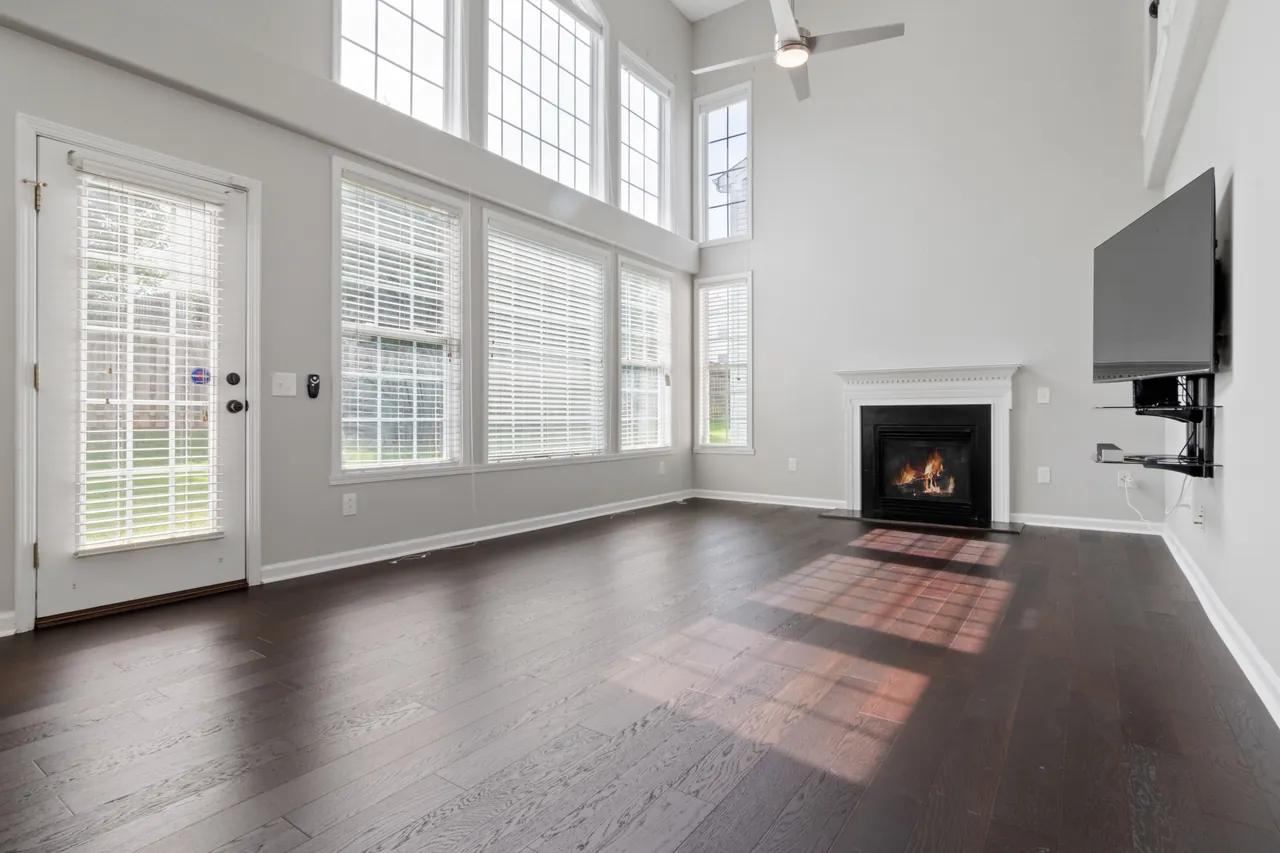
A two-storey living room in a suburban house, completely empty: a glass door with blinds, a wall of windows with a row of upper windows above it, a gas fireplace with a white mantel, a TV on a wall bracket and a ceiling fan. It is a stock photograph by Curtis Adams on Pexels, and every staged version of it below is our own render of that photo, not retouched.
First-time buyers and young couples
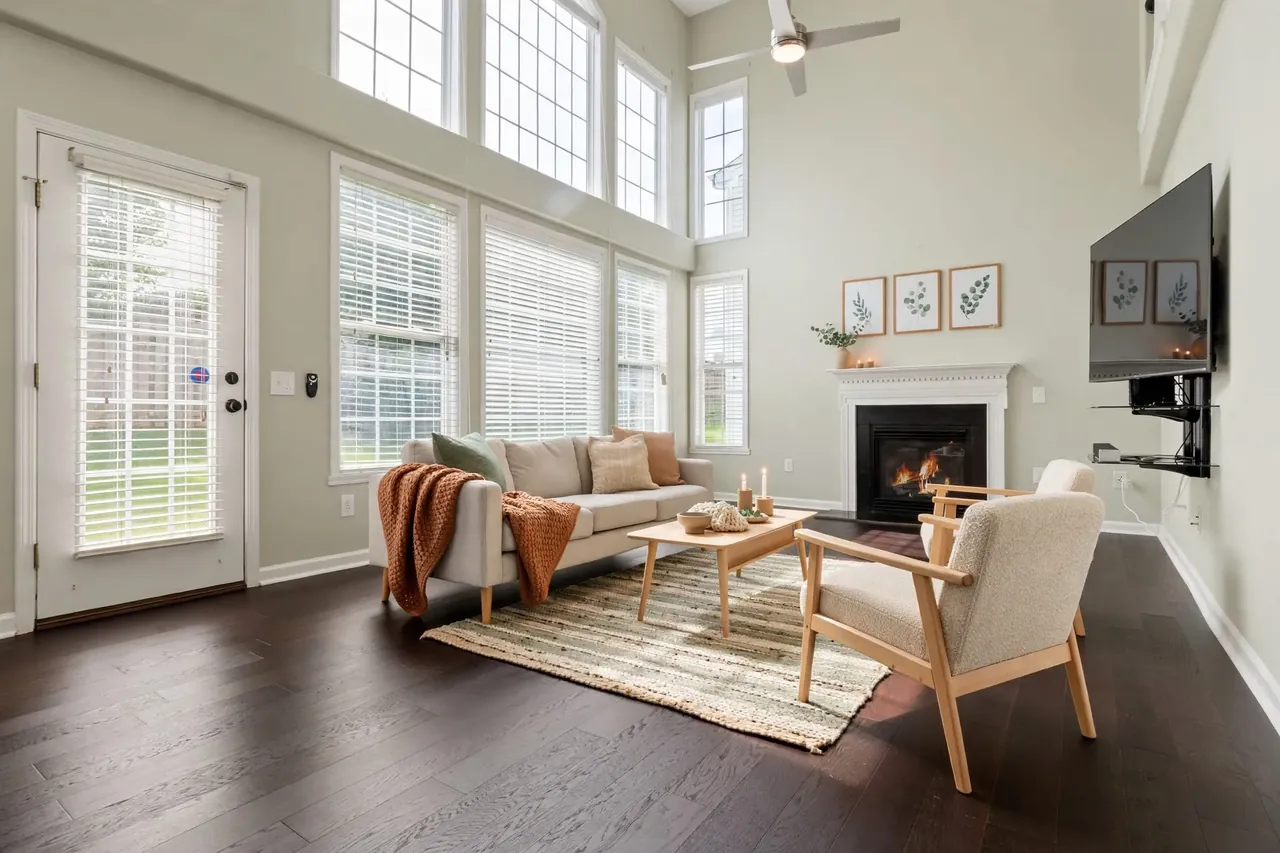
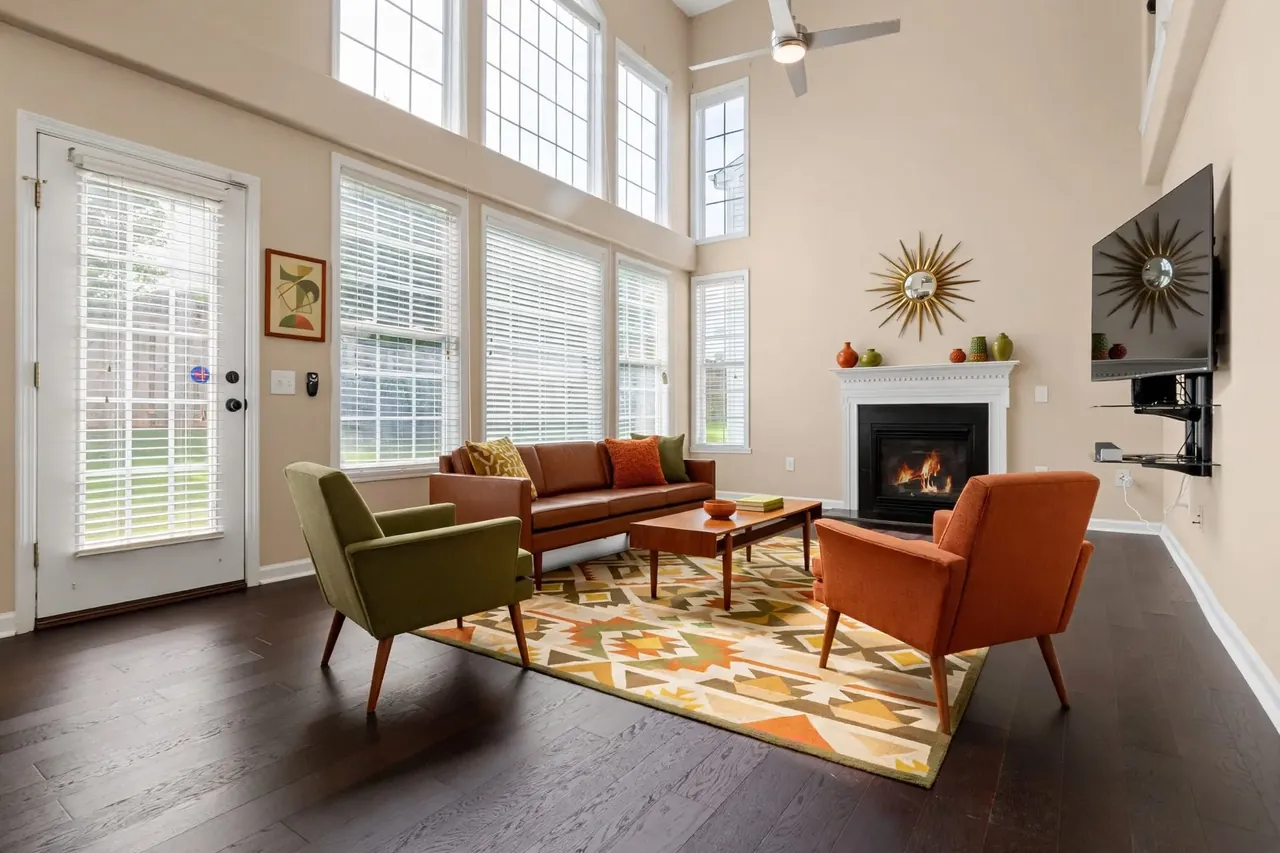
Styles that fit: Scandinavian, Mid-Century, Modern.
First-time buyers are usually stretching to the top of their budget, often for a condo, a townhouse or a smaller house with modest rooms. They want to see a home that already works: bright, uncluttered, easy to keep and furnished with things they could plausibly own.
- Scandinavian is the safest choice. Pale wood, light walls and soft textiles make a small or north-facing room read brighter and larger, and nothing in it looks expensive to copy.
- Mid-Century suits design-aware buyers and the houses built in that era: ranches, split-levels, older condos. Tapered legs, teak and warm colour give a plain room personality without making it formal.
- Modern is the neutral answer for a new-build condo: low profiles, a tight palette and almost nothing on the surfaces.
Avoid: heavy carved furniture, formal matching sets, and a room that looks three price bands above the buyer's own sofa. A first home staged like a showroom reads as somebody else's home.
Families with children
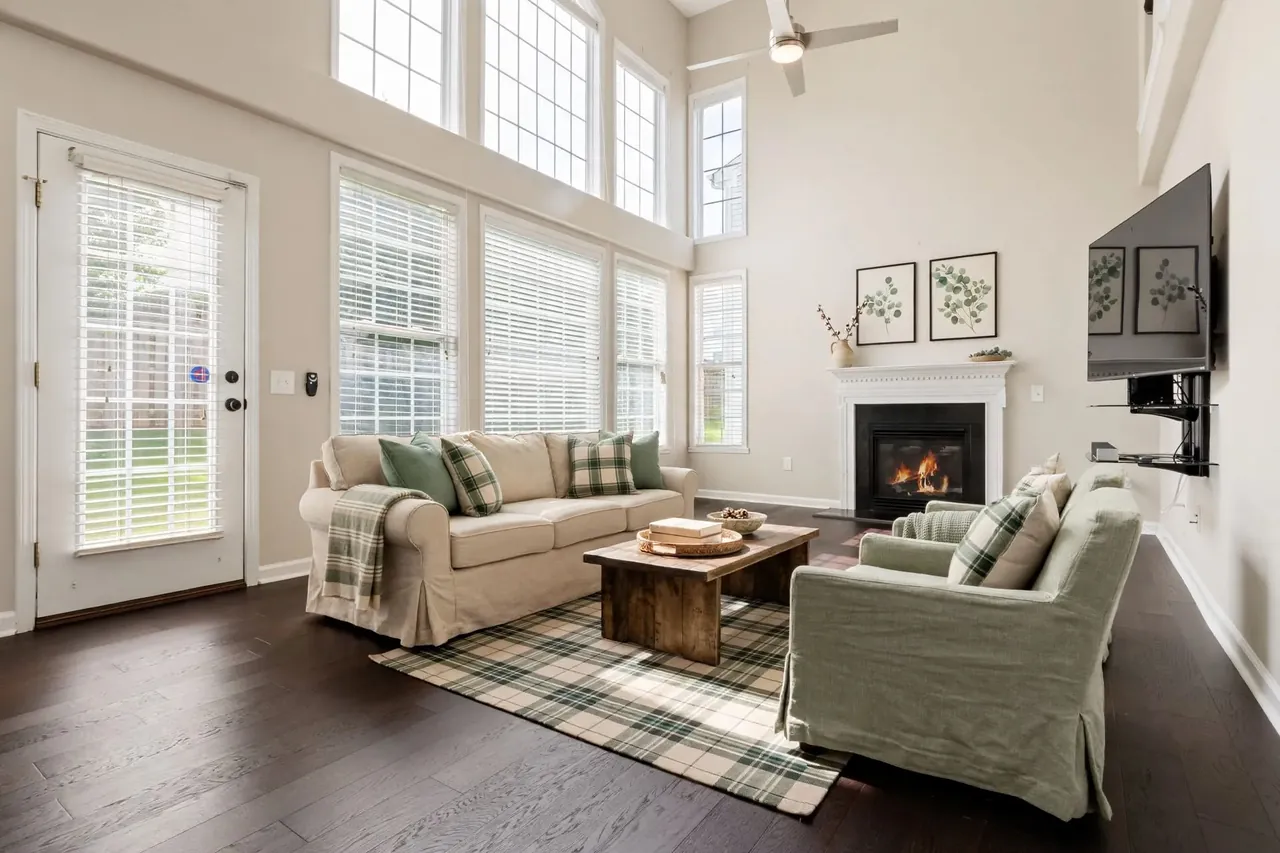
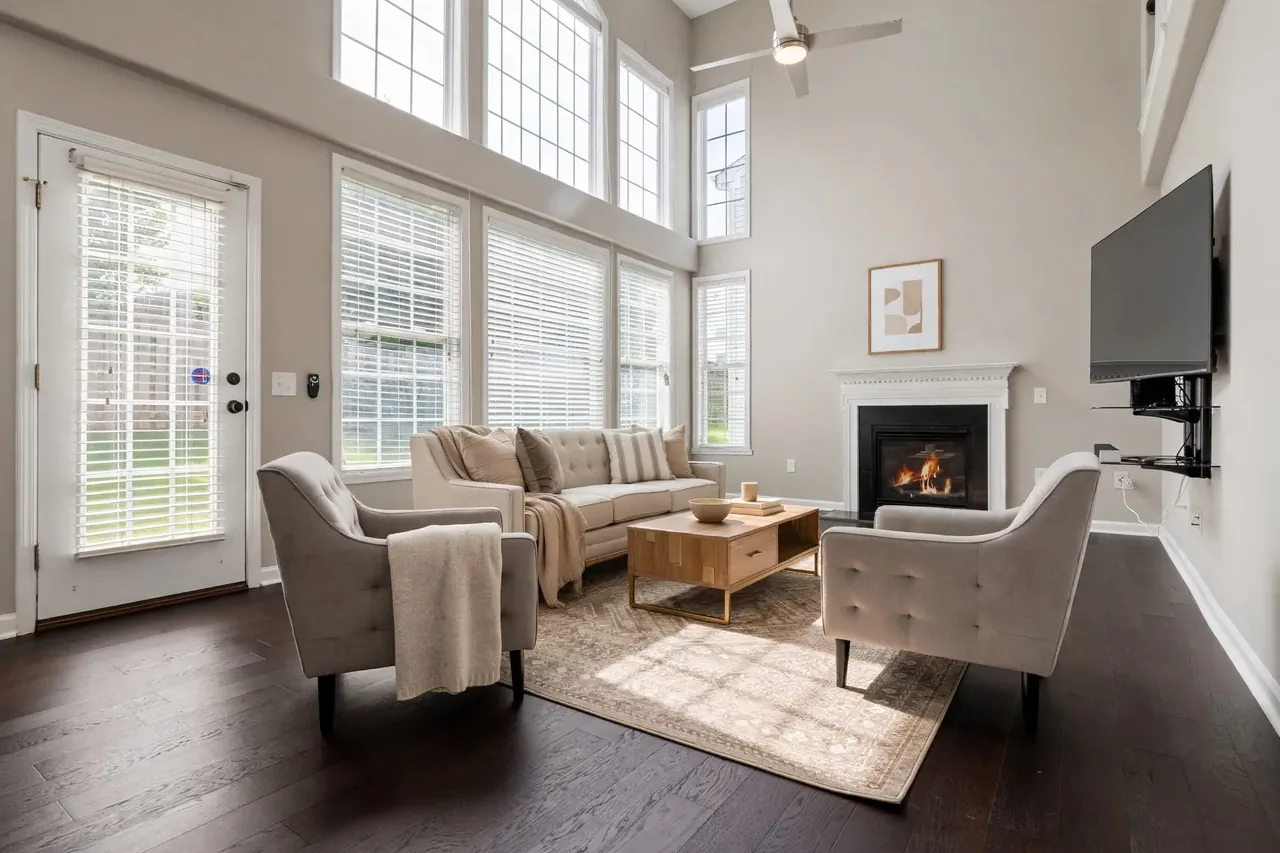
Styles that fit: Transitional, Farmhouse, Modern Farmhouse.
Families buy for function first: enough bedrooms, a table everyone fits around, a living room that survives a Saturday. The staging should answer those questions at a glance and look like it could cope with real life.
- Transitional is the broadest default of all: classic shapes in calm colours, and the style least likely to put anyone off.
- Farmhouse says comfort and weekends at home: slipcovers, linen, sturdy wood and a rug under everything. It suits suburban and rural houses, and a real fireplace like this one.
- Modern Farmhouse is the cleaner version for newer builds: white and black, warm wood and less pattern. The modern farmhouse guide has the details.
Show seating for the whole household, a rug that could be a play area, and a full-size dining table wherever the room allows one. Do not turn every spare room into a nursery: only about a quarter of US buyers have children under 18 at home, so a flexible guest room or home office speaks to more of them.
Luxury listings
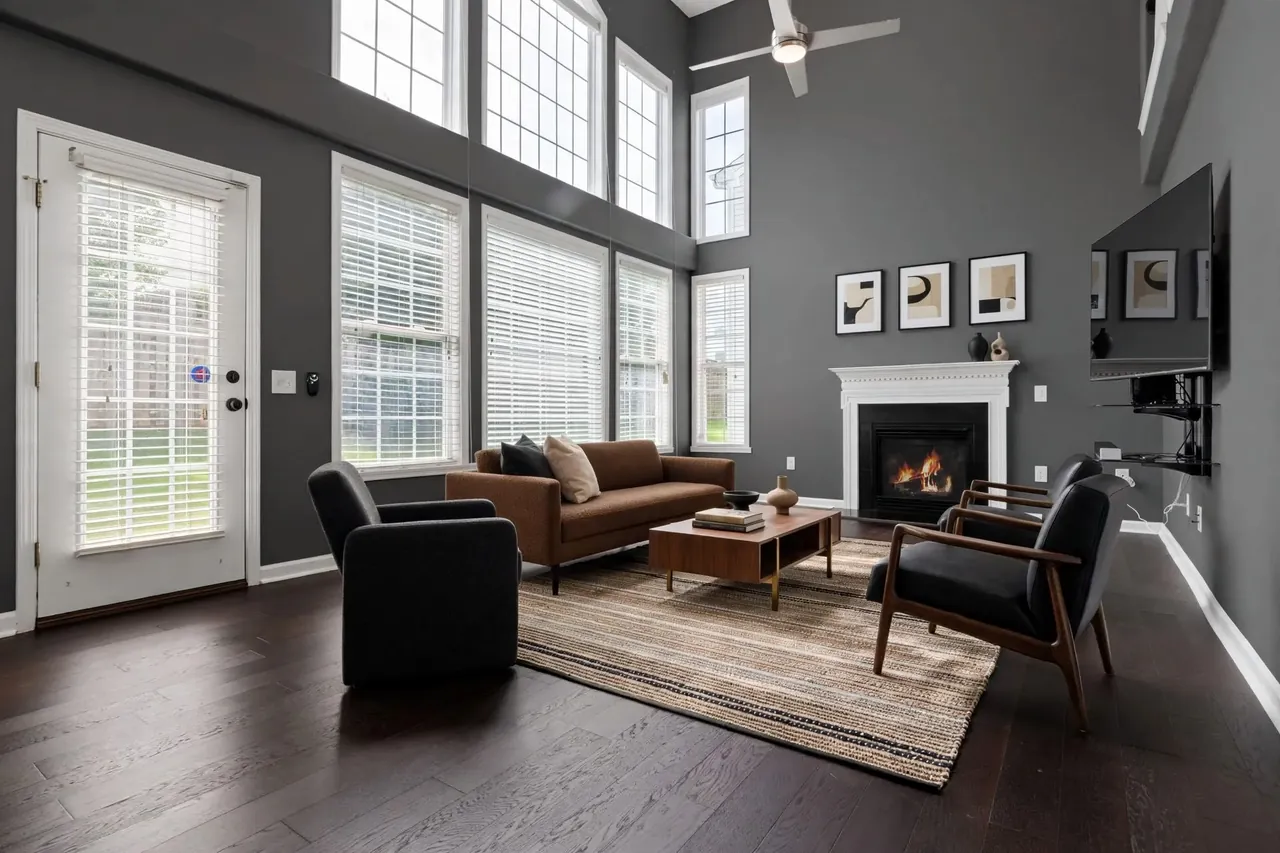
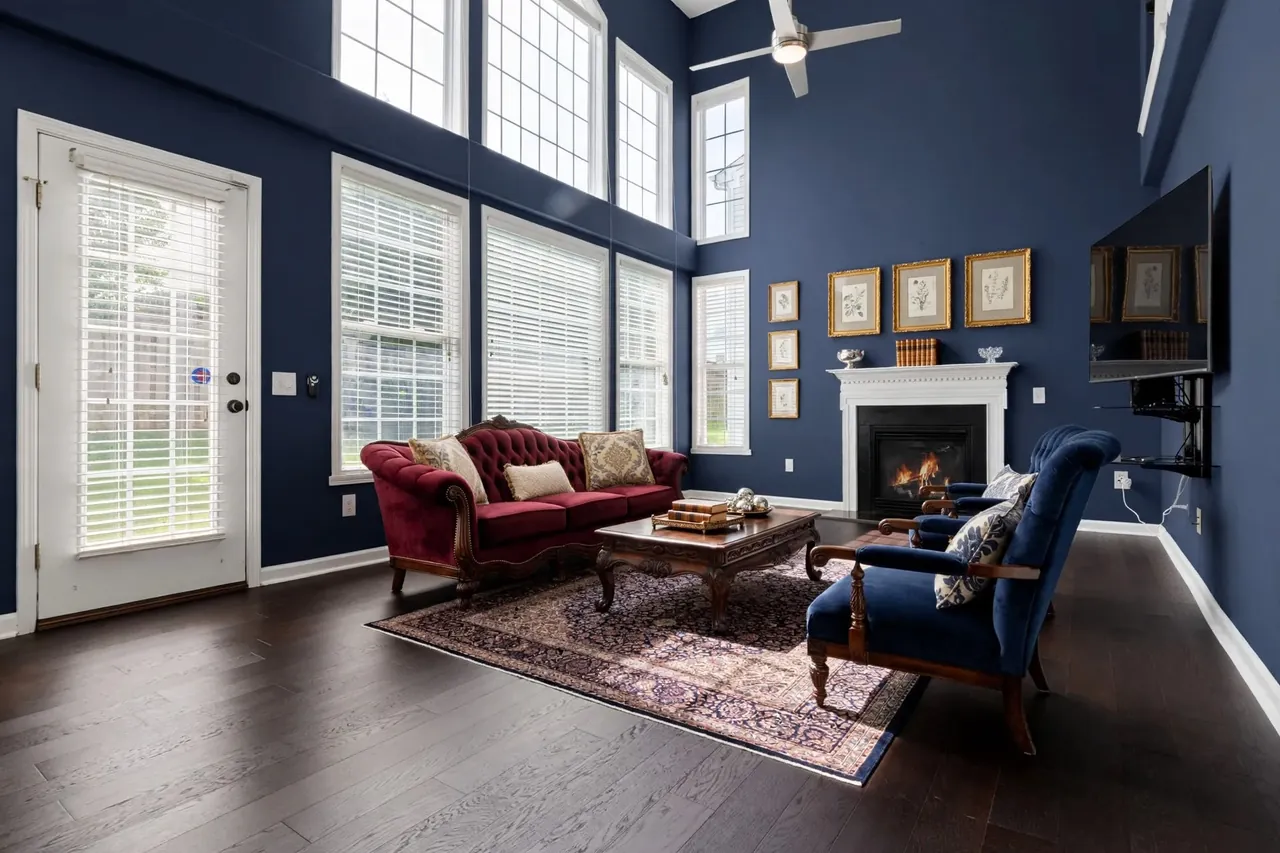
Styles that fit: Contemporary, Modern, Luxury, and Traditional for period homes.
At the top of the market the staging has to match the house. These buyers have seen a lot of expensive homes, and furniture that looks cheaper than the finishes makes the whole property look cheaper.
- Contemporary and Modern suit new high-end builds, penthouses and architect-designed houses: fewer, larger pieces, real materials such as walnut, leather and stone, and one strong piece of art.
- Luxury adds marble, brass and velvet where the buyer expects polish, such as a downtown penthouse or a new estate home, and only where the property can carry it. On a mid-market house it reads as trying too hard.
- Traditional belongs in period and formal homes, where carved wood, velvet and a Persian rug flatter the mouldings and the fireplace instead of fighting them.
The rule at this level is restraint: one statement piece per room, space between pieces, and nothing that competes with the view. Luxury buyers inspect everything in person, so the photo has to be accurate: furnish the room, do not remodel it.
Cottages, cabins and country homes
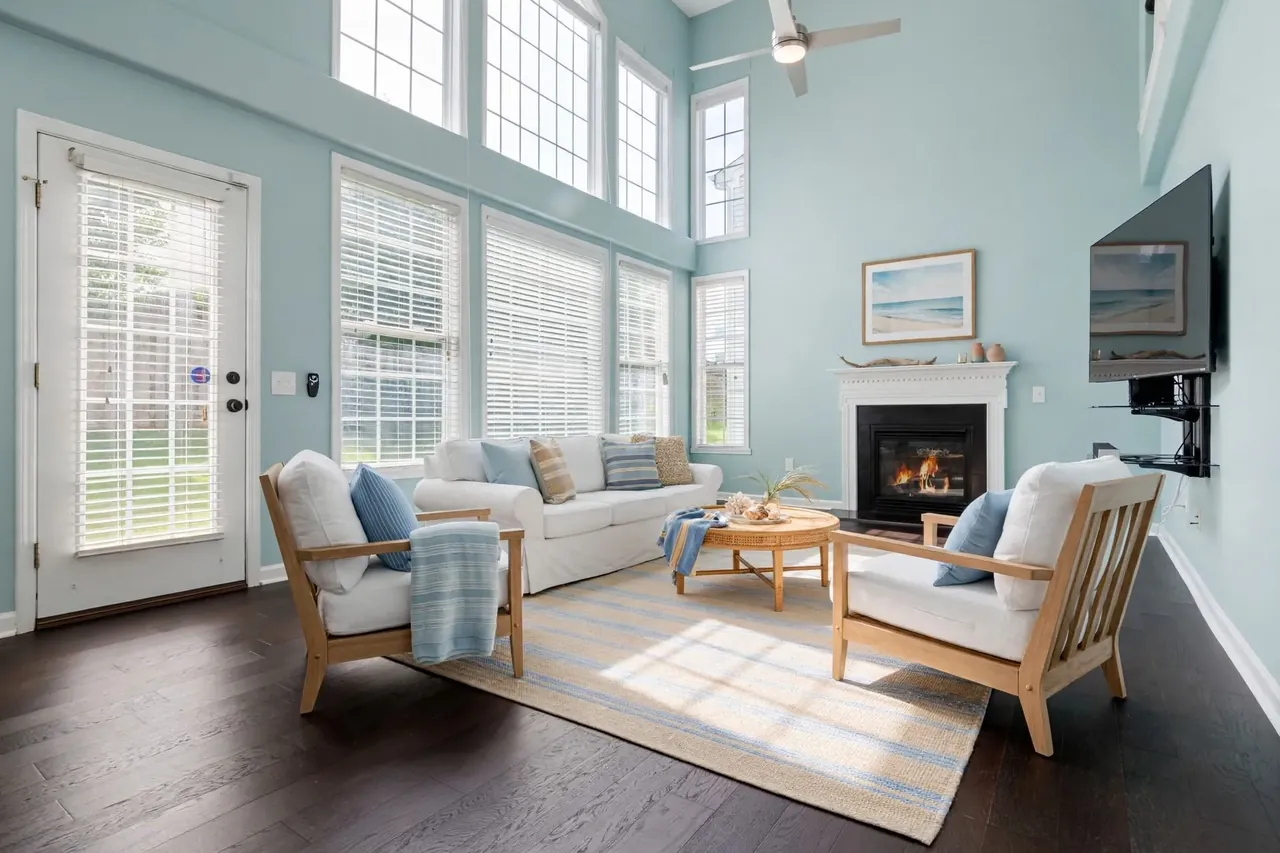
Styles that fit: Coastal, Farmhouse, Rustic, Canadian Cabin.
A cottage buyer is buying a way of spending weekends: coffee on the dock, a fire at night, friends staying over. The staging can sell that life, so it can be more relaxed and more characterful than in a city home.
- Coastal for anything near water, lake or sea: white and sand, soft blues, rattan and linen.
- Farmhouse and Rustic for country houses and properties with land: weathered wood, wool, stoneware and a big table.
- Canadian Cabin for log and timber homes and ski country: plaid, leather and a fireplace at the centre of the room.
Avoid the theme park. One seascape and a few shells are coastal; anchors, oars and a lifebuoy on every wall are a costume, and the same goes for antlers in a cabin. And if the cottage is sold with its furniture, photograph what is included: staging is for the empty rooms.
Downsizers and empty nesters
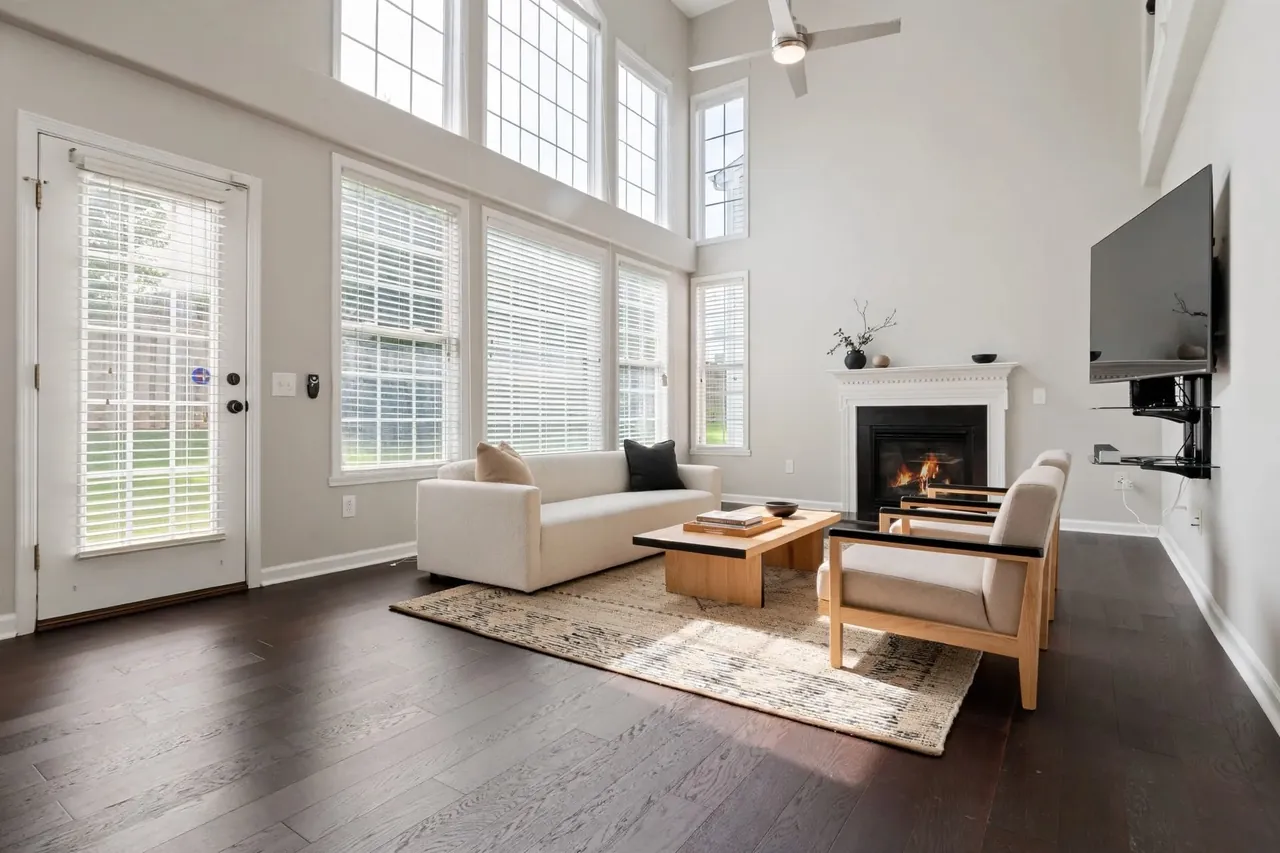
Styles that fit: Transitional, Japandi, Warm Minimalist, Coastal Grandmother.
Downsizers are leaving a bigger house they have lived in for years, usually for a condo, a bungalow or a smaller house on one level. The question in their head is whether their life fits into fewer rooms: where the dining table goes, where the grandchildren sleep, whether there is still a good chair by the window.
- Transitional feels familiar to someone leaving a traditional family home, only lighter and more current.
- Japandi and Warm Minimalist sell calm and easy upkeep: few objects, natural materials, nothing to dust. Pick seating with arms and a normal height, like the oak armchairs in the Japandi frame above: a sofa that sits almost on the floor is one more thing for this buyer to worry about.
- Coastal Grandmother suits a relaxed condo near the water: cream, soft blue, linen, books and fresh flowers.
Show the life they will keep: a real dining table, a guest bed in the second bedroom, a reading corner. A room for living in, not a show flat. The background on the style is in our Japandi style guide.
Investors, landlords and rental listings
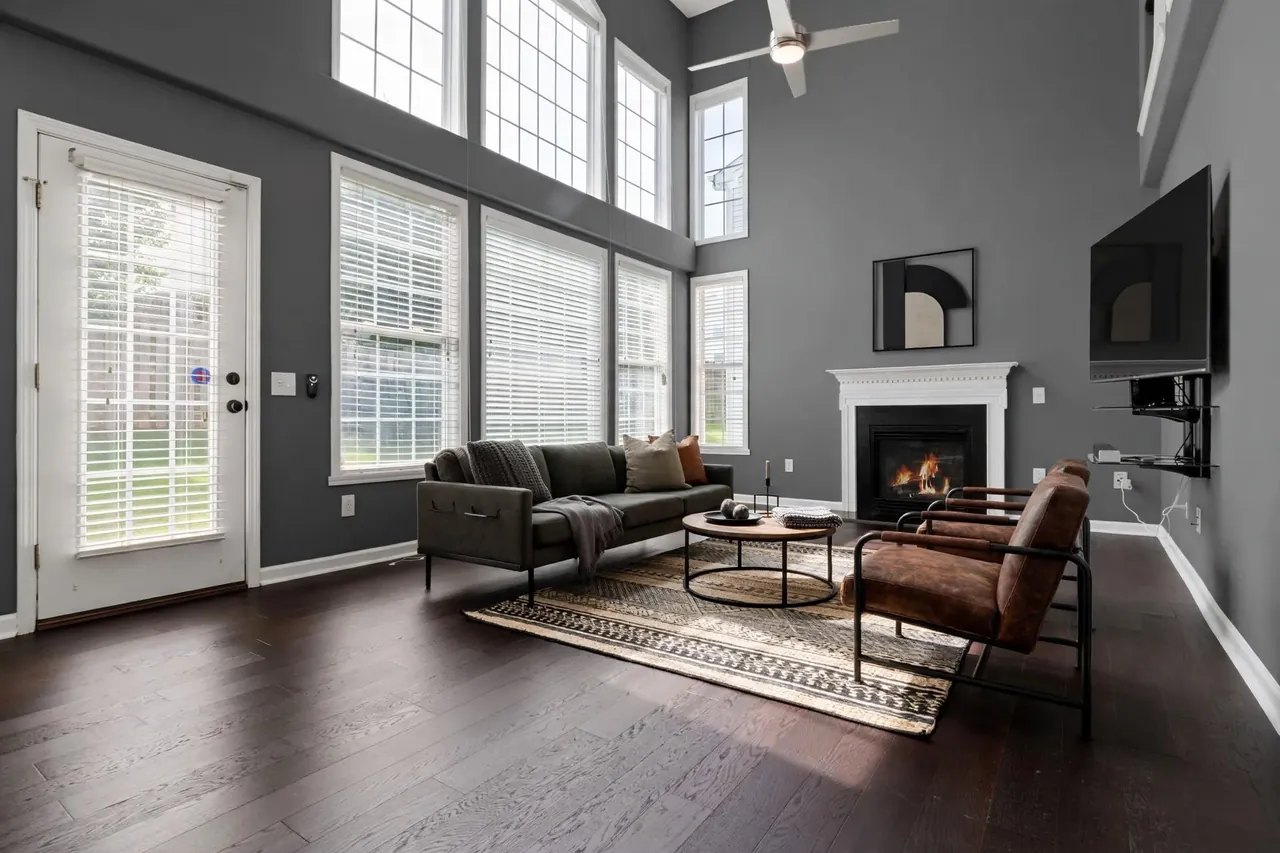
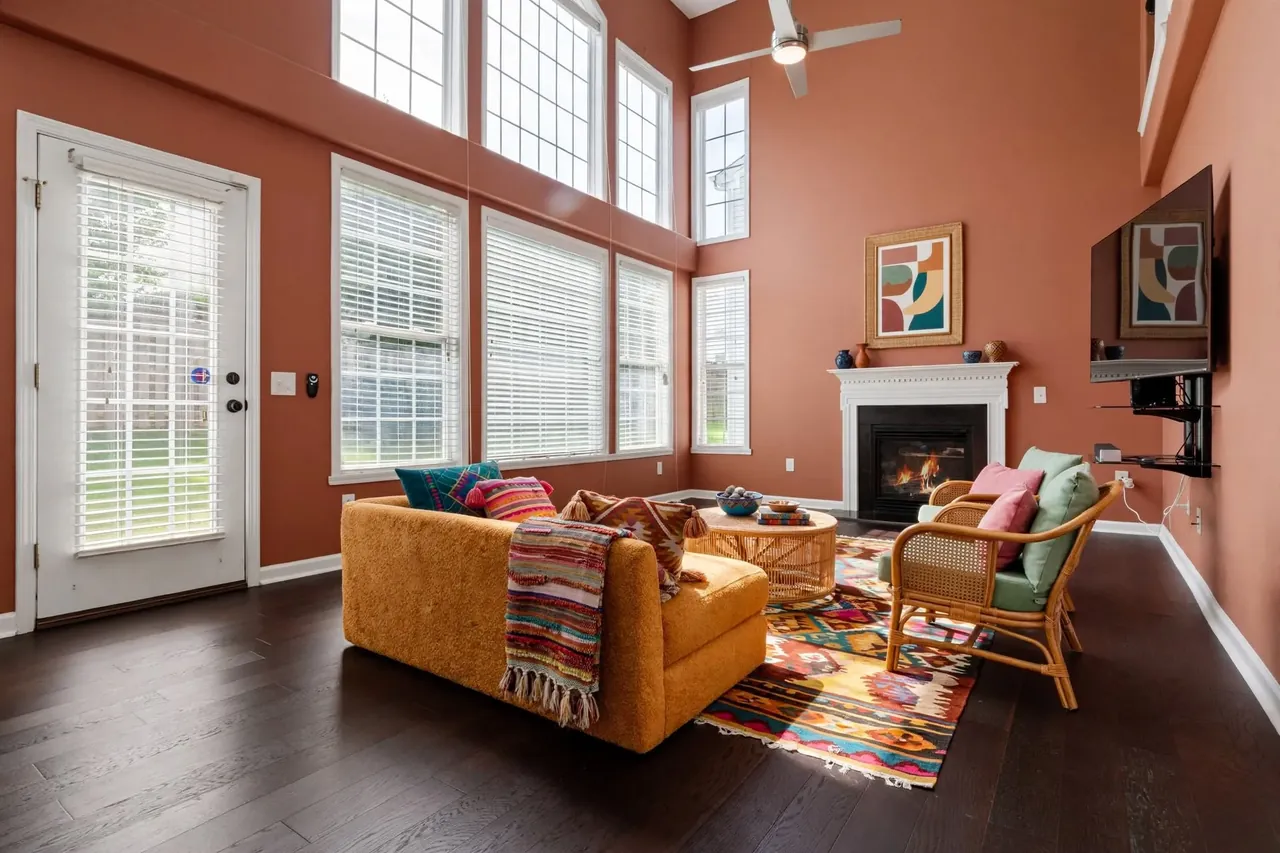
Styles that fit: Modern, Minimalist, Industrial, and Bohemian for planning a short-term rental.
Two very different listings live here. A long-term rental, or a unit sold to an investor, should look clean, durable and easy to picture with the tenant's own things in it. A short-term rental competes with every other place to stay on the same dates, and character helps it stand out.
- Modern and Minimalist for long-term rentals and investor units: neutral, hard-wearing, nothing a tenant would have to live around.
- Industrial for city apartments and lofts aimed at younger renters: black metal, leather and wood.
- Bohemian, or Coastal and Canadian Cabin near water and snow, for a short-term rental you are about to furnish. Use the render to choose the look before you buy anything, then photograph the real room for the listing: guests expect to find exactly what they booked.
Two honesty rules matter more here than anywhere. If a unit is let furnished, the photos must show the furniture the tenant will get; virtual staging is for empty units. And a rental photo is still advertising: label it as virtually staged and keep it accurate, the same as a sale listing. The rules by region are in the disclosure rules hub.
Match the staging to the price
The same buyer type turns up in every price band, so price is the second filter. A rule that works: the furniture in the photo should look like what a buyer at that price would own, or one step better. Two steps better and the room looks staged for someone else.
| Price band | What the staging should look like | Styles that fit |
|---|---|---|
| Entry level: starter condos, first homes | Light, simple, affordable-looking pieces at a small scale | Scandinavian, Modern, Mid-Century |
| Middle of the market | Comfortable, current and broadly likeable | Transitional, Farmhouse, Modern Farmhouse |
| Upper middle | Fewer, better pieces in real wood, leather and wool | Transitional, Japandi, Contemporary |
| Luxury | Restraint, real materials, one statement piece | Contemporary, Luxury, Traditional for period homes |
Overstaging a starter condo with marble and brass tells a first-time buyer that the home is not for them. Understaging an expensive house with flat-pack furniture makes its finishes look cheaper than they are.
By region: coast, Southwest, city and north
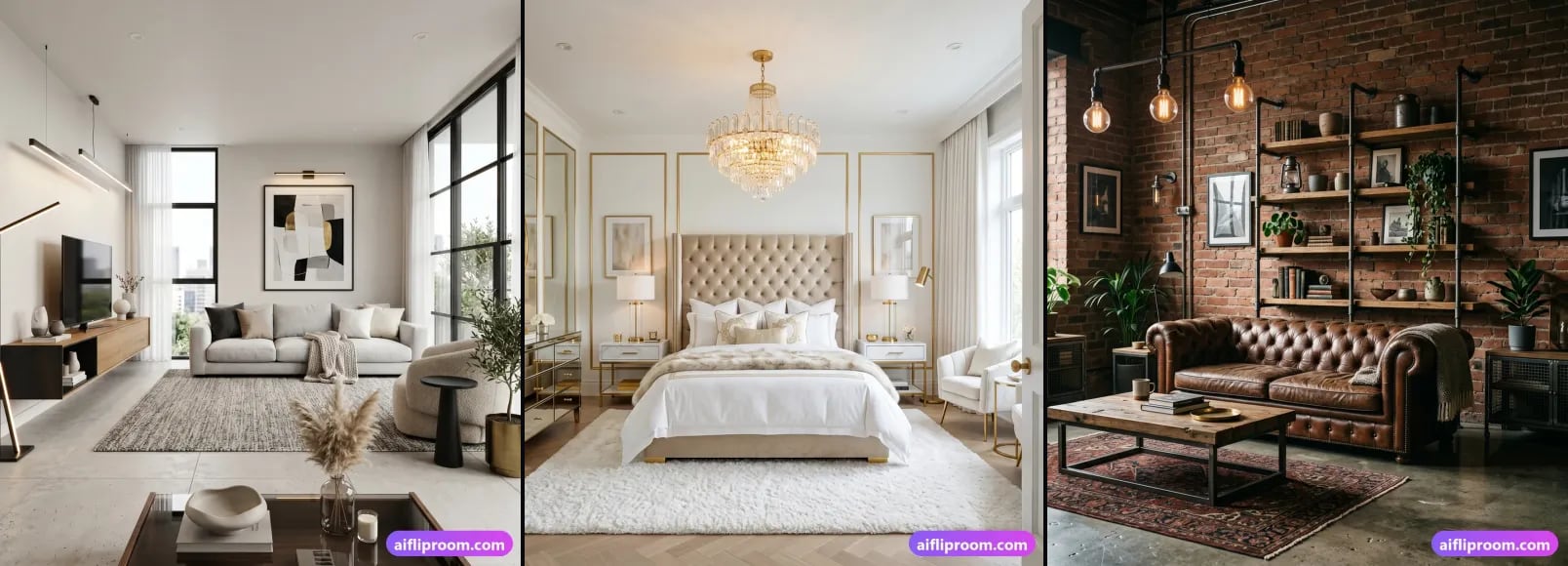
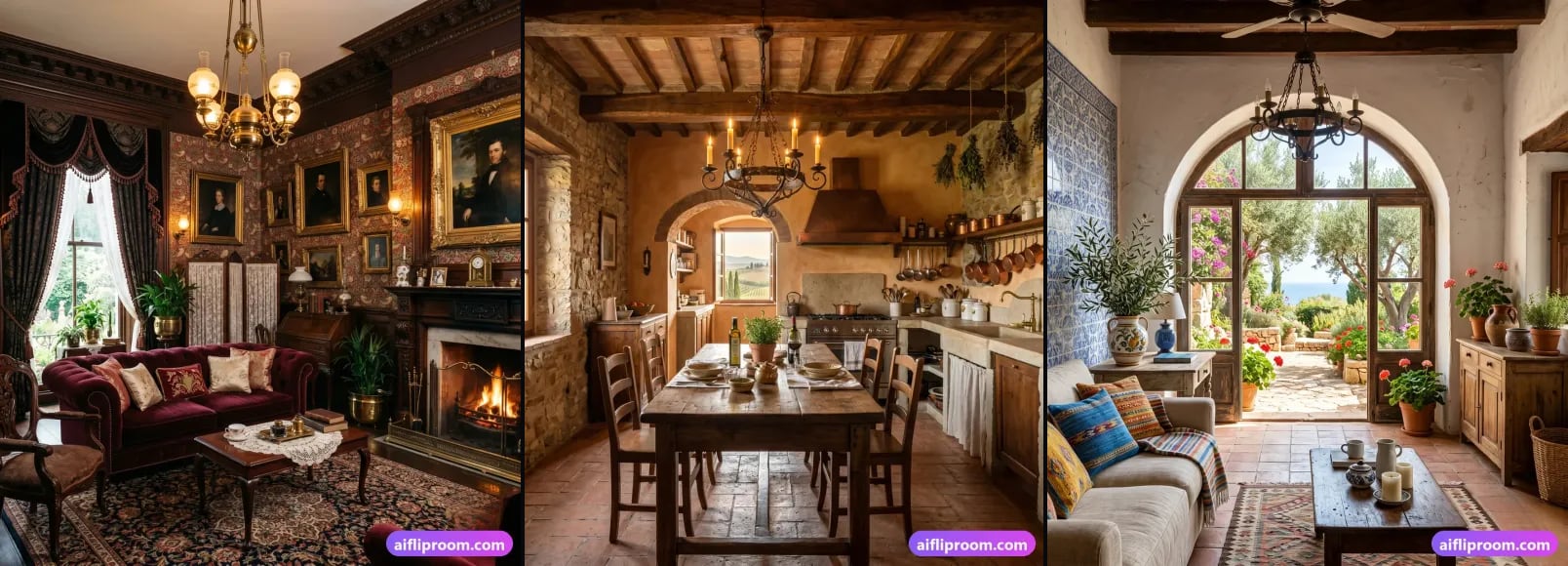
Region is a nudge, not a rule: a downtown condo in Phoenix is still a city condo first. But buyers carry a picture of what a home in their area looks like, and a style that matches it feels right before they can say why. The four images in this section are illustrations from our style library, rooms generated entirely by AI to show each look, not staged listing photos.
On the coast and by the lake
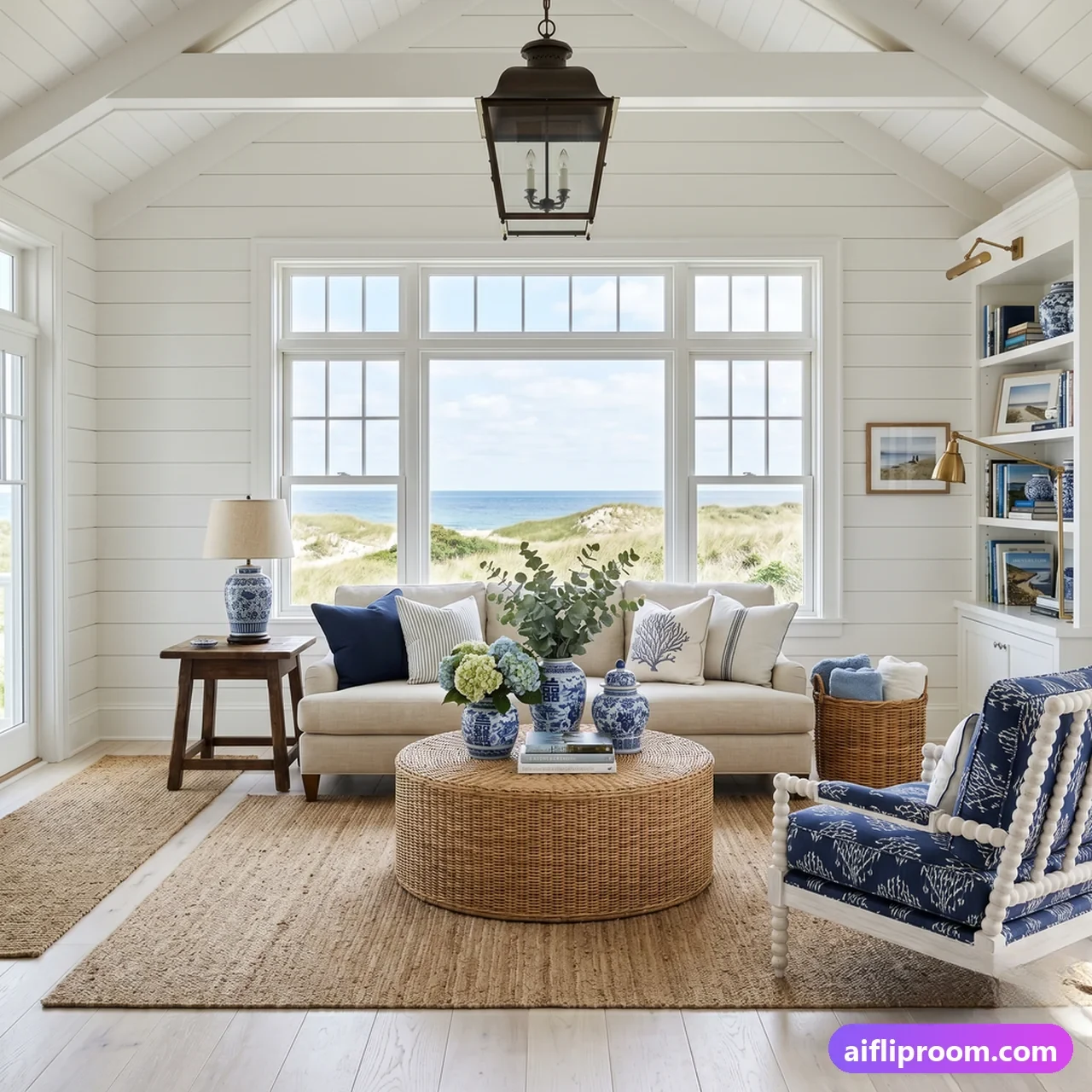
Coastal and Hamptons for beach and lake houses, from the Atlantic shore to Ontario's cottage country; Coastal Grandmother for a relaxed condo near the water; Tropical where palms grow outside the window. Keep it light: white, sand and blue, linen and rattan, very few shells.
The Southwest and the sun belt
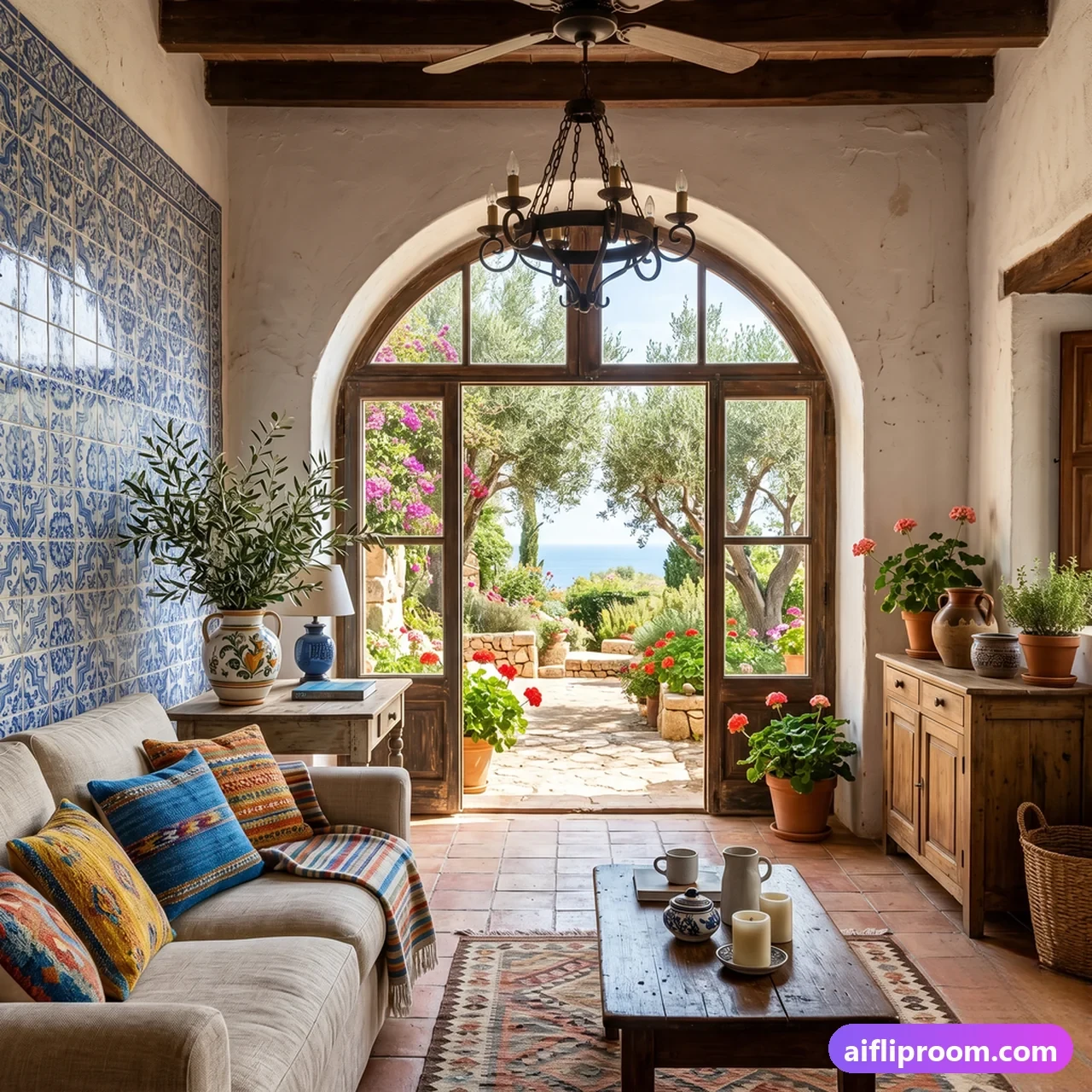
Southwestern for adobe and Pueblo Revival houses in Arizona and New Mexico; Mediterranean and Tuscan / Italian for stucco walls, arches and tiled roofs from California to Florida. In hot, bright places, earthy colours, leather, terracotta pots and woven textiles look right; heavy wool and dark velvet look like the wrong climate.
In the city
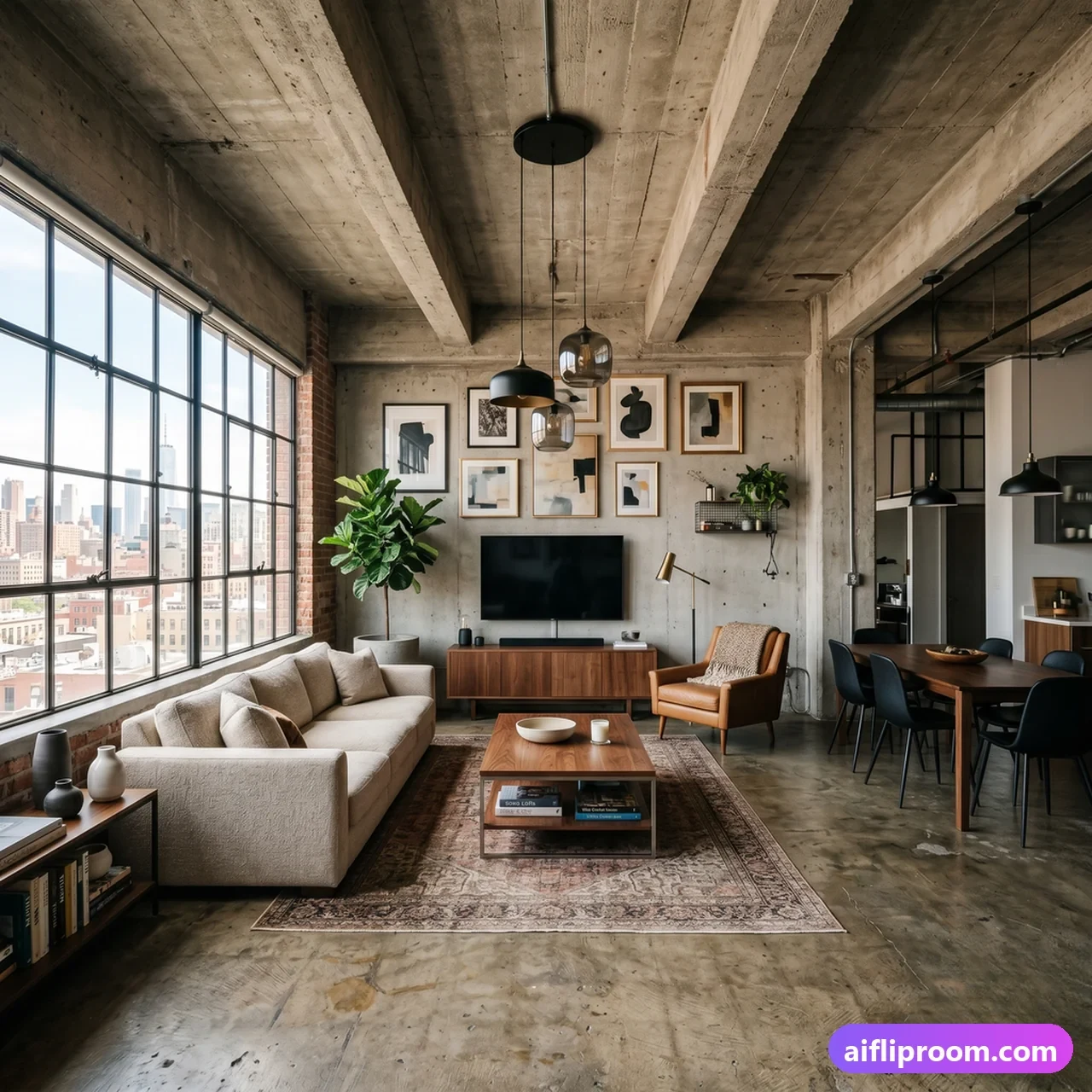
Industrial and Urban Loft for converted warehouses, lofts and anything with high ceilings or visible structure; Contemporary and Modern for glass towers and new condos. City buyers expect less furniture and more floor: a sofa, a table and a desk corner that proves a home office fits. In a listing photo the brick and concrete have to be there already; staging brings the furniture, not the building.
The north: Canada, the mountains, long winters
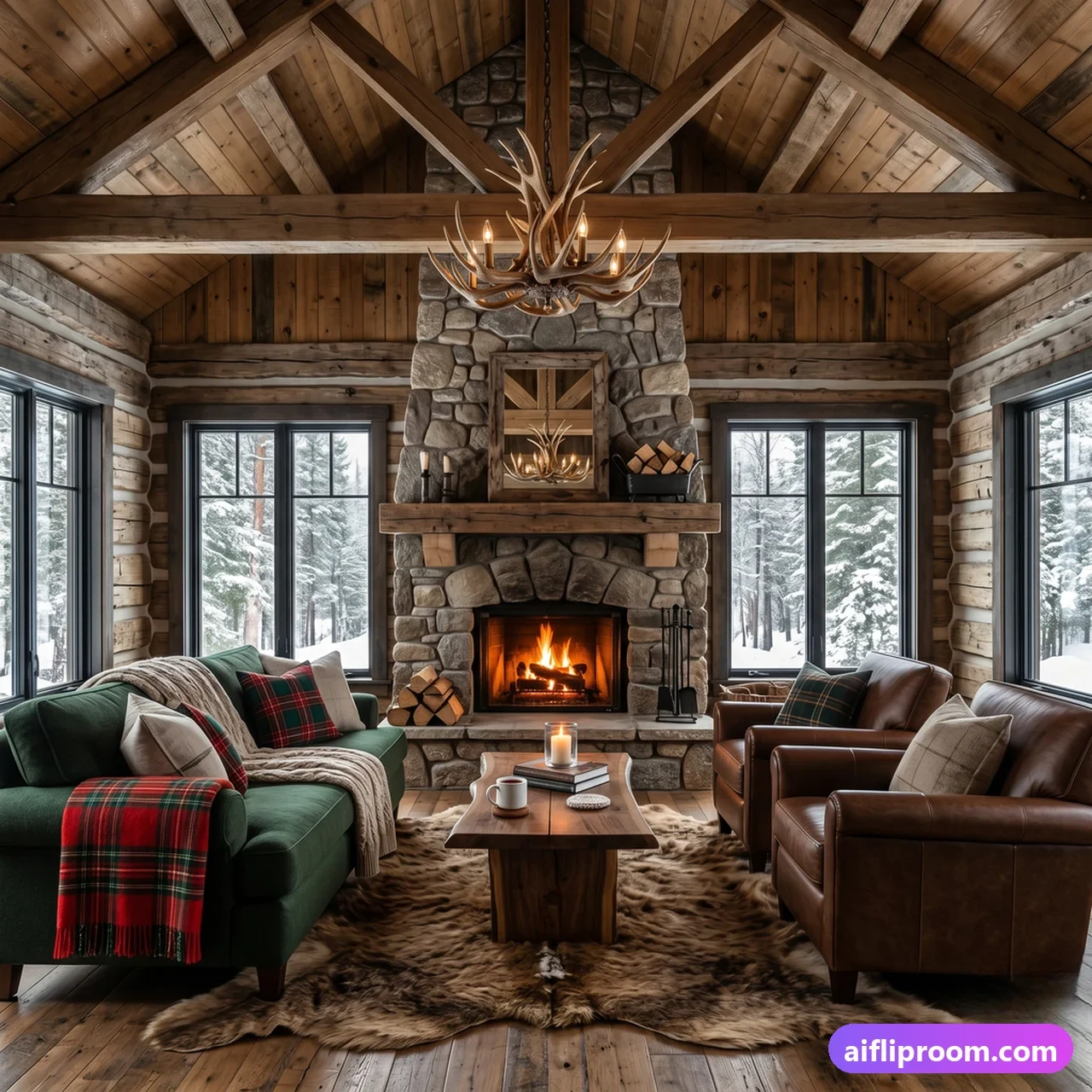
Scandinavian and Hygge for long winters: light walls, warm wood, several soft lamps and a throw on every chair. Canadian Cabin and Rustic for cottages, chalets and log homes. Where winter takes half the year, buyers look for warmth: a fireplace that gets used, rugs on wood floors, lamps instead of one ceiling light. The Scandinavian interior design guide explains why the style was built for exactly that.
Quick reference: which style for which buyer
| Buyer | Start with | Also consider | Why |
|---|---|---|---|
| First-time buyers, young couples | Scandinavian | Mid-Century, Modern | Bright, easy to keep, affordable to copy |
| Families with children | Transitional | Farmhouse, Modern Farmhouse | Comfortable, durable, familiar |
| Luxury buyers | Contemporary | Luxury, Traditional for period homes | Matches high-end finishes, with restraint |
| Cottage and country buyers | Coastal | Farmhouse, Rustic, Canadian Cabin | Sells the weekend, not the furniture |
| Downsizers | Transitional | Japandi, Warm Minimalist | Familiar, calm, easy upkeep |
| Renters and investors | Modern | Minimalist, Industrial | Neutral, durable, broad appeal |
| Not sure yet | Transitional | Modern, Scandinavian | The broadest defaults |
Five mistakes that lose the buyer
- Staging for yourself. Your taste is one vote; the buyer's is the one that counts.
- A different style in every room. Rooms can differ in function, not in taste: pick one style for the whole listing.
- Over-theming. Anchors in the beach house, cacti in every corner of the desert home, antlers in every room of the cabin. One nod to the setting is enough.
- Staging above the price band. The room should look like the buyer's next home, not a hotel they cannot afford.
- Changing the house instead of furnishing it. New paint, floors, light fixtures or brick in a listing photo show a different property. For a design preview that is fine; for the MLS it is not.
Try two or three styles on your own listing
From photo to the right style
- 1Name the buyerOne line: who is most likely to buy this home, at what price, in what kind of place.
- 2Pick two or three stylesFrom the sections above, not the whole library. Each style page in the style library shows the look in more rooms.
- 3Upload and renderOn the generate page, upload a level daylight photo of the room and pick a style. For a listing photo, turn on MLS mode first. A render takes about 15 to 60 seconds.
- 4Compare with the originalWindows, doors and fixtures where they were, nothing in front of the glass, and in MLS mode the same paint, floor and light fixtures. Redo any frame that fails.
- 5One style for the whole listingUse the winner in every staged room, label each staged photo as virtually staged and keep the untouched originals.
Every new account gets three free renders with no credit card (free renders carry a watermark), enough to see which look suits your buyer. The pricing page has the plans if you need more, and the virtual staging workflow for listing agents covers the rest of the routine, from which rooms to stage to the remarks line.
Questions about choosing a staging style
What is the best style for virtual staging?+
The one the most likely buyer can picture living in. When you do not know who that is, a neutral style is the safe default: Transitional is the broadest, with Modern and Scandinavian close behind. When you do know, go more specific: Scandinavian or Mid-Century for a first home, Farmhouse for a family house, Contemporary for a high-end build, Coastal for a cottage, Japandi for a downsizer's condo.
What staging style sells a house fastest?+
None that anyone has measured. We know of no study that compares sale times by staging style, so ask for the source behind any percentage attached to one style. What has been measured is staging in general: in NAR's 2025 Profile of Home Staging, 83% of buyers' agents said staging made it easier for buyers to picture a property as their future home. The style that does that best is the one that fits the buyer and the house.
Should virtual staging be neutral or bold?+
Neutral when the buyer pool is broad or unknown, which covers most listings. Bolder when the house and the buyer call for it: a lake cottage, a city loft, a 1960s ranch, or a listing that has to stand out among many similar ones. Bold means a clear point of view, not more objects.
Can each room in a listing be staged in a different style?+
Better not. Choose one style for the likely buyer and use it in every staged room. Rooms can differ in function, but a Japandi living room next to a farmhouse kitchen reads as two different houses.
Does the staging style change the walls?+
In the ordinary styles it can: our AI may repaint the walls and swap light fixtures, because colour and light are part of a style. That is fine for a design preview. For a listing photo, turn on MLS mode on the generate page, which is built to change furniture and decor only, and check the paint, the floor and the fixtures against the original before you publish.
Which staging style works best for a rental listing?+
For a long-term rental, a neutral and durable look: Modern or Minimalist, or Industrial for a city loft. If the unit is let furnished, show the real furniture instead of staging it. For a short-term rental, use a characterful style such as Bohemian or Coastal to choose the look before you furnish, then photograph the real room for the listing.
See it on your own room
Upload a photo and watch AI restage your space in 15–60 seconds, depending on how much detail it has — free to try, no credit card.
Try AI Flip Room freeGot a question about this?
Something unclear or not covered? Ask here. We read every question and answer the useful ones right in the article. Nothing you write is published.
Related reading
Living Room Virtual Staging: One Empty Room, 10 Styles (Before and After)
One empty living room, ten virtual staging styles, before and after: Modern, Scandinavian, Farmhouse, Japandi and more on the same real photo, and who each style suits.
Virtual Staging Workflow for Listing Agents: 7 Steps
A repeatable virtual staging routine for listing agents: which rooms to stage, in what order, one style per listing, the remarks line, the publish check.
Virtual Staging Disclosure Rules: How to Label Staged Photos
Why disclosure is required, three ways to label a virtually staged photo, what you may change vs never touch, and the rules of sixteen jurisdictions compared.